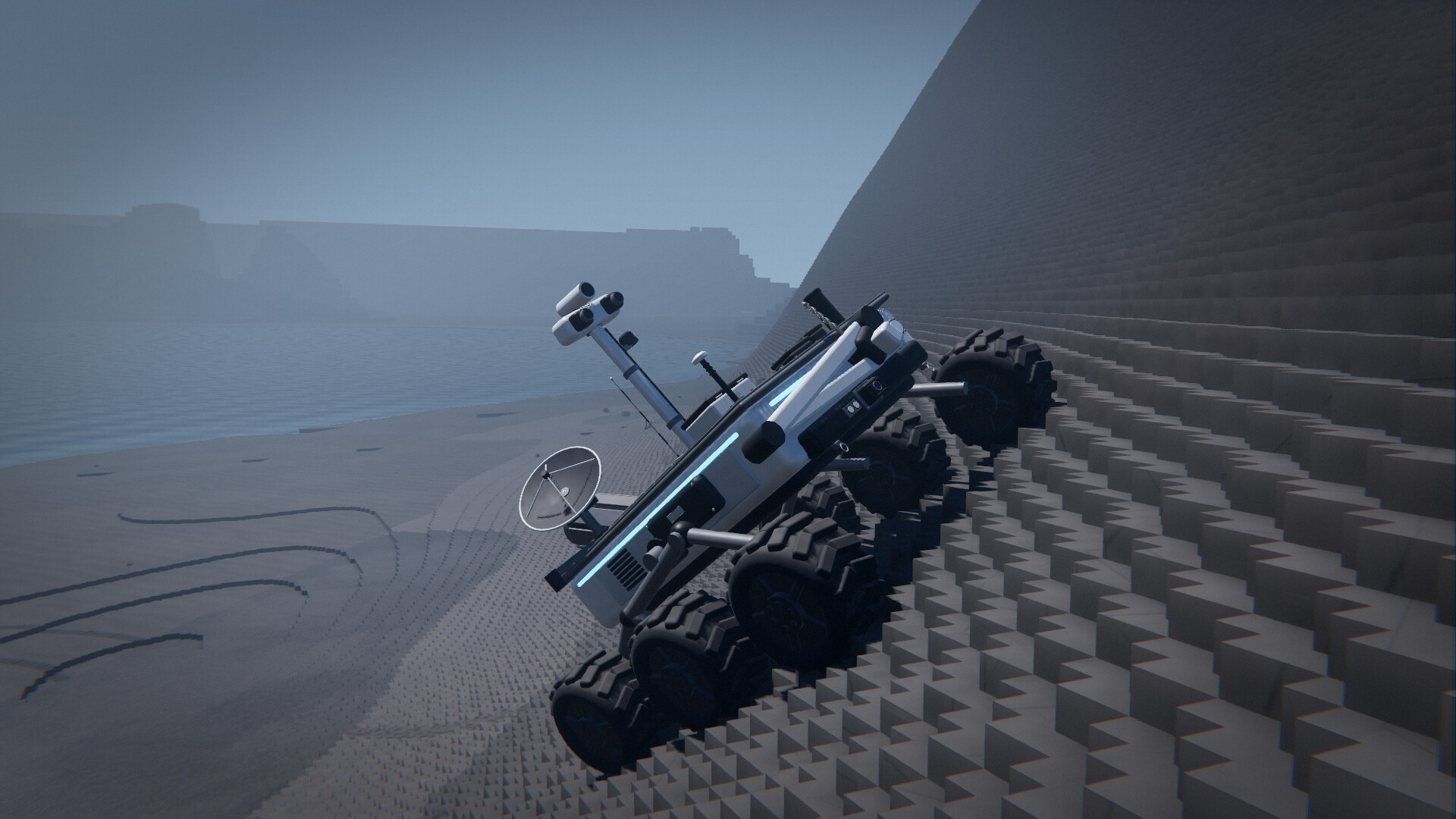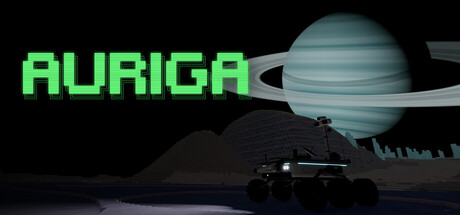


In 1988 the rover AURIGA found something on Mars, and the program buried it. 350 years later, it wakes. Drive a slow, physical rover across procedurally generated worlds: drill, scan, map caves with lidar and outlast radiation, storms and crushing air, from green-phosphor Mars to distant stars.

Sign in to add this item to your wishlist, follow it, or mark it as ignored

This game is not yet available on Steam

Planned Release Date: December 2026

Interested?
Add to your wishlist and get notified when it becomes available.
 

About This Game

Something was found on Mars in 1988

On its third sol, the experimental rover AURIGA drilled into Martian rock and found something that should not have been there. The program was shut down within days, the finding was classified, and the rover was left where it stopped.

For three and a half centuries the dust buried it. Then someone came looking.

Drive one machine, carefully

This is a game about driving a single rover across ground no one has stood on. It is slow on purpose. Every metre is driven, every sample is drilled, and every mistake stays with you.

  • A physical rover. Rocker-bogie suspension, wheels that slip in sand and break off ledges, slopes that will roll you if you misjudge them.

  • Real instruments. Scan unusual finds, drill samples, photograph the landscape, and map lava tubes and impact craters with a spinning lidar.

  • Power is a resource. Solar panels by day, batteries through the night, and a radioisotope generator for worlds with no sun.

  • Hazards you can read. Radiation, extreme heat and cold, crushing 90-bar atmospheres, acid storms, stellar flares, lava and crevasses, all estimated before you land.

  • Ground you can change. The terrain is voxels. Cut it with a blade, bore tunnels into hillsides, and blast it with demolition charges.

Two eras

Play the 1988 mission on a green-phosphor terminal, with a grainy vidicon camera feed and geared, clattering motors. Or wake up in 2338 with a refit chassis, a full-color sensor suite, orbital supply drops, and Meridian, the AI who brought you back.

The story

Chapter I, The Long Walk. A few sols of survey work for Surface Operations Control, until the drill finds what it finds.
Chapter II, Revenant. The rover's core is revived centuries later by a civilization that has changed beyond recognition.
Chapter III, The Quiet Machines. A trail of dormant self-replicating probes, and the question of who sent them.

Endless worlds

Outside the story, any seed is a planet. Gravity, air, temperature, day length, weather, geology and landforms all follow from the world itself: ice worlds, lava planets, tidally locked worlds with a frozen night side, super-Earths, Titan-like haze worlds with methane seas, rogue planets with no star at all.

  • Inspect each world on a turning globe painted from its real terrain before you commit to landing.

  • Work through survey contracts for credits, then spend them on upgrades and supply drops.

  • Chain worlds into a run with one rover, choosing where to go next.

  • Watch the crossing between stars at half the speed of light, with the sky bent by relativity, while the next world builds.

  • Choose Survey, Free Roam, or Hardcore, where losing the rover ends the mission for good.

While the world loads

The loading screen has a cabinet of arcade games to play while terrain generates. Not all of them are on the menu.

Built from code

The terrain, the sky, the music and every sound effect are generated by the game itself.

AI Generated Content Disclosure

The developers describe how their game uses AI Generated Content like this:

Generative AI tools were used during development to help create code, 2D art and text, including draft translations. The developer directed, selected and assembled all of it into the game.

No generative AI runs while you play. Meridian, your companion, is scripted rather than a chatbot, and the game sends nothing to AI services. Planets come from the game's own procedural generator, not an AI model.

System Requirements

Windows
SteamOS + Linux
    Minimum:
    • OS: Windows 10 64-bit · Ubuntu 22.04 64-bit or an equivalent distro
    • Processor: 4-core 64-bit CPU, Intel Core i5-6500 / AMD Ryzen 3 1200
    • Memory: 4 GB RAM
    • Graphics: Vulkan-capable GPU with 2 GB VRAM, NVIDIA GTX 960 / AMD RX 470
    • Network: Broadband Internet connection
    • Storage: 2 GB available space
    • Sound Card: Any onboard or dedicated audio device
    • Additional Notes: Requires Vulkan support and up-to-date graphics drivers. Low preset at 1080p.
    Recommended:
    • OS: Windows 10/11 64-bit · Ubuntu 24.04 / SteamOS
    • Processor: 6-core CPU, Intel Core i5-10400 / AMD Ryzen 5 3600
    • Memory: 8 GB RAM
    • Graphics: NVIDIA GTX 1660 Super / AMD RX 5600 XT, 6 GB VRAM
    • Network: Broadband Internet connection
    • Storage: 2 GB available space
    • Sound Card: Any onboard or dedicated audio device
    • Additional Notes: High preset at 1080p / 60 fps. SSD recommended.
    Minimum:
    • OS: Ubuntu 22.04 64-bit or an equivalent distro
    • Processor: 4-core 64-bit CPU, Intel Core i5-6500 / AMD Ryzen 3 1200
    • Memory: 4 GB RAM
    • Graphics: Vulkan-capable GPU with 2 GB VRAM, NVIDIA GTX 960 / AMD RX 470
    • Network: Broadband Internet connection
    • Storage: 2 GB available space
    • Sound Card: Any onboard or dedicated audio device
    • Additional Notes: Requires Vulkan drivers: Mesa 23 or newer (AMD/Intel) or NVIDIA proprietary driver 535 or newer. Low preset at 1080p.
    Recommended:
    • OS: Ubuntu 24.04 64-bit / SteamOS 3
    • Processor: 6-core CPU, Intel Core i5-10400 / AMD Ryzen 5 3600
    • Memory: 8 GB RAM
    • Graphics: NVIDIA GTX 1660 Super / AMD RX 5600 XT, 6 GB VRAM
    • Network: Broadband Internet connection
    • Storage: 2 GB available space
    • Sound Card: Any onboard or dedicated audio device
    • Additional Notes: High preset at 1080p / 60 fps. SSD recommended.
Review Filters