

A cluttered archive of real recordings: brass bands, opera, vaudeville and street voices, cut into pieces and scattered across the floor. No labels, no titles, no search. You have nine cabinets, a tape deck, and your ears. Find the fragments that belong together and make a recording whole again.

Sign in to add this item to your wishlist, follow it, or mark it as ignored

This game is not yet available on Steam

Coming soon

Interested?
Add to your wishlist and get notified when it becomes available.
 

About This Game

An archive nobody catalogued


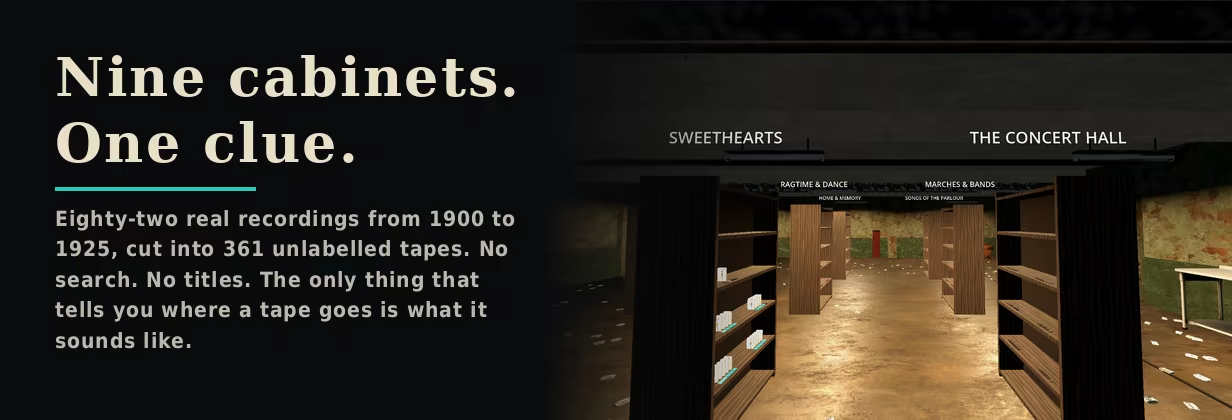
Sub-level two holds 82 real recordings, every one of them public domain, out of the Library of Congress. Seventy were cut between 1900 and 1925 brass bands, ragtime, opera, vaudeville, songs people sang in their own front rooms. The other twelve are New York street interviews from the 1950s and 60s, and they are filed under THE STREET, which is the one cabinet in this archive where people are simply talking.

Someone cut them into pieces. Three hundred and sixty-one unlabelled cassettes, on the shelves, on the benches, and all over the floor.

There is no search. There are no titles. A tape tells you nothing until you play it.

What you get is nine cabinets, each with a sign over it — The Stage, Marches & Bands, Ragtime & Dance, Voices From Abroad, The Concert Hall, Sweethearts, Home & Memory, Songs Of The Parlour, The Street — and a deck to play tapes on.

Listen. Decide. Commit.


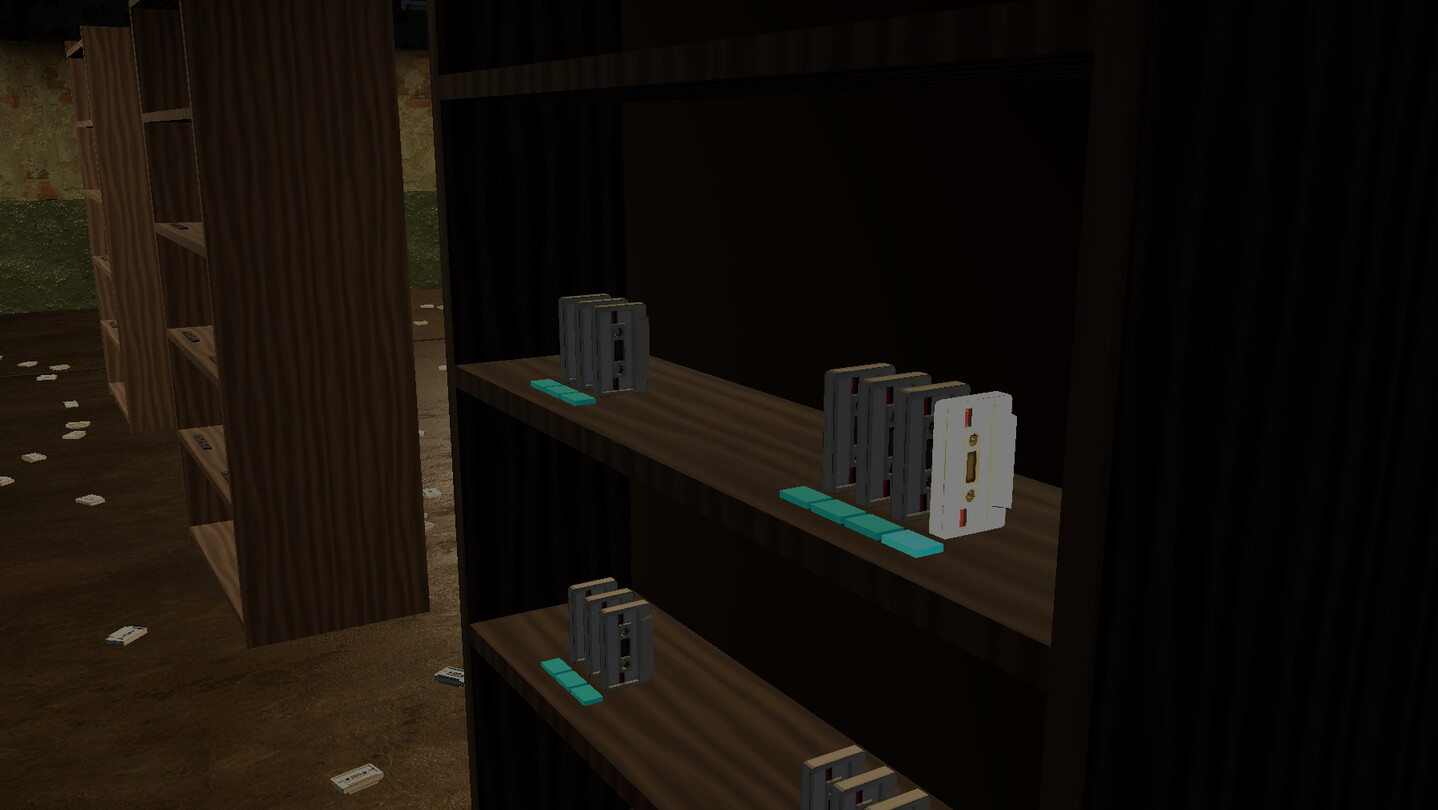
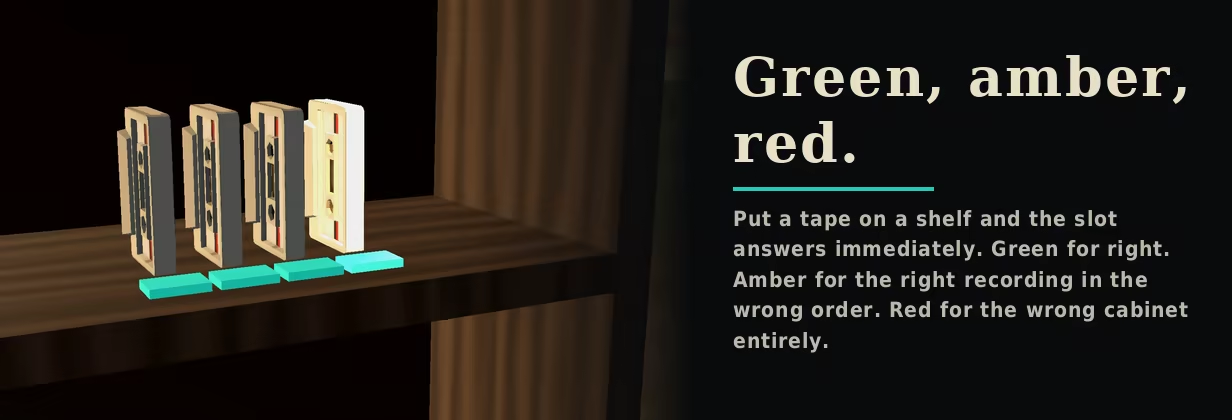
Put a fragment on the shelf under the sign you think it belongs to, in the position you think it holds, and the slot answers you immediately.

  • Green — right cabinet, right recording, right place.
  • Amber — right recording, wrong order.
  • Red — wrong cabinet entirely.

No menus, no confirmation, no waiting. The answer is a coloured chip on a shelf, and it is there the instant you let go.

Somewhere to be wrong


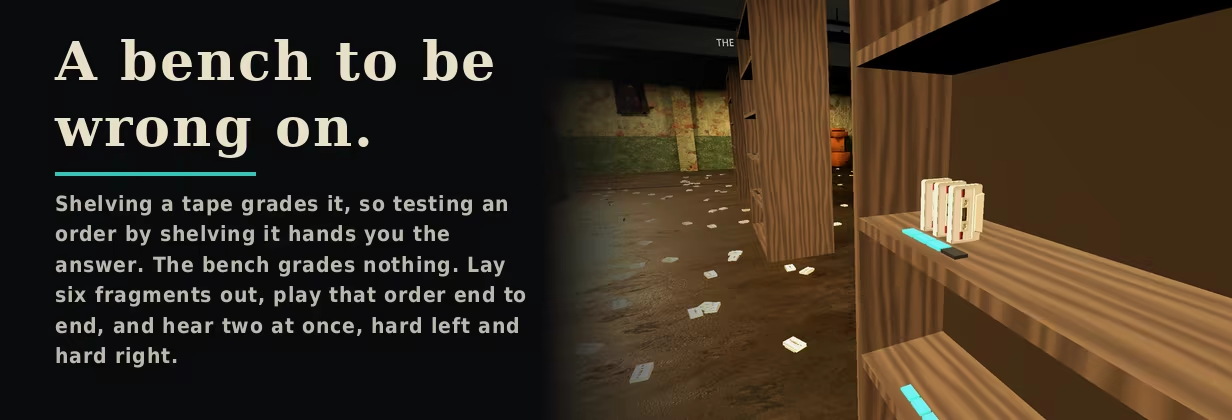
Put a tape on a shelf and the game answers straight away which means you can't use the shelves to test a hunch without being handed the answer to it.

So there's a workbench, and the workbench never judges anything. Lay six fragments out on it. Reorder them. Play them end to end and listen. Play two at once, one in each ear, and hear the difference instead of trying to remember it.

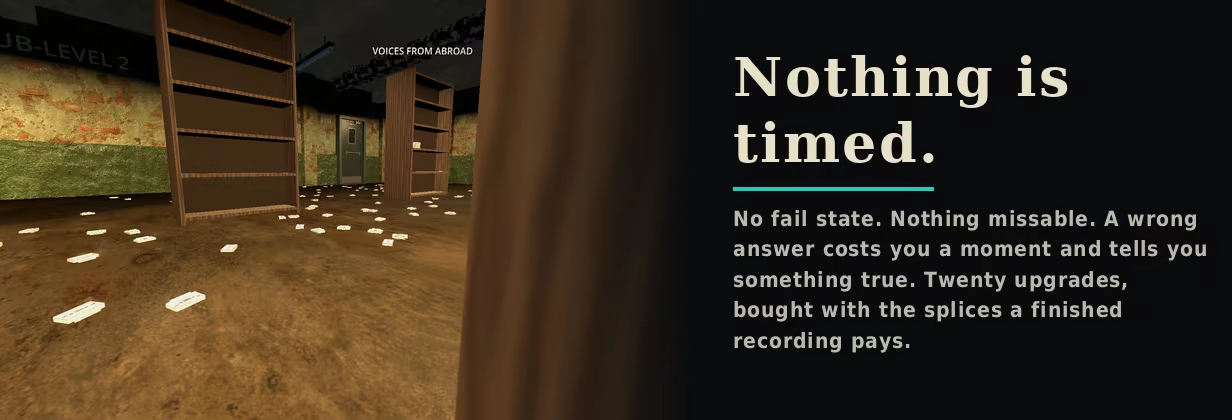
Nothing is timed


No fail state. Nothing missable. Nothing kills you. A wrong answer costs you a moment and tells you something true.

Restoring a recording pays you a splice. Splices buy twenty upgrades: scrub a tape by hand, loop its last two seconds, halve its speed, carry more at once, push a trolley, print labels, keep a ledger, cross-reference the book against itself.

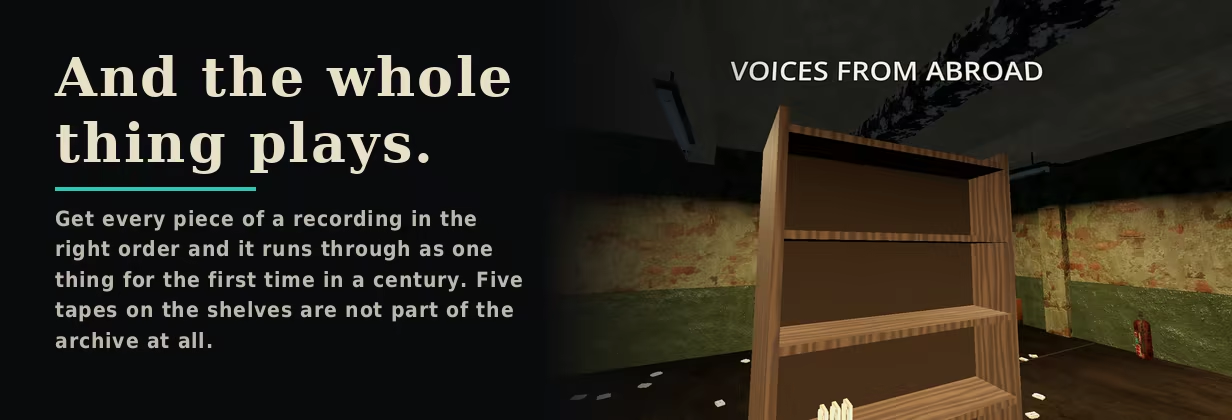
Place all tapes in order to hear the full piece


Every fragment in the right cabinet, in the right position, and the recording runs through as one thing for the first time in a century.

Somebody worked here before you


Five tapes on these shelves were never part of the archive. They were left by whoever had this job last, and they surface as the floor clears.

They are the only voice in the building that isn't a hundred years old, and they are the only thing here that was addressed to you.

What's in the box


  • 82 real recordings, 361 fragments, nine cabinets
  • 20 upgrades, all of them buyable
  • Plays on a controller, and every keyboard control is rebindable
  • Three graphics presets that are real changes, not labels
  • No network, no telemetry, no account, no data collected

Accessibility


Hearing is required to play the puzzle. Hearsay works by matching fragments of a recording to each other and to a category, entirely by ear. The recordings are not captioned and will not be: a transcript of a fragment is the solution to it, and captioning the puzzle would delete the game rather than open it up. If you are deaf, the puzzle will not be playable. We would rather lose the sale than have you find that out afterwards.

The story is a different question, and we answered it differently. The five tapes left behind by the previous archivist are the only speech in the game that is not a puzzle, and they are fully subtitled. They are off by default, because the game is meant to be played by ear — turn them on in Settings.

Hard of hearing, or deaf in one ear, is well supported. There is a mono-audio option that sums the stereo image to both ears, so the two-fragment comparison feature works with one working ear. Master, fragment, effects and ambience each have their own volume slider.

Colour is confirmation, not the message. Every shelf verdict can show a shape as well as a colour a tick for correct, a slash for out of order. It is off by default because it is extra ink on 361 slots, and on in Settings in one click. The palette was checked under protanopia, deuteranopia and tritanopia.

Motor and input. Every keyboard control is rebindable, bound by physical key so non-QWERTY layouts work untouched. The game plays on a controller; a few advanced controls are keyboard-only for now. No quick-time events, no timed inputs, no twitch reflexes, no fail state.

Visual. Adjustable field of view, mouse sensitivity and Y-inversion. Three graphics presets. Window sizes include 1280x800.

System Requirements

    Minimum:
    • OS: Windows 10 64-bit
    • Processor: Any x86-64 CPU from 2015 or later
    • Memory: 4 GB RAM
    • Graphics: Vulkan 1.1 capable — Intel HD 520 / AMD Radeon R5 / NVIDIA GTX 750 or better
    • Storage: 700 MB available space
    • Sound Card: Required. This game is unplayable without audio output.
    • Additional Notes: Headphones strongly recommended.
    Recommended:
    • OS: Windows 11 64-bit
    • Processor: Any modern x86-64 CPU
    • Memory: 8 GB RAM
    • Graphics: Any discrete GPU from 2018 or later
    • Storage: 700 MB available space
    • Sound Card: Any. Headphones.
Review Filters