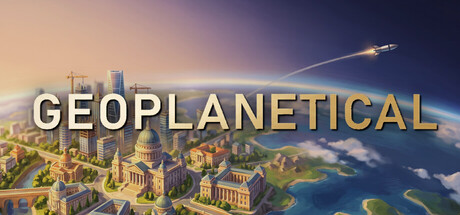

A geopolitical simulation that starts on January 1, 2026, with the world as it stood that day. Govern one of 200+ nations and territories, or lead its opposition: laws, budget, elections, strikes, diplomacy, war. The other governments never wait for you. No scenarios, no end date.

Sign in to add this item to your wishlist, follow it, or mark it as ignored

Coming Soon To Early Access

The developers of this game intend to release as a work in progress, developing with the feedback of players.

Note: Games in Early Access are not complete and may or may not change further. If you are not excited to play this game in its current state, then you should wait to see if the game progresses further in development. Learn more

What the developers have to say:

Why Early Access?

“Geoplanetical aims to become a benchmark for deep geopolitical simulation games.

Its interconnected political, economic, social, diplomatic and military systems make community feedback especially valuable, as many aspects can only be properly evaluated through long and varied campaigns.

Releasing in Early Access was not my original plan or usual approach. However, Geoplanetical has always been developed in close collaboration with its community, and 100% of respondents to a recent community poll asked for an Early Access release.

The game’s core is already playable, major bugs are rare, and the save system and debugging pipeline are reliable. Early Access therefore feels like the right opportunity to involve players more directly while continuing to improve the depth, balance, accessibility and stability of the simulation.”

Approximately how long will this game be in Early Access?

“I currently expect Geoplanetical to remain in Early Access for approximately 18 to 24 months.

This is only an estimate and may change depending on community feedback and the needs of development. My priority is to build a stable, coherent and genuinely deep geopolitical simulation rather than rush toward an arbitrary deadline.”

How is the full version planned to differ from the Early Access version?

“I plan to deepen the existing systems and expand the interactions between politics, economics, society, diplomacy, warfare and the evolution of the wider world.

The exact direction will evolve according to testing, technical priorities and community feedback. The ambition is for Geoplanetical to become one of the genre’s reference points for players looking for a deep and large-scale geopolitical simulation.”

What is the current state of the Early Access version?

“The core experience of Geoplanetical is already playable. Players can begin a campaign as a playable terrestrial authority, explore the 3D globe and manage their country through interconnected political, economic, budgetary, social, diplomatic and military systems.

The rest of the world continues to evolve through simulation and decisions made by other actors. Saving and loading are functional, major bugs are rare, and the project has a reliable debugging and testing pipeline.

However, some systems still need further balancing, depth and accessibility. Players should expect bugs, incomplete areas and potentially significant changes throughout Early Access.”

Will the game be priced differently during and after Early Access?

“I plan to gradually increase the price as substantial content and features are added and Geoplanetical moves closer to its full release.

Any planned price change will be communicated to the community in advance.”

How are you planning on involving the Community in your development process?

“Community involvement is at the heart of Geoplanetical’s development.

Players already contribute through discussions, suggestions, bug reports and polls.

The decision to consider Early Access itself came directly from the community, with 100% of respondents to the poll supporting it.

I intend to continue listening closely to feedback, sharing development progress and explaining major changes. Community reports will help identify priorities, improve balancing and usability, and reveal issues that only emerge during long campaigns.

This collaboration will help shape the development process while preserving the project’s central vision: making Geoplanetical a deep, ambitious and distinctive reference within the geopolitical simulation genre.”
Read more
This game is not yet available on Steam

Planned Release Date: Oct 28, 2026

This game plans to unlock in approximately 2 weeks

Interested?
Add to your wishlist and get notified when it becomes available.
 

Report bugs and leave feedback for this game on the discussion boards

See all discussions

About This Game

January 1, 2026. You take over a country as it stood that morning: its debt, its population, its economy, and the war already underway in Ukraine. Push a pension reform through a parliament that can say no, negotiate with striking unions, run for a seat on the UN Security Council. There is no scenario waiting for you, and every other government is already making its own decisions.

Geoplanetical is a geopolitical simulation I am building on my own. Play any of 200+ nations and territories, as the government or as the opposition. The other countries set their budgets, pass laws, hold elections, impose sanctions, offer alliances and can declare war, on you included.

Every number has a cause

Numbers are never decoration here. Each one comes from something that actually happens in your country:
  • A strike pulls workers out of businesses and public services.
  • A coal or gas plant burns fuel to make electricity. When energy runs short, prices climb, companies struggle and your tax revenue falls.
  • A blockade cuts seaborne trade. An occupied province stops producing.
  • More money for hospitals changes little without the staff to use it.
  • Companies invest and hire on their own, following demand. 100+ goods move between around thirty sectors and across world trade.
When a number moves, the game shows you why. The Situation Room sums up what is being decided without you, what is getting worse at home and what the world is doing to you. Since you last looked recaps what changed. Where these numbers come from breaks down your approval and stability. Your ministers give advice on their portfolios.

Raise taxes to save public services? Push back the retirement age? Change the electoral system, knowing it could cost you your majority? I won't tell you which policy is right. Shrink the state or grow it, deregulate or regulate, disarm or militarize: the game doesn't grade your ideology, it works out what comes next.

Parliament can say no

  • Change the laws people care about: minimum wage, working hours, paid leave, retirement age, abortion, death penalty, cannabis (banned, decriminalized, medical, regulated or state monopoly), religion, a yearly immigration cap, asylum rules.
  • Get them through: vote forecasts, your party's voting line, debates, executive sign-off, vetoes, constitutional review.
  • Face the voters: every chamber and every office has its own calendar, some renewed only in part. Coalitions form after the vote, cohabitation can happen, and you can call early elections when your office allows it. Results come in live on election night.
  • Run your party: raise funds, recruit activists, campaign, and make up to three promises. The game tracks them through your term: keep them and you gain credibility, break them and you pay for it.
  • Lose, and keep playing: an election defeat does not end the game. Stay on in opposition and table a motion of no confidence, take over the party now in power, or play as someone else in the same world.
  • Lobby in private through Cablegram: ask an opposition leader to back your bill, or a foreign leader to vote with you at the UN. They accept or refuse depending on your relationship.

Rewrite the constitution

100+ institutional choices: electoral system, an upper house to create or abolish, powers of parliament, executive veto, judicial review, term lengths and limits, how the head of state is chosen, emergency powers, succession. Monarchies come with heirs, regencies and royal decrees.

The game won't stop you from building a contradictory regime. It lets you find out whether it survives.

Hold society together

  • Nearly twenty social groups, each with income before and after tax, wealth, satisfaction and militancy. They react to the cost of living, unemployment, housing and public services.
  • Unions: negotiate a strike and compare how each union responds to your offer.
  • Protests: facilitate, contain, disperse, order an armed crackdown or send in the army. People can die, and things can escalate.
  • Housing: rent control that spreads as leases renew, caps on mortgage rate resets, social housing.
  • Public services: health, education, justice, police, prisons and administration, each with its own doctrine, staff and capacity. Build schools, hospitals, police stations, courts and prisons province by province.
  • Migration: arrivals and departures by age and skill, brain drain, communities and diasporas.
  • Natural disasters: fund prevention against wildfires, floods, cyclones, earthquakes and tsunamis, respond when one hits, rebuild province by province, send aid abroad.

Run the economy

  • Budget: income tax brackets, VAT by product category, spending, debt, the policy rate, or an independent central bank.
  • Crisis: when currency reserves run dry, markets shut you out or you default, the IMF can step in with a loan paid in tranches, each one tied to a review of your budget.
  • Finance: bail out a bank, nationalize it or wind it down, restructure a company, run a sovereign wealth fund, impose capital controls, close the stock exchange.
  • Industry: launch programs to reshore production, export more, create jobs or cut a critical dependency.
  • Trade: negotiate tariffs product by product, impose sanctions, deal with trade blocs such as the EU, USMCA, Mercosur, ASEAN or AfCFTA.
  • Energy: place power plants on the globe, add storage and interconnections. Drill, shut down, nationalize (with compensation or by seizure) or privatize extraction. Build strategic reserves. Inside OPEC, vote on quotas, cheat on yours, or start a price war if you are the swing producer.
  • Transport: ports, airports, corridors. Close a strait or canal you control.
  • Prestige: tourism, festivals, championships, an Olympic bid.

Negotiate, spy, threaten

  • Treaties: defense pacts, guarantees, non-aggression, military access, intelligence sharing. Foreign bases, military support in cash or equipment, foreign aid, sanctions.
  • Crises: public warnings, missile tests, naval exercises and patrols, maritime interdiction. Other governments escalate with the same tools.
  • International organizations: run for a UN Security Council seat and vote on resolutions under the permanent members' veto. Apply to join the European Union, vote on its rules and candidates, campaign in European elections, or leave. Answer NATO's calls for collective defense. The ECB, OPEC, the IMF and the IAEA are in the game too.
  • Intelligence: build networks abroad, steal state secrets, sabotage a power grid, a plant or an extraction site, infiltrate terrorist organizations and capture their members, hunt down spies at home.

War has a front, and a home front

  • The war council: pick your grounds, from defending an ally to outright conquest, rated from legitimate to aggression. Claim provinces. Before you confirm, see who is expected to join you, back your target or condemn you, where your ministers stand, and what it will cost you in stability, approval and broken treaties.
  • A front simulated day by day on a fine grid, between real formations: terrain, supply, encirclements, air superiority, control of the seas. A province only falls once most of its ground is held.
  • You don't move divisions: your general staff does. You set the directive (hold, limited pressure, major offensive), the priorities between theaters, the targeting doctrine and the amphibious landings, and you order the equipment, from tanks to satellites.
  • Strike without invading: an air and missile campaign, which you can conclude or escalate into a full invasion.
  • Occupy: administer, repress or expel. Hostility can grow into revolt. Civilian deaths, displaced people and refugees follow, and the world watches: relations sour, sanctions come.
  • Hold the home front: a stronger army doesn't guarantee a short war. Support for the war wears down with losses, time and lost ground. If it collapses, you lose.
  • Make peace: annex the claimed provinces you occupy, impose a political status, or settle for a ceasefire or an armistice.
  • Go nuclear: run a declared program or a secret one. Building the bomb isn't the hardest part. Keeping the world from finding out is, and IAEA inspectors may come knocking. Set your alert level, pick targets in the nuclear war room, decide how to retaliate if you are hit. Soot from strikes affects the climate. A game rule decides whether other governments may strike first.

Beyond the map

  • Territories: grant autonomy or independence, buy or cede a territory, hold referendums.
  • Research: over 200 technologies across nearly twenty fields, with licenses, scientific cooperation and joint industrial projects.
  • The Moon: it hangs above the globe, and you can settle it. Sites, facilities, crews, resources shipped back to Earth, governors, colonial charters, all the way to a colony's autonomy or independence.
  • Your nation: rename it, draw or import its flag, or pick a historical one.
  • A world that moves: a 3D globe with day and night, clouds and city lights. Leaders age, die and are succeeded. TV news bulletins, read by an anchor, break the big events.

No end date

There is no year limit and no hidden timer. Keep playing and watch the long consequences of what you built: generations age, populations grow or shrink, deposits run out, forests and fish stocks regrow or collapse if you take too much. The game only ends if your nation is wiped out. If your country survives, its story goes on.

Frequently asked questions

When does a game start? Are there scenarios?
Every game starts on January 1, 2026, with the world as it stood that day. There are no scripted scenarios and no historical start dates.

Which countries can I play?
200+ nations and territories: every sovereign state, plus territories with their own administration, such as Greenland, Puerto Rico or Hong Kong. Microstates like Monaco or the Vatican are on the map but not playable. You can switch country or role mid-game from the pause menu.

Are real leaders and parties in the game?
No. Leaders are fictional characters, and parties are generated and anonymized. When a leader dies or is replaced, the game generates who comes next.

Is there a difficulty setting?
No. The challenge comes from the country you pick. Suggested starts range from countries with room to breathe to countries where everything is urgent.

Do I need to know economics or geopolitics?
No. The Situation Room, your ministers' advice, the breakdown of your approval and the tooltips explain what is going on. Pause at any time, play at three speeds, keep named saves and autosaves. A built-in cheat console lets you experiment freely.

Is there multiplayer?
Geoplanetical is a single-player game.

Will there be mod support?
Not for now: my priority is the game itself. If modding comes, it will most likely be cosmetic. Large conversions, such as a 1945 start, are unlikely because the simulation is very complex.

Will the game keep evolving?
Yes. I will keep fixing, balancing and expanding it after launch, and I read your feedback.

A word from the developer

I am building Geoplanetical on my own, as a long-term project. The game will never tell you that you have won. A few decades into your campaign, look at your laws, your debt and your borders, and decide for yourself whether you did better than the people in charge on January 1, 2026.

Hugo, Polytale Games

AI Generated Content Disclosure

The developers describe how their game uses AI Generated Content like this:

Yes. Geoplanetical is a solo project, just me. I use generative AI in a few places. It helps me translate the game and this Steam page into other languages, though I check every translation myself. It also helps me research and format the game's real world starting data, which comes from public sources like the World Bank, the IMF and Natural Earth, and I verify all of that data myself too. The character portraits, around 60,000 of them, are generated with AI. The promotional images and text on this store page were made with AI as well. That's it. Nothing else in the game uses generative AI, and none of it runs while you play. If you want to know where the rest of the game's content comes from, like the real world datasets, the hand made assets and the Creative Commons icons, it's all documented in the About section inside the game.

System Requirements

    Minimum:
    • OS: Windows 10 64 bits
    • Processor: i5-8400 / Ryzen 5 2600
    • Memory: 12 GB RAM
    • Graphics: GTX 1060 6 Go / RX 580 8 Go
    • DirectX: Version 11
    • Storage: 4 GB available space
    • Sound Card: DirectX-compatible audio device
    Recommended:
    • OS: Windows 11 64-bit
    • Processor: i5-10400 / Ryzen 5 3600
    • Memory: 16 GB RAM
    • Graphics: RTX 2060 6 Go / RX 6600 8 Go
    • DirectX: Version 11
    • Storage: 4 GB available space
    • Sound Card: DirectX-compatible audio device
Review Filters