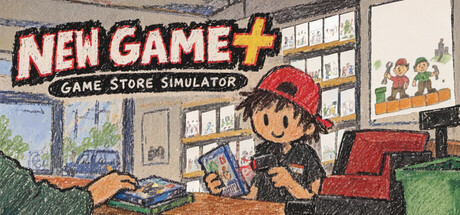


Build and run your own video game store through the console generations. Choose what to stock, make the shop your own, and buy, repair and resell used games. Handle midnight launches and head office, with shelves full of games and consoles you'll recognise.

Sign in to add this item to your wishlist, follow it, or mark it as ignored

Coming Soon To Early Access

The developers of this game intend to release as a work in progress, developing with the feedback of players.

Note: Games in Early Access are not complete and may or may not change further. If you are not excited to play this game in its current state, then you should wait to see if the game progresses further in development. Learn more

What the developers have to say:

Why Early Access?

“New Game+ is a parody retail-sim about running a video game store across five console eras. It's built by a solo dev, and it's at the size and complexity where I can't sensibly playtest it alone.

The game has 12 customer archetypes, a skill tree with twelve categories of upgrades, game repair minigames, a trade-in pricing loop, and a rolling era catalog that shifts what's on the shelves as time passes.

The systems interact in ways that surface real edge bugs and cases only when many players are actually playing.”

Approximately how long will this game be in Early Access?

“I plan to be in Early Access roughly 8 to 12 months, with the exact length dependent on how many of the later eras and systems we ship and how the community reacts to each major update.

As a solo developer learning how to develop my first game, I'd rather take the time to do the later eras justice than rush to a 1.0 that compromises them. If the project moves faster than expected, I'll exit Early Access sooner; if community feedback opens up directions worth exploring, I stay in Early Access longer; keeping the store page and roadmap notes up to date as that picture firms up.”

How is the full version planned to differ from the Early Access version?

“ I plan to use the Early Access period to expand the game in several directions:

- More eras: Early Access launches with the early-era retail experience playable end to end. I plan to fill out later eras with the catalog, customer behavior, hardware, and storefront aesthetics specific to each.

- More repair depth: One repair minigame is fully fleshed out at Early Access launch. I plan to ship distinct repair experiences for the other console families (different tools, different procedures, different failure modes).

- Deeper progression: I plan to expand the skill tree, the cash-upgrade tree, and the long-term store-evolution mechanics so the back half of a campaign feels as rich as the early game.

- More employee depth: I plan to grow the employee system (hiring, training, autonomy levels, specialization) into a more meaningful part of mid-to-late-game play.

- More cosmetic and customization options: I plan to add more wall and floor materials, furniture variants, signage, and visual personalization tools so each player's store feels distinct.

- Polish across the board: art, UI, audio, performance, accessibility, and localization will all get continued attention based on what players surface.

I'll also be responsive to suggestions and pain points I hear from the community. Some of the most valuable changes I end up making probably aren't on this list yet.”

What is the current state of the Early Access version?

“ At Early Access launch, the game includes:

- A fully playable retail loop: trading in used games, grading and pricing them, shelving them, recommending titles to customers, ringing up sales, handling demanding archetypes, dealing with returns and complaints, paying rent, and finishing each in-game day with a graded performance report.

- Multiple customer archetypes (collectors, bargain hunters, gift buyers, traders, demo-kids, knowledge seekers, recommendation seekers, midnight-launch crowds, and more), each with their own behavior, dialogue, and economic effects.

- A twelve-category skill tree with respec, plus a separate cash-upgrade path for the physical store.

- Repair minigames for damaged cartridges and discs, accessible directly from the trade-in pricing flow.

- A trend and demand system that makes some games hotter than others based on what's selling, what's in season,
and what platforms have active hardware.

- A tutorial that walks new players through the loop across the first several in-game days.

- A day/night cycle with era-specific lighting, in-game news magazine, online orders, marketing decisions, and a
back-office computer for managing the business.

- Customization for walls, floors, ceiling, shelving, signage, and counter materials so the player can shape the
look of their store.

- A functional first era with its full catalog, hardware, and storefront feel; later eras are present in skeleton
form and continue to fill out during Early Access.

There are rough edges — that's expected for Early Access. I update the game regularly, and a small number of
features (additional repair experiences, later-era catalogs, some employee depth) are intentionally not yet
complete because they're the kinds of things community feedback will shape.”

Will the game be priced differently during and after Early Access?

“I plan to gradually raise the price as I ship more polished professionally-made assets and content, additional eras, more repair minigames, and broader progression depth.

Players who come in during Early Access will be supporting me with development financially and emotionally at a lower entry point than the full release is likely to carry.

I'll communicate price changes ahead of time through Steam news posts so the community always knows what to expect.”

How are you planning on involving the Community in your development process?

“ I take community feedback seriously, it's one of the main reasons I'm going to Early Access in the first place.

Specifically:

- Discord community for real-time conversation, focused channels (bug reports, balance, feature ideas, dev logs, screenshots), and a closer-knit space where I can have ongoing back-and-forth with players who want to be more involved.

- Steam Discussions as the primary public-facing channel. I read it, and I respond directly when I can. Bug reports, balance suggestions, feature requests, and confusion about systems all belong there.

- Steam Community Hub news posts when meaningful updates ship, so players know what changed, what's coming, and
what I'm currently working on.

- In-game feedback for shorter signals — quick reactions, "this thing felt unfair," "I didn't understand this UI" without making people leave the game to share.

- Regular update cadence: I aim to ship meaningful updates on a steady rhythm rather than disappearing for months.
When something is going to take longer, I'll say so.

- Transparency about scope: when I decide to cut something, change direction, or extend a feature, I'll explain
why on the news feed and in Discord instead of letting things quietly slip.”
Read more

Download New Game+ - Game Store Simulator Demo

Join the New Game+ - Game Store Simulator Playtest

Request access and you’ll get notified when the developer is ready for more participants.
This game is not yet available on Steam

Planned Release Date: December 2026

Interested?
Add to your wishlist and get notified when it becomes available.
 
See all discussions

Report bugs and leave feedback for this game on the discussion boards

About This Game

Build and run your own video game store, starting in the late nineties and moving through five console generations. Pick the games, consoles and accessories you want to sell, work out where everything goes, and open the door.

New consoles arrive, customers start asking for different games, and what's on your shelves has to change with them. There's a launch night to get ready for, trade-ins coming across the counter, and a bench out back for the ones that come in broken.

Make the store yours

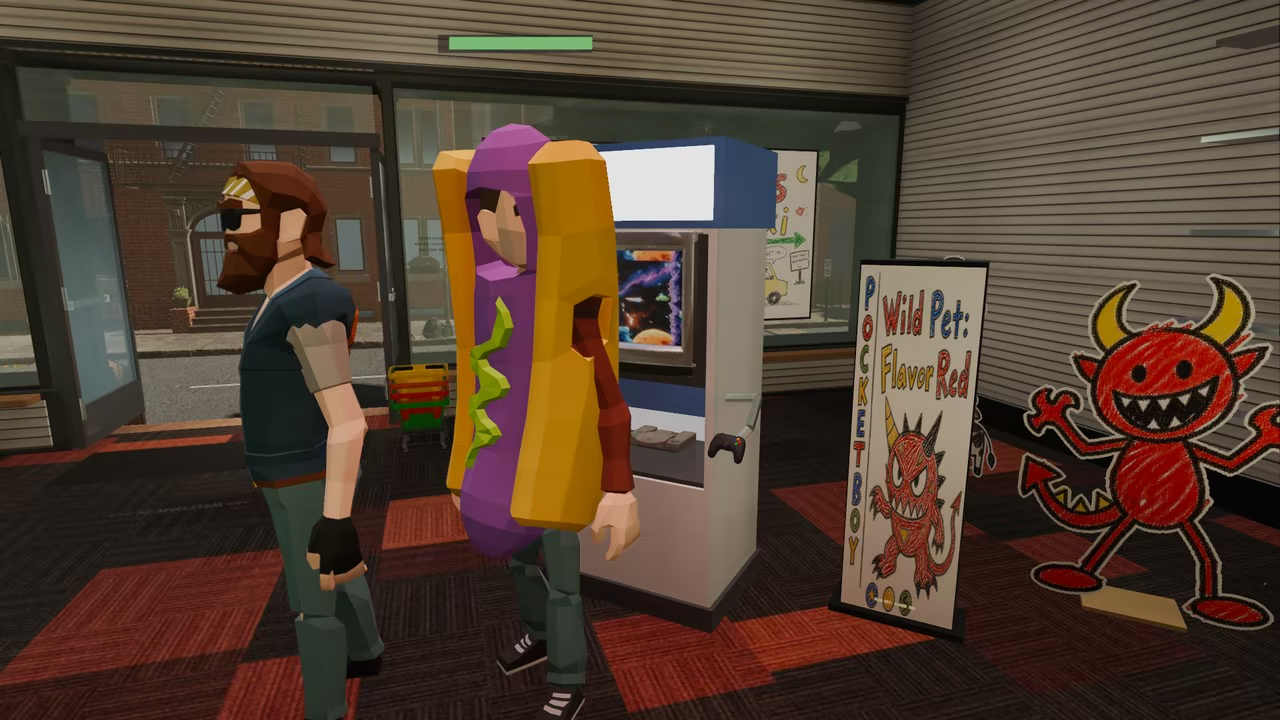
Shelving, gondolas, glass cases, the counter, the paint on the walls: you place all of it, then decide what goes where. Put the new releases where people see them first, give each console its own display, cover the wall in posters, and keep a glass case for the special editions and the rare finds so they don't get lost in the used bin. The store in these shots was laid out by hand with the tools in the game.

New consoles, new shelves

Get the new console in, get licensed to sell for it, and make room for its games. Every generation shifts what people come in for: last year's biggest cartridge turns into trade-in stock, a new format shows up on the wall, and there's a midnight launch to build the whole week around. Over 130 games across fourteen consoles, all of them parodies, and you don't need to catch every reference to enjoy reading the box art.

Trade-ins and the bench

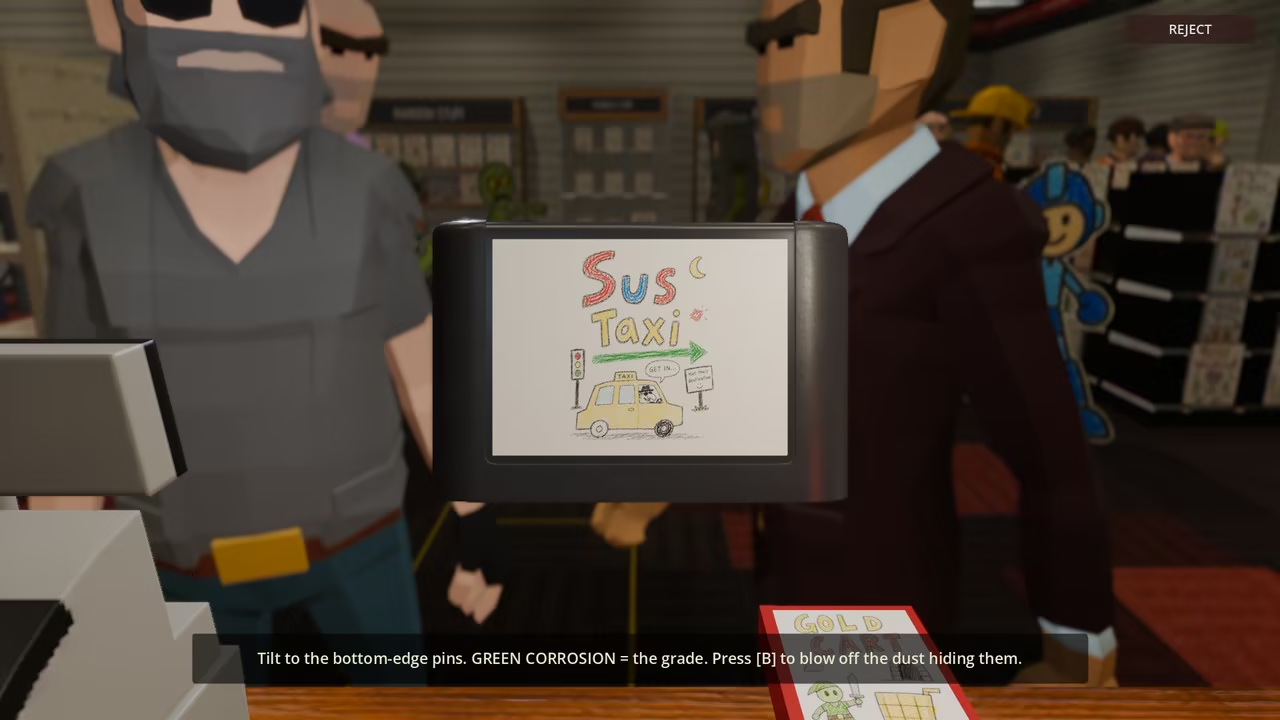
A broken game can still be worth buying. Turn the cartridge over, check the pins, put the label under the UV light if something looks off, then grade it and make your offer. The rough ones go to the bench: open the shell, clean the contacts, swap the dead save battery. Get it working and it goes back on the shelf at a price you set with the sticker gun.

The counter

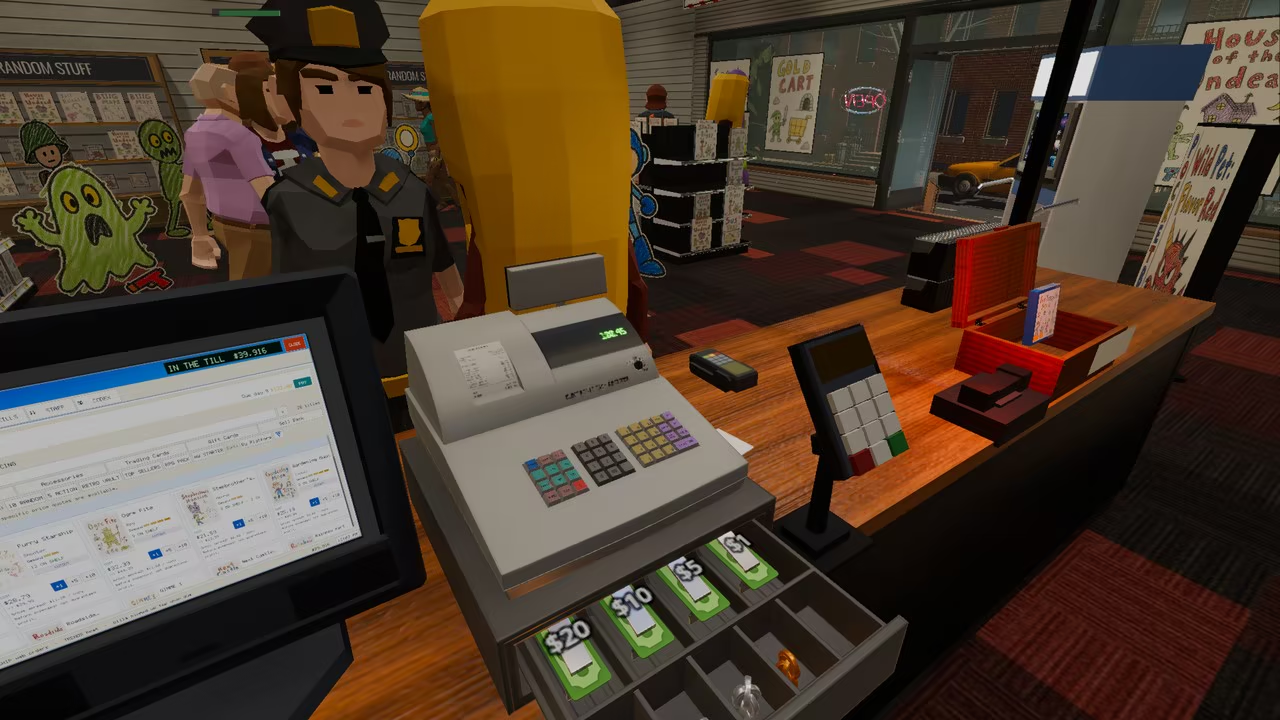
Ring up the games, count the change, and ask about the membership. Yes, even when they came in for one used game. Some customers know exactly what they want; the rest will tell you what they liked last and let you walk them to the right shelf. Hire staff when you can't be in two places, keep the rent paid, and expect head office to have opinions about your numbers when you'd rather be talking about the new console.


There's a free demo covering the store's first days.

AI Generated Content Disclosure

The developers describe how their game uses AI Generated Content like this:

This game was developed by a solo beginner from the ground up. AI tools were used during development to assist with coding, learn new software, generating some audio, and create in-game product and console artwork. All game design, systems, and creative direction are my own work.

System Requirements

    Minimum:
    • OS: Windows 10 64-bit
    • Processor: Intel Core i5-4460 / AMD FX-6300
    • Memory: 8192 MB MB RAM
    • Graphics: NVIDIA GTX 960 / AMD R9 280
    • DirectX: Version 12
    • Storage: 2000 MB MB available space
    Recommended:
    • OS: Windows 10/11 64-bit
    • Processor: Intel Core i5-8400 / AMD Ryzen 5 2600
    • Memory: 16384 MB MB RAM
    • Graphics: NVIDIA GTX 1060 / AMD RX 580
    • DirectX: Version 12
    • Storage: 2000 MB MB available space
Review Filters