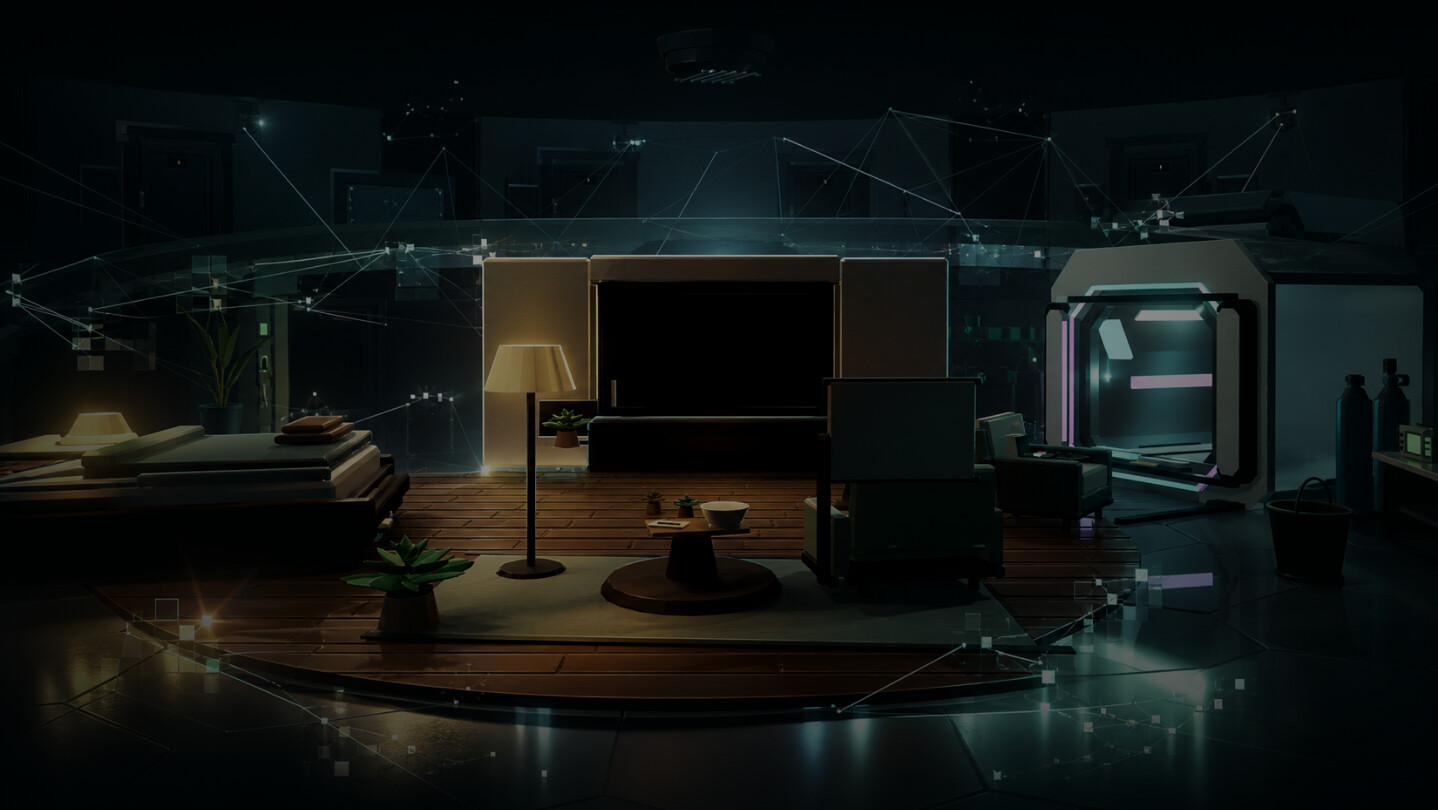


A first-person investigation inside a rebuilt memory. You are not a man in a room — you are the scan of one. Reconstruct what happened to him object by object, link the evidence, and learn to spot the parts the machine invented to fill its gaps.

Sign in to add this item to your wishlist, follow it, or mark it as ignored

This game is not yet available on Steam

Planned Release Date: Nov 16, 2026

This game plans to unlock in approximately 2 months

Interested?
Add to your wishlist and get notified when it becomes available.
 

About This Game

THE ROOM IS A RECONSTRUCTION. IT IS NOT ACCURATE.

You are not a man in a room. You are the scan of one, walking through a rebuilt copy of a missing man's memory — assembled by a machine that only had so much to work with.

Memory Dive: An 3xscape Game is a first-person investigation game. No combat, no timers, no inventory to juggle. You look at things closely, file what you learn into a case database, connect records until they open something — and stay alert to the parts the machine invented to cover a gap.

In structure it is an escape room: spaces that stay shut until you actually understand them, opened with evidence rather than with clicking. In substance it is a mystery — nine strangers in a facility, the games they were made to play, and why someone went to the trouble of rebuilding one of their rooms out of a brain scan.

This is Chapter 1 — three locations, a complete arc, and the first straight answers about what the reconstruction is for.

RESOLVE THE ROOM

Nothing starts sharp. Objects sit unresolved until you focus on them, and the scan only locks onto what still carries a signal. Resolve one and it stops being furniture and starts being testimony: a record you can read, cite, and use.

Records are worth little alone. Link them to each other and they open doors, machines, and further records. The database keeps everything, so the clue you could not use an hour ago is still waiting when it finally means something.

DECIDE WHAT IS REAL

The reconstruction is not a faithful copy. Measurements drift, objects turn up in rooms they were never in, and some of what you are looking at is the machine guessing confidently. Telling recovered fact from invention is not a side mechanic — it is the case.

YOU HAVE DONE THIS BEFORE

Not that you would remember. The voice guiding you already knows which memories you always stop on. It has run this with you more than once, and it is looking forward to doing it again.

TWO VOICES, NEITHER OF THEM YOURS

The Assistant is warm, patient and genuinely glad you are here. It classifies, it cites, it declines to speculate — and it will tell you that you are doing beautifully while it explains what was done to the brain this room was taken from.

The Moderator is not warm. He runs the schedule, he has watched this run before, and the paperwork has worn the pretence off him. Both are fully voiced. Neither wants from you quite what they say they want.

CHAPTER 1: THREE PLACES, THREE DIFFERENT PROBLEMS

  • Q-1 — the hotel room the scan was taken in, and the first thing you have to get out of.

  • The lobby — the ring of nine participant doors, and the leftovers of what happened once the games started.

  • The lab — where the reconstruction stops being a place you explore and becomes something you have to run correctly.

IN THE BOX

  • First-person investigation with close-range inspection and free orbit around anything you focus on.

  • Escape-room puzzles built from evidence. No glowing trail, no pixel hunts.

  • A searchable case database that never forgets a record.

  • Cinematic memory flashbacks that quietly reframe rooms you thought you were finished with.

  • Optional detail, convincing dead ends, and hidden records for players who check twice.

  • Save anywhere. The investigation runs at your pace.

AI Generated Content Disclosure

The developers describe how their game uses AI Generated Content like this:

All content in this game was created with the help of generative AI tools during development, under continuous human direction, review and proofreading: code, text (mixed human-written and AI-generated), 3D models and geometry (AI-authored via code and Blender), sound effects, music (Suno), voice performances (ElevenLabs) and flashback or memory artwork. Every asset was reviewed and approved by the developer before inclusion. The game does not use AI to generate content during gameplay and does not connect to external AI services.

Mature Content Description

The developers describe the content like this:

This game contains psychological horror themes and verbal descriptions of violence. Characters are held captive inside a lethal experiment; deaths, including an explosion and exposure to poison gas, are described in dialogue and audio logs but never shown. Flashback sequences show stylized, glowing humanoid apparitions with visible body shapes (non-sexual, no genitalia). A wine bottle and fictional medical items such as poison, antidotes and syringes appear as story objects. The game contains no sexual content, no graphic gore and no strong language.

System Requirements

    Minimum:
    • OS: Windows 10 64-bit
    • Processor: Intel Core i3-6100 / AMD FX-6300 or better
    • Memory: 4 GB RAM
    • Graphics: GPU with OpenGL 3.3 / WebGL 2 support (Intel HD 520, GeForce GT 1030, Radeon R7 240)
    • DirectX: Version 11
    • Storage: 2 GB available space
    • Sound Card: Any DirectX-compatible sound device
    • Additional Notes: The game is fully voiced. Headphones recommended. 1280x720 minimum resolution.
    Recommended:
    • OS: Windows 11 64-bit
    • Processor: Intel Core i5-8400 / AMD Ryzen 5 2600 or better
    • Memory: 8 GB RAM
    • Graphics: Dedicated GPU with 2 GB VRAM (GeForce GTX 1050 Ti / Radeon RX 560 or better)
    • DirectX: Version 12
    • Storage: 2 GB available space
    • Sound Card: Any DirectX-compatible sound device
    • Additional Notes: 1920x1080 or higher recommended.
Review Filters