

A gentle mystery about a village that cannot let go of its dead. As a journeyman necromancer, you lay six spirits to rest by listening to them, investigating what holds them, and making your case with three objects in a ritual circle. No combat, no timers, no fail states.

Zaloguj się, aby dodać tę pozycję do listy życzeń, zacząć ją obserwować lub oznaczyć jako ignorowaną

Polski język nie jest obsługiwany

Ten produkt nie obsługuje twojego lokalnego języka. Przed zakupem zapoznaj się z listą obsługiwanych języków, która znajduje się poniżej.

Ta gra nie jest jeszcze dostępna na Steam

Planowana data wydania: październik 2026

Interesuje cię ten produkt?
Dodaj go do swojej listy życzeń i otrzymaj powiadomienie, gdy stanie się dostępny.
 

O tej grze

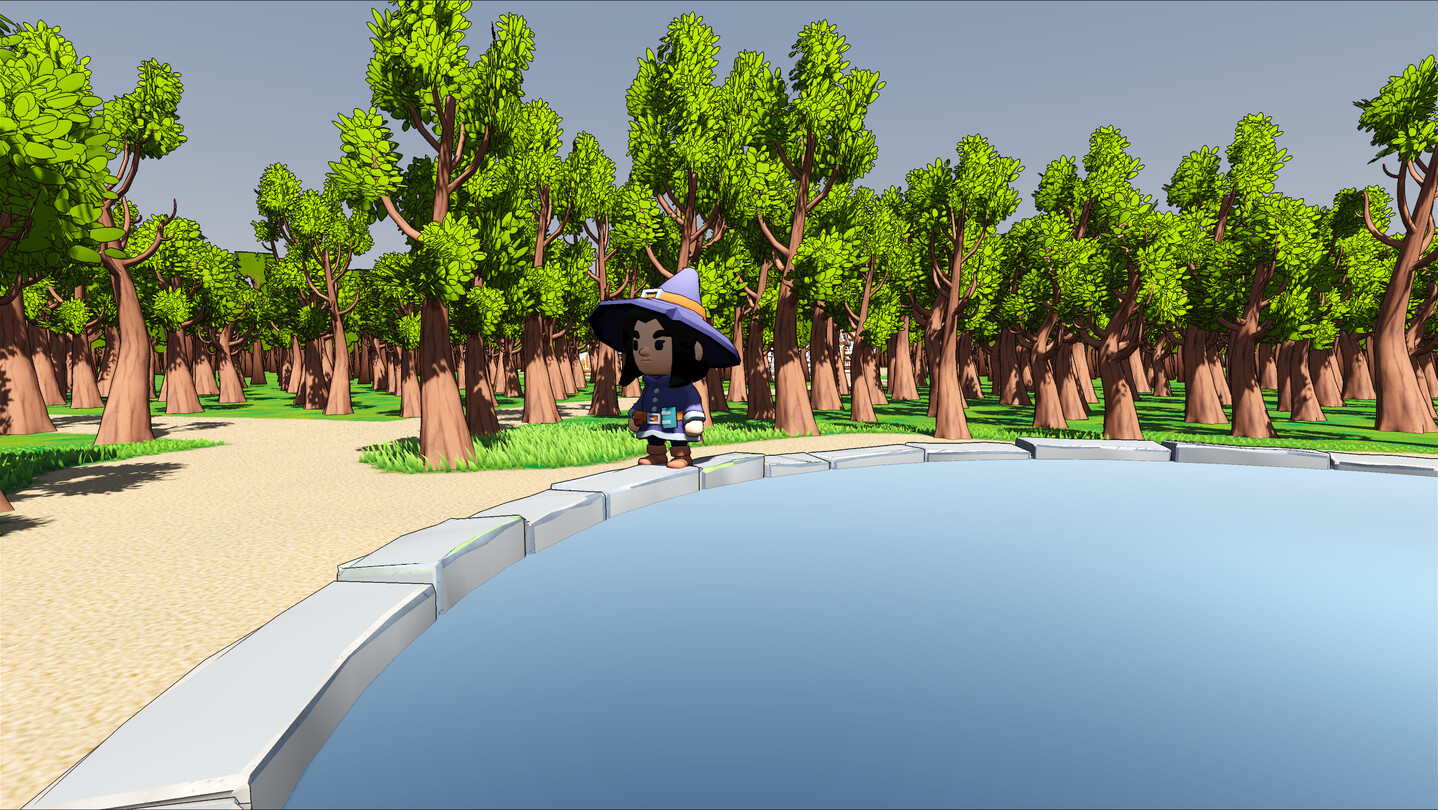
Cozy Necromancy is a gentle mystery about a village that cannot let go of its dead.

You are a journeyman necromancer, freshly graduated and posted to Willowmere on your first assignment. The spirit waypoint beneath the village, the Moonwell, was sealed thirty-five years ago, and the dead have been collecting behind it ever since. None of them are hostile. All of them are stuck.

There is no combat in this game. You cannot fight a ghost into peace.

Listen first

Every bound spirit is a person with an unfinished sentence: a twin who blames herself for a fire, a knight who kept the wrong oath, a hedge witch the village burned and later thanked. You travel with them, watch what they react to, read the archive someone misfiled, and ask the living about the things they would rather not say.

The ritual is an argument

When you think you know what binds a spirit, you say it with objects: three items placed in the ritual circle. What matters is what they mean... a locket, a scorched hinge, a letter never sent. Get it right and they can move on. Get it half right and they will tell you so. Nothing is ever consumed, so you can always try again.

A village that feels alive

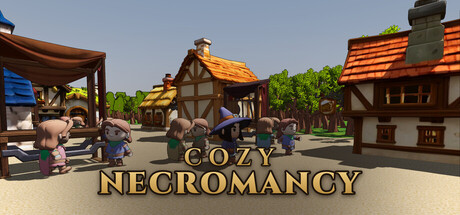
Seven villagers with their own routines, their own gossip and their own reasons to be somewhere in the afternoon — and a square full of neighbors talking among themselves.

Six spirits and one sealed well

Six companion stories, each one resolvable on its own, and one older question underneath them all: who sealed the Moonwell, and what were they protecting?

Quiet by design

No timers, no fail states, no combat, no resource management. Packing puzzles when you want them. Hints when you are stuck, and a journal that remembers what you have worked out.

Talk to people, not to a server

The villagers' small talk, and the oracle's riddles when a ritual goes wrong, are written on the spot by a small language model that runs entirely on your computer. The model ships inside the game. The story itself is written by hand: the model is trusted with the weather, not the plot.

Fair and quiet about it

  • No ads, no microtransactions, no account.

  • Plays fully offline. Nothing about you is collected by us.

  • Keyboard and mouse.

Oświadczenie w sprawie treści generowanych przez SI

Producenci opisują, jak ich gra korzysta z treści generowanych przez SI, w następujący sposób:

A small language model (Google's Gemma 3 270M) runs entirely on the player's computer, with no network connection. It writes short lines of villager small talk, the ritual oracle's one- or two-sentence hint after a failed ritual, and routine filler records in the in-game archive, and it chooses which of our pre-written dialogue lines fits the moment.

Guardrails: the player never types to the model — there is no text input anywhere in the game. Every prompt is a fixed template we wrote, filled in from game state such as a character's name, the time of day and the current quest. Output is short by construction (hard token caps, and lines over a few words are cut or discarded); lines that read as narration, stage directions or an assistant speaking are rejected; dialogue choices are constrained to our own authored lines. Any failure falls back to written lines. Players can turn the model off in Settings, and the game plays identically on written lines alone.

Wymagania systemowe

Windows
macOS
SteamOS + Linux
    Konfiguracja minimalna:
    • Wymaga 64-bitowego procesora i systemu operacyjnego
    • System operacyjny: Windows 10 64-bit
    • Procesor: 4 threads, x86-64 with SSE4.2 (Intel Core i5-4460 / AMD Ryzen 3 1200)
    • Karta graficzna: Vulkan-capable, 2 GB VRAM (NVIDIA GTX 950 / AMD RX 460 / Intel UHD 620)
    • Miejsce na dysku: 2 GB dostępnej przestrzeni
    • Karta dźwiękowa: any
    Konfiguracja zalecana:
    • Wymaga 64-bitowego procesora i systemu operacyjnego
    • System operacyjny: Windows 11 64-bit
    • Procesor: Intel Core i5-8400 / AMD Ryzen 5 2600
    • Karta graficzna: NVIDIA GTX 1060 / AMD RX 580, 4 GB
    • Miejsce na dysku: 2 GB dostępnej przestrzeni
    • Karta dźwiękowa: any
    Konfiguracja minimalna:
    • Wymaga procesora Apple
    • System operacyjny: macOS 13 Ventura
    • Procesor: Apple Silicon
    • Karta graficzna: Vulkan-capable, 2 GB VRAM (NVIDIA GTX 950 / AMD RX 460 / Intel UHD 620)
    • Miejsce na dysku: 2 GB dostępnej przestrzeni
    • Karta dźwiękowa: any
    Konfiguracja zalecana:
    • Wymaga procesora Apple
    • Karta graficzna: NVIDIA GTX 1060 / AMD RX 580, 4 GB
    • Miejsce na dysku: 2 GB dostępnej przestrzeni
    • Karta dźwiękowa: any
    Konfiguracja minimalna:
    • System operacyjny: Ubuntu 22.04 or SteamOS 3, 64-bit
    • Procesor: 4 threads, x86-64 with SSE4.2 (Intel Core i5-4460 / AMD Ryzen 3 1200)
    • Karta graficzna: Vulkan-capable, 2 GB VRAM (NVIDIA GTX 950 / AMD RX 460 / Intel UHD 620)
    • Miejsce na dysku: 2 GB dostępnej przestrzeni
    • Karta dźwiękowa: any
    Konfiguracja zalecana:
    • System operacyjny: Ubuntu 22.04 or SteamOS 3, 64-bit
    • Procesor: Intel Core i5-8400 / AMD Ryzen 5 2600
    • Karta graficzna: NVIDIA GTX 1060 / AMD RX 580, 4 GB
    • Miejsce na dysku: 2 GB dostępnej przestrzeni
    • Karta dźwiękowa: any
Filtry recenzji