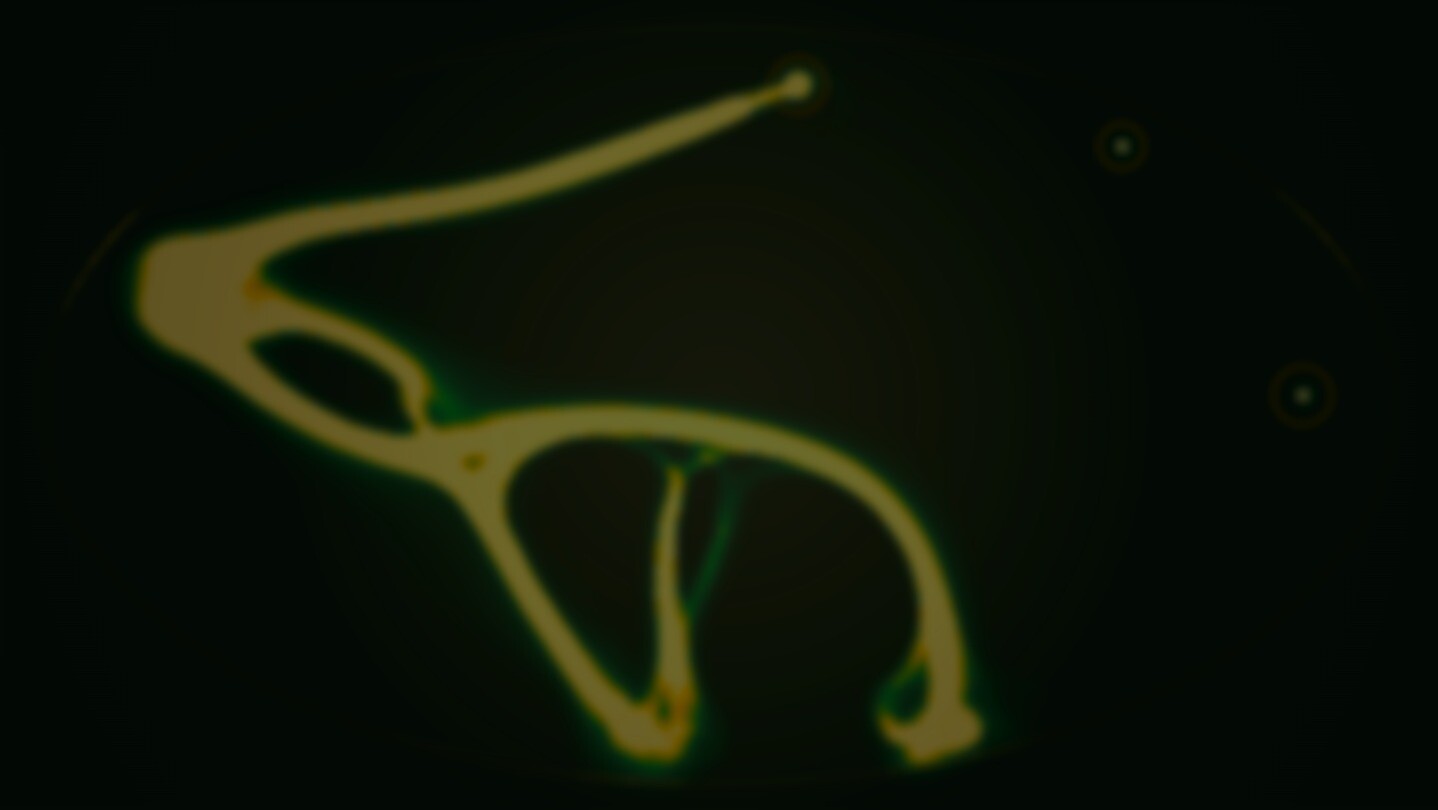


An incremental idle sim with one input: drop glucose. A live slime-mold simulation finds it, grows, and swallows five habitats, from a petri dish to a city. From the forest on, breed strains no one else has, dry them to a code, and send them as a picture.

Sign in to add this item to your wishlist, follow it, or mark it as ignored

This game is not yet available on Steam

Planned Release Date: Q4 2026

Interested?
Add to your wishlist and get notified when it becomes available.
 

About This Game

Drop glucose. That is the whole input.


A live physarum simulation reaches for it, decides what to digest first and which strands harden into trunk lines, and keeps working while you are away.

In eastern Oregon a single fungus spans nine square kilometers. It is over 2,000 years old and it is the largest organism on Earth. The game measures your area against that record the whole way.

Upgrades change behavior, not just a number
Metabolism, growth speed, chemical sensing, mycelial density. After every purchase you can see the colony move differently. Mutations always cost something: melanized armor costs digestion, bioluminescence costs enzyme regen.

Five habitats, five different physics

A petri dish it climbs out of on its own. A rotting log you hollow from the inside. A night forest where betting on forecast rain pays. A root network where you trade sugar with trees. A 3D city where coverage becomes a multiplier.

Idle, with an ending
Carcasses decompose into income while you are away. There is a real ending at 6 to 10 hours, and prestige asks a real question: which mutation goes to the next generation, price included.

The culture shelf (beta)

From the forest on, grow strains in side dishes. Every strain is measured in a standard trial and carries a fingerprint, so no two saves hold the same one. Rare behaviors come straight from research on real physarum: anticipation, trail memory, habituation, light avoidance, fusion killers, apogamy.

Dry a strain into a 76-character code or a card image. Whoever revives it gets its traits. Prices, timings and rare-trait odds will move through November based on what players do.

A free dish

Lay oats in any shape, a word, a map, and watch the organism draw it. Nothing here is scripted. Save it as an image or a 15-second clip.

A research log you write yourself
Each entry is stamped with the day, the date, the habitat and your area. Add one photo. Export the whole log as a single page.

Nothing is drawn
Every structure on screen comes from thousands of agents simulated each frame. The sound is synthesized in code. No colony ever looks the same twice.

Field notes, 33 of them
The Tokyo subway experiment, the maze-solving slime mold, the black fungi on the Chernobyl reactor walls. The real research behind every system, and where the game simplifies, it says so.

The free demo covers the first two habitats, the petri dish and the rotting log, about 20 minutes. The forest, the root network, the city and the culture shelf are in the full game.

System Requirements

    Minimum:
    • Requires a 64-bit processor and operating system
    • OS: Windows 10 64-bit
    • Processor: Dual-core 1.5 GHz or better
    • Memory: 2048 MB RAM
    • Graphics: Any GPU with hardware acceleration (Intel HD 4000 or later)
    • Storage: 1000 MB available space
    Recommended:
    • Requires a 64-bit processor and operating system
    • OS: Windows 10/11 64-bit
    • Processor: Quad-core 2.0 GHz
    • Memory: 4096 MB RAM
    • Graphics: Any dedicated or integrated GPU, 2015 or later
Review Filters