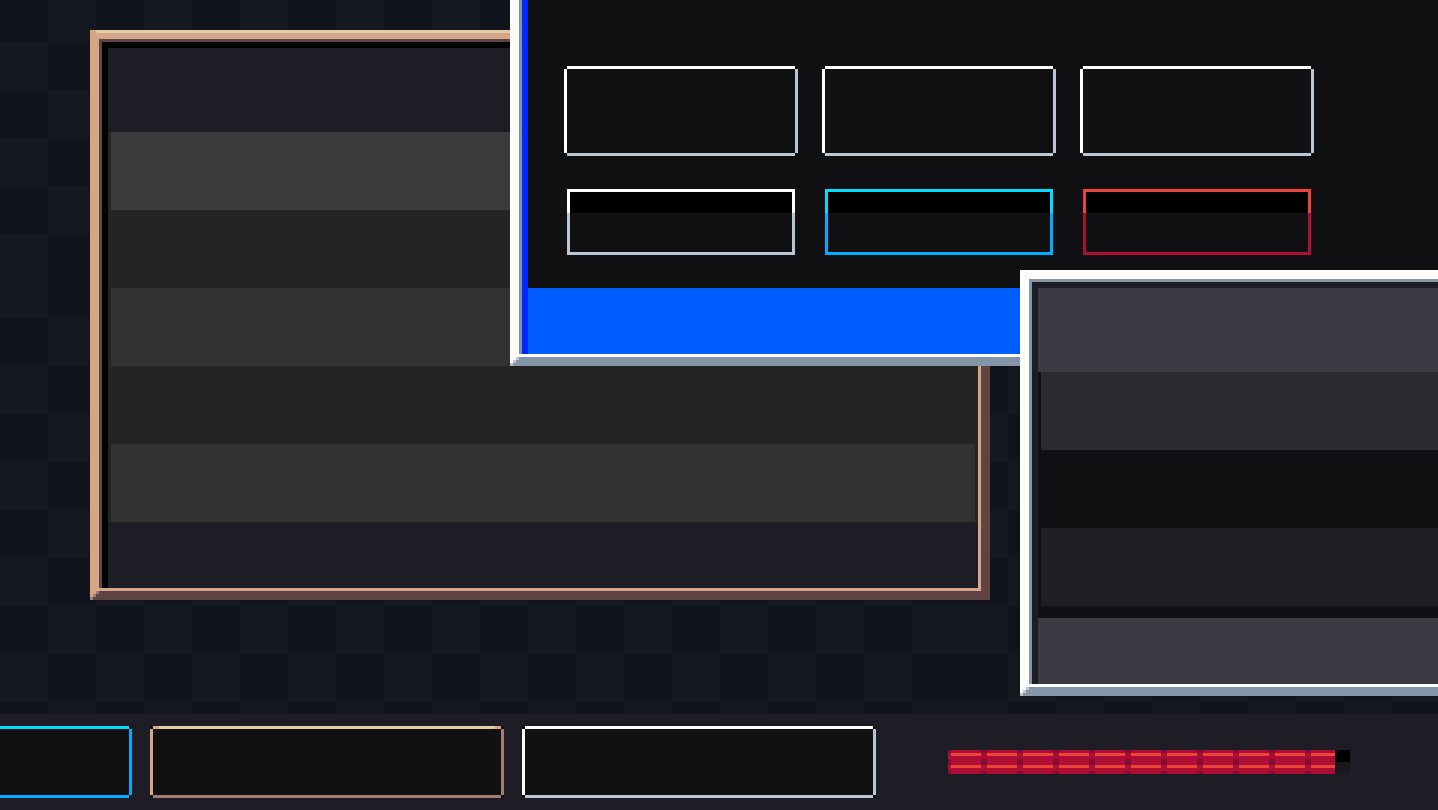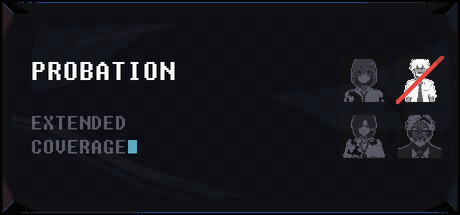

You triage requests inside a corporate OS that lies by omission: cover a window and it keeps showing yesterday's data, perfectly confident. Every case hides in the gap between two windows, and someone in this building is counting on you not to look. Meridian is delighted with your progress.

Sign in to add this item to your wishlist, follow it, or mark it as ignored

Download PROBATION: EXTENDED COVERAGE Demo

This game is not yet available on Steam

Planned Release Date: Nov 1, 2026

This game plans to unlock in approximately 8 weeks

Interested?
Add to your wishlist and get notified when it becomes available.
 

About This Game

One shift. One screen. The windows overlap - and whatever you cannot see starts lying to you.

You are on probation at Meridian, Internal Resolution, Tier 1. Extended Coverage, 18:00 to 02:00, formally voluntary. You have an Employee ID instead of a name, a queue that refills faster than you empty it, and SYNERGY OS 4.2 - an internal tool that has been patched for years and is proud of its version number. Somewhere in this building, people are signing work orders they could not have signed. Nobody has asked you to look into it. You are simply the last person the paperwork passes through.

THE WORK

Every ticket is a small case, and the answer is never in the ticket. It is in the contradiction between two other windows: a work order signed by someone who was on approved leave, a badge that opened a floor it was never cleared for, a letter whose signature block does not match the last eight from the same author. Pull both records into evidence, then approve, deny, escalate, or hold. Saying yes is easy. Saying no has to be justified with a reason code, picked from twenty-two that are almost identical on purpose. A refusal backed by two records that contradict each other is worth three times a merely correct answer. Nobody in this company will ever call that detective work. There is a form for it, so it is a form.

THE RULE

A window covered by more than 30% stops syncing. It does not warn you. It does not grey out. It keeps showing the data it had the last time you looked, with complete confidence, and the only tell is a timestamp in a footer you were not watching. The desk is 1920x1048. Everything you need does not fit on it, and that is not an oversight, that is the game. Stale is not only a number that moved: a letter you have already read can be extended while its window is covered, and the Inbox goes on filing it as read until it can see the record again. Sooner or later you will refuse the wrong person on evidence that was true twenty minutes ago. It will be filed under your badge, and it will stay filed.

YOUR DESK IS A BUILD

Sixteen programs, a memory budget, and a limited number of slots. Between shifts you decide what you will not see tonight. The AI that highlights contradictions costs 39% of your memory and is wrong about one hint in six - and a wrong hint looks exactly like a right one, because a hint that admitted its own doubt would not be a product. The legacy search always tells the truth and takes eight seconds to do it. What is not installed does not exist: not "harder to find", not "hidden behind a check". Every working build is blind in a different direction, and none of them clears a shift at 100%. You choose your blind spot before the evening starts, and then you work inside it for eight hours.

WHAT THIS GAME DOES NOT HAVE

No jump scares. No monsters. No chases. No characters and no dialogue - the only faces here are badge photographs inside a personnel record, and a record can be out of date. No fake Windows dialogs. No explanation at the end. Nothing here is ever loud. The horror is the distance between what the system says and what the data shows, and you are the one who has to close it. Nothing will lunge at you out of the dark. Something will simply, quietly, turn out to be true - and it will still be true tomorrow, in writing, with a procedure number on it.

THE COMPANY WOULD PREFER A DIFFERENT ANSWER

Once an evening, from the third shift on, the records say deny and a standing notice from another department asks you to approve - politely, with a procedure number and no signature. Your two scores move in opposite directions: one measures whether you did as you were told, the other whether you were right. Obedience is cheaper. Nothing on the screen ever tells you which column is the one that counts, and you find that out only when somebody reads both of them back to you. Some evenings the building wants something on the spot: a mandatory procedural check, numbered and timed, lands in the middle of the desk and covers whatever was under it. You can drag it somewhere cheaper. You cannot close it, and the clock does not stop while you work it out.

MERIDIAN IS DELIGHTED WITH YOUR PROGRESS

Nothing here is ever threatening and nothing is ever explained. The notifications congratulate you. "Great news! Your Compliance Score is trending up" slides in seconds after you deny access to someone who is dead in one database and still badging onto the third floor in another. The wellness program grants a fourth pause on shift 3, extends it on shift 5, takes one back on shift 7, and by shift 9 it is called Peak Season Protocol and there are none. People leave the personnel database and their tickets keep arriving, on time and correctly formatted. Somewhere around the seventh evening the workstation stops behaving like a tool, and the tone of the notifications does not change at all.

THE MAIL IS ADDRESSED TO THE ASSIGNMENT

Correspondence in this building is filed against a post, not a person, so from the second evening a routing mailbox starts writing to yours. Every letter is ordinary, and every header can be checked against tonight's roster, the clock, or a revision counter - and one field an evening does not survive the check. A distribution list carrying a badge that is not in the building. A read receipt stamped eight minutes before delivery. An enclosure taken at an hour that has not happened yet. You answer with a form code and never with words: acknowledge, return, forward, hold, or no reply due. Attach a record if you like; nothing requires it and nothing thanks you for it. On the last evening a reply arrives in a closed thread, to a disposition filed under your name that you did not file - and the shift report counts it among yours.

NINE SHIFTS, AND ONE A DAY AFTER THAT

156 tickets across nine evenings, about three hours. Exactly one new kind of contradiction or one new interface violation per shift - never two. Failing a shift does not restart the campaign: you keep your progress and start the next evening from a worse place, which is also how it works out here. Daily Shift picks one evening from the date, so it is the same evening for everyone playing today, and gives you a single line to compare with.

ACCESSIBILITY

Unlimited pauses, a slower clock, quiet failures, reduced motion, three colour vision palettes with a non-colour state marker on every window, a brightness and a phosphor-glow slider, toasts that can stop counting as occlusion, full key rebinding, and four separate volume sliders. None of it changes the simulation: a recorded shift played with accessibility on matches the same shift played without it.

DISPLAY

The desk is one fixed screen of 1920x1080 and the game never reflows it. It scales the finished frame to your monitor as a whole, so a pixel stays square; on 1920x1080 and 3840x2160 it is exact. A display smaller than 1920x1080 will letterbox it.

System Requirements

Windows
SteamOS + Linux
    Minimum:
    • OS: SYNERGY OS 4.2 (or literally anything from this decade, we're not picky, HR isn't watching)
    • Processor: Anything that can multitask like a stressed probationary employee juggling six overlapping windows
    • Memory: 1024 MB RAM
    • Graphics: Anything that can render fluorescent lighting and quiet despair
    • Storage: 200 MB available space
    • Additional Notes: If your PC can run a spreadsheet and quietly judge you for it, it can run this game. Data may go stale if left uncovered for too long. Same goes for your GPU drivers.
    Minimum:
    • OS: Ubuntu 18.04 (or whatever distro your programmer friend flashed over the weekend)
    • Processor: Toaster processor or better (2005+)
    • Memory: 1024 MB RAM
    • Graphics: Any GPU that has ever dreamed of rendering a pixel
    • Storage: 200 MB available space
    • Sound Card: Anything capable of a single beep
    • Additional Notes: If your potato can boot Linux, it can run this game. If it can't, we recommend a more motivated potato.
Review Filters