

Build a tiny corner shop into a massive hypermarket in this 1–4 player co-op market simulator. Stock shelves, set prices, cook fresh food, serve customers, hire staff, automate your store and survive the chaos of running a retail empire together.

Sign in to add this item to your wishlist, follow it, or mark it as ignored

This game is not yet available on Steam

Planned Release Date: October 2026

Interested?
Add to your wishlist and get notified when it becomes available.
 

About This Game

Start with an empty little shop, a few shelves and barely enough money to keep the lights on.

Then make it huge.

Build, manage and expand your own supermarket in a 1-4 player co-op business simulator where every box unpacked, every customer served and every questionable business decision brings you one step closer to turning a tiny neighborhood store into a massive retail empire.

Work alone or bring your friends. Divide the jobs, make a plan… or completely ignore the plan and watch the store descend into beautifully profitable chaos.

Start Small. Grow Huge.

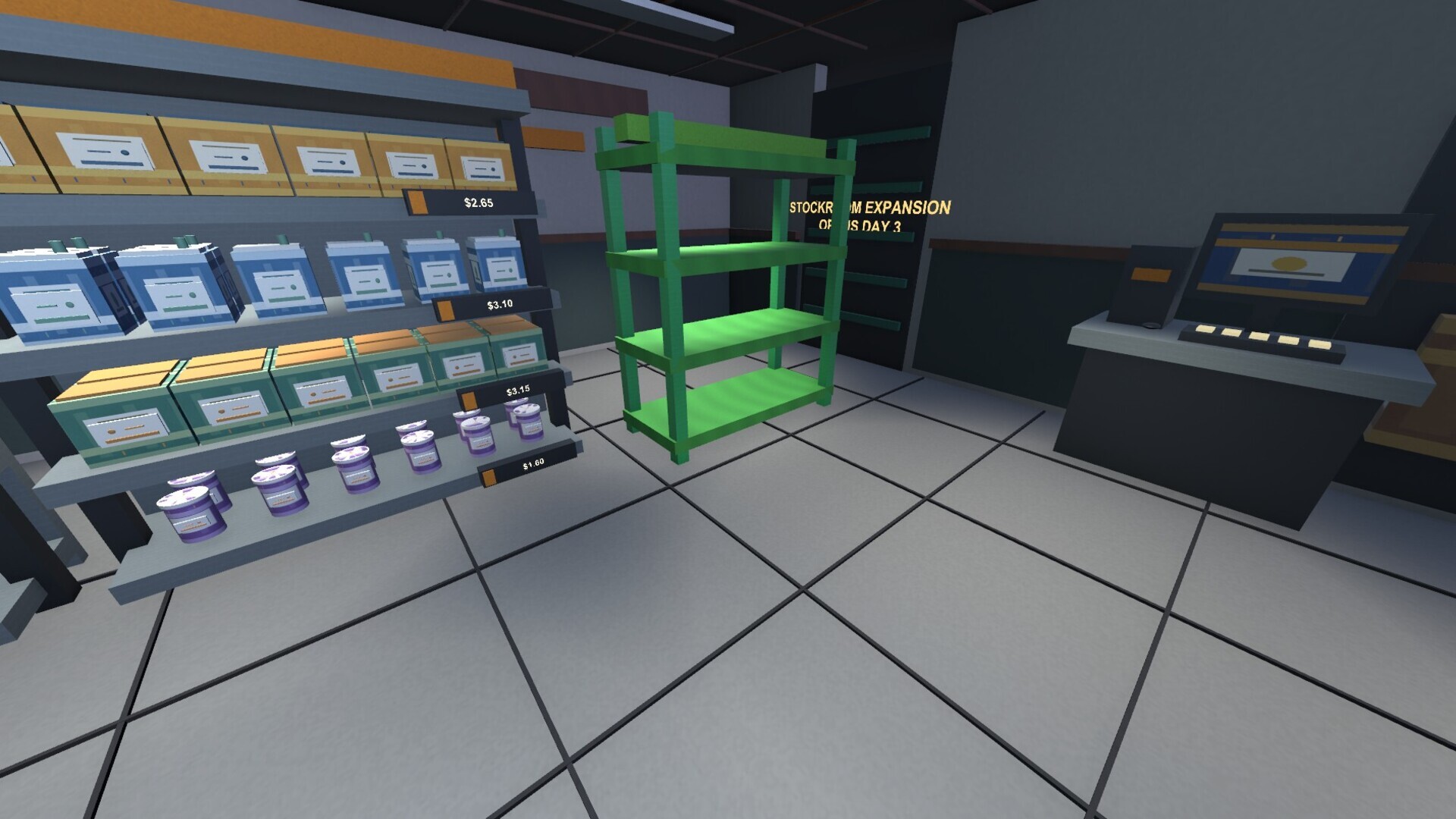
Your first store is nothing special: a small room, a checkout, a couple of shelves and a handful of products.

Every successful day gives you more opportunities to expand.

Unlock new rooms, increase your floor space, introduce new departments and gradually transform your humble corner shop into a full-sized supermarket - and eventually an enormous hypermarket filled with customers, employees and hundreds of products.

What begins as a tiny shop can eventually become a retail complex with warehouses, multiple departments, automated systems and more customers than you ever wanted to deal with.

Run the Store Together

Everything can be managed alone, but supermarkets are much more fun with friends.

Play with up to four players in online co-op and decide how to divide the work.

One player can operate the checkout while another restocks the shelves. Someone can manage deliveries while another prepares fresh food.

Or all four of you can abandon your responsibilities and chase a shoplifter through the store.

The choice is yours.

As the business grows, teamwork becomes increasingly important. Bigger stores mean more customers, more deliveries, longer queues and significantly more opportunities for something to go terribly wrong.

Stock Hundreds of Products

Order goods from suppliers, receive deliveries, carry boxes into storage and keep your shelves full.

Expand your catalogue from basic groceries into an increasingly large selection of products and departments.

Manage:

  • Groceries

  • Drinks and snacks

  • Fresh produce

  • Frozen food

  • Household products

  • Bakery goods

  • Prepared meals

  • Electronics

  • Clothing

  • Specialty departments

  • And much more

Decide which products deserve valuable shelf space, monitor demand and build a store that actually makes money.

Empty shelves mean unhappy customers.

Overstocking means money sitting uselessly in your warehouse.

Finding the balance is your problem.

Prepare and Sell Fresh Food

Not everything arrives in a cardboard box.

As your supermarket expands, unlock food preparation departments and produce fresh goods directly inside the store.

Bake bread and pastries, prepare hot food, make sandwiches and other ready-to-eat products, and serve hungry customers from dedicated counters.

The cooking system becomes another part of your store's economy: ingredients cost money, prepared food takes time and badly managed production can leave you with wasted stock or empty displays during the busiest part of the day.

Eventually your supermarket can grow beyond simple shelves into bakeries, deli counters, cafés and full food-service areas.

Build Your Store Your Way

You decide how your supermarket is laid out.

Place shelves, refrigerators, freezers, displays, checkout lanes, storage equipment and decorations wherever they make sense to you.

Design efficient customer routes.

Create an organized warehouse.

Build a beautiful little grocery store.

Or construct an enormous retail labyrinth that requires a map and divine intervention to escape.

As new areas become available, the scale of your business changes dramatically — from a shop you can cross in seconds to a hypermarket with multiple departments, storage areas and hundreds of customers.

Set Prices and Manage the Economy

Running a supermarket is more than moving boxes.

Choose your prices, monitor costs, follow demand and decide where to invest your profits.

A cheap product may attract customers but leave almost no margin. An expensive product may sit untouched on the shelf.

Expand too aggressively and you may discover that a gigantic empty building is considerably less profitable than it looked on paper.

Spend your money on:

  • New products

  • Store expansions

  • Equipment

  • Additional departments

  • Employees

  • Storage capacity

  • Security

  • Automation

  • Decorations and improvements

Grow carefully - or gamble everything on the next expansion.

Hire Employees and Automate the Chaos

At the beginning, you do almost everything yourself.

That does not last forever.

Hire employees as your supermarket grows and assign them to jobs such as checkout operation, shelf stocking, cleaning, security and warehouse work.

A well-managed store gradually changes the role of the player.

You begin as a worker carrying boxes and scanning groceries.

Eventually, you become the owner of a business that can keep operating without you personally putting every bottle of milk onto a shelf.

Build efficient systems, automate repetitive work and concentrate on expanding your retail empire.

Deal With Real Supermarket Problems

Customers are wonderful.

Usually.

Your store will face rush hours, long queues, misplaced products, shortages, messes, inefficient employees and other everyday disasters.

And sometimes customers may decide that paying for their shopping is optional.

Improve security, react to shoplifters and keep increasingly complicated stores under control as the number of visitors grows.

In co-op, these situations can quickly turn into absolute chaos - which is usually when the supermarket becomes the most entertaining.

From Corner Shop to Retail Empire

Progress through dramatically different stages of business.

Corner Store
A tiny shop where you personally handle almost everything.

Grocery Store
More products, more customers and the first serious expansions.

Supermarket
Multiple departments, employees, fresh food and increasingly complex logistics.

Hypermarket
Large warehouses, extensive automation, specialized departments and enormous customer traffic.

Megastore
A massive retail operation where logistics, management and expansion become just as important as selling individual products.

The goal is not merely to make the same shop slightly larger.

The way you play changes as your business grows.

Your Store. Your Strategy. Your Disaster.

Build an efficient supermarket.

Create the most beautiful store in town.

Optimize every cent of profit.

Run an enormous automated retail machine.

Or invite three friends and discover exactly how quickly four people can turn a simple grocery store into a logistical catastrophe.

Start with one empty room.

See how big you can make it.

System Requirements

    Minimum:
    • Requires a 64-bit processor and operating system
    • OS: Windows 11
    • Processor: Intel Core i3 7700 or similar
    • Memory: 4 GB RAM
    • Graphics: Nvidia GTX 1080 or similar
    • Storage: 1 GB available space
    • Additional Notes: Any PC should run this game.
    Recommended:
    • Requires a 64-bit processor and operating system
    • OS: Windows 11
    • Processor: Intel Core i5 7700 or similar
    • Memory: 4 GB RAM
    • Graphics: Nvidia RTX 2060 or similar
    • Storage: 1 GB available space
    • Additional Notes: Any PC should run this game.
Review Filters