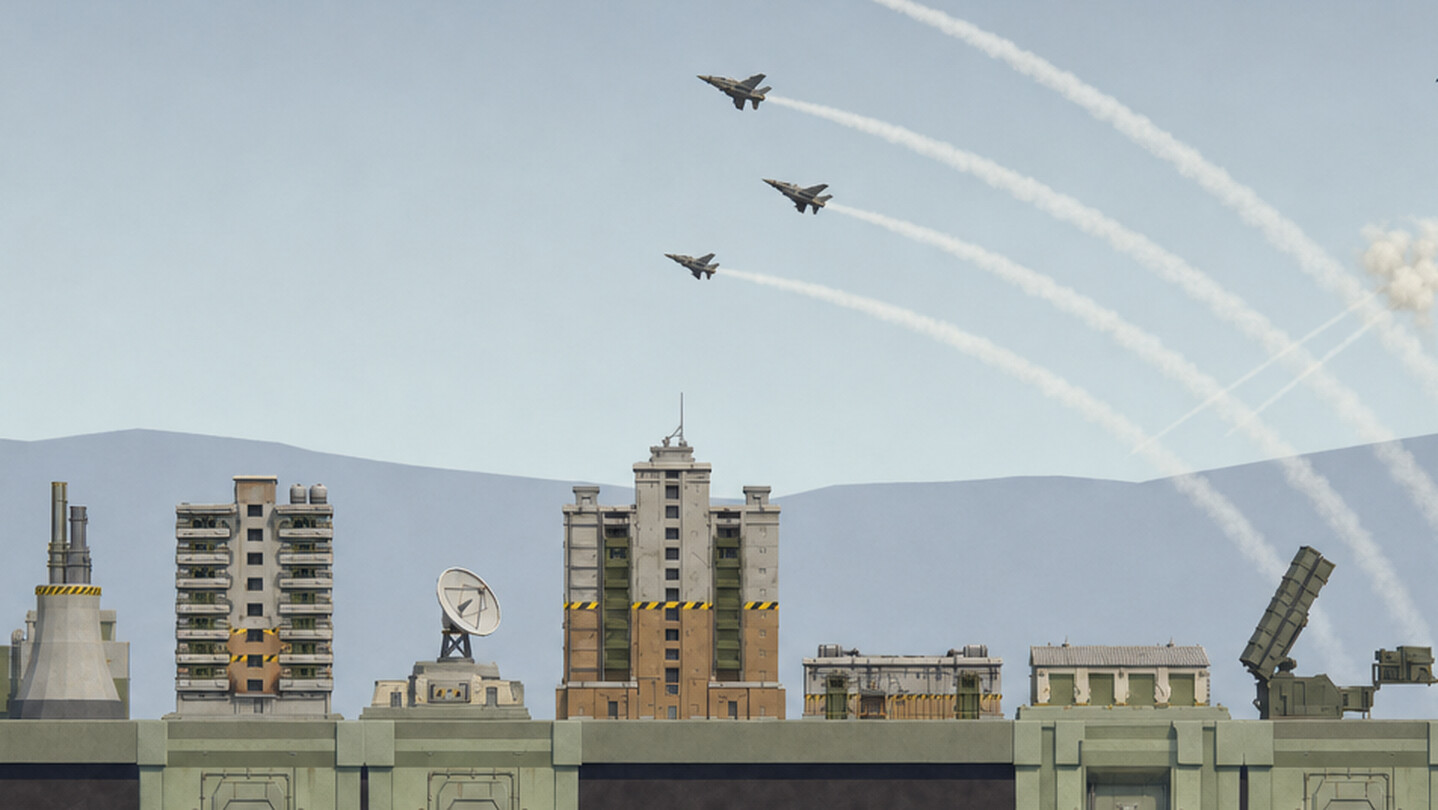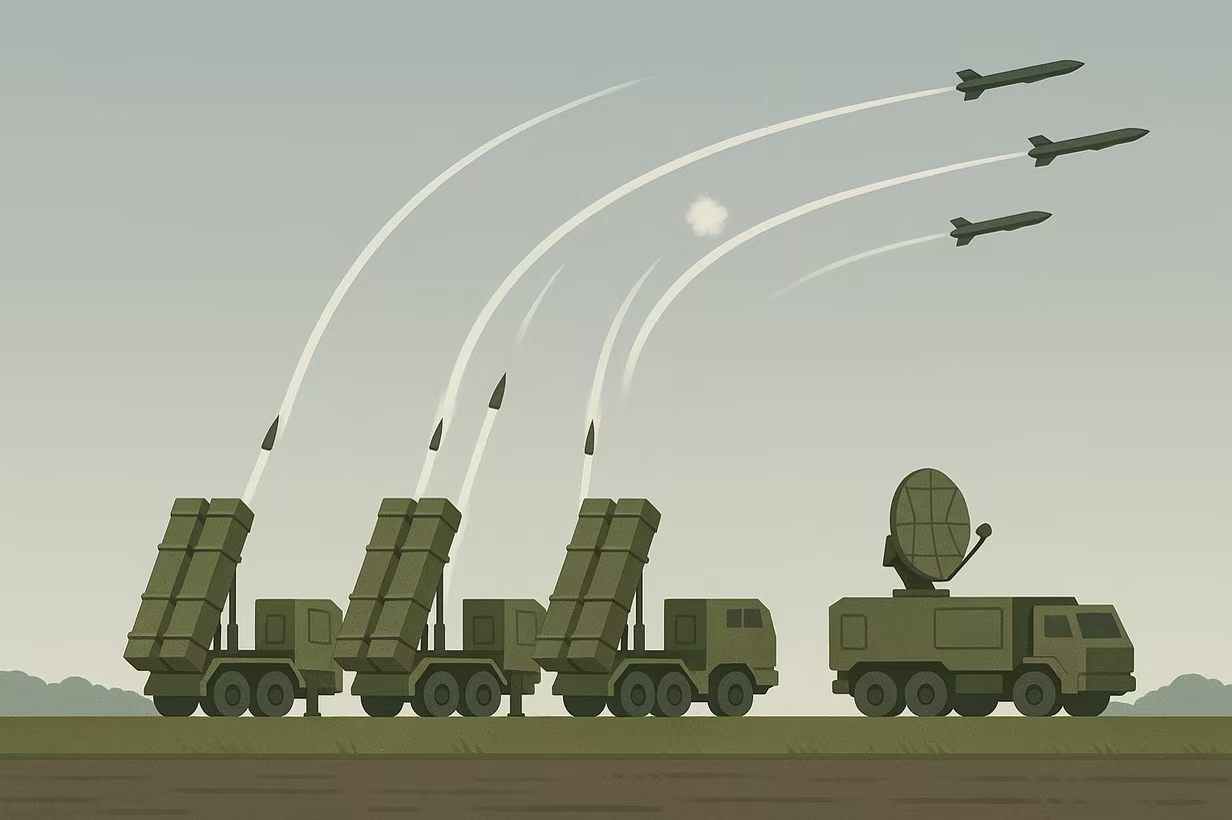



A real-time war of air defence and industry. Build the economy, bury it, and layer SAMs over what you cannot hide. Read a fading intel picture of the enemy base and aim every missile yourself. Break their will to fight before they break yours.

Sign in to add this item to your wishlist, follow it, or mark it as ignored

Coming Soon To Early Access

The developers of this game intend to release as a work in progress, developing with the feedback of players.

Note: Games in Early Access are not complete and may or may not change further. If you are not excited to play this game in its current state, then you should wait to see if the game progresses further in development. Learn more

What the developers have to say:

Why Early Access?

“Close the Sky is a systems-driven war game where economy, research, doctrines, and air-defence balance all interact — and the final shape of those systems, including the core match loop itself, is still being decided. How a match flows — the pacing of build-up, when war pressure ramps, how long the endgame should take to close out — is exactly the kind of thing we can only settle with players in real matches. Our closed playtest already reshaped the game in ways we didn't plan; Early Access widens that loop. The community won't just tune numbers — it will steer how the game is actually played.”

Approximately how long will this game be in Early Access?

“Around six months. The exact exit date depends on how the community-driven roadmap settles — if a system players are pushing for needs more time to get right, we'll extend rather than cut it. The goal is a focused Early Access, not a permanent one.”

How is the full version planned to differ from the Early Access version?

“The 1.0 version will be shaped by what Early Access players push for. Major content is still to come: single-player campaigns and additional multiplayer modes are planned for the full version, and their design will be informed by how the community plays during Early Access. The game loop itself is also expected to change: match pacing, phase structure, victory conditions, and how aggressive the endgame feels will all be adjusted — possibly significantly — based on real matches. Also planned: new research branches and doctrines (which ones make the cut will be decided with the community), additional enemy AI behaviors and difficulty modes, and new scenarios and settings for skirmish and multiplayer. We're deliberately leaving room in the roadmap beyond that — several systems in the current build exist because playtesters asked for them, and we expect 1.0 to include features that haven't been invented yet.”

What is the current state of the Early Access version?

“The core pillars are playable — base-building across the surface and underground, industry and economy, research and doctrines, air defence and strike warfare, the will/morale system, skirmish against the AI, and online PvP — but none of them are final. The match loop itself is still evolving: pacing, phase transitions, and victory conditions will be adjusted throughout Early Access as we learn from player matches. The research tree and doctrine set are incomplete, enemy AI has a limited behavior repertoire, scenario variety is thin, there is no campaign yet, and multiplayer currently ships with one mode. Balance moves meaningfully from patch to patch. Expect bugs, and expect systems to change shape — sometimes because you argued for it on our Discord.”

Will the game be priced differently during and after Early Access?

“No. The price will remain the same when we leave Early Access.”

How are you planning on involving the Community in your development process?

“Our Discord is the center of development — patch discussions, balance debates, and direct access to the developer. We post regular devlogs and patch notes on Steam, read the discussion boards, and have already been folding playtester feedback into weekly builds. Balance changes will be argued in the open before they ship, and when a roadmap decision could go either way, we'll put it to the community.”
Read more

Join the Close the Sky Playtest

Request access and you’ll get notified when the developer is ready for more participants.
This game is not yet available on Steam

Planned Release Date: Q3 2026

Interested?
Add to your wishlist and get notified when it becomes available.
 
See all discussions

Report bugs and leave feedback for this game on the discussion boards

About This Game

The war is fought over the sky, and won on the ground under it.


You run a nation's war machine from a single side-on cross-section: industry and air defence on the surface, everything you care about dug in beneath it. There is no fog to march through and no units to shepherd. There is a strip of ground, a sky above it, and an enemy doing the same thing to you at the same time.

Dig, and decide what is worth burying


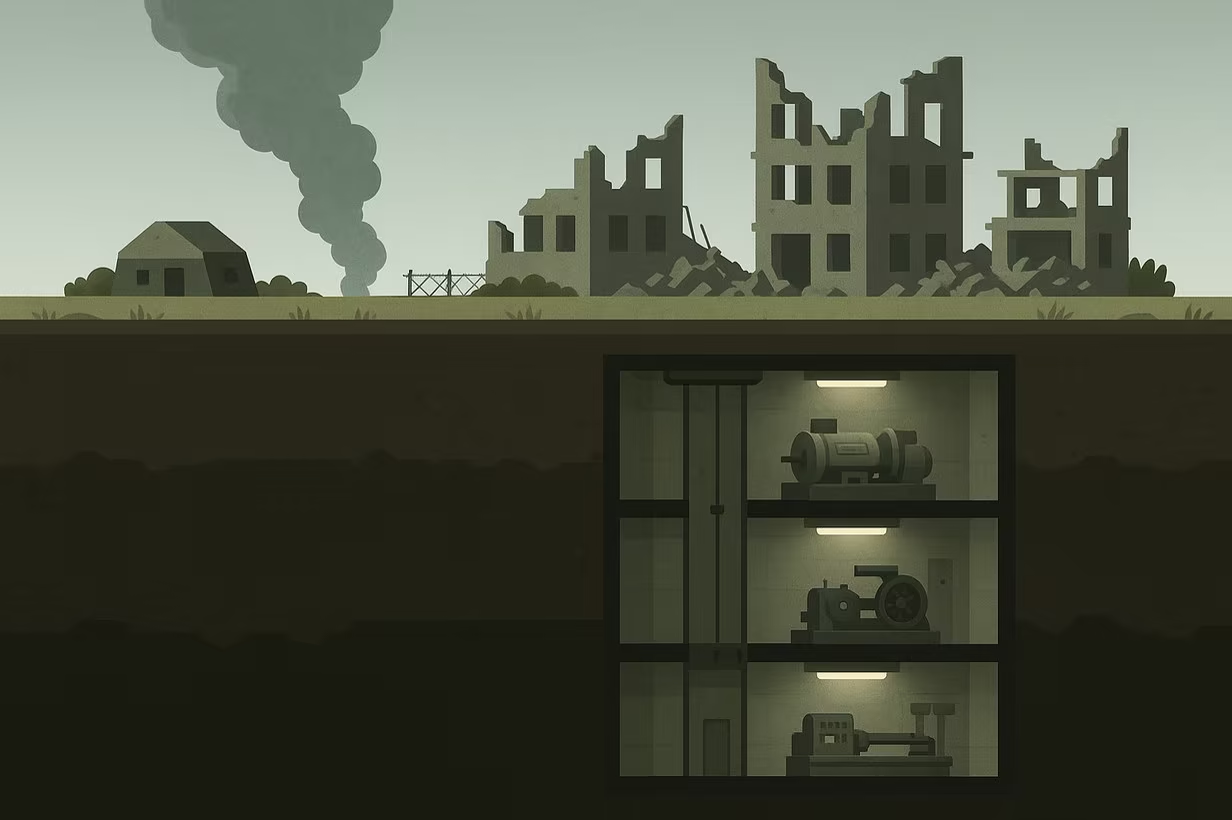
Every plot goes three levels down. Depth costs x2, x4 and x8 in money and time, and only penetrating warheads reach it — a GBU-57 is the sole conventional way into a deep bunker. But batteries and radars cannot be buried at all: they need line of sight to the sky. So the things that keep you alive are the things that have to stand in the open.

Interceptors are ammunition


Batteries fire from the national stockpile. A SAM site with nothing on the shelf is scenery, and the air-defence panel marks it DRY in red. Every round you produce needs warehouse space, and each type takes a different amount of it — a shell is one crate, a ballistic missile five, a nuclear warhead ten. A line that finishes a round with nowhere to put it jams at 100% and holds up everything queued behind it.

Your ammunition dump is a weapon pointed at you


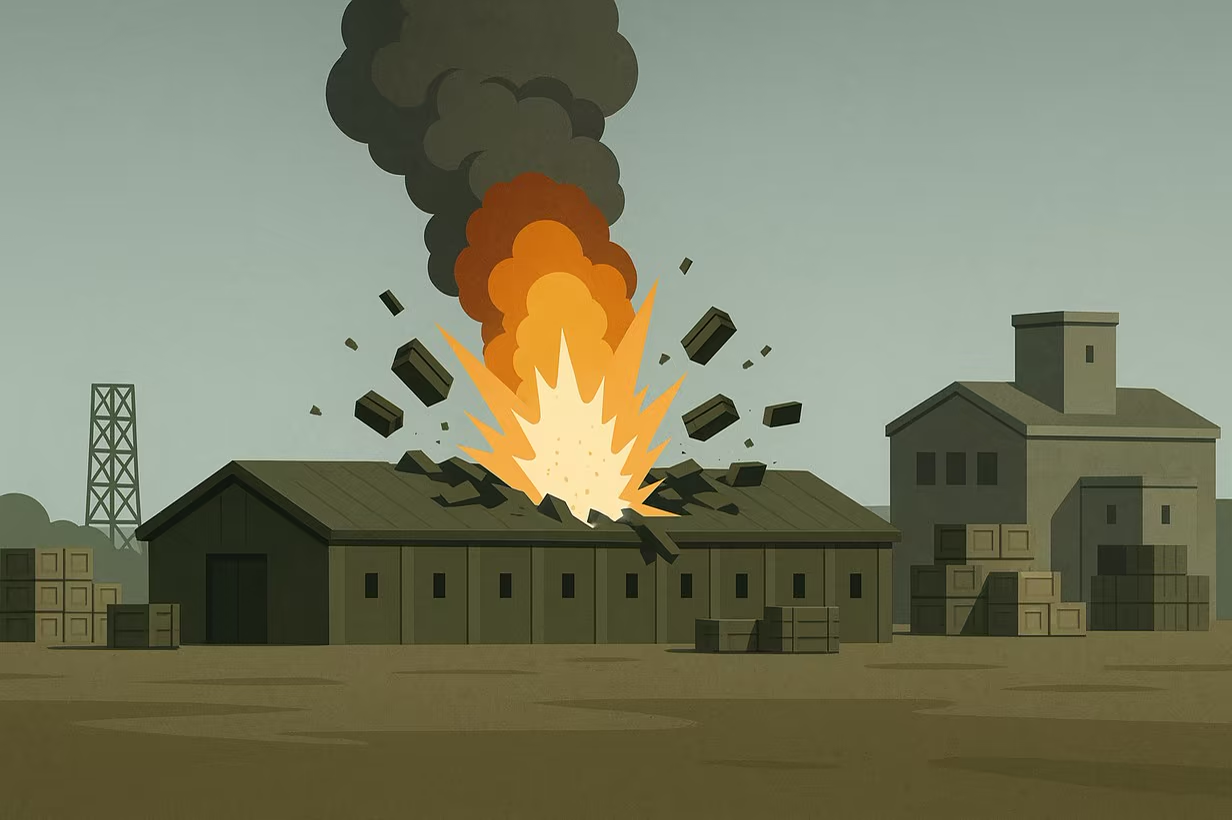
A warehouse that dies takes its stock with it, and the stock goes off. The blast radius and the damage both scale with how full it was: an empty depot is inert, a full one reaches six slots either side and will chain-detonate any other full depot it catches. Burying one halves the reach per level. It is the best target on the enemy's base, and the worst thing to put beside your own power plant.

You never see the truth, only your last look at it


The enemy base starts completely dark. Recon drones photograph what they overfly and a satellite station sweeps on a timer, and from then on you are working from a snapshot that ages while they rebuild — the view fades from white to amber as it goes stale.

Strikes are aimed at places, not at buildings. A missile hits whatever occupies that cell when it arrives, which may be nothing, or may be something new. Stale intel costs you missiles. Decoy sites exist to make that worse.

Aim it yourself


Arm a weapon, switch to the enemy base, and the cursor becomes a gunsight: aim box, blast footprint, what your intel believes is in that cell, the damage profile, and whether any battery you know about can engage it. Click to fire, and keep clicking to saturate.

Warheads are not interchangeable


Every munition carries a profile across four channels — structure, personnel, electronics and incendiary — following what the real system is built for. A TOS-1A guts a garrison and barely marks the walls. CHAMP burns out a sector's electronics without knocking anything down. Weapons carry their real designations, with the full profile on hover.

Fifty-one technologies, five doctrines


A full-screen tech tree across detection, air defence, strategic, strike and reconnaissance. Hover a node and everything that is not one of its prerequisites dims, so the chain you would have to research first reads as a single path. Research stalls if your labs lose power.

An opponent with a plan


The enemy runs one of three doctrines, chosen by the match seed and announced in the log: Swarm floods the sky with cheap drones and wins on the exchange rate, Fortress digs in behind layered SAM and waits you out, Blitz races to heavy missiles and hits before your defences exist. Difficulty changes only how fast it thinks — never what it is given.

Two players, one war


Multiplayer runs the same war against a person: one nation each, no pause, the war clock locked to 1x. Both machines run the whole simulation and only orders cross the wire, so the game plays as sharply over a bad connection as a good one. Every five seconds the clients compare a hash of their entire state.

You do not win by taking ground


There is no ground to take. You win when the enemy's will to fight reaches zero, and you lose when yours does. Will drains from civilian casualties, lost buildings and lost strategic targets — the command bunker is worth 30 on its own. Nuclear weapons crater the target's will and dent your own.

JOIN DISCORD:

AI Generated Content Disclosure

The developers describe how their game uses AI Generated Content like this:

Some pre-rendered assets in this game and its store presence were created with the assistance of generative AI tools: portions of the 2D artwork (such as backdrop and ramp textures, marketing and capsule images) and some sound effects. All AI-assisted assets were reviewed, selected, and edited by the developer before inclusion. The game's design, code, gameplay systems, writing, and balance are entirely human-made. No content is generated by AI at runtime.

System Requirements

    Minimum:
    • Requires a 64-bit processor and operating system
    • OS: Windows 10 64-bit
    • Processor: Intel Core i5-4460 / AMD FX-6300
    • Memory: 8 GB RAM
    • Graphics: NVIDIA GeForce GTX 750 Ti / AMD Radeon R7 260X, 2 GB VRAM
    • DirectX: Version 11
    • Network: Broadband Internet connection
    • Storage: 4 GB available space
    • Additional Notes: 1920x1080 or higher recommended. Broadband connection required for multiplayer only.
    Recommended:
    • Requires a 64-bit processor and operating system
    • OS: Windows 11 64-bit
    • Processor: Intel Core i5-9600K / AMD Ryzen 5 3600
    • Memory: 16 GB RAM
    • Graphics: NVIDIA GeForce GTX 1060 / AMD Radeon RX 580, 6 GB VRAM
    • DirectX: Version 12
    • Network: Broadband Internet connection
    • Storage: 4 GB available space
Review Filters