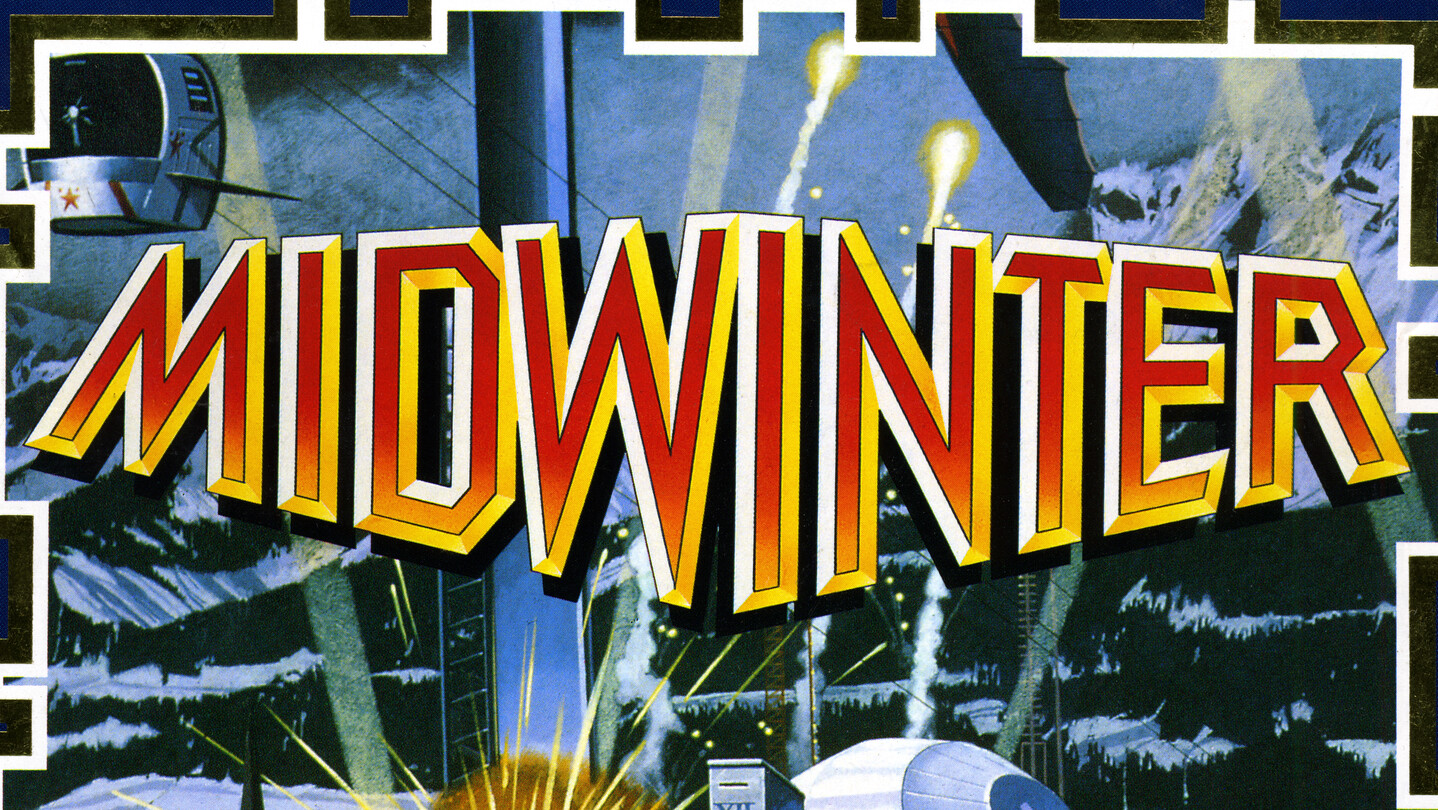


Find allies. Recruit. Resist. Conquer. Nearly 30 years before Breath of the Wild perfected open world, there was Midwinter. Mike Singleton's 1989 landmark, faithfully remastered — 160,000 square miles of frozen island, 32 survivors with 32 personalities, and an invading army to resist and destroy.

Sign in to add this item to your wishlist, follow it, or mark it as ignored

Coming Soon To Early Access

The developers of this game intend to release as a work in progress, developing with the feedback of players.

Note: Games in Early Access are not complete and may or may not change further. If you are not excited to play this game in its current state, then you should wait to see if the game progresses further in development. Learn more

What the developers have to say:

Why Early Access?

“This is a faithful remaster of a large, systems-heavy 1989 open world, and the honest way to finish it is with players on the island. It's also a one-man project. Early Access lets the people who care most about Midwinter shape which systems get deepened first, and catch the problems that only show up when a real player goes somewhere I didn't expect.”

Approximately how long will this game be in Early Access?

“Around 6 months. The goal is 1.0 once the full campaign is complete and stable across the whole island and at various difficulty levels.”

How is the full version planned to differ from the Early Access version?

“More enemy systems to turn a punishing game into a brutal learning curve, deeper enemy behavior, difficulty and balance passes, and quality-of-life work driven by player feedback.”

What is the current state of the Early Access version?

“Fully functional travel and FPS combat modes. The full island geography with every original building and settlement. Skiing, snow buggy, hang gliding and cable cars, the sniper system with breath control, demolition with charges and timers, character recruitment and switching, the RETRO/MODERN art toggle, four difficulties, and the Arctic Survival School tutorial academy with its scored drills and graduation run. Enemy AI is vicious but predictable — true to the original — and will deepen during Early Access.”

Will the game be priced differently during and after Early Access?

“The price may rise modestly at 1.0 as content is added. Everyone who buys during Early Access keeps the game at no extra cost. The IP owner has the final say on this.”

How are you planning on involving the Community in your development process?

“Through the Steam forums and the project's development log, which has documented this remaster publicly from the start.”
Read more
This game is not yet available on Steam

Coming soon

Interested?
Add to your wishlist and get notified when it becomes available.
 
See all discussions

Report bugs and leave feedback for this game on the discussion boards

About This Game

FIND. RECRUIT. RESIST. CONQUER.

The island of Midwinter has fallen. You are what's left.

An invading army holds the settlements, the factories and the heat mines. Against them: one officer, a silent radio, and a vast landscape of ice and snow.

This is where the open world came from.

Nearly 30 years before Breath of the Wild and 15 years before Far Cry, there was Midwinter.

In 1989 Mike Singleton handed players 160,000 square miles of freely roamable solid-3D terrain, a sniper rifle, vehicles scattered across the island for the taking, and no instructions on how to save the world — it was a new genre all its own. Midwinter was a strategy game, a stealth game, a first-person shooter and an open-world sandbox before most of those words existed. The lineage of the modern open world runs straight through Singleton's work to DMA Design's Grand Theft Auto and everything after it.

If you play open-world games, this is the ancestor. And nothing since has done quite what it does — find, recruit and then play as any of 32 individuals, switching between them as the war moves across the island.

32 characters. 32 personalities.

Every survivor on this island is a real person, not a unit. They have their own skills, their own morale, their own friendships and grudges — and their own reasons to say yes or no when you come asking. Find them. Recruit them. Then command them directly, switching between them at will as the war spreads across the map. Who you recruit changes what you're capable of.

A whole island — hyper-realistic terrain. For 1989, anyway.

The original modelled an entire arctic mountainous landmass at a scale nothing else of its era attempted, and it's all still here: ridges, valleys, trees, frozen lakes and passes that matter. The terrain is the strategy. A ridge line is cover. A downhill run is speed (or danger). The open ground is where good people die.

Cross it your way — and there's always a ride.

Ski it. Drive it in a snow buggy. Launch off a peak in a hang glider and ride the air for miles. Take the cable cars up steep mountains. Vehicles are housed at Resistance garages scattered across the whole island in effectively unlimited supply — abandon one, take another, keep moving. Every method has its own speed, its own risk and its own cost in energy and time.

Advanced sniper mode — advanced for 1989, at least. Hold your breath.

Get to a bunker, get the rifle up, and take the shot properly. Range, zoom, a compass on the horizon, radar, rounds you can count — and a breath meter you hold steady before you squeeze. A patient sniper is worth more than a squad out here.

Sabotage over firefights.

You will not win this by shooting your way through. Pick your target — synthesis plant, factory, warehouse; this is what the enemy needs to move and conquer — wire the charges, set the timer, and be somewhere else when it goes. Dynamite is finite. Cut the supply lines and starve an army that outguns you, until the odds finally turn.

Play it in 1989 or in 2026 — your choice, any time.

One switch flips the entire game between the authentic original pixel art and a fully modern art pass. Same world, same systems, two eras. Pair it with the Authentic learning curve for the original's famously merciless "the game explains nothing" design — or turn tutorials on and let it teach you. Or, go full OG and read the manual!

Arctic Survival School — learn the mountain before it kills you.

A full training academy on its own slice of the island: skiing, defense, driving and dogfighting, hang gliding, navigation, resistance, survival, and a final graduation run. Twenty scored drills, each in a contained practice area where nothing you do touches your saved game, ranked bronze, silver or gold. Take it if you want to arrive competent. Skip it if you'd rather the island taught you the hard way. And when you need to look something up mid-campaign, the Frostopedia is right there.

Faithful, not frozen in amber.

Rebuilt in Unreal Engine 5 with modern controls, lighting and performance — while keeping the systems, the scale and the cold that made the 1989 classic unlike anything else.

AI Generated Content Disclosure

The developers describe how their game uses AI Generated Content like this:

Character portrait artwork in the optional modern art mode was created using generative AI tools (ChatGPT) during development. All gameplay code, world design, systems, and the retro art mode are hand-made.

System Requirements

    Minimum:
    • OS: Windows 10 64-bit (1909 or later)
    • Processor: Intel Core i5-8400 / AMD Ryzen 5 2600
    • Memory: 8 GB RAM
    • Graphics: NVIDIA GeForce GTX 1060 6GB / AMD Radeon RX 580 8GB
    • DirectX: Version 12
    • Storage: 4 GB available space
    • Additional Notes: Mouse and keyboard required. Targets 1080p.
    Recommended:
    • OS: Windows 11 64-bit
    • Processor: Intel Core i5-12400 / AMD Ryzen 5 5600
    • Memory: 16 GB RAM
    • Graphics: VIDIA GeForce RTX 3060 / AMD Radeon RX 6600 XT
    • DirectX: Version 12
    • Storage: 4 GB available space
    • Additional Notes: Mouse and keyboard required. 1440p and above. SSD recommended.
Review Filters