

You are the unseen hand — the resistance's digital arm inside a regime that has begun burning books. Crack the Concord's networks from a green-phosphor terminal, cover every log you touch before the trace fills, and get paid off-grid. 24 missions. Three you are not meant to win.

Sign in to add this item to your wishlist, follow it, or mark it as ignored

This game is not yet available on Steam

Planned Release Date: August 2026

Interested?
Add to your wishlist and get notified when it becomes available.
 

About This Game

THE REGIME DIGITIZED ITSELF. THAT WAS THE DOOR.


The Concord came for the books slowly — a Yellow Index that grew from eighteen titles a week to sixty-one, a Listening Node on every lamppost, a certificate with three questions you were supposed to answer honestly. Then it came for them all at once.

To burn faster, the Concord had to consolidate: intake cards, raid dispatch, confiscation ledgers, the whole paper apparatus copied into the Central Archive of Civic Heritage. Paper you cannot reach. A network you can.

You are the unseen hand — a resistance operator on a salvaged terminal in a basement nobody has found yet. You never appear in the history. Every intrusion you run is the hidden cause of something the record already reports: the fourteen houses spared out of seventy-one, the two cataloguers who make it out through the woods, the pamphlet that told everyone what really happened in September.

THE TERMINAL IS THE GAME


No abstraction layer, no click-to-hack minigame standing in for the work. You get a shell and 43 real commands, and you type them.

  • Navigate and stealls, cd, cat, grep, find, stat, cp, mv, chmod across a virtual filesystem that answers like a real one.
  • Get inscan a host, probe the exposed service, crack it, exploit a known flaw, escalate to root, inject the database, dump what you came for.
  • Stay hidden — chain proxies with bounce, spoof your fields, shred the evidence, tamper a log rather than deleting it, wipe-logs when there's no time left to be clever.
  • Read the manual — every command has a man page, written in-world by an operating system that does not like you.

EVERY HACK LEAVES A TRACE


The moment you touch a defended system, something starts filling. Proxy chains slow it. Better hardware slows it. Quiet commands slow it. Nothing stops it.

Every intrusive command you run writes a line into a remote log, and those lines are your problem now. A clean run erases exactly what it touched — and nothing more. Wipe too much and you've replaced evidence of an intruder with evidence of an intruder covering their tracks.

Sloppiness compounds. Heat persists across the whole campaign: missed logs, blown timers, connections you held two seconds too long. Vigilance hardens its targets in response. The systems you'll face in Act IV are the systems you taught it to build.

TWENTY-FOUR MISSIONS. THREE OF THEM YOU LOSE.


The campaign runs the length of the burning, from a single Listening Node bolted to a lamppost at Halberd and Mill to a man on a six A.M. train with a book in his head.

Three missions are designed losses. There is no hidden path, no upgrade tier, no perfect run that saves the printer who will not leave his shop, or reaches the woman whose last message to you was do not come. You will get the workers out. You will get the catalogue out. You will not get everything out, and the game will not pretend otherwise.

This is a story that ends in preservation, not victory. The war is lost before you sit down. What you're actually doing is making sure something survives it.

SPEND WHAT THEY PAY YOU


Contracts settle in an off-grid ledger — the Concord owns the payment tablets, so the resistance keeps its own books. Spend it on faster CPUs to outrun the trace, more RAM to run more tools at once, longer proxy chains, better crackers and log-cleaners, and automation that turns a six-command ritual into one.

Ten optional side contracts run alongside the main chain — a scrubbed cash flag, a decoy registration, a leaked bulletin, one small mercy — and stay replayable.

FEATURES


  • A full fake OS on a green-phosphor CRT — draggable windows, a terminal, mail client, world map, ledger, toolkit, trace monitor, and a script builder, all under a scanline shader.
  • 43 shell commands with in-world man pages, tab completion, and command history.
  • 24 campaign missions across five acts, plus 10 replayable side contracts.
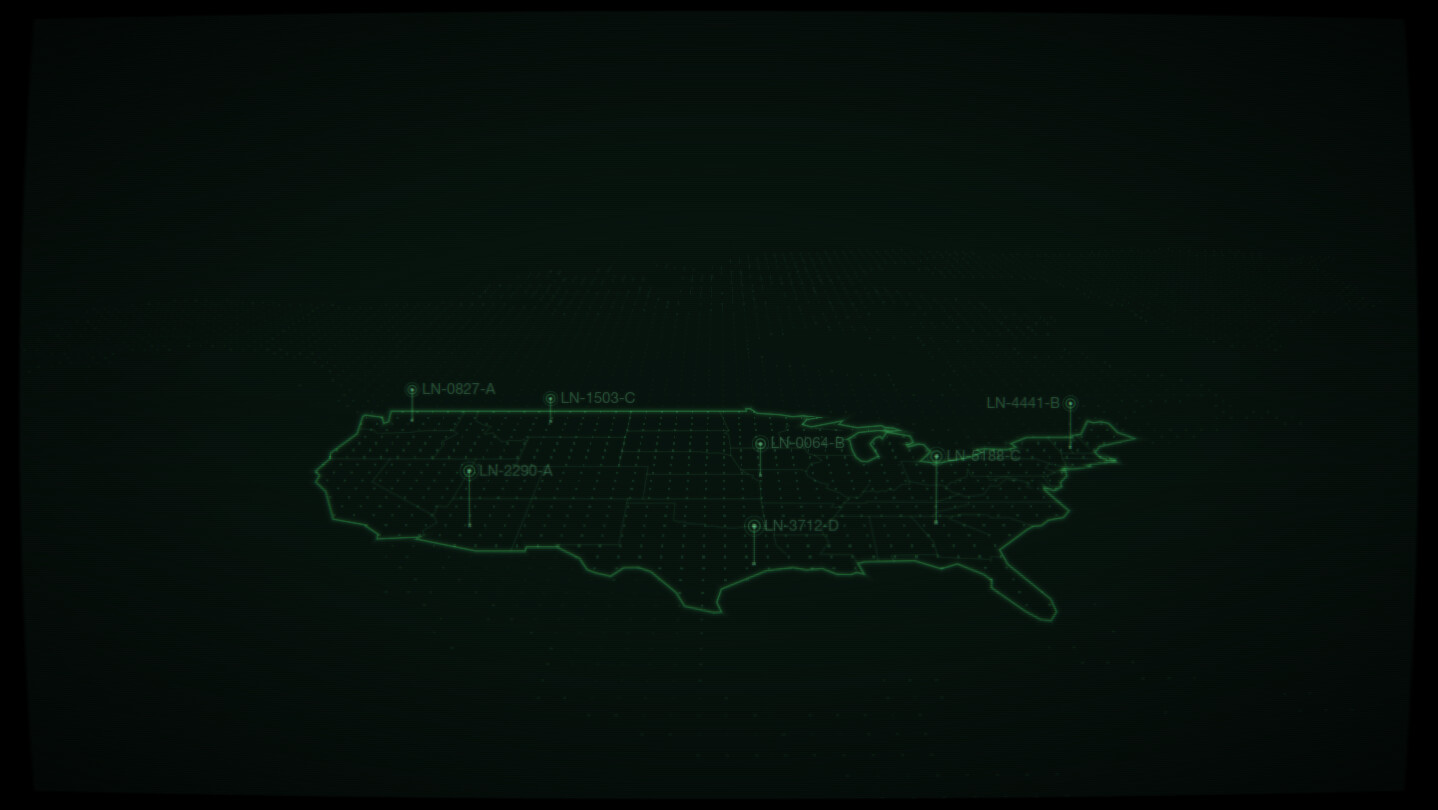
  • A neural-net world map of Concord installations and resistance cells that doubles as your target browser and route planner.
  • Real save encryption — your key derives an actual AES key. "Enter your key to continue" is not theater; lose it and the save does not open.
  • Twenty tools and upgrades across scanners, crackers, exploits, proxies, log-cleaners, and hardware tiers.

SET IN THE WORLD OF CELSIUS 232


Flashpaper is the hidden layer beneath the novel — the wires under a story told entirely on paper. You do not need to have read it. If you have, you already know how this ends, and you will spend twenty-four missions finding out that it ended that way because of choices you made.

Mature Content Description

The developers describe the content like this:

Flashpaper is set under an authoritarian regime that censors books and disappears people. Played entirely through a fictional computer terminal, it contains no depicted violence, gore, sexual content, or strong language — but its written story deals directly with mass surveillance, warrantless raids, arrest without charge, deaths in state custody, and arson that kills civilians.

Specific content some players will want to know about in advance: a fire that kills four people, including a man who refuses to leave his shop; a death in custody concealed by official letters of condolence sent, word for word, to grieving families; the arrest of a named character the player is explicitly unable to save; and an interrogation whose outcome is described but never shown.

Three missions cannot be won. This is deliberate and central to the story.

System Requirements

Windows
macOS
SteamOS + Linux
    Minimum:
    • OS: Windows 10 (64-bit)
    • Processor: Dual-core 2.0 GHz
    • Memory: 4 GB RAM
    • Graphics: OpenGL 3.3 compatible GPU with 1 GB VRAM (Intel HD 4000 / GeForce GT 730 / Radeon HD 7000 or newe
    • Storage: 500 MB available space
    • Additional Notes: Keyboard required. 1280×720 minimum display resolution.
    Recommended:
    • OS: Windows 11 (64-bit)
    • Processor: Quad-core 2.5 GHz or better
    • Memory: 8 GB RAM
    • Graphics: Dedicated GPU with 2 GB VRAM
    • Storage: 500 MB available space
    • Additional Notes: 1920×1080 or higher.
    Minimum:
    • OS: macOS 11.0 Big Sur
    • Processor: Intel Core i5 or Apple Silicon
    • Memory: 4 GB RAM
    • Graphics: Metal-capable GPU, OpenGL 3.3 support
    • Storage: 500 MB available space
    • Additional Notes: Universal binary (Intel + Apple Silicon). Keyboard required.
    Recommended:
    • OS: macOS 13.0 Ventura or newer
    • Processor: Apple Silicon (M1 or newer)
    • Memory: 8 GB RAM
    • Graphics: Integrated Apple Silicon GPU or better
    • Storage: 500 MB available space
* Starting February 15, 2024, the Steam Client will no longer support 32-bit games or macOS 10.14 or lower.
    Minimum:
    • OS: Ubuntu 20.04 LTS / SteamOS 3.0 (64-bit)
    • Processor: Dual-core 2.0 GHz
    • Memory: 4 GB RAM
    • Graphics: OpenGL 3.3 compatible GPU with 1 GB VRAM
    • Storage: 500 MB available space
    • Additional Notes: Keyboard required. X11 or XWayland.
    Recommended:
    • OS: Ubuntu 22.04 LTS or newer
    • Processor: Quad-core 2.5 GHz or better
    • Memory: 8 GB RAM
    • Graphics: Dedicated GPU with 2 GB VRAM
    • Storage: 500 MB available space
There are no reviews for this product

You can write your own review for this product to share your experience with the community. Use the area above the purchase buttons on this page to write your review.

Review Filters