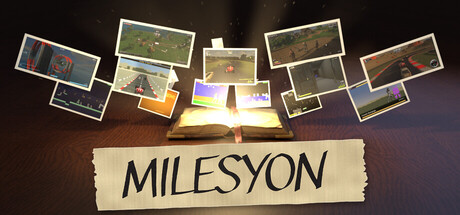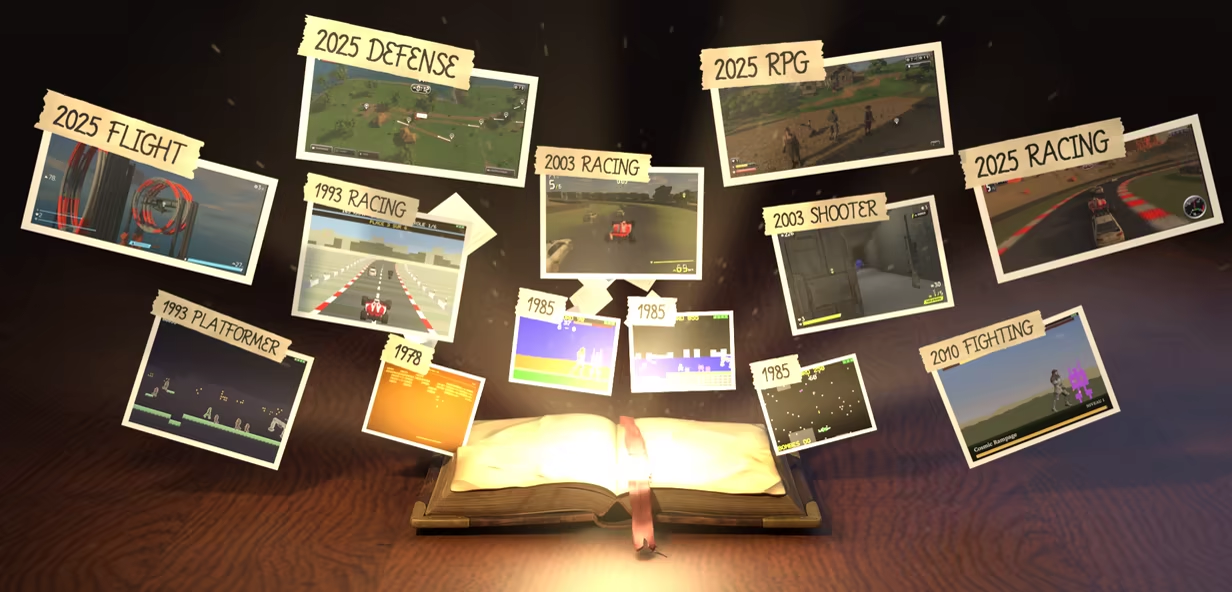

1978: a garage, a computer, a bank loan. Run your studio all the way to 2026 and make the games you want: racing, fighting, platformers, flight, role-playing, strategy… Then actually play them, in text on a 1978 tube, in pixels, then in 3D. Custom engine, offline, made by one person.

Sign in to add this item to your wishlist, follow it, or mark it as ignored

Coming Soon To Early Access

The developers of this game intend to release as a work in progress, developing with the feedback of players.

Note: Games in Early Access are not complete and may or may not change further. If you are not excited to play this game in its current state, then you should wait to see if the game progresses further in development. Learn more

What the developers have to say:

Why Early Access?

“Because the game is big, I am alone, and it is not finished. You can already run a studio from 1978 to 2026 and play the games you make. But the genres are not all at the same level, 48 years of economy need thousands of playthroughs I will never play alone, and a new player is not guided well enough yet. I would rather open now, say what is wrong, and fix it with the people who play.”

Approximately how long will this game be in Early Access?

“I am aiming for 18 to 24 months. That is an estimate: I would rather say a long time than cut corners.”

How is the full version planned to differ from the Early Access version?

“I want the full version to be the same game, finished. What I plan: every genre at the level of racing; characters that no longer clip and that hold their weapons properly; a guided first hour; an economy balanced all the way to 2026; fifteen complete languages; a Mentor you can rely on. Other systems are being considered (designing your own machines, rivals with the same tools as you): their place and order will be decided with players, and I am not promising any date. None of the above is a promise of content.”

What is the current state of the Early Access version?

“Playable from 1978 to 2026: studio management (team, bank, market, rivals, lawsuits, research), the interface of each era, making and trying your games, painted covers, the studio's Book, 50 achievements, 32 music tracks. The text and pixel games hold up. In 3D, twelve genres can be played; racing is the most finished, the others have visible flaws: clipping bodies, badly held weapons, scenery that is sometimes thin. Loading a game you made can show a black screen for a few seconds. The Mentor is experimental and its answers are sometimes clumsy. French complete, English nearly complete, thirteen other languages partial. Windows, keyboard and mouse; no controller support. I make sure every update keeps your saves; if that ever became impossible, I would say so beforehand. Mods are planned for later and are not open yet.”

Will the game be priced differently during and after Early Access?

“The price will go up a little when the full version ships. If you buy during Early Access you will not pay again.”

How are you planning on involving the Community in your development process?

“On the game's Steam forum. I read everything and I answer myself. The big choices (which genre to finish first, which rule to change) will go through an open discussion, then a beta branch, before they enter the game.”
Read more
This game is not yet available on Steam

Coming soon

Interested?
Add to your wishlist and get notified when it becomes available.
 

Report bugs and leave feedback for this game on the discussion boards

See all discussions

About This Game

You make games. Then you play them.

You describe the game you want in one sentence. A race, a fight, a platformer, a space shooter, a biplane flight, a match, an island to defend, a role-playing game, a park to run. The game builds it with the technology of its year: text characters on an amber tube in 1978, pixels in 1985, 3D later on. Then you sit down and play it.

In other studio games, your game ships and you get a score. Here, it exists.

48 years of studio life, month by month

You start in a garage with a loan. You hire, pay wages, meet deadlines, pick your machines, argue with the bank and with publishers, take a lawsuit, watch a rival ship your idea first. The game does not go easy on you, and a studio can go under.

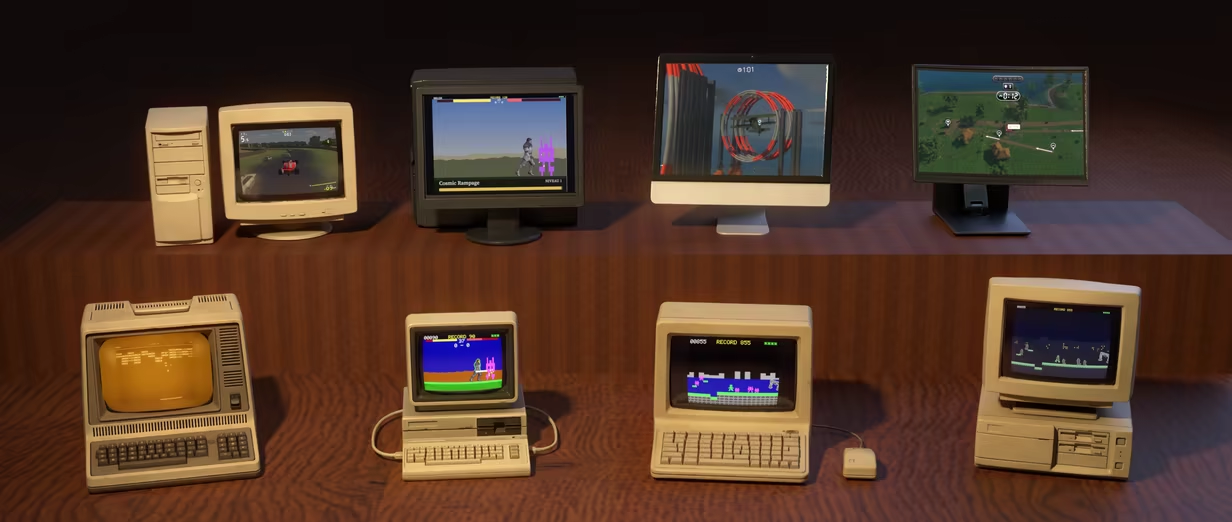
The computer ages with you

You play sitting at the computer of each era, in a 3D room. In 1978 everything goes through a text screen. Then come windows, the mouse, the desktop of the 2000s. After 2014 the studio's files are sheets taped to the wooden desk, with their objects lying around them.

Every game leaves a mark

Each game gets its cover, painted while it is being made, and its place on the shelf. The studio's Book writes itself as you play, from what really happened: your games, your people, your bad years.

An engine built for this game

Milesyon does not run on an off-the-shelf engine, neither Unity nor Unreal. Its engine was written in Rust for it, with a Vulkan renderer. The same engine runs the studio, the computers of every era and the games you create, from 1978 text characters to 3D: that is what lets one game build others, on your machine, offline.

What you are buying today

The game is in Early Access, and I would rather say so here than let you find out.

  • What holds up: managing the studio from 1978 to 2026, the interface of each era, making your games, and all the text and pixel games.

  • What is uneven: the 3D games. Twelve genres exist and can be played (racing, sports, flight, duel, shooter, role-playing, strategy, management, platformer, stealth, puzzle, defence). Racing is the most finished; the others still have visible flaws: bodies clipping through each other, weapons held badly, scenery that is sometimes thin.

  • What is missing: a better guided first hour, late-game balance, and languages other than French and English, which are partial.

One person, years of work, and AI tools

I have been making Milesyon alone for a long time. For a game this size to exist with one person behind it, I made a choice, and I would rather tell you here than let you find out: part of the 3D models, textures, music, sounds, code and translations comes from AI tools. I chose, sorted, assembled and tuned each of them in the game myself. The idea, the rules, the 48-year economy and every decision are mine, and every license is in order.

While you play, three small models run on your machine, offline: the Mentor, still experimental, which answers your questions from the facts of your own game; a storyteller, which writes the press reviews when your games ship, the awards speeches and the words of your fans and employees; and the painter, which paints the covers of your games. No account, no server, no subscription: nothing leaves your computer and no data is collected. Full details are in the disclosure at the bottom of the page.

AI Generated Content Disclosure

The developers describe how their game uses AI Generated Content like this:

Milesyon is made by one person. For a game this size to exist, part of the 3D models, textures, music, sound effects, the narrator's voice (generated from the developer's own voice, with his consent), code and translations was created with AI tools, then chosen, sorted, assembled and tuned by hand in the game. The idea, the rules, the economy and every decision are the developer's own. The images on this page are 3D scenes composed from the game's own models and real footage of the game, around its hand-made logo.

While you play, three small open-weight models run on your own machine, offline: the Mentor (still experimental) answers your questions and reads the words the game does not know when you describe a game; a storyteller writes the press reviews when your games ship, the awards speeches and the words of your fans and employees; the painter paints the covers of the games you create. Nothing leaves your computer, no data is collected, and the models never learn from your games.

Name of AI model included with the game: Three open-weight models run locally on the player's machine, offline: Qwen2.5-0.5B-Instruct and Qwen3-1.7B, both fine-tuned by the developer for the game (language models, Apache 2.0), and Chroma1-HD-Flash with its text encoder and image decoder (image model, Apache 2.0). No external AI service is used during play.

System Requirements

    Minimum:
    • Requires a 64-bit processor and operating system
    • OS: Windows 10 (64-bit)
    • Processor: 64-bit dual-core CPU with AVX2
    • Memory: 8 GB RAM
    • Graphics: GPU with Vulkan 1.3 support
    • Storage: 30 GB available space
    • Additional Notes: Keyboard and mouse. No internet connection required.
    Recommended:
    • Requires a 64-bit processor and operating system
    • OS: Windows 11 (64-bit)
    • Processor: 64-bit quad-core CPU with AVX2
    • Memory: 16 GB RAM
    • Graphics: Dedicated GPU with 8 GB of video memory, Vulkan 1.3 (paints the covers; with less, the game draws them itself)
    • Storage: 30 GB available space