


ForGlory is an online turn-based strategy wargame! Raise armies, grow your economy, forge alliances, duel champions, tame beasts, dice battles. Design your coat of arms. Solo or 8-player online, ranked or casual. Playtest live—tournaments for rare champion armour. Wishlist & Discord!

Sign in to add this item to your wishlist, follow it, or mark it as ignored

This game is not yet available on Steam

Coming soon

Interested?
Add to your wishlist and get notified when it becomes available.
 

Community Playtesting and Tournaments!

For Glory is currently in closed alpha with 16+ active playtesters. The core loop, four maps, ranked system, and tournament infrastructure are live and playable!

Wishlist to follow development and visit the website link to feeely sign up as a potential playtester for upcoming community tournaments for the chance to win eternal glory and 1 of 1 champion armour styles as rewards!

Help shape the game's future!

About This Game

I wanted to make a unique conquest game that supports up to 8 live players! Expand your territory on 1 of 4 handcrafted maps, build farms, mines, fisheries, and dozens of buildings to fund, feed, and expand your forces, invest in taking castles and building strong frontiers, and compose armies that fit how you want to fight in epic dice-driven battles — including a naval layer with ships, ports, and epic sea battles.

If you push too far without a solid economy and a weak frontier, you may pay for it, but equally if you are too passive and fail to expand, your ability to continue to grow your army will be halted. In this game, expansion is key, as a single player can't simply turtle all game and continue to recruit unit after unit.

I specifically wanted to create a game that was complex in it’s features, but very simple to navigate for first time players. For me there is nothing more frustrating than a super in depth campaign game that feels impossible to navigate and see what is really going on.

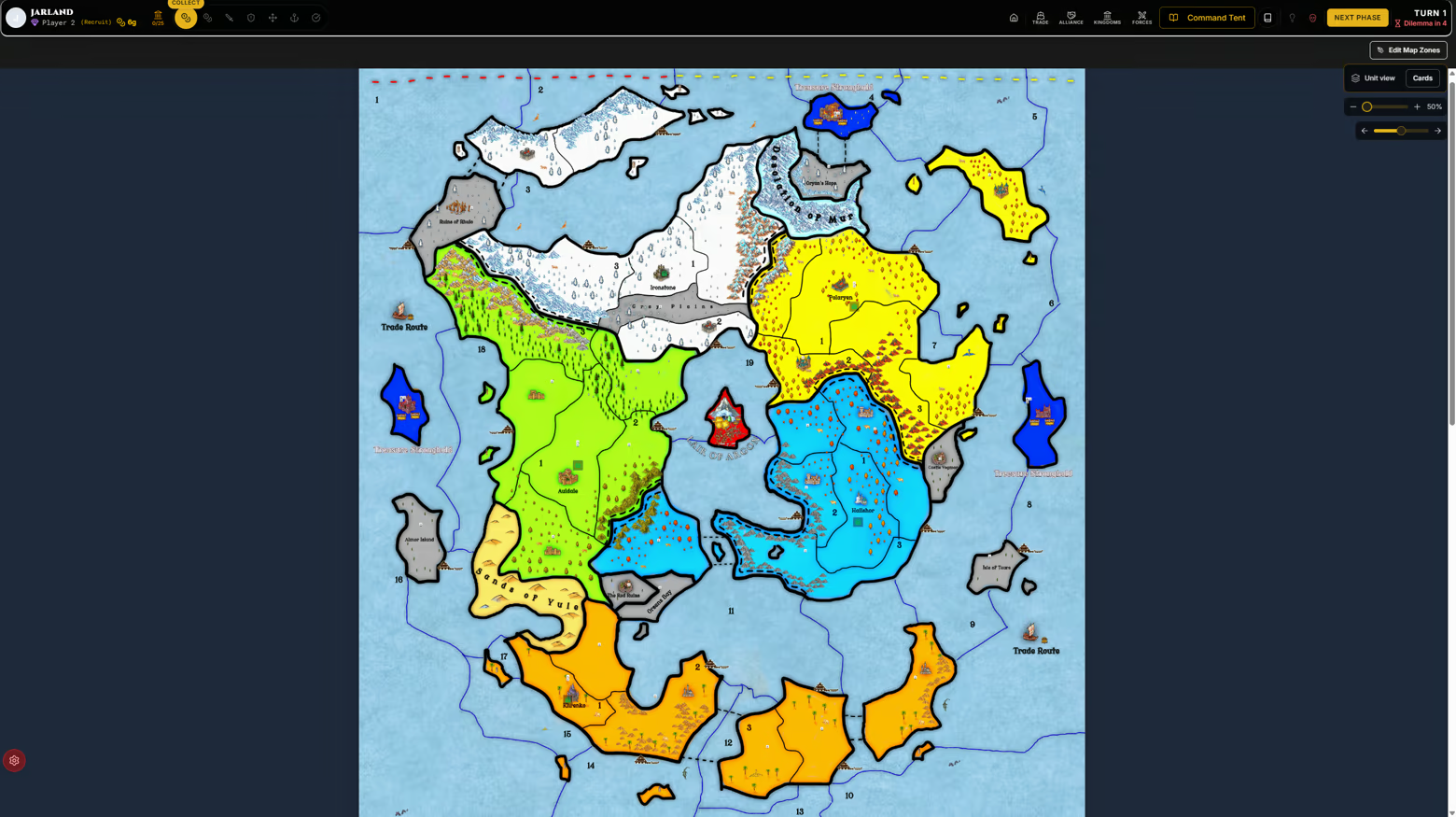
Every turn has a simple phase process: collect income, recruit units, move armies, fight battles, reposition, place new structures and units. What you build, where you expand, and when you commit to war — all of it feeds forward and is easy to handle.

In each players menu, their kingdom overview, income breakdown, army count, alliance tab, trade routes, and a fully immersive yet very straightforward ‘rulebook’ section allows players to deep dive on each unit, buildings and their function, special zones, movement, battles, magic, and practically every aspect of the game. But you don’t have to spend ten minutes reading paragraph after paragraph of text and rules, this rulebook is very simple and visual.

(For Detailed Gameplay Walkthrough's and Campaign Games - Check out my YT Channel: 

Four Maps, Four Entirely Different Campaigns

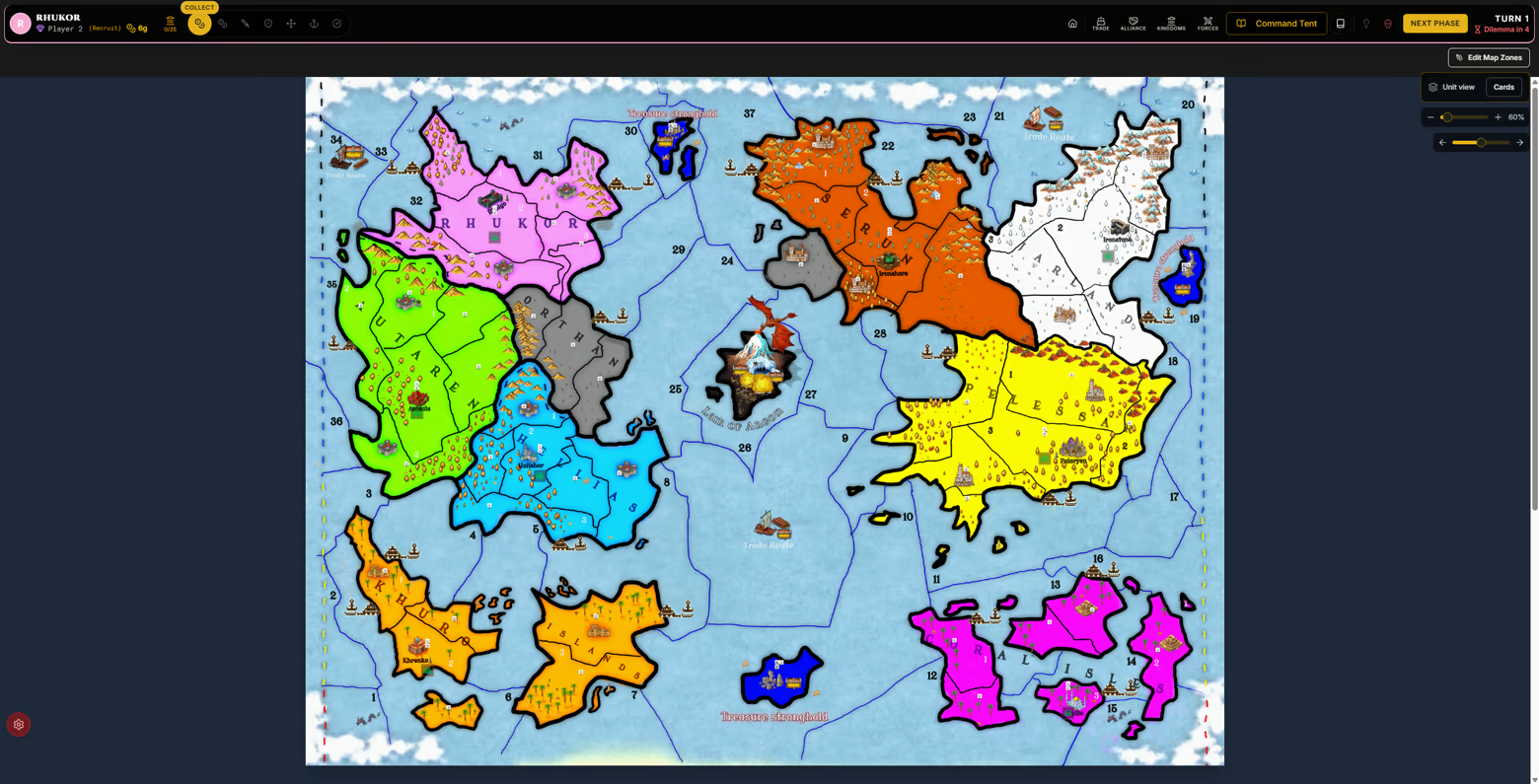
Classic Map

Initially, I only made the Classic map, which was exactly the physical map that I made for the board game. This plays much like the physical game, and is a great starting  campaign for up to 5 friends to play, however I soon realized the potential that other maps I could create would have for longer and more immersive and legendary campaigns.

As of now, I’ve created 4 fully functional campaign maps, each with their own feel, uniqueness, and focus!

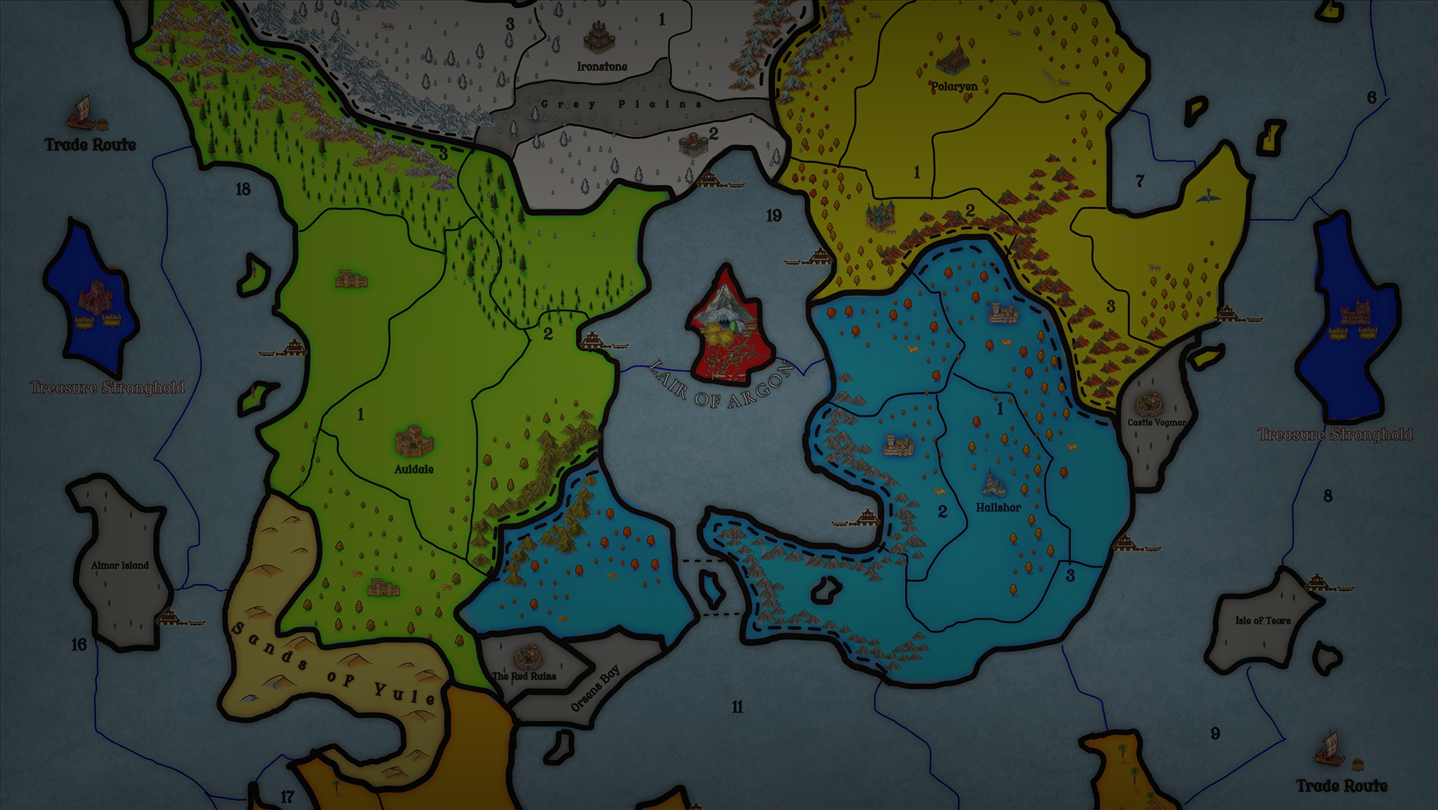
The classic map introduces the core loop: 5 players, around 60–90 minutes of straight gameplay, hazardous zones, sea trade, treasure strongholds, and the Lair of Argon — where you can send your army against the legendary dragon Argon, and if victories gain treasure and a dragon hatchling which you can use in your army to devastating effect.

Warlords Map

The Warlords map scales the game to a max of 8 players, but still has the same simple and colourful feel as the classic map with a heavier naval focus and more room for alliance politics and slightly longer campaigns.

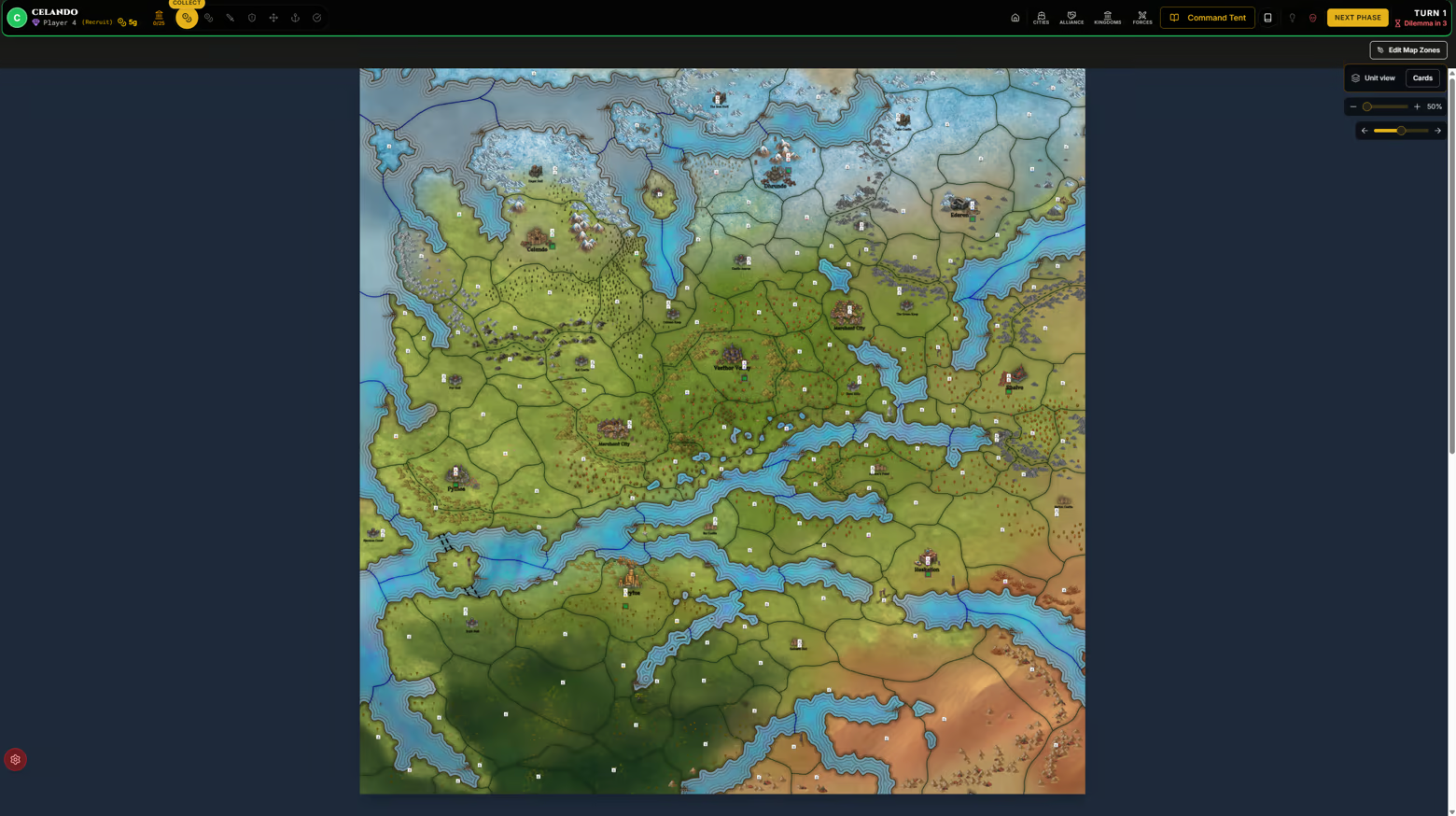
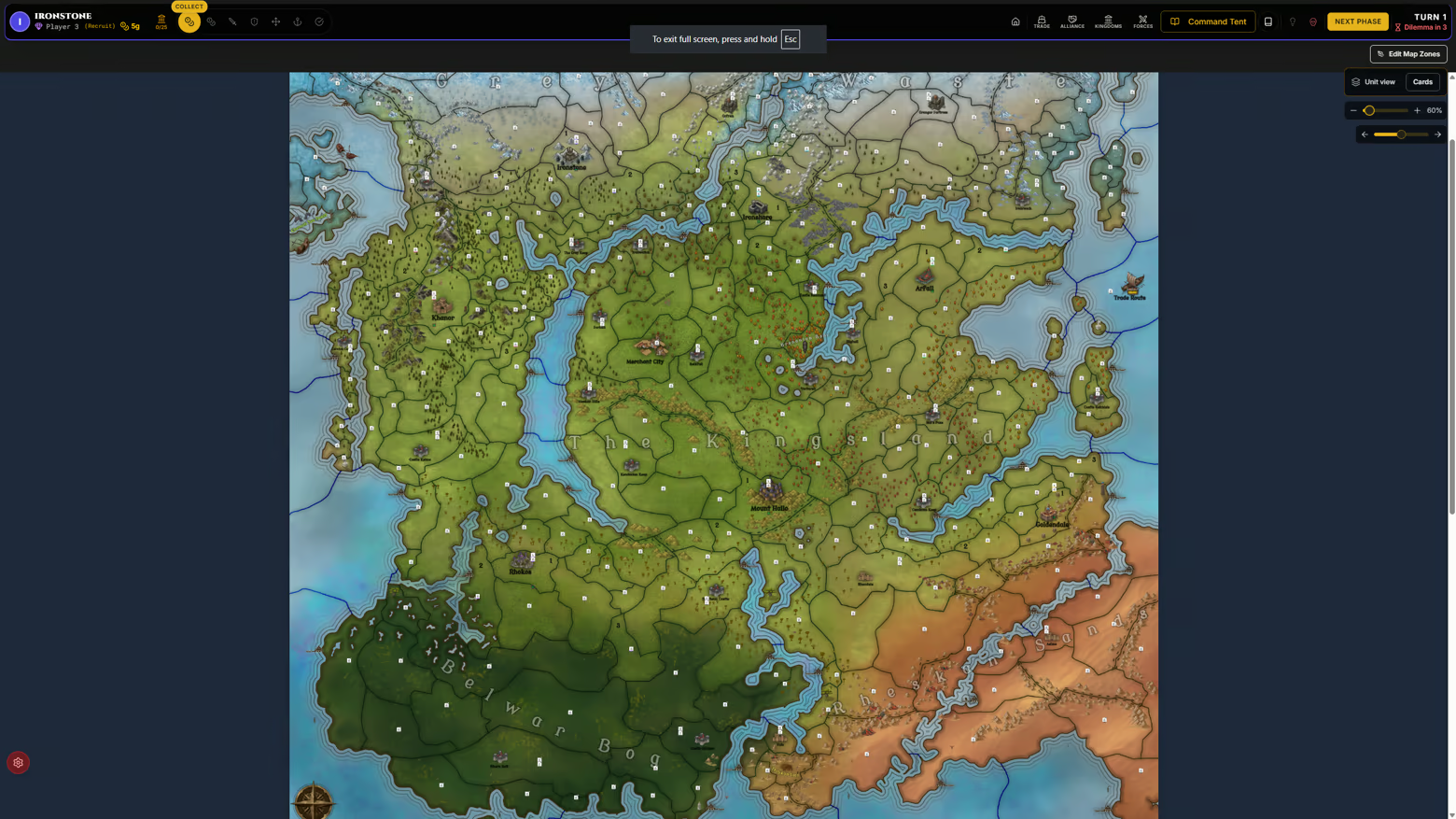
Conquest of Glory Map

The Conquest of Glory map is a significant shift from the classic and warlords versions. Not only did I make the art style more realistic, but this map has three times the zones as the classic map, and is much more land focused. However the pacing is also slightly tuned. Units are more expensive, gold is harder to come by, and players can really focus on building their kingdom and creating their frontiers and invasion plans in strategic and tactical ways. Alliances are longer, and dilemmas are more frequent. Castles can no longer be taken without siege engines in a player's army, which first require a siege workshop to build. Zones can be pillaged for immediate gold, and players can control juicy merchant cities for trade income, build fisheries on coastal zones, and build up your empire to field multiple max stack armies. Aggression pays here, but so does patience, and a bold general can seize his opportunities on this map, and create a strong kingdom.

Eternal Empires Map

The final map that I created is the Eternal Empires map. This is the deepest theater in For Glory: with over 300 zones to conquer, up to 7 players possible, and with an estimated time of 5-6 weeks of playtime before one winner is clearly in sight. This campaign plays much like the conquest map, but everything is turned up to 100. More zones, more men, more gold, the battles are bigger, more frequent, and players have the chance to make a name for themselves as great Emperors. Alliances are necessary in the face of multi player coalitions, and wars can get bloody and costly. In this map only, there are five beasts of Legend located in various spots on the map, where a player can send their champion to try and defeat in an epic battle. If they are victorious, the player successfully tames the beast, and gets to control that beast until it is slain in battle. In this map, alliances can only be formed by physically sending your diplomat to another players capital city, and along the way another player’s assassin can strike from the shadows, causing betrayal and chaos. This is the week- to-moths campaign for players and groups that want to commit to a long and rewarding grind.

Each map is on the same engine that I created. Completely different strategic problems.

Rival Courts, Not Faceless Queues

What I always enjoyed was the ability to customize your kingdom, making the setup of board games always one of the most fun parts for me.

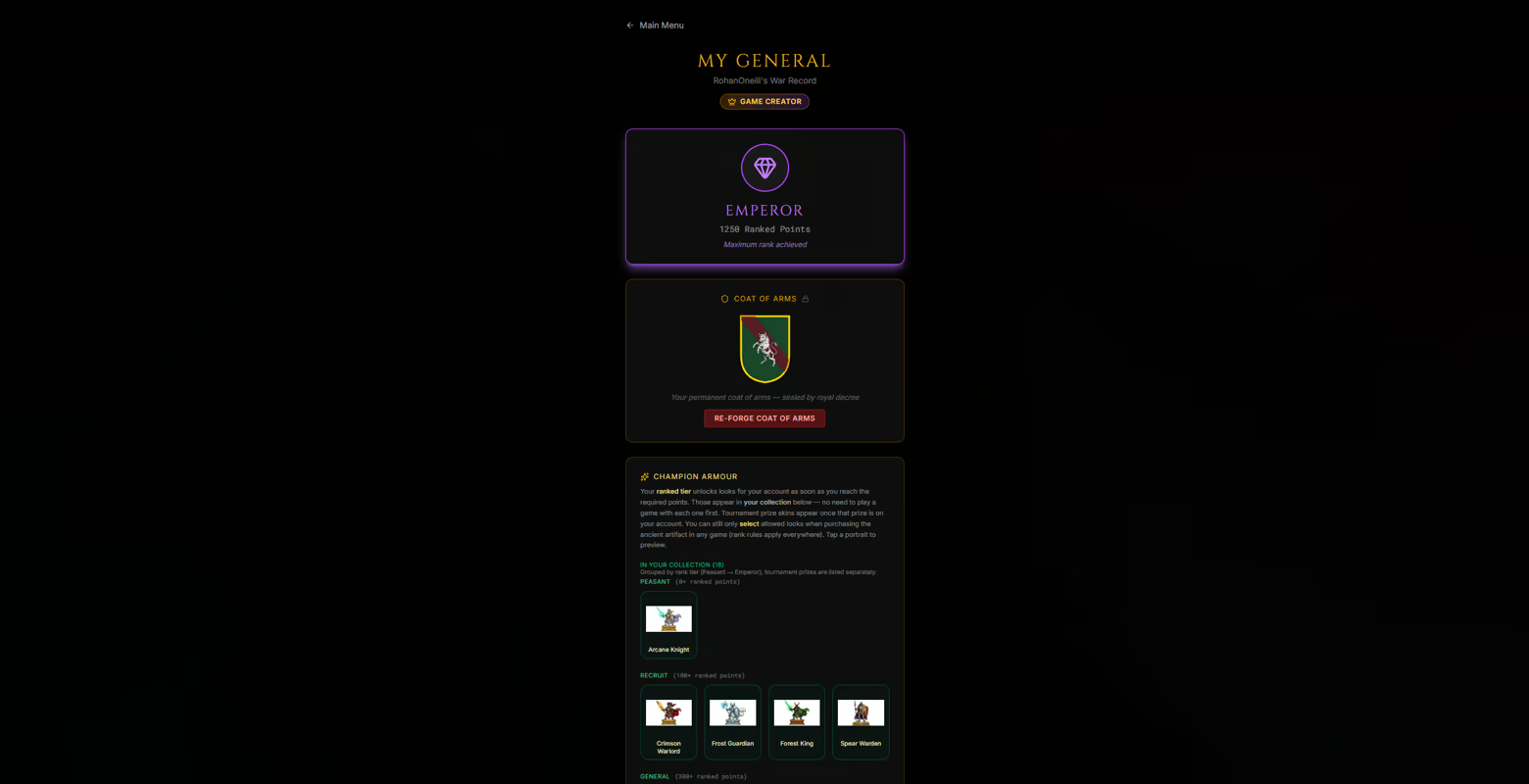
I made it so that you're not an anonymous color on the map, but you have your own recognizable heraldic shield and coat of arms which is used as an identification badge on the map. Players can forge a coat of arms using a custom builder with dozens of shapes, patterns, charges, and colours, which will show up in the lobby beside their name, in game, and in their ‘my general’ section. That way multiplayer feels like rival kingdoms at a table, not faceless matchmaking with different names only.

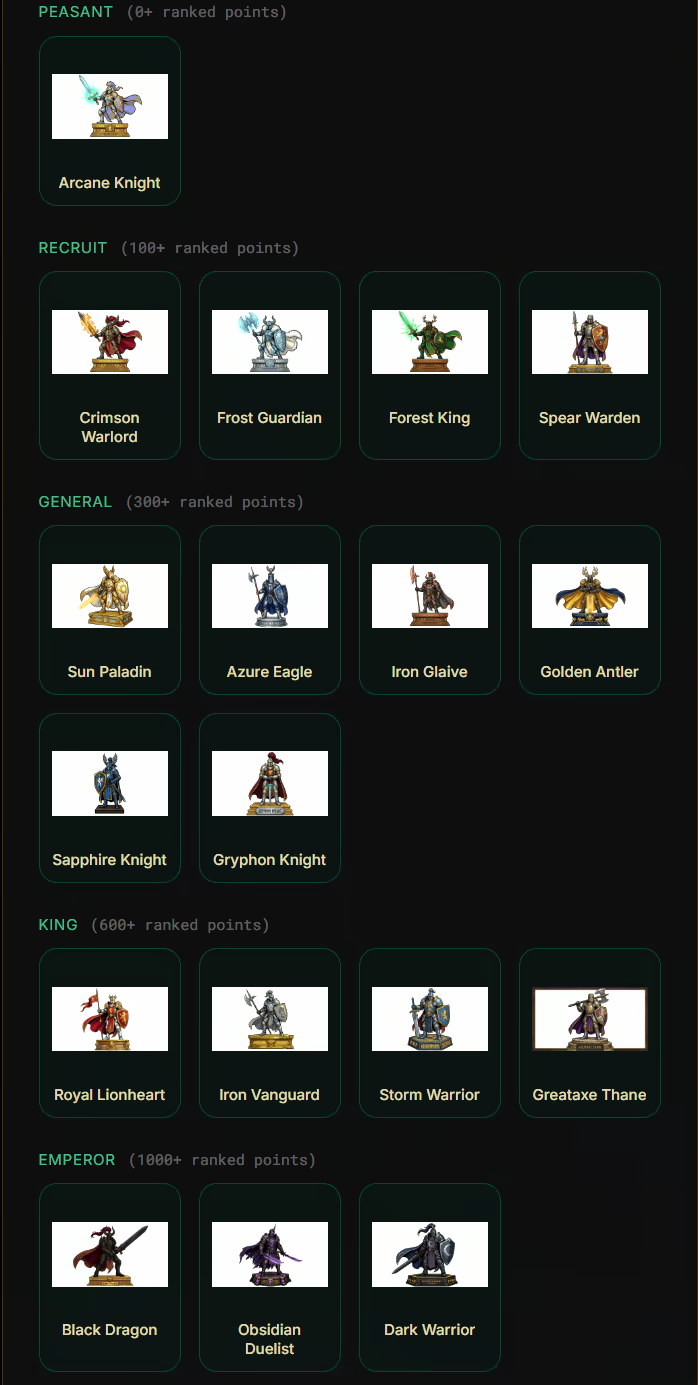
Right now there is a fully working Ranked and Casual system which players can play. In ranked, top 3 finishes grant players ranked points, a bottom finish a loss, a penalty for leaving, and other essential mechanics are in place for balancing and ensuring the ranked system actually makes sense. Right now there are six different ranks from peasant to Emperor, and each time a player ranks up, they unlock various champion rarity styles, which they can use in game.

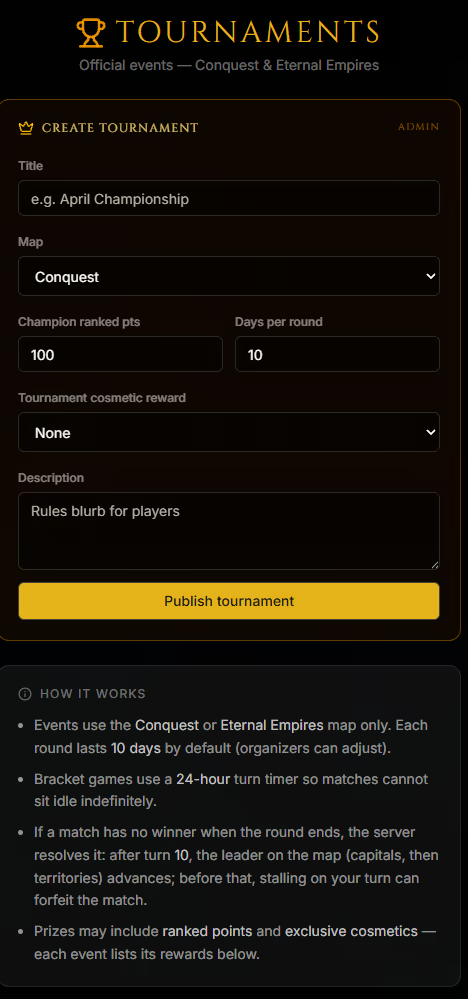
There is also a global leaderboard for ranked players, and soon to be tournaments organized by me for one of one champion armour styles and ranked points for the victor. Turn timers keep campaigns moving if you are playing with randoms, and if you want to have unlimited turn times you can do so, or if you want a more relaxed, once every 3 days take your turn type of games. Because I built everything online without requiring a downloaded game, the game saves automatically, and players can reconnect whenever without saving, which means real life doesn't kill the campaign!

Combat With Real Consequences

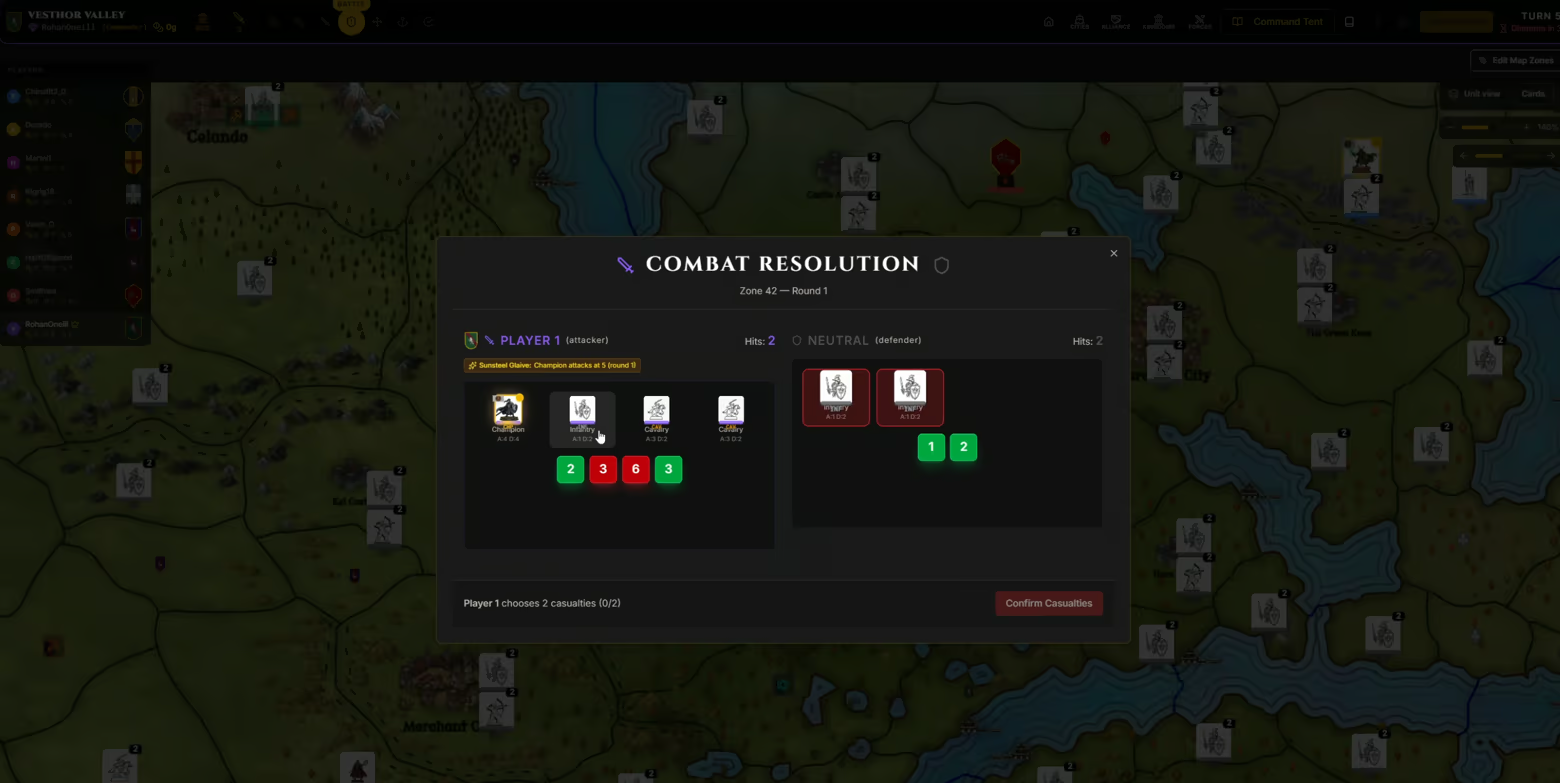
Combat is strategic, yet has elements of chance. Units roll dice with attack and defense values on the battle board, with players having the option to retreat after each round of attacks. Castles and capitals change the math — cavalry pay a price at the walls, archers defend better in castles, and fortifications boost a zones defences, deterring risky raids and invasions.

You control your army composition and positioning. With over 25 unique units, from infantry to armoured knights, cavalry to war elephants, scouts and champions and mages, there is no one ‘meta build’ that players have to spam or else be at a disadvantage. Armies are capped at 20 units max, but this means that as the game advances, elite armies will have the edge over 20 stack cheap infantry armies. The dice control variance. Skill wins over time — but luck can still turn the tide.

Champions, Duels, and Ancient Artifacts

Remember I talked about the customization? This is where ForGlory really stands out. Each player starts with a champion at the start of each game, and on turn 3 onward, players can purchase ancient artifacts which grant your champion a specific bonus: from legendary weapons, to armour, and army boosts, these artifacts allow players to express their campaign strategy while also creating a champion that they want. Champions are not the single most powerful units, but they are the most personal, with players being able to choose their champion ‘skins’ or armour styles, giving them a personal and unique feel. As players rank up, they unlock new champion styles, so if you see a player with the Black Dragon champion skin in game...just know you are in for a tough campaign. When two armies meet, champions are forced to duel before the battle— and the loser loses both their champion and the artifact they purchased.

The fourteen artifacts reshape how your champion fights and how your army stacks bonuses: mobility boosts, raw duel power, powerful weapons, ancient armour, naval bonus’, battle-opening swings. And yet, players can opt to not purchase an artifact and spend their gold elsewhere, and this is entirely a viable option.

Mercenaries That Travel the World

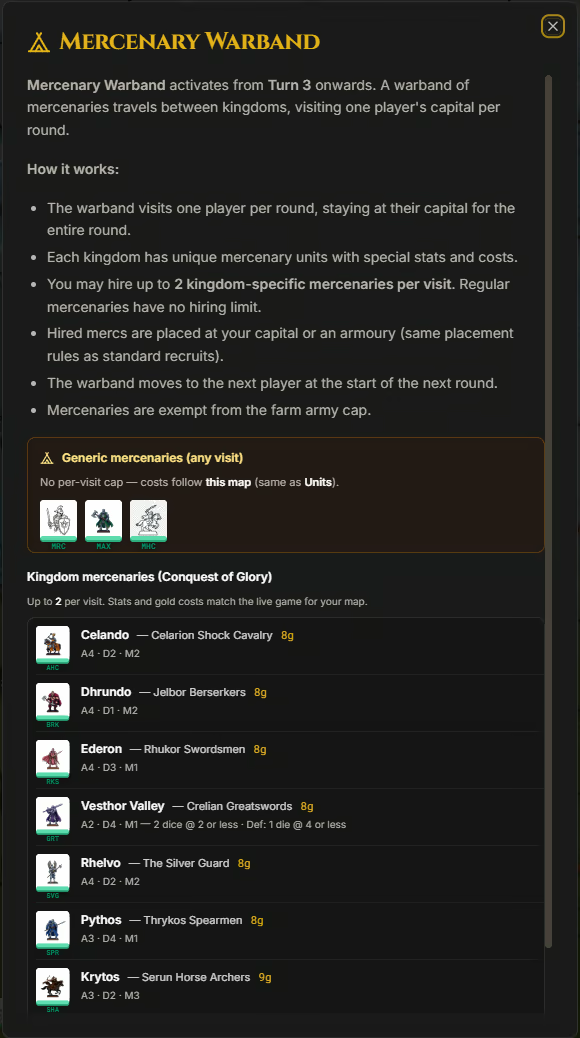
No fantasy campaign is complete without some mercenary element. This is again where I wanted to create something unique, so that ForGlory stands out in its mechanics and gameplay loop. From turn three onward, a mercenary warband doesn't sit in a menu — it actually travels between capital cities, visiting one kingdom each round.

When at your capital, players can recruit standard mercs that the entire lobby has access to, but can also purchase limited kingdom-specific mercenaries which are very powerful and unique in their abilities. Some players will have access to fast horse archers, others lumbering greatsword units, and others powerful bowmen or shock cavalry. Mercs are more expensive then normal units, but what makes them worth it is that once you spend the gold, they’re not tied to your farm capacity like all of the other units in the game.

Naval Campaigns That Open New Fronts

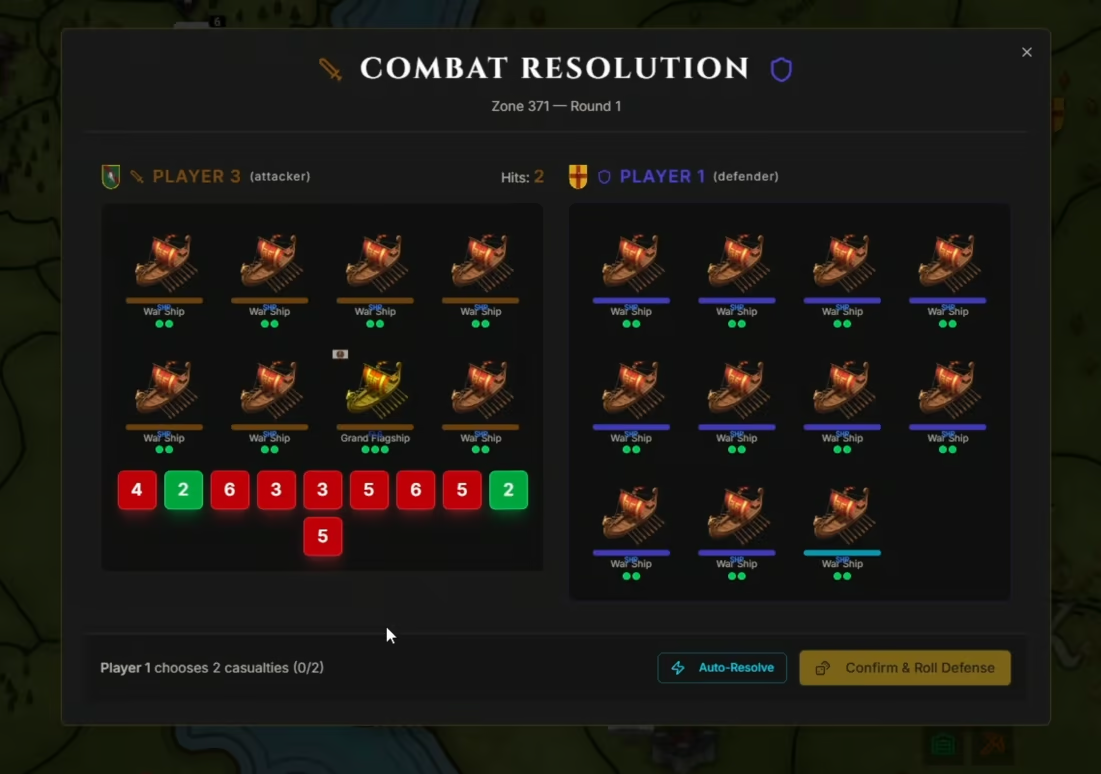
Players can purchase two different kinds of war ships to seize naval trade routes, control important straits, and transport armies across sea zones. Regular warships are the basic ships, and grand flagships  anchor a heavier navy — with blockading pressure where the map allows.

Ports are on various locations on the map: players can build and deploy ships there, invest in a Golden Harbour to raise your warship ceiling and earn a second flagship. Each ship has multiple hit points, so that sea battles aren’t over quickly, giving players the option to limp away with damaged ships rather than lose their troop cargo if the tides turn against them. In ForGlory, the seas are a second front, not a loading screen.

Alliances, Dilemmas, and the World That Pushes Back

Friendship has a price tag. Players can enter into limited turn secret alliances, to gain gold and frontier security to go all in on their campaigns without worry of being third party once their lands are weak. However alliances are not set in stone, players can break alliances if they are willing to pay the costly gold penalty, creating a slightly uncertain tension and diplomatic balancing act across the map.

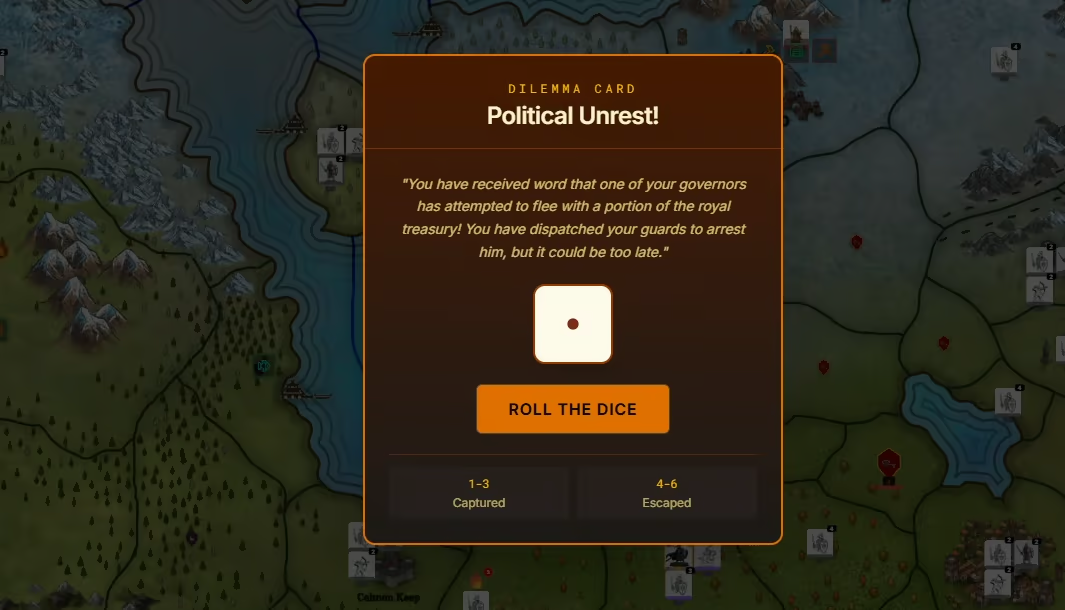
Every few turns, dilemma cards throw crises at your realm: politics, plague, piracy, lost ground, champion duelists, and sorcery challenges. Internal administrative issues bite back at your expansion and your rule, creating a hint of uncertainty. Constant dilemmas which balance the free rewards that players received from their research tree cards they selected at the start of the game can halt a campaign and act as minor setbacks. You can't control everything. That's intentional — unforeseen challenges in governance are thrown at you, but won’t be so devastating to change the course of the game.

Argon, Hatchlings, and Beasts of Legend

On the Classic and Warlords map the Lair of Argon is located at the center of the map: a multi-round dragon fight that can reward gold and a Dragon Hatchling — a flying, powerful unit that in the right hands can be used to terrible effect.

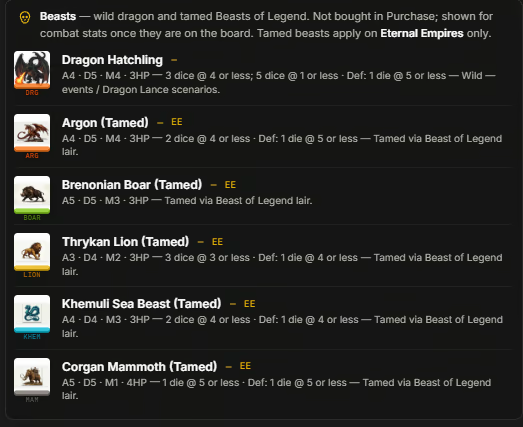
On the Eternal Empires map, five legendary beasts can be hunted and tamed into unique units: The dragon Argon, the Brenonian Boar, Thrykan Lion, Khemuli Sea Beast, and Corgan Mammoth — each with its own lair.

Only champions can enter the lair to fight the beasts: win and the beast is tamed and joins your forces, and each beast has special attack and defence values, and hitpoints. Lose and you would need to recruit another champion and try again.

An Economy You Build on the Map

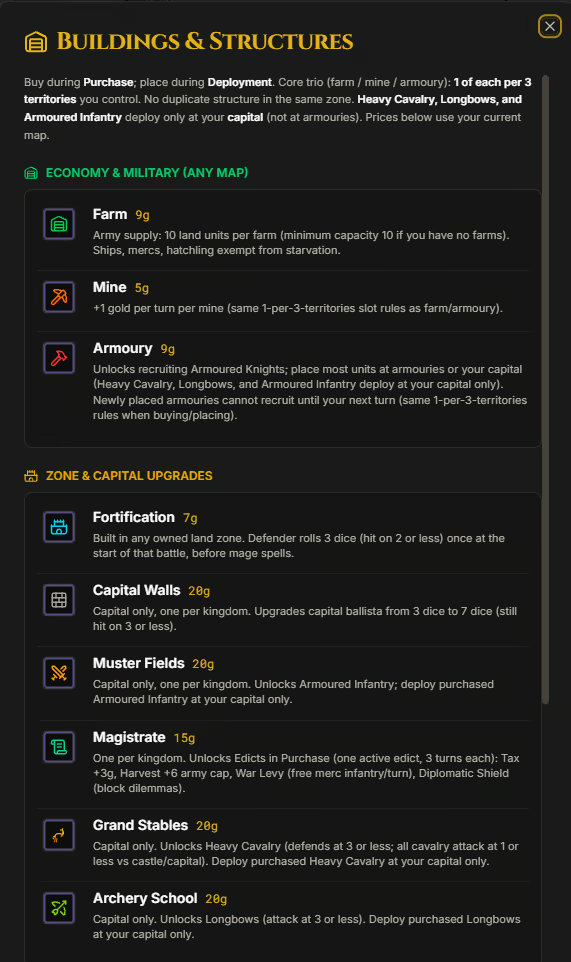
ForGlory’s building system is simple to learn and deep to master. You buy in the Purchase phase and place in Deployment. Farms, mines, and armouries share one rule: players can buy 1 of each for every three territories you control, one structure per zone.

Farms set army size—each adds land-unit capacity (e.g. 10 on Classic, 6 on Eternal Empires). Outgrow your food and starvation culls excess troops. Ships, mercenaries, and the hatchling are exempt.

Mines give +1 gold per turn each. Armouries unlock Armoured Knights and let most units deploy there instead of only in your capital city.

Capital city upgrades unlock elite units and can bolster your cities defeces as well as help administer your kingdom.

Fortifications toughen key zones. Capital Walls make your capital harder to storm. Siege Workshop (Conquest / Eternal Empires) unlocks siege engines for castle and capital assaults. Fisheries and the Golden Harbour extend coastal income and naval power where the map allows.

A Magistrate unlocks short-lived Edicts (tax, harvest, levies, diplomatic shield).

On Eternal Empires, the Diplomatic Institute and The House allow recruitment of diplomats and assassins.

Wishlist and Tournaments!

Don’t let the list intimidate you—the flow is simple: buy in Purchase, place on the map, and the UI walks you through the rest.

Wishlit my game and join my discord to be a part of community tournaments I am organizing for no charge! These tournaments will award players ranked points, exclusive champion skins, and will help the game on its way to success! 

System Requirements

Windows
macOS
SteamOS + Linux
    Minimum:
    • OS: Windows 10 64-bit
    • Processor: Dual-core CPU (2.0 GHz or equivalent)
    • Memory: 8 GB RAM
    • Graphics: Dedicated or recent integrated graphics
    • Storage: 500 MB available space
    • Sound Card: Any
    • Additional Notes: Requires a modern web browser (Chrome, Firefox, or Edge) and a stable broadband internet connection. Game is played online via your web browser; no local install required.
    Minimum:
    • OS: macOS 11 (Big Sur) or later
    • Processor: Intel Core i5 or Apple M1 (or equivalent)
    • Memory: 4 GB RAM
    • Graphics: Integrated graphics; Metal-capable GPU
    • Storage: 500 MB available space
    • Sound Card: Any
    • Additional Notes: Requires a modern web browser (Safari 15+, Chrome, or Firefox) and a stable broadband internet connection. Game is played online in your browser; no local install required.
* Starting February 15, 2024, the Steam Client will no longer support 32-bit games or macOS 10.14 or lower.
    Minimum:
    • OS: Ubuntu 22.04 / SteamOS 3.0 or later
    • Processor: Quad-core CPU or Steam Deck APU (or equivalent)
    • Memory: 8 GB RAM
    • Graphics: Dedicated or recent integrated graphics with Vulkan 1.2+
    • Storage: 500 MB available space
    • Sound Card: Any
    • Additional Notes: Mouse, trackpad, or Steam Input mapped as mouse recommended. Steam Deck: playable in Desktop Mode via browser; not Steam Deck Verified as a native title. Internet required.
There are no reviews for this product

You can write your own review for this product to share your experience with the community. Use the area above the purchase buttons on this page to write your review.

Review Filters