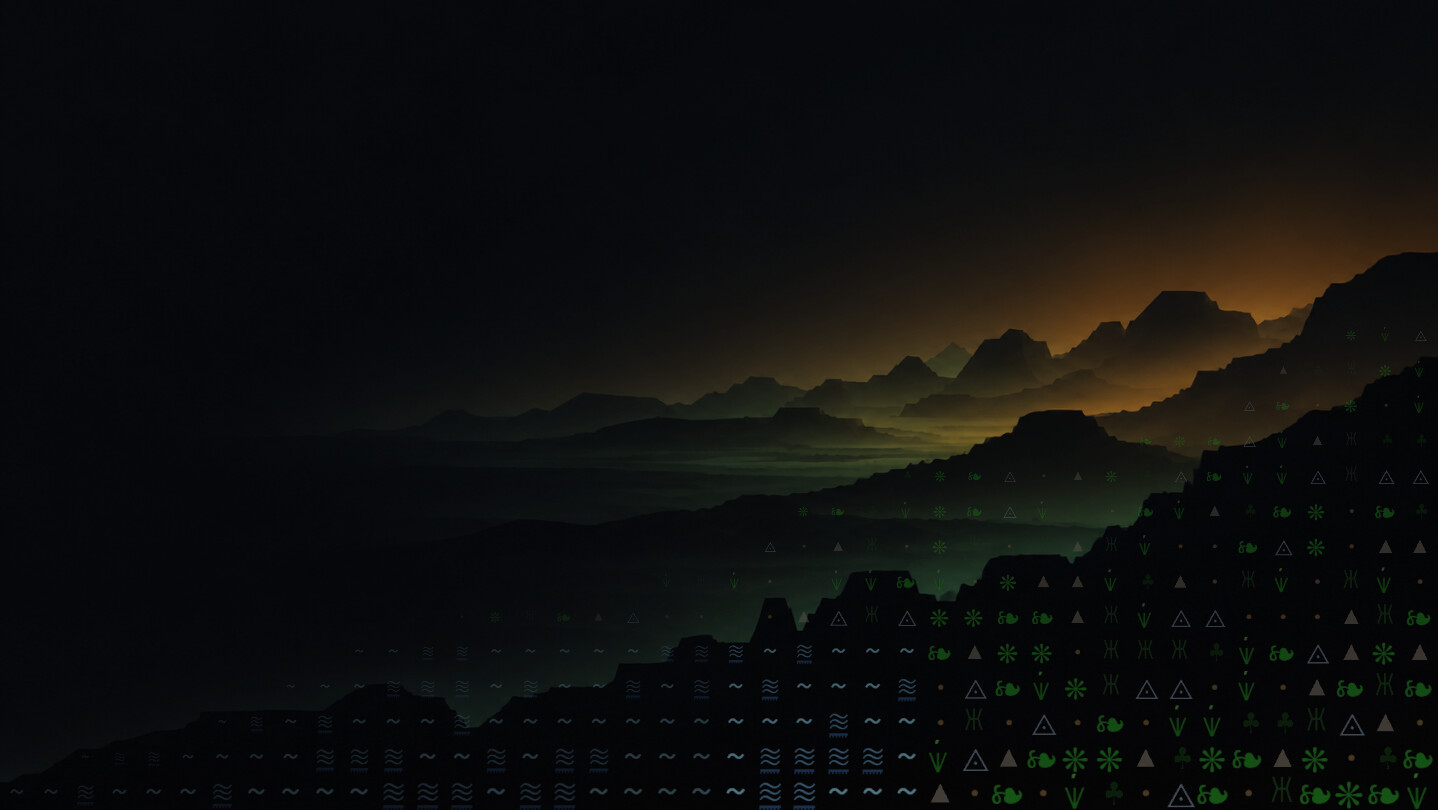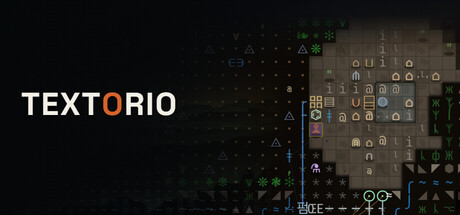


Crash-land on Kepler-442b. With nothing but a terminal, build automated factories from raw ore. Power them. Fight back the wildlife. Descend 4 world layers to save 50,000 colonists in cryo-sleep. ASCII factory automation, deep and brutal. Pure text. Pure systems.

Sign in to add this item to your wishlist, follow it, or mark it as ignored

Coming Soon To Early Access

The developers of this game intend to release as a work in progress, developing with the feedback of players.

Note: Games in Early Access are not complete and may or may not change further. If you are not excited to play this game in its current state, then you should wait to see if the game progresses further in development. Learn more

What the developers have to say:

Why Early Access?

“Textorio is a solo project. The core systems — mining, smelting,
electricity, fluids, steam, hydraulic logic, and the four-layer descent —
are built and play tight. What I can't simulate alone is HOW thousands of
factory builders will break those systems.

Every factory-automation game lives or dies on optimization edge cases that
only emerge under public stress-testing. Early Access lets the players who
actually care about this genre shape the late-game balance, the boss
encounter in the Core Chamber, and the upcoming co-op mode — instead of me
guessing what feels right and shipping a 1.0 that's tuned for a single
brain.

I want to ship Textorio with the community, not at them.”

Approximately how long will this game be in Early Access?

“Approximately 12 to 18 months.

The timeline depends on player feedback and how deep the late-game content
needs to go. I'd rather extend EA by a few months than ship a 1.0 that feels
incomplete. If the community wants more layers below the Core Chamber, more
enemy types, or more factory systems, those will land before I call it 1.0.”

How is the full version planned to differ from the Early Access version?

“We plan to expand the game in several areas during Early Access:

  • The Core Chamber endgame — the deepest layer is currently accessible. We plan to add the boss encounter and
    its narrative payoff during Early Access.
  • Deeper layer mechanics — we plan to fully build out each world layer (Surface, Caves, Deep Caves, Core
    Chamber) with its own engineering systems, automation challenges, and resource puzzles, all interconnected across the
    descent. Cross-layer logistics, layer-specific machinery, and increasing complexity at every level are core EA goals.
  • Steam Achievements and Cloud saves — planned for addition during Early Access.
  • Co-op multiplayer (Factory Wars) — local LAN is currently in closed testing. We plan to expand and refine it
    during Early Access.
  • Expanded logistics — long-distance pipes, automated transport, and additional late-game research.
  • Polish — balance, quality-of-life features, sound design, accessibility options, and additional language
    support driven by community demand.

We don't plan to change the ASCII rendering, the four-layer structure, or the engineering depth of the core systems.
Those are the game's DNA.”

What is the current state of the Early Access version?

“The Early Access build of Textorio is feature-complete for the full core loop. Everything described in the "About This
Game" section above is implemented and playable today.

The four world layers — all explorable now:
  • Surface — forested terrain with grass, sand, desert and savanna biomes; rivers and water; day/night cycle
    and weather (rain, snow, clear); deposits of stone, iron, copper, coal, and crude oil; tree harvesting with a chance
    of sunpetal seeds; hostile fauna spawns at night.
  • Caves — reached by building a Tunnel Bore. Crystal formations in five color families, glowing mushrooms,
    geothermal vents, mineral seams; richer ore yields; larger and more aggressive wildlife.
  • Deep Caves — extreme heat. Machines operate at reduced efficiency until you research thermal management.
    Heavy metals and rare minerals only found at this depth.
  • Core Chamber — the final layer, accessible via Core Drill. The reactor restart is the mission's climax. The
    boss encounter is the one piece reserved for Early Access development.

Engineering and automation — fully wired:
  • Electricity — boilers, steam engines, solar concentrators, geothermal plants, windmills, accumulators,
    electric poles, lamps. Full grid simulation with networks, brownouts, and load balancing.
  • Fluid dynamics — pipes, offshore pumps, storage tanks, fluid hubs, oil derricks, oil pipelines, distillation
    towers. Real fluid flow with pressure across multi-tile networks.
  • Steam pressure — boilers turn water and fuel into steam; steam engines convert steam to electricity; steam
    tanks, piston crushers, steam whistles, and valves let you build steam-driven contraptions. Pressure spikes if you
    mismanage the loop.
  • Hydraulic logic gates — AND, OR, NOT, XOR, DELAY, MEMORY, pressure sensors, and pneumatic memory. Build full
    logic circuits inside your factory using fluid signals.
  • Smelting and refining — stone furnaces, steel furnaces, electric furnaces, refineries, chemical plants,
    trommels and sluice boxes for mineral processing.
  • Belts and inserters — transport belts, splitters, inserters, fast inserters, filter inserters. Route any
    item anywhere.
  • Assembly — assemblers, pneumatic assemblers, quantum synthesizers. Multi-stage production chains.
  • Specialty drills — Tunnel Bores break into the cave layer, Seismic Drills extract heavy resources, Core
    Drills reach the reactor, Placer Miners and Electric Miners for surface and cave ore.
  • Climate machinery — atmospheric condensers, air separators, heat sinks for thermal management in deep
    layers.
  • Vertical lift system — lift shafts, lift stations, and lift platforms move you and items between world
    layers.

Research tree — a full tech tree unlocked through science-pack production. Each pack tier opens new buildings,
recipes, weapons, and access to deeper layers.

The Mote autonomous companion drone — your AI sidekick. Three modes: FOLLOW (stays near you, repairs machines
on the way), GUARD (holds position, attacks hostile fauna in range), SCOUT (explores ahead, reveals fog, tags
resources). The Mote has its own mood system that reacts to combat and your playstyle.

Hostile wildlife and evolution — biters, spitters, behemoths, scouts, and passive critters. Evolution scaling
increases enemy tier over time and in response to your defenses. Static defense doesn't work for long.

Combat and survival — melee weapons (wrench, chitin blade, plasma maul), ranged (personal laser), throwables
(grenades), medical packs and repair kits. Three armor tiers (operator suit, energy suit, reinforced suit). Walls and
turrets for static defense. Day/night attack cycles.

Five-chapter narrative — a guided quest line: Landfall → First Industry → Power Grid → Research Division → Into
the Dark. BASTION (the ship's surviving uplink AI) narrates the descent with transmissions, and recovered crew logs
unlock the colony's tragic backstory.

Mainframe OS — your in-game terminal:
  • LIDAR Atlas — real-time map of all four layers with zoom and filters
  • Power Grid Manager — live network statistics
  • Resource Monitor — production graphs over time
  • Threat Radar — animated enemy detection
  • Factory Statistics — efficiency metrics and bottleneck analysis
  • Ecology Tracker — wildlife populations, births and deaths
  • Command Line — 50+ terminal commands for power users
  • Comms Inbox — BASTION transmissions and found-log archive
  • Operator Briefing replay — re-open the first-launch tutorial anytime

1v1 LAN Factory Wars multiplayer — host or join a local match. Mirrored world generation. Military science
research and military buildings (Raider Bay, Guard Tower, Electrified Wall). Real-time PvP with all weapon and armor
types. In-game chat. Rematch button. Win by destroying the enemy's Cryo-Vault. Currently in closed testing; we plan to
expand and refine multiplayer during Early Access.

Quality of life:
  • Operator Briefing — first-launch tutorial screen explaining controls, resources, automation, the four layers, and
    threats; replayable from the Mainframe or pause menu anytime
  • Save / load — full compressed save states with multiple slots per profile, sparse tile encoding for small file
    sizes
  • In-game pause menu — Save, Load, Settings, Tutorial replay, Orbital Network, Quit
  • Day / night cycle with sun position and ambient light shifts
  • Weather system — rain, snow, clear
  • ASCII rendering — every entity is a glyph in a colored tile, smooth at any zoom level

Expected playthrough length: 15 to 30 hours depending on optimization depth.

Not yet in the game:
  • The Core Chamber boss encounter (the layer is accessible but the encounter is locked).
  • Steam Achievements and Cloud saves.
  • Public Factory Wars matchmaking (local LAN works today and is in closed testing).
  • Localization beyond English.

Will the game be priced differently during and after Early Access?

“Yes. The Early Access price is the lowest Textorio will ever be.
Buying during Early Access gives you full access to every update including the 1.0 release at no extra cost. This is our way of rewarding the players who help shape the game before launch. We plan to raise the price gradually as significant content updates land during EA, with a higher price at 1.0 release.”

How are you planning on involving the Community in your development process?

  • Public roadmap — updated monthly via Steam announcements. Players see what's being worked on and what's next.
  • Steam Discussions — every bug report, feature request, and balance complaint gets read and acknowledged. Major proposals go to
    community votes.
  • Open dev logs — regular written updates and screenshots about what's breaking, what's improving, what's next.
  • Community-shaped priorities — if 1.0 is months away and players want late-game content first versus balance first, the data
    decides.
Read more
This game is not yet available on Steam

Coming soon

Interested?
Add to your wishlist and get notified when it becomes available.
 
See all discussions

Report bugs and leave feedback for this game on the discussion boards

About This Game

TEXTORIO


You crash-land on Kepler-442b — a planet that wants you dead. 50,000 colonists sleep in cryo-pods deep below the
surface. Wake them, or die trying.


In Textorio, you build a factory in pure ASCII. Raw ore becomes circuits. Circuits become machines. Machines become a
self-sustaining production empire — and that empire is the only thing standing between humanity and extinction on an
alien world.

This is factory automation stripped to its bones. No textures. No 3D models. Just glyphs, logic, and consequences.

MINE. SMELT. AUTOMATE. SURVIVE.


Start with a single terminal and a busted escape pod. By hour four you'll have power grids, fluid networks, steam
pressure, and conveyors carrying ore from underground veins to refineries you designed yourself. By hour twelve you'll
be drilling through bedrock toward the colonists, fighting wildlife that evolves to counter your factory.

Every machine is rendered as an ASCII character. Every system is a real system — electricity flows along wires, fluids
flow through pipes, logic gates fire on signals. If you understand it, you can break it. If you can break it, you can
optimize it.

THE DESCENT


You don't conquer one biome. You conquer four, and each one is a different problem.

Surface — forests, river systems, ore veins, and hostile fauna that emerges at night. Your first factory is
built here, exposed to weather, predators, and the slow rotation of the day/night cycle.

Caves — pierced by your Tunnel Bore. Crystal seams in five color families. Geothermal vents. Glowcap mushrooms
that light their own caverns. The wildlife is older, larger, and lit by minerals you'll learn to harvest.

Deep Caves — magma-warm air that overheats your machinery until you research thermal management. Heavy metals
you can't find anywhere else. And the fossilized remnants of structures that weren't yours.

Core Chamber — the reactor. The reason for everything. Restart it and the colony lives. Fail and the cryo-pods
go cold one by one.

KEY FEATURES


  • Pure ASCII rendering — every machine, ore, conveyor, and creature is a glyph. Runs on anything. Reads like a
    system schematic.
  • Real engineering systems — electricity networks, fluid dynamics with real pressure, steam-driven
    contraptions, and hydraulic logic gates (AND/OR/NOT/XOR/DELAY/MEMORY). No abstractions. No magic.
  • Four interconnected world layers — Surface, Caves, Deep Caves, Core Chamber. Each has unique resources,
    threats, and engineering puzzles. A vertical lift system carries you and your goods between them.
  • Silicon-based hostile wildlife — biters feed on electromagnetic energy. They don't attack you — they're
    trying to eat your factory. Build walls and they evolve stronger. Use turrets and they swarm in larger packs. Static
    defense fails over time. Adaptation is the only strategy.
  • The Mote — your autonomous companion drone — an AI sidekick with three modes (FOLLOW, GUARD, SCOUT) and its
    own mood system. It repairs your machines, scouts ahead, defends your base, and reacts to how you play.
  • BASTION uplink — the ship's surviving AI narrates your descent in fragmented transmissions. You'll recover
    crew logs from the previous mission as you go deeper. The story they tell is not the one BASTION is telling you.
  • Self-designed factories — no preset blueprints, no templates, no auto-solver. The factory that saves 50,000
    lives is the one YOU figure out, from a blank Surface to the Core.
  • 1v1 LAN Factory Wars — host a match against a friend, build symmetric bases, train Raiders, and try to
    destroy the enemy's Cryo-Vault before they destroy yours. Currently in closed testing.
  • Your name in the manifest — beat the game and your username goes into the colony ship's permanent crew log.

THE WORLD


Kepler-442b orbits a K-type star 1,206 light years from Earth. The colony ship Wreckborn was supposed to land
it gently. It didn't. Your cryo-pod ejected. The rest are still down there.

You wake on a continent of black soil and pale grass, with a wrist terminal that still works, three days of rations,
and the silhouettes of broken alien architecture on the horizon. The wildlife is patient. The colonists' pods are
running out of power.

Somebody tried this before you. They left logs. They didn't leave bodies.

DESIGN PHILOSOPHY


Textorio respects your intelligence. No tutorial popups holding your hand. No glowing arrows pointing at "the
next thing." A 30-second briefing on the controls, then you're alone with a wrist terminal and a planet. Read, decide,
build.

Every glyph is a real entity. No background art. No decorative tiles. If you can see it on the map, you can
interact with it — inspect it, build over it, route a belt past it, destroy it. The map is the world.

Every system simulates. Electricity actually flows along wires. Fluids actually have pressure. Steam condenses
back to water. Logic gates fire on real signal thresholds. The depth isn't decorative, it's structural. You can short
a circuit, deadlock a pipe, or design a memory cell.

ASCII isn't a limitation — it's a clarity tool. A 50,000-tile factory in ASCII reads at a glance the way a 3D
version never could. Bottlenecks jump out. Optimization opportunities reveal themselves. Your factory becomes legible
the same way a circuit diagram is.

ABOUT THE STUDIO


Textorio is built by one developer at Hyena Studios in Anykščiai, Lithuania. No publisher. No marketing budget.
No focus groups. Just code, ASCII, and obsession.

Your factory is your survival. Make it beautiful.

System Requirements

    Minimum:
    • Requires a 64-bit processor and operating system
    • OS: Windows 10 64-bit
    • Processor: Intel Core i3 / AMD Ryzen 3 or equivalent
    • Memory: 2048 MB RAM
    • Graphics: Integrated graphics (Intel HD 4000 or better)
    • DirectX: Version 10
    • Storage: 500 MB available space
    • Sound Card: Any DirectX-compatible sound card
    Recommended:
    • Requires a 64-bit processor and operating system
    • OS: Windows 11 64-bit
    • Processor: Intel Core i5 / AMD Ryzen 5
    • Memory: 4096 MB RAM
    • Graphics: Any dedicated GPU with 1 GB VRAM
    • DirectX: Version 11
    • Storage: 1024 MB available space
    • Sound Card: Any DirectX-compatible sound card
There are no reviews for this product

You can write your own review for this product to share your experience with the community. Use the area above the purchase buttons on this page to write your review.