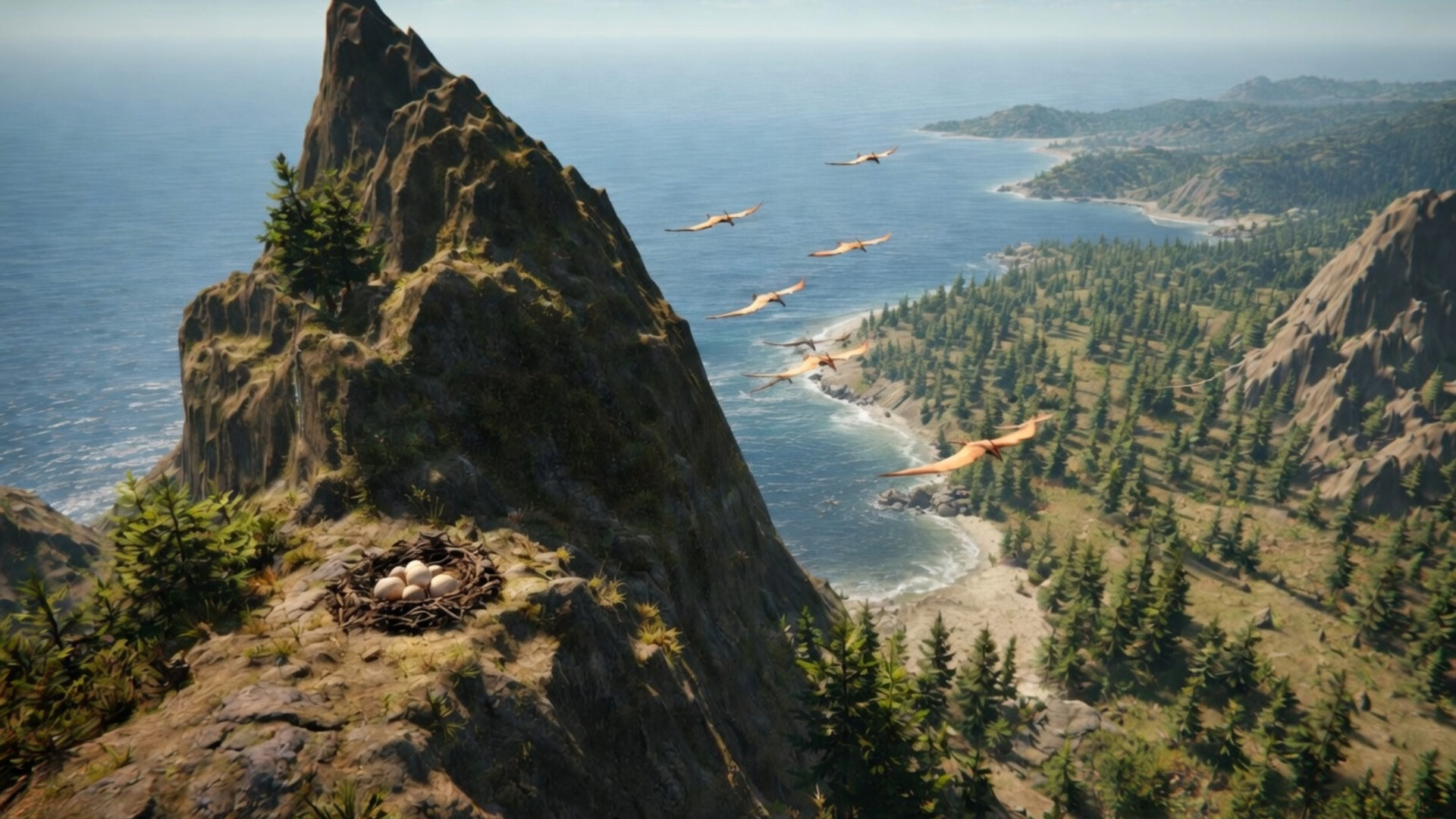


Age of Beast is a real time dinosaur survival strategy game where you take control of a species and guide it through generations of survival on a massive tropical island.

Sign in to add this item to your wishlist, follow it, or mark it as ignored

Coming soon

This item is not yet available

Interested?
Add to your wishlist and get notified when it becomes available.
 

About This Game

Build a species and watch an ecosystem come alive

Age of Beast is a real time dinosaur survival strategy game where you take control of a species and guide it through generations of survival on a massive tropical island.

Begin with only one adult male, one adult female, and an empty nesting ground.

Find fresh water, locate food, explore unknown territory, produce eggs, raise young, defend your nesting grounds, survive predators, endure dangerous weather, and slowly grow your species from two dinosaurs into a major part of a living ecosystem.

Every species plays differently.

A Tyrannosaurus can become one of the most dangerous predators on the island, but every adult requires enormous amounts of food and new generations take time to raise.

Velociraptors are much smaller and more vulnerable, but reproduce quickly, move rapidly, hunt together, and recover from population losses much faster.

Massive herbivores can become extremely difficult for predators to defeat, but they require large feeding areas, reliable water, protection for young, and generations of successful reproduction.

The goal is not to destroy every other species.

Every faction begins with exactly 1 point.

When the match timer expires, the species with the highest score wins.

Population, happiness, survival, successful generations, individual dinosaur levels, exploration, Knowledge, discoveries, hunting, food security, water security, raising young, and many other accomplishments contribute to your score.

Or choose Endless and allow the ecosystem to continue developing for as long as you want.

Start with two dinosaurs

Every species begins from the same basic foundation.

One adult male.

One adult female.

One nesting ground.

One point.

Both dinosaurs begin at Level 1 and are ready to reproduce.

There are no starting eggs and no starting young.

Everything your species becomes develops during the game.

Your first challenge is survival.

Find fresh water.

Find food.

Learn the surrounding territory.

Protect the nesting ground.

Keep your breeding pair alive.

Produce your first clutch of eggs.

From there, your species can begin growing into something much larger.

Females lay eggs

Adult females produce eggs after breeding with a compatible adult male.

Different dinosaur species have very different clutch sizes and reproduction rates.

Smaller dinosaurs can produce larger clutches and replace lost individuals relatively quickly.

Large predators and enormous herbivores produce fewer eggs and require much more time to create large populations.

A Tyrannosaurus population should never grow at the same rate as a Velociraptor population.

Massive sauropods can eventually create incredibly powerful herds, but reaching that point requires generations of survival.

Eggs are real physical objects inside nesting grounds.

Eggs cannot move.

Eggs cannot fight.

Eggs cannot hunt.

Eggs cannot explore.

They remain inside the nesting area while they incubate.

Eggs can also be discovered, attacked, and eaten by predators.

A predator that discovers an undefended nesting ground may choose to eat the eggs rather than risk attacking the adults nearby.

Protecting your nesting grounds becomes increasingly important as your species grows.

A large species may eventually maintain several nesting areas throughout its territory.

Raise new generations

Dinosaurs move through a complete life cycle.

Eggs hatch into hatchlings.

Hatchlings grow into juveniles.

Juveniles grow into adults.

Adults eventually become elders.

Elders eventually die from old age.

Young dinosaurs are physically smaller than adults and gradually grow over time.

They are also much more vulnerable.

Young dinosaurs require food, water, protection, and healthy adults around them.

A young Tyrannosaurus may eventually become one of the strongest animals on the island, but first it must survive long enough to reach adulthood.

Adults form the main population responsible for keeping the species alive.

They hunt.

They forage.

They explore.

They fight.

They defend nesting grounds.

They protect young.

They reproduce.

They can also help feed weaker members of the herd.

Elders become less important as fighters but continue benefiting the species by producing Knowledge over time.

Keeping elders alive can therefore remain valuable long after their strongest years have passed.

Every dinosaur is an individual

Every dinosaur has its own name, sex, age, level, experience, health, needs, happiness, abilities, and history.

Dinosaurs receive species themed pun names that make individual animals easier to remember.

A Tyrannosaurus may be named Rexanne.

A Velociraptor may be named Clawdia.

A Triceratops may be named Horn Solo.

A Stegosaurus may be named Stego My Eggo.

Your original male and female can eventually become the ancestors of dozens or hundreds of descendants.

Dinosaurs gain experience through survival and activity.

Hunting prey.

Escaping predators.

Finding food.

Finding fresh water.

Exploring unknown territory.

Discovering important locations.

Protecting young.

Defending nesting grounds.

Winning fights.

Raising offspring.

Surviving dangerous weather.

As dinosaurs gain experience, they level up.

Develop individual specialties

Dinosaurs can become especially skilled at different parts of survival.

Some become better hunters.

Some become faster.

Some develop greater stamina.

Some become better foragers.

Some become more resilient.

Some become better parents.

Some develop stronger perception.

Some become especially effective at generating Knowledge.

Progression has an element of randomness, meaning two dinosaurs from the same species can grow into very different individuals.

Species characteristics also influence development.

Fast dinosaurs are more likely to become exceptional runners.

Predators are more likely to develop strong hunting abilities.

Large armored dinosaurs may become particularly resilient.

Dinosaurs that survive for many generations can become extremely valuable members of the species.

Hunger and thirst control survival

Every dinosaur must eat and drink.

Herbivores search for vegetation appropriate for their size and feeding style.

Smaller plant eaters can survive from common plants, berries, shrubs, and low vegetation.

Massive herbivores can reach tall vegetation and premium feeding areas unavailable to smaller dinosaurs.

Carnivores must find meat.

They can hunt other dinosaurs, search for neutral wildlife, locate carcasses, raid nesting grounds, eat eggs, or catch easier prey.

Aquatic and fish eating species can hunt fish and use marine environments.

Fresh water is essential for nearly every species.

Rivers, lakes, ponds, springs, and watering holes become some of the most important locations on the island.

The ocean surrounds the entire island and dinosaurs may enter it, swim, travel, hunt, and fish where appropriate, but seawater cannot replace fresh drinking water.

Without food, dinosaurs eventually die.

Without water, dinosaurs eventually die.

Watering holes bring the island together

Fresh water naturally creates important gathering points.

Herbivores need it.

Predators know herbivores need it.

Neutral wildlife needs it.

Young dinosaurs need it.

During good weather, enough water may exist for species to remain separated.

During droughts, surviving freshwater locations become increasingly important.

Several unrelated species may suddenly be forced toward the same watering hole.

A peaceful location can quickly become dangerous.

Predators may stalk nearby vegetation waiting for prey.

A herd may decide the water is too dangerous and search for another source.

A massive herbivore herd may simply arrive and force smaller dinosaurs away.

Water sources can change as weather changes, meaning safe territory does not remain safe forever.

Hunt like a predator

Predators search for prey they believe they can catch and defeat.

Distance matters.

Size matters.

Health matters.

Stamina matters.

Herd size matters.

The strength of the target matters.

A predator may choose a young dinosaur, an injured animal, an isolated adult, an egg, or neutral wildlife instead of attacking the strongest member of a herd.

Predators automatically sprint while chasing prey.

Sprinting drains stamina.

A failed hunt can become dangerous.

A predator that wastes all of its stamina chasing something too fast may become exhausted far away from food or fresh water.

Powerful carnivores sit near the top of the food chain, but their enormous food requirements mean they must continue finding successful hunts.

Prey wants to survive

Prey does not automatically stay and fight a predator.

Survival comes first.

When dangerous predators are discovered, prey attempts to escape.

Nearby animals may flee together.

Adults may position themselves between predators and their young.

A herd may completely abandon a feeding area or watering hole if remaining there becomes too dangerous.

Prey automatically sprints when escaping serious danger.

As stamina falls, movement becomes slower.

When stamina reaches extremely low levels, dinosaurs are reduced to a slow exhausted walk.

Fighting becomes a last option for many herbivores.

But powerful herbivores are far from helpless.

A Triceratops, Ankylosaurus, Stegosaurus, or massive sauropod may decide that standing its ground is safer than running.

Large herds can also become confident enough to defend themselves.

A predator that chooses the wrong target can quickly become the one in danger.

Command your dinosaurs directly

Select individual dinosaurs or large groups.

Drag a selection box around several dinosaurs.

Create control groups.

Move multiple dinosaurs together.

Right click terrain to move.

Right click an enemy dinosaur to attack it.

Double right click terrain to sprint toward that location.

Double right click an enemy to launch a sprinting attack.

Use sprinting when pursuing prey, escaping predators, reaching water, defending nesting grounds, or responding to an emergency.

Camera controls allow you to zoom far above the island or lower the view closer to your dinosaurs.

The minimap displays the entire island while Fog of War limits what your species has actually discovered.

Explore a hidden island

The island begins covered by Fog of War.

You only know territory your dinosaurs have explored.

Different species have different vision and perception abilities.

Some dinosaurs can see and detect threats from much farther away than others.

Exploration reveals rivers, lakes, watering holes, feeding grounds, forests, nesting territory, coastlines, wildlife, rival species, and special locations.

AI species explore the island too.

They do not automatically know where important locations or enemies are.

They must travel into unknown territory and react to what they discover.

Discover valuable locations

Some areas of the island are much more valuable than others.

You may discover rich feeding grounds.

Rare vegetation.

Medicinal berries.

Pristine freshwater springs.

Mammal dens.

Large sheltered areas.

Important landmarks.

Artifacts.

Excellent nesting territory.

Major discoveries can provide experience, score, Knowledge, healing opportunities, food, water, or other advantages.

A weaker species that explores efficiently can gain advantages that a stronger but poorly managed species never discovers.

A tropical dinosaur world

The island contains many natural environments.

Forests.

Plains.

Wetlands.

Swamps.

Highlands.

Coastal areas.

Rivers.

Lakes.

Ponds.

Freshwater springs.

Beaches.

Open ocean.

Different environments contain different food, water, shelter, and wildlife opportunities.

Large herbivores may migrate between feeding grounds.

Predators may patrol routes connecting freshwater sources.

Aquatic species can hunt around coastal and marine habitats.

The island begins relatively quiet.

Every species starts with only two dinosaurs.

Then females produce eggs.

Eggs hatch.

Young dinosaurs survive.

Populations increase.

New nesting areas appear.

Predators hunt.

Herbivores migrate.

Animals die.

New generations replace them.

A quiet island can eventually become a world filled with hundreds of dinosaurs.

Weather changes survival

Age of Beast features a changing day and night cycle.

Morning becomes afternoon.

Afternoon becomes sunset.

Night becomes sunrise.

Temperature changes throughout the day and is displayed in Fahrenheit.

Weather can include clear skies, rain, heavy rain, fog, thunderstorms, droughts, heat waves, and cold snaps.

Rain can restore freshwater.

Drought can reduce freshwater.

Heat increases thirst.

Storms make travel more dangerous.

Heavy weather can threaten young dinosaurs.

Large trees and sheltered locations can provide protection during dangerous storms.

Weather can completely change which parts of the island are safe and valuable.

Match lengths or Endless survival

Choose how long you want the competition to continue.

Matches can last a short amount of time or continue for hours.

When the timer expires, current scores determine the winner.

Or choose Endless.

Endless mode has no automatic winner.

Continue breeding, hunting, exploring, surviving, and watching the ecosystem change for as long as you want.

AI species want to win too

Every AI faction follows the same survival systems as the player.

AI dinosaurs search for water.

Find food.

Explore.

Breed.

Raise young.

Protect nesting grounds.

Avoid dangerous predators.

Hunt weaker prey.

Move away from dangerous situations.

Seek shelter.

Respond to population problems.

Try to improve their score.

An AI species falling behind in exploration may send more dinosaurs into unknown territory.

A predator failing to find food may search for different prey.

A thirsty herd may abandon its territory and migrate toward known fresh water.

Different difficulty levels change how effectively the AI handles these decisions.

Very Easy.

Easy.

Medium.

Hard.

Very Hard.

Impossible.

Higher difficulties improve AI effectiveness without giving the AI complete knowledge of the hidden world.

System Requirements

    Minimum:
    • OS *: Windows 7/8/10
    • Processor: 64-bit Processor: Intel Core i3 or equivalent
    • Memory: 8 GB RAM
    • Graphics: Intel Iris 630 Pro or similar (using "Basic" mode in graphics settings)
    • DirectX: Version 11
    • Storage: 1 GB available space
    Recommended:
    • OS *: Windows 7/8/10
    • Processor: 64-bit Processor: Intel Core i5 or equivalent
    • Memory: 8 GB RAM
    • Graphics: Nvidia GTX 1060 or Radeon 580
    • DirectX: Version 11
    • Storage: 1 GB available space
* Starting January 1st, 2024, the Steam Client will only support Windows 10 and later versions.
Review Filters