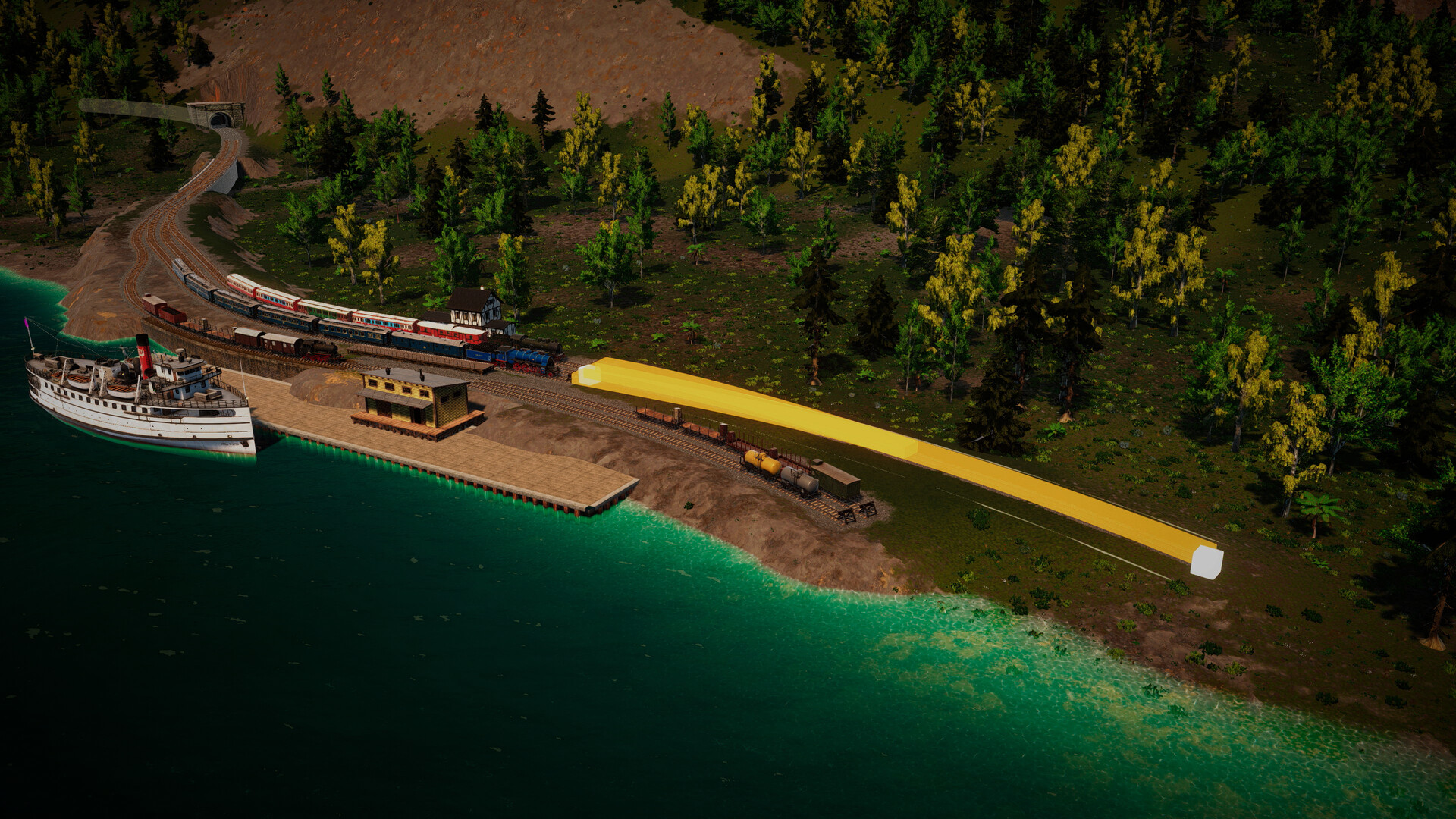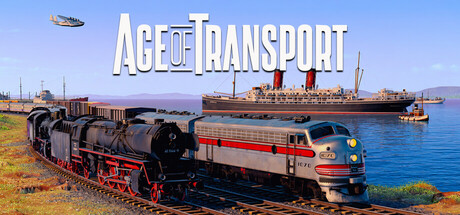

Classification yards, waybills and live dispatch — on a 1:4-scale Earth. Build a multi-modal freight empire across rail, sea and air through twelve eras of transport history, in a persistent world shared by up to 255 companies.

Sign in to add this item to your wishlist, follow it, or mark it as ignored

Coming Soon To Early Access

The developers of this game intend to release as a work in progress, developing with the feedback of players.

Note: Games in Early Access are not complete and may or may not change further. If you are not excited to play this game in its current state, then you should wait to see if the game progresses further in development. Learn more

What the developers have to say:

Why Early Access?

“Age of Transport - Blue Marble is a persistent multiplayer game, and the multiplayer half of it is unfinished by design — because the decisions it still needs are not ours to make alone.

The single-player simulation is playable end to end today. What comes next is the part that only exists once people are in it: how dedicated servers are hosted and administered, what tools the people running large worlds actually need, how communities grant standing to their members, what a world of 255 companies demands that a world of five does not, and how twelve eras of balance hold up when players spend fifty hours in each of them rather than the hours we can spend ourselves.

The charter system is the clearest case. Charters are the objectives that give a player direction in an otherwise entirely open world — undertakings, trials, surveys, routes and developments, with the largest of them gating the eras. Early Access ships with a basic set, and the stack it grows into will be built substantially from what players suggest. The thing that tells you what to do in this game is a thing our players help write.

We have opinions about all of that. We do not have answers, and we would rather build the answers with the people who will live in these worlds than guess and ship. Early Access is where that conversation can happen while the game is still shaped by it.”

Approximately how long will this game be in Early Access?

“We're planning around nine to twelve months. That estimate assumes the networked infrastructure — dedicated servers in particular — lands roughly on schedule. If real-world testing tells us it needs longer, we'll take longer and say so, rather than shipping 1.0 on a date we picked before we had the data.”

How is the full version planned to differ from the Early Access version?

“The multiplayer and community layer will be built out rather than merely hardened. Dedicated server hosting will be released with the administration tools operators ask for during Early Access — we have a first guess at what those are and expect to be wrong about some of it. The lobby, standings and watchdog will have grown features we haven't thought of yet.

The charter system will have grown from the basic set at launch into a much larger body of objectives, a substantial part of it built from what players suggest and ask for.

Balance across the twelve eras will have been reworked against real play: charter difficulty, era pacing, city-service thresholds and the economics of each period, tuned by how people actually play rather than how we imagined they would.

The vehicle catalogue will be substantially larger than the 2,500+ at Early Access launch, and prioritised by player requests.

And the systems that ship at launch will have had a year of real use behind them — including the ones we will have changed because players showed us a better idea.”

What is the current state of the Early Access version?

“Playable end to end, single-player and multiplayer. All twelve eras, the economy and production chains, industry and power, city growth and control, the research tree, the 2,500+ vehicle catalogue, Train Spotter mode and world visitors are in and working.

Multiplayer is where the development is. The global lobby, global standings, server availability watchdog and dedicated server hosting are built and working, but they are young: they have been exercised by our own testing rather than by real communities, and both the feature set and the administration tools will change substantially based on what server operators tell us they need. Expect refactoring and optimisation as real load arrives.

The charter system ships with a basic set of objectives. It is deliberately a starting point rather than a finished body of content, and growing it is one of the main things Early Access is for.

Balance is the other open area. Era pacing, charter difficulty and city-service thresholds are tuned against our own playthroughs. Twelve eras at twenty to fifty hours each is more play than a small team can generate, and these numbers will move as players reach places we haven't.

One commitment that will not change: we do not wipe worlds. The world you start with is the world you keep.”

Will the game be priced differently during and after Early Access?

“Yes. The price will increase going from Early Access to version 1.0. Buying early costs less and always will — there is no edition, season pass, DLC or in-game purchase to buy on top of it, now or ever. One purchase covers the game, everything added during Early Access, and everything added after it.”

How are you planning on involving the Community in your development process?

“**Player feedback is the primary input, not a suggestion box.** Early Access exists so that the people living in these worlds decide what gets built next, and the work is organised around four things they genuinely shape.

**Dedicated servers and the tools around them.** The people running large worlds for months are the ones who will find what is missing, so their feedback is prioritised. Administration tools, how communities grant standing to their members, how worlds are listed and discovered — none of it is settled, and it should be settled by the operators it affects rather than by us guessing at what they need.

**The charter system.** Charters are the objectives that give a player direction and purpose in an open world, and Early Access ships with a basic set. Growing that stack is a conversation we intend to have in public, because every player has a route they want built or a record they want attempted, and the good ones will not all come from us.

**Balance.** Era pacing, charter difficulty and city-service thresholds are our best guess, tuned against our own playthroughs. Twelve eras at twenty to fifty hours each is far more play than we can generate ourselves. Players will reach places we have not, and the numbers that are wrong are the ones they will tell us about.

**The vehicle catalogue.** The production queue is public — you can see what is being built now and what is queued behind it. What moves up that queue is decided by what players ask for. We are working towards an in-game voting system so that requesting and voting happen where players already are, rather than on a forum they have to remember to visit.

**How we communicate.** The Steam forums and our community channels, read and answered by the developer rather than by a community manager. Regular builds with changelogs that say what changed and who asked for it. And regular posts about what is going well and what is proving harder than expected — including the things we got wrong.”
Read more
This game is not yet available on Steam

Planned Release Date: 2027

Interested?
Add to your wishlist and get notified when it becomes available.
 

Report bugs and leave feedback for this game on the discussion boards

See all discussions

About This Game

Age of Transport – Blue Marble is a transport simulation on a 1:4 scale model of Earth. The map covers the whole planet, with 70,000 cities placed where they actually are.

You build railways, roads, ports, airports and the industry behind them. There is no money in the game. To build a locomotive you need a factory, to supply the factory you need ore, and to move the ore you need a railway. Cities want food, clothing, medicine and consumer goods. They get them if you deliver them. How many people your network supplies is how you are scored.

Trains are dispatched rather than assigned to fixed routes. Yards sort wagons over a hump. Track is built from rail, sleepers, fastenings and ballast, and each of the four limits the speed of the line.

Features

  • The whole Earth at 1:4 scale, installed with the game. No streaming.
  • Trains, trams, ships, riverboats, aircraft and helicopters, plus the ports and interchanges between them.
  • Over 2,500 vehicles, 1830s to the present day.
  • Production chains up to nine steps, with power stations and a grid.
  • Twelve eras played as one continuous game, with no restarts between them.
  • Singleplayer, or up to 255 companies in a shared persistent world.
  • Charters to work towards: transcontinental routes, speed records, surveys, city development.
  • No DLC, no microtransactions.

Early Access

Singleplayer is playable from start to finish. The multiplayer part is still being built: dedicated servers, the tools to administer them, and the list of charters. We want input from the people who will use them. We expect nine to twelve months. Worlds are never wiped.

System Requirements

    Minimum:
    • DirectX: Version 12
    Recommended:
    • DirectX: Version 12
    • Network: Broadband Internet connection
Review Filters