


A systems-driven, real-time hacking sandbox in a living, procedurally generated world. Profile people, infiltrate companies, exploit networks from your terminal, automate complex attacks, erase the evidence, trade stocks and crypto, and buy or sell intelligence on an underground marketplace.

Sign in to add this item to your wishlist, follow it, or mark it as ignored

Early Access Game

Get instant access and start playing; get involved with this game as it develops.

Note: Games in Early Access are not complete and may or may not change further. If you are not excited to play this game in its current state, then you should wait to see if the game progresses further in development. Learn more

Leaving Early Access: 2027

What the developers have to say:

Why Early Access?

“How To Hack In? is built around interconnected systems rather than a single scripted path. Seeing how players combine tools helps me understand which mechanics are clear, which outcomes feel fair, and which system interactions are the most interesting.

Early Access lets me expand and refine the simulation with the community. Player feedback has already shaped usability, balance, onboarding, and development priorities. It will remain part of how I decide what to improve as the game moves toward 1.0.”

Approximately how long will this game be in Early Access?

“I'm currently targeting a full release in 2027. Until then, I plan to add more systems and content, improve how existing systems work together, and continue polishing the game. I will update this estimate if the schedule changes.”

How is the full version planned to differ from the Early Access version?

“The current Early Access version focuses on the procedurally generated hacking sandbox played through the simulated workstation.

For 1.0, I plan to preserve and expand that sandbox while connecting it to a free-roam 3D city and a story campaign with player choices and different outcomes. The city is planned to add activities and tools outside the workstation interface, while the story campaign will use the existing systems within a more structured narrative.

On the way to 1.0, I also plan to add more tools, missions, and world content, along with Steam Achievements, Steam Deck support, optimization, accessibility improvements, and general polish. Priorities may change as development continues and player feedback comes in.

Multiplayer is not currently planned.”

What is the current state of the Early Access version?

“The current Early Access version is a single-player hacking sandbox played through a simulated operating system. Each new game procedurally generates people, companies, networks, websites, and missions.

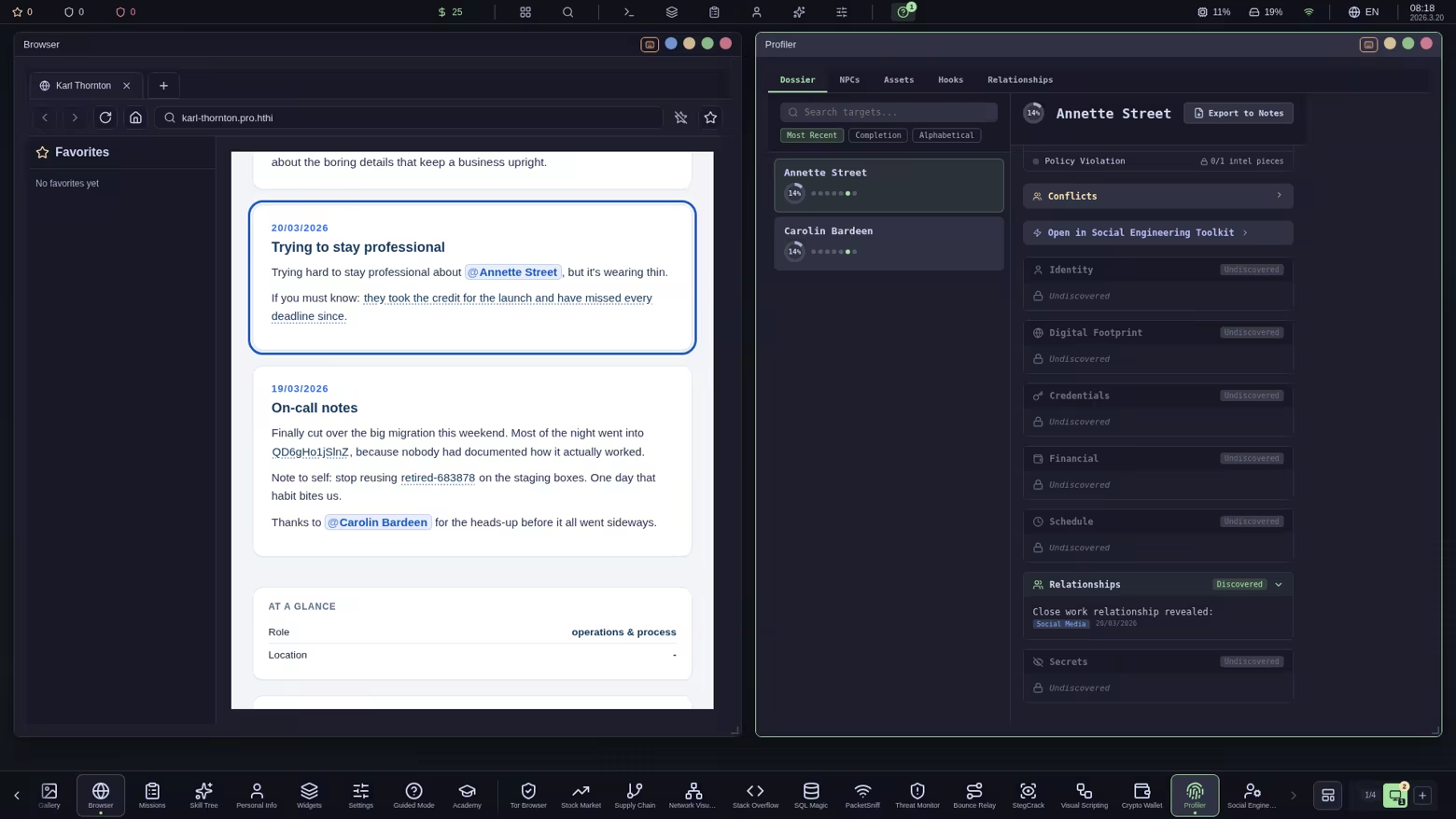
Use terminal and browser tools to exploit websites and network services, move between connected machines, route connections through relays, and clean up logs. Build dossiers on people, uncover Weak and Strong hooks, and use social engineering to gain information or access.

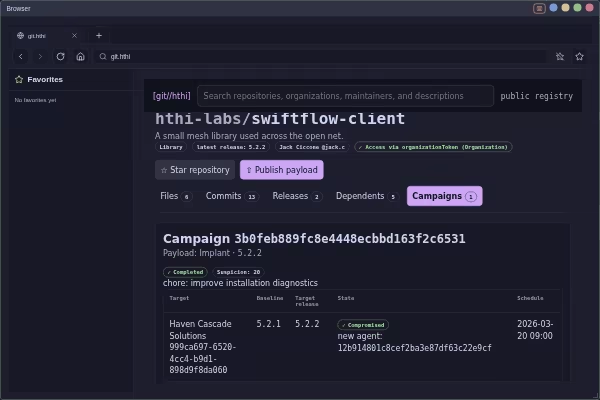
Develop your playstyle through the Skill Tree and automate repeatable tasks with Visual Scripting. Use code repositories to compromise company software and carry out supply-chain attacks. Rent remote servers, host websites, and build command-and-control infrastructure.

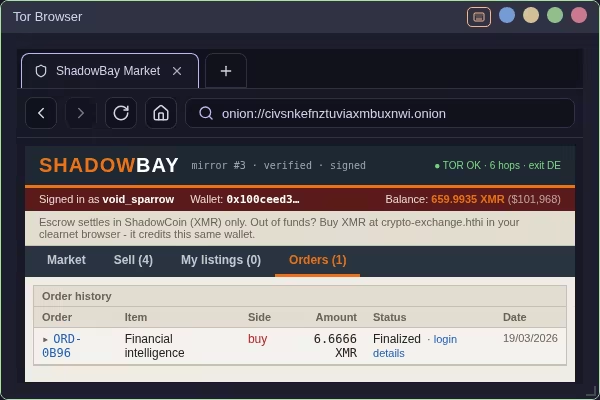
Trade stocks and cryptocurrency, trace transactions, and investigate or take over scam operations. Access an underground marketplace through Tor to buy or sell intelligence, hooks, and recovered artifacts. Customize the workstation with shortcuts for individual app windows, floating or tiling modes, and saved configurations of open apps.

Optional guidance is available through the workstation tour, searchable Wiki, Guided Mode, Hackopilot, and interactive Academy lessons. Some lessons require earlier lessons, player progression, or the relevant tool.

The free-roam 3D city and story campaign are not yet included.

Some major Early Access updates may require starting a new game. When that happens, I'll make it clear in the update announcement.”

Will the game be priced differently during and after Early Access?

“Yes. The Early Access price reflects the game's current scope. I plan to raise the price as major content is added and the game approaches 1.0, but I haven't decided when or by how much.”

How are you planning on involving the Community in your development process?

“I read feedback, bug reports, suggestions, and play experiences shared through Steam Discussions and the official Discord.

That feedback helps me understand which features are hard to discover, where interfaces are unclear, how difficulty and pacing feel, and what happens when systems are combined. I use it alongside the game's overall direction to prioritize fixes, refine mechanics, and decide where more guidance or content is needed.”
Read more

Buy How To Hack In?

₩ 14,500
 
See all discussions

Report bugs and leave feedback for this game on the discussion boards

About This Game

Every system is a way in

How To Hack In? is a systems-driven hacking sandbox played through your own simulated workstation.

Each new game creates a world of people, companies, networks, websites, relationships, vulnerabilities, and secrets. What you find in one place can be useful somewhere else. That might mean using personal details for social engineering, trying exposed credentials against company systems, or compromising software used by other businesses.

Follow the connections, combine what you learn, and find your way in.

People are part of the network

NPCs have personalities, relationships, routines, and conflicts. Learn about them through social posts, files, transactions, and other information scattered across the world.

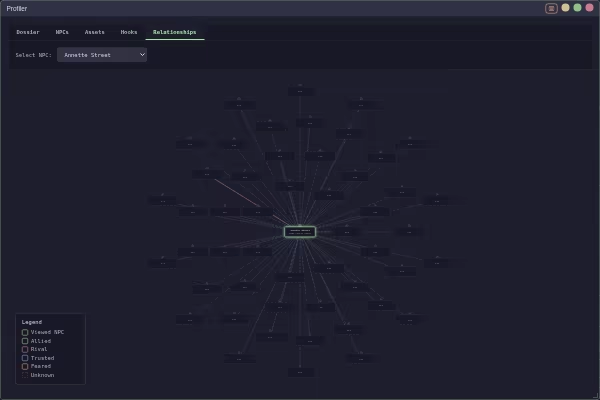
The Profiler brings those discoveries together into dossiers. Map relationships, identify useful hooks, connect people to digital assets, and use what you know to find opportunities that technical tools alone would miss.

Plan the operation your way

Gather information through websites, social media, email, files, network scans, and personal dossiers. Then choose your approach:

  • Crack credentials and explore internal networks.

  • Scan for vulnerable services and move between connected machines.

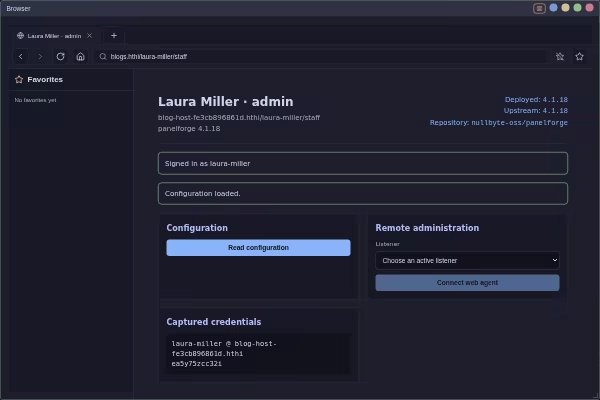
  • Find and exploit vulnerabilities in websites and admin panels.

  • Profile targets, uncover Weak and Strong hooks, and choose from phishing, vishing, pretexting, bribery, or leverage.

  • Route connections through compromised machines and clean up logs when you are done.

  • Build visual scripts to automate repeatable tasks.

An operation can be technical, social, financial, or a mix of all three.

Attack connected companies

Companies have suppliers, clients, competitors, code repositories, products, infrastructure, and economic health.

Compromise the software they use and carry out supply-chain attacks. If the incident reaches the news, it can damage the company's reputation and affect its stock price.

Rent remote servers, host websites, build command-and-control infrastructure, and manage agents across compromised systems.

Work across a simulated economy

Trade stocks and cryptocurrency, trace transactions, and investigate scam operations - or take them over yourself. Access an underground marketplace through Tor to buy or sell intelligence, hooks, and recovered artifacts.

Choose what to do with the information you uncover. Expose wrongdoing, help a victim, use evidence as leverage, manipulate stock prices, or profit from a criminal operation.

Build your hacking workstation

Assign custom shortcuts to individual app windows and switch between floating and tiling modes. Save configurations of open apps, then reload your preferred layout whenever you need it. Build reusable workflows with Visual Scripting.

Develop your preferred playstyle through the Skill Tree. Your CPU, RAM, and connectivity determine what your workstation can handle, while money, tools, and access determine which paths are open to you.

Learn at your own pace

Start with a tour of the workstation, use the searchable Wiki for quick reference, and turn to Guided Mode or Hackopilot when you need more specific guidance. Interactive Academy lessons teach key systems by letting you use them.

AI Generated Content Disclosure

The developers describe how their game uses AI Generated Content like this:

Generative AI tools were used during development to assist with portions of localization for the game.
All AI-assisted content is pre-generated. No generative AI is used while the game is running, and the game does not connect to an external generative AI service.

Mature Content Description

The developers describe the content like this:

The game contains optional stylized images of topless adult women with visible breasts. Some missions and in-game text include private-photo blackmail, affairs, occasional strong language, and non-graphic references to death or violence. There are no depicted sexual acts, graphic violence, or gore.

System Requirements

Windows
SteamOS + Linux
    Minimum:
    • Requires a 64-bit processor and operating system
    • OS: Windows 10
    • Processor: 2.0 GHz
    • Memory: 4 GB RAM
    • DirectX: Version 10
    • Storage: 15 GB available space
    Recommended:
    • Requires a 64-bit processor and operating system
    • OS: Windows 11
    • Processor: 2.0 GHz
    • Memory: 8 GB RAM
    • DirectX: Version 10
    • Storage: 15 GB available space
    Minimum:
    • OS: openSUSE Tumbleweed, Linux Mint 21.2 "Victoria" or SteamOS or equivalent
    • Processor: 2.0 GHz
    • Memory: 4 GB RAM
    • Storage: 15 GB available space
    Recommended:
    • OS: openSUSE Tumbleweed, Linux Mint 21.2 "Victoria" or SteamOS or equivalent
    • Processor: 2.0 GHz
    • Memory: 8 GB RAM
    • Storage: 15 GB available space
Review Filters