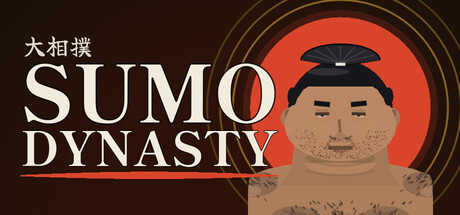


Run a sumo stable as its oyakata. Raise young men from amateur sumo to the top of the banzuke, survive the Yokozuna Council, buy elder names and build a dynasty, in the most in-depth sumo management game ever made. In English and full Japanese.

Daftar masuk untuk menambah item ini ke senarai hajat anda, ikuti atau tandakannya sebagai diabaikan

Bahasa Bahasa Melayu tidak disokong

Produk ini tidak menyokong bahasa tempatan anda. Sila semak senarai bahasa yang disokong di bawah sebelum membuat pembelian

Permainan ini belum tersedia di Steam lagi

Akan datang

Berminat?
Tambah ke senarai hajat anda dan terima pemberitahuan apabila permainan sudah tersedia.
 

Tentang Permainan Ini

Sumo Dynasty puts you in charge of a sumo stable (heya) as its oyakata. You never step on the dohyo. You recruit the boys and men, decide how hard they train, manage the money, the staff and the stable's name, and try to raise a rikishi from the bottom of the banzuke to the white rope. It is the most in-depth sumo management game ever made: almost everything is modelled on how the real sport works, and the world keeps moving without you. Play it alone or in an online league with friends, in English or in full Japanese.

Behind the professional world is a living amateur one: hundreds of middle-school, high-school, university and corporate wrestlers at their schools, growing year by year. Follow a young rikishi for years before he turns pro.

  • Seven national championships, from the Junior High and the Inter-High to the Kokutai, the Student and the All-Japan, fought as knockout brackets

  • Titles matter: amateur titles bring tsukedashi rights under each era's real rules

  • Scouting and recruiting: hidden potential described only in words, foreign scholarship students, and rival stables chasing the same prospects

Every man in all six divisions has an exact place on the banzuke. After each basho a Banzuke Committee builds the new one from the results, with the conventions of the real thing.

  • The big decisions: Ozeki runs, kadoban, demotions, Yokozuna promotion and the one-division limit

  • The banzuke reveal: watch the new banzuke land move by move, then check the promotion picture as the next basho closes

  • Every era: kosho, division sizes, pay scales and foreign limits change on their real dates

Six honbasho a year, fifteen days each. Every bout is simulated from the tachiai to the finish, with 82 kimarite and the five non-techniques. Watch your men's bouts with play-by-play, set a bout plan, and decide when a hurt man should withdraw.

  • Bout plans: his own sumo, an all-out tachiai, push and thrust, take the belt, or risk a henka

  • Live days: fight tomorrow's bouts one at a time in their real order, the Yokozuna last

  • Prizes: sansho, kinboshi, playoffs and the Emperor's Cup, with the kensho banners carried round the ring

Watched bouts are acted out on the dohyo, with the ritual intact. The gyoji calls the men up, the banners parade, they throw salt, crouch and rise again, and only then do they charge.

  • The struggle on the ring: drives, belt fights, throws and trips, and men who tumble off the edge, now and then into the crowd

  • The judges confer: mono-ii when a gyoji's call is challenged, and torinaoshi when the bout is too close to call

  • Zabuton fly when a Yokozuna is beaten; a gold-star win is announced as KINBOSHI

  • The day's ceremonies: dohyo-iri, the bow-twirling ceremony, the awards and the victory parade

After every basho, the Yokozuna Deliberation Council meets and its chairman speaks to the press. A Yokozuna who wins ten bouts hears that "ten wins may satisfy a Sekiwake; it does not satisfy this council". A henka, too many pull-down wins or repeated withdrawals bring sharper words, then encouragement, a warning or a recommendation to retire. The council also explains exactly why an Ozeki was, or was not, given the rope.

A sports page in the Japanese style is printed for every banzuke and every basho day, built from the real results, with the full hoshitori table and a full-house stamp on the big days.

  • Predictions: before opening day pick the Makuuchi and Juryo champions, a special-prize winner and a kinboshi, and be scored against three newspaper pundits

  • Your say: a 240-character statement to the press in the Oyakata no koe column

Almost every wrestler is carrying something: a sore knee, a bad back, a taped elbow. They fight on, and it costs them, sometimes for a whole year.

  • A body map for every man: lasting damage part by part, and his full injury history

  • Surgery or rehab: serious tears force the real choice between a long recovery and fighting on sooner at a cost

  • Your call: injury policies, withdrawals, and keeping a man home from the regional tour

You set the course, and the stable follows it when you are not watching day by day.

  • Standing orders: fight on when one win from kachi-koshi, rest when the yusho is out of reach, never henka a Yokozuna

  • A game plan for each rival: push, belt, tachiai or henka, with the coaches' read of every match-up

  • Sponsors: companies bid for popular sekitori when the banzuke comes out, put kensho banners on his bouts, and walk if he fails to deliver

  • Stable projects, degeiko by invitation, signing gifts and visits to a recruit's family

A stable outlives its wrestlers.

  • Elder names (toshiyori kabu): 105 names, each with a history and a price set by its prestige. Secure one for a man while he is still fighting, paid from his own savings and the stable's funds, so he can stay in sumo when he retires. Buy and sell them on the market

  • Succession: groom the coach who will take over when your master steps down at 65, or watch the ichimon bring in an outsider

  • The Association: board elections by ichimon, and your master can stand for a seat

  • Retirement: the danpatsu-shiki, where guests take a snip and the master makes the last cut

  • Legacy: milestones, the masters of your stable, every man you raised, records, rivalries and a year in review

Start in any era from 1967 to today, and play under the rules of the time as later reforms arrive on schedule. Or build your own world.

  • The Database Editor creates stables and rikishi, adds photos in place of the drawn portraits, and shares mods

  • The in-game Handbook explains how sumo works, with every screen pictured and annotated, a glossary, and every kimarite with how often it is seen in real sumo

  • Fully playable in Japanese: the whole interface, the play-by-play, the newspaper, the biographies and the Handbook

One shared world where each friend runs his own stable. Decisions wait for the next sim, and the host's game applies everyone's together.

  • Create a league and share its join code, or reopen any league you are in

  • The sim runs when every owner is ready, when the deadline passes, or when the host calls it, by the week, the basho day or the whole basho

  • Fair by design: contests for recruits, elder names and board seats follow the game's rules, not who clicked first

  • Autopilot keeps absent owners' stables running, and the commissioner can pause, skip or remove

  • All six divisions, from maezumo and Jonokuchi to Yokozuna, with real promotion rules

  • A Banzuke Committee, and a Yokozuna Deliberation Council that speaks after every basho

  • A living amateur world with seven national championships, tsukedashi and foreign scholarship students

  • Detailed bout simulation with 82 kimarite, play-by-play, bout plans and standing orders

  • An animated dohyo with the full ritual, mono-ii and torinaoshi

  • The Sumo Shimpo, with predictions against the pundits

  • Training regimes, degeiko, mentors, tsukebito and stable staff

  • Injuries, ailments wrestlers fight through, a body map, and surgery decisions

  • Sponsors, stable projects, earnings, kensho, supporters' groups, scandals and suspensions

  • Elder names, succession, ichimon politics and board elections

  • Jungyo tours, keiko-soken, kesho-mawashi, dohyo-iri and danpatsu-shiki

  • Procedural faces and a unique biography for every wrestler

  • Records, legends, rivalries, a year in review and 27 Steam achievements

  • Every era from 1967 to today, with the rules changing on their real dates

  • Online leagues for up to 45 owners

  • A Database Editor, mods and an in-game Handbook

  • Full Japanese translation

Keperluan Sistem

    Minimum:
    • OS: Windows 10 64-bit
    • Pemproses: dual-core 2.0 GHz
    • Memori: 4 GB RAM
    • Grafik: DirectX 12 or Vulkan capable (Intel HD 520 / GeForce GTX 750 / Radeon R7 260)
    • Storan: 500 MB ruang tersedia
    Dicadangkan:
    • OS: Windows 10/11 64-bit
    • Pemproses: quad-core 3.0 GHz (simulating weeks and full basho is the heaviest work)
    • Memori: 8 GB RAM
    • Grafik: any DirectX 12 GPU from the last 8 years
    • Storan: 1 GB ruang tersedia
Penapis Ulasan