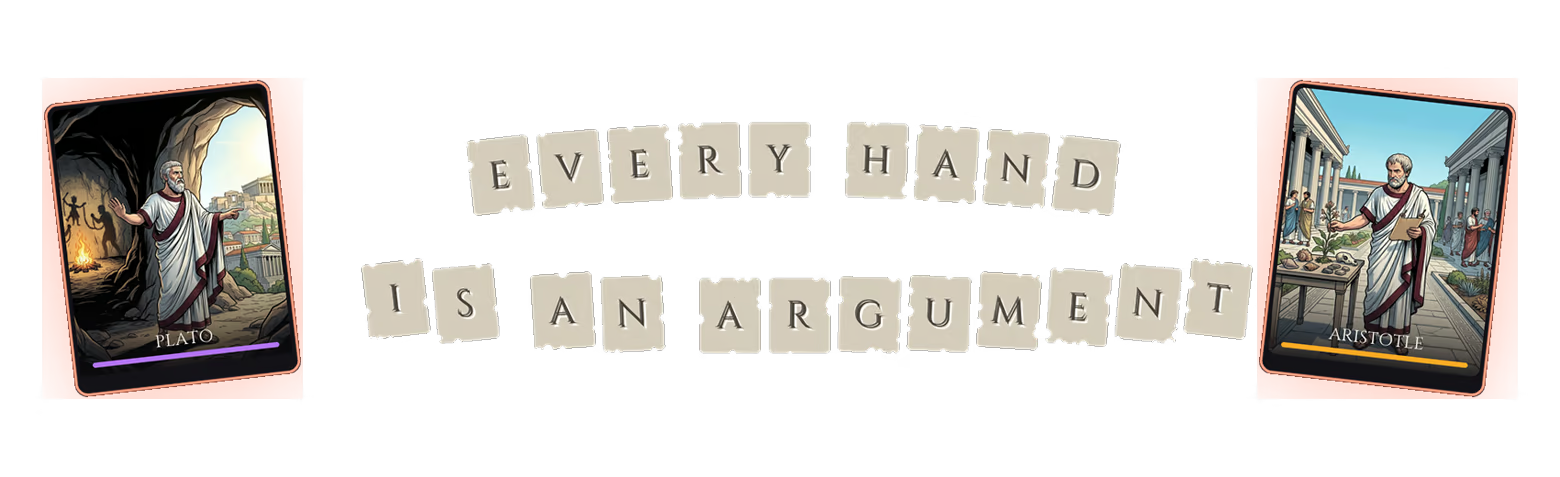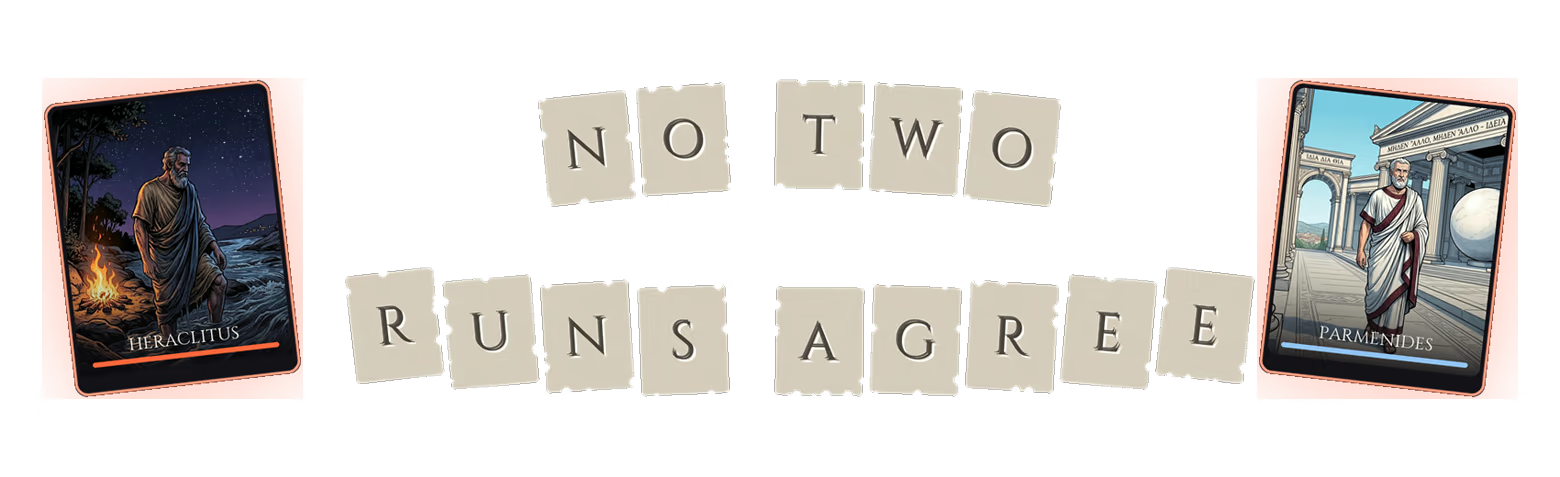


Play philosophers as cards and turn each hand into an argument. Schools, eras and ideas amplify or contradict one another — and the game keeps a Ledger of what you claimed versus what you actually did. Build a doctrine. Then live with it.

Sign in to add this item to your wishlist, follow it, or mark it as ignored

This game is not yet available on Steam

Coming soon

Interested?
Add to your wishlist and get notified when it becomes available.
 

About This Game

Maieutic is a roguelike deckbuilder where your cards are philosophers — and they argue back.

Build hands from real thinkers and let intellectual history do the scoring. Cards from the same school reinforce each other. Lineages fire across centuries — Aristotle's inheritance running through Scholasticism, Empiricism handing itself to Pragmatism. Play opposites and your multiplier collapses, because when contradicting ideas shout at once, none of them is heard.

  • 272 real philosophers, each with a school, an era, fields, tags and a passive that belongs to no one else

  • 97 schools, 41 fields, 31 tags and 15 eras feeding into one synergy system

  • Genuine contradictions that punish incoherent hands — not arbitrary card colors

  • Philosophers who knew each other speak on the table: teachers recognize students, rivals interrupt

Between rounds you choose where to go: the Agora to trade for what you're missing, a school's faculty to recruit from its lineage, or a dilemma that pays well and costs something you can't take back.

  • 88 relics that bend the rules of your run

  • 30 consumables for reshaping a deck mid-fight

  • Routes, events and dilemmas that send every run somewhere the last one didn't go

  • Six-chapter Story Mode through philosophy's own history, each ending against what that era actually feared: Censorship, Silence, the Inquisition, the Leviathan

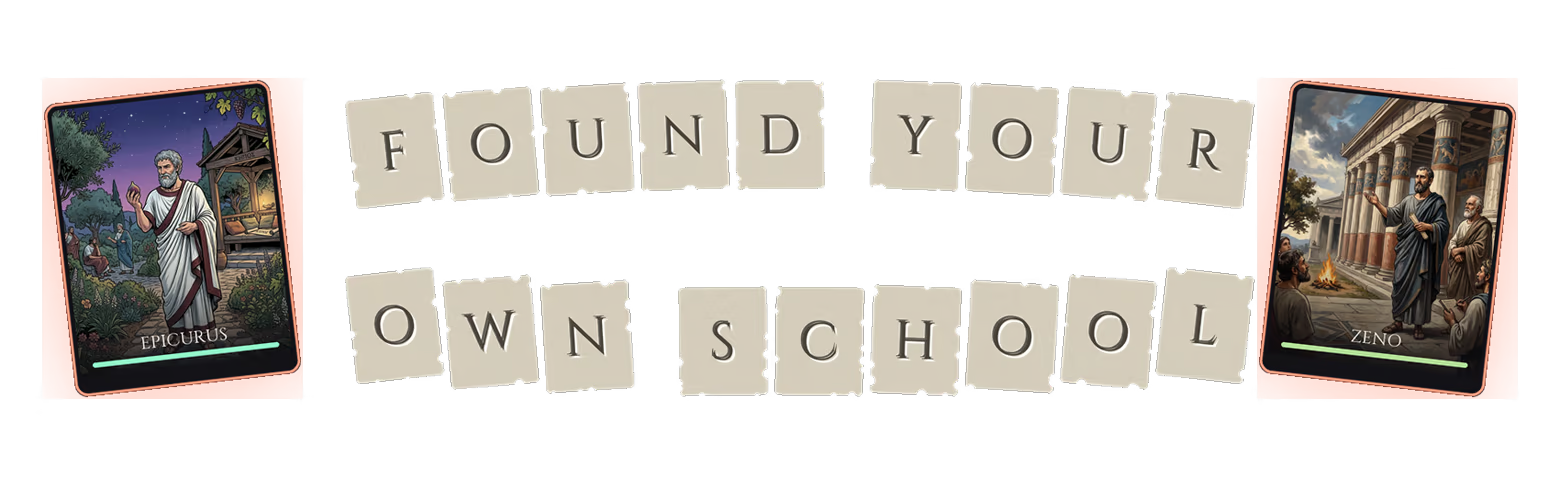
Runs end. Your school doesn't. Hire philosophers as faculty and watch them level up across runs, commit your academy to a doctrine, and grow it from a room with one teacher into an institution with a reputation. Plato founded the Academy. Aristotle left and founded his own. Now it's your turn.

  • Recruit philosophers as permanent faculty who gain levels, mentors and rivals between runs

  • 24 doctrines to commit your school to — each one changes what your academy is good at

  • 5 academy paths, 9 rites and a faculty council as your reputation grows

  • Fame, Prestige, an Honor Tree and weekly objectives that persist long after a run is over

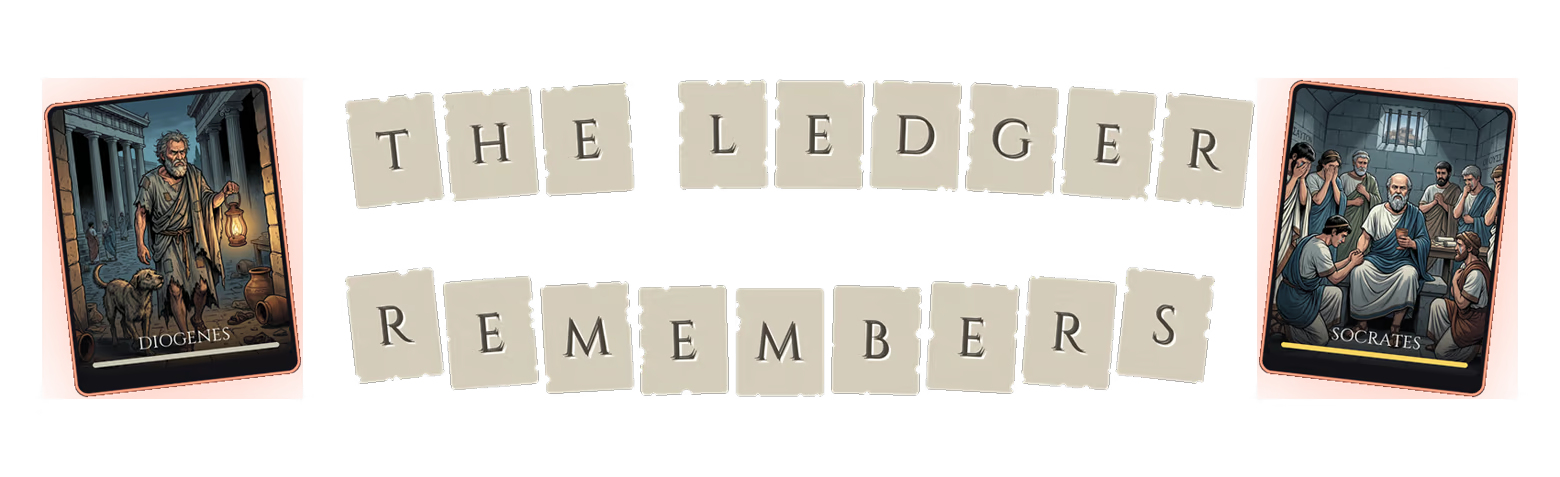
The game asks you things. Is freedom real, or a story we tell about necessity? Does knowledge come from experience, or from reason? You answer — and separately, the Ledger records the hands you actually played. At the end of a run it puts both columns side by side, and your dominant philosophy reshapes the world into one of 20 different endings. Most players find out they argued for one philosophy and played another. It doesn't punish you. It just shows you.

  • A run-end Ledger measuring what you claimed against what you did, across three axes

  • 20 world-state endings decided by the philosophy you actually played

  • 548 real works and full biographies, unlocked as you play

  • A codex of schools, eras and combinations, plus a gallery of curios

  • Daily runs and endless mode.

You can play this game for the score.

People also play it to find out what Diogenes said.

AI Generated Content Disclosure

The developers describe how their game uses AI Generated Content like this:

This game includes content created with the assistance of generative AI tools:

- In-Game Artwork: Philosopher portraits and background visuals were generated using Google's Gemini (Gemini Pro) and hand-curated by the developer.
- Text: Philosopher biographies and informational descriptions were generated with Anthropic's Claude, based on the developer's direction, then reviewed and edited by the developer.

All AI-generated content has been reviewed, edited, and curated by the developer, who holds full commercial rights for its use in this product.

System Requirements

    Minimum:
    • OS: Windows 10 64-bit
    • Processor: Dual-core 2.0 GHz
    • Memory: 4096 MB RAM
    • Graphics: Vulkan 1.0 compatible GPU (Intel HD 520 / NVIDIA GTX 600 / AMD HD 7000 or newer)
    • Storage: 2048 MB available space
    • Sound Card: DirectX compatible
Review Filters