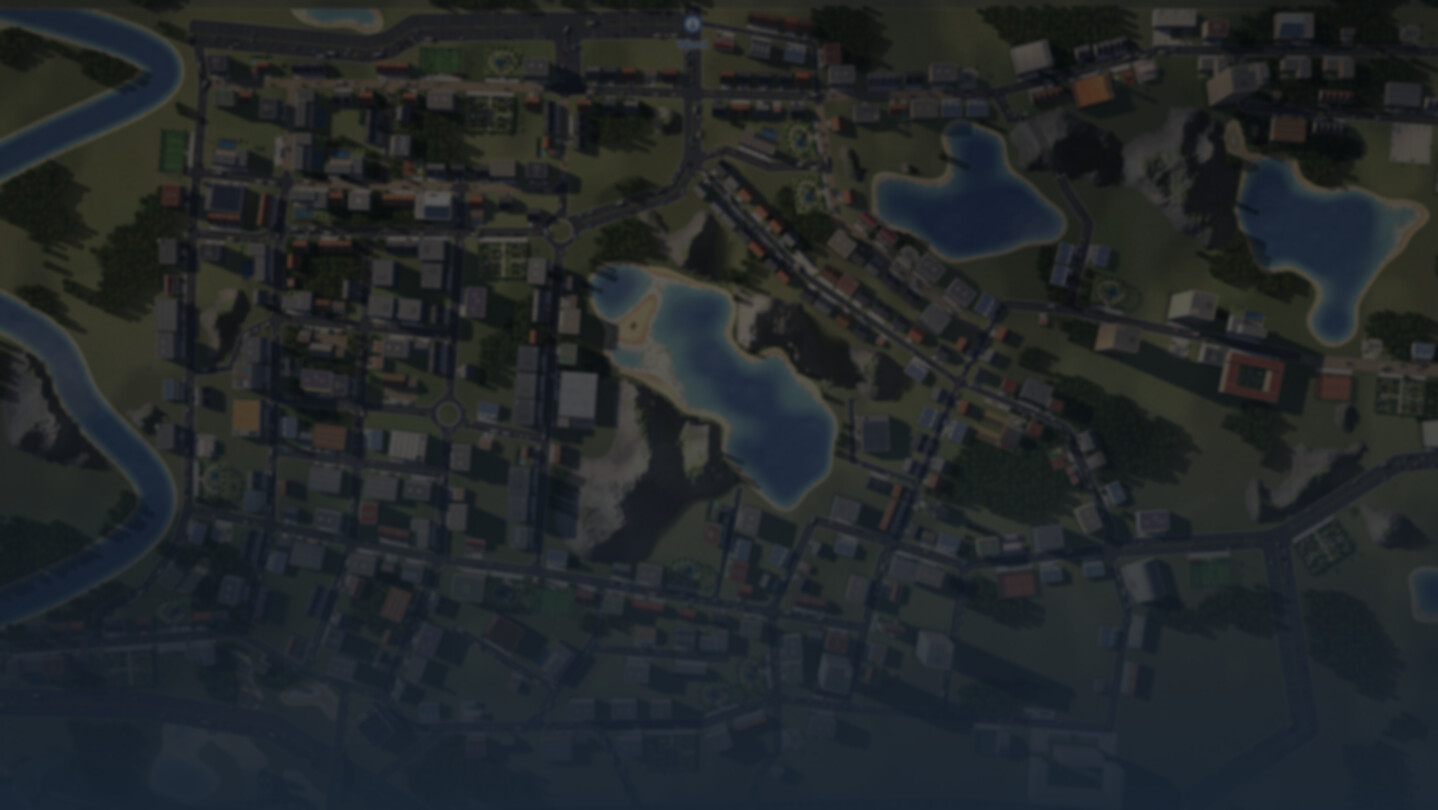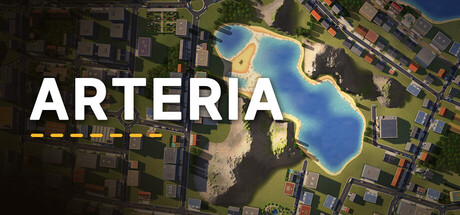

Build roads, intersections, and tram lines. The city grows on its own along the roads you lay. Ease congestion and turn a village into a metropolis.

Sign in to add this item to your wishlist, follow it, or mark it as ignored

This game is not yet available on Steam

Planned Release Date: 29 Oct, 2026

This game plans to unlock in approximately 2 weeks

Interested?
Add to your wishlist and get notified when it becomes available.
 

About This Game

Arteria is a city builder where traffic is at the heart of everything. Your city grows along the roads you build. Every car belongs to a specific household, travels to a real job, shop, or school, and needs somewhere to park. Keep traffic flowing, and a small crossroads settlement can grow into a metropolis of more than 100,000 residents.

You start on an empty map with several incoming roads at its edges. Nothing happens until you connect your first street to them. Then the first residents move in, followed by shops, offices, factories, schools… and traffic jams.

The city grows on its own, but only where people can actually reach. If congestion gets too severe, the city stops growing.

Building roads

  • Freely drawn roads — 9 types, ranging from gravel country roads to highways where drivers can reach speeds of up to 150 km/h.

  • Every road segment can have its own lane layout — up to 8 lanes in each direction, including asymmetric configurations, turning lanes, and curbside parking.

  • Edit lane arrows directly on the map. Click an arrow to disable a turn, or drag a lane toward a specific outgoing lane to allow multiple lanes to turn side by side.

  • Roundabouts in four sizes, including three-lane roundabouts, traffic lights with adjustable green-light timings, and priority roads.

  • Multi-lane ramps with acceleration and deceleration lanes for high-speed roads.

  • Bridges on three elevation levels and tunnels at three depths, including routes beneath rivers and rock formations. Build a cloverleaf, a turbine interchange, or something entirely your own.

  • Every change can be undone and redone, with the money you spent returned to the city budget.

Traffic That Is Actually Simulated

  • Every vehicle has its own driver who can avoid congestion and change routes while already on the road.

  • Drivers yield just like in real traffic — they approach the line, wait for a gap, and become more willing to merge the longer they are stuck.

  • On ramps and lane reductions, vehicles merge using the zipper method.

  • The game includes cars, vans, trucks, buses, motorcycles, trains, and trams.

A City That Lives on Its Streets

  • Residents form households and share cars. A parent drives the kids to school and picks them up in the afternoon, a retiree drives to their allotment, and a student takes the bus.

  • Every resident chooses how to reach their destination: by car, bus, tram, train, or on foot.

  • Cars do not disappear when they reach their destination. They park in driveways, garages, parking lots, or along streets. If no space is available, the driver searches for parking nearby and walks the rest of the way.

  • Supply chains matter. Factories, warehouses, and shops send out their own trucks, and empty shelves quickly become a source of dissatisfaction.

  • Tourists visit museums, the castle, the zoo, and amusement parks, stay in hotels, while sports fans and concertgoers travel into the city for matches and events.

  • More than 100 building types across 10 categories: residential, commercial, offices, industry, public services, tourism, sports, recreation, parking, and transportation.

Find the Bottleneck

  • Click a road, intersection, or building to see the complete routes of the cars using it — where they came from and where they are going.

  • Unhappy residents tell you exactly what they are missing: a shorter commute, a shop, peace and quiet, parking, a job, a school, or a park.

  • Use traffic, noise, and happiness maps, as well as public transport line views showing passengers waiting at stops.

  • Resident happiness affects tax income. A nearby park can increase it by 15%, while noise and congestion reduce it.

  • Designate no-build zones to preserve space for future roads, interchanges, and other infrastructure.

From Crossroads Settlement to Megalopolis

  • 13 stages of city development, from a Crossroads Settlement to a Megalopolis. Each stage unlocks new roads, tools, and buildings.

  • Major landmarks and infrastructure: a national stadium, airport, container port, opera house, aquarium, TV tower, race track, and even a spaceport with rocket launches.

  • Large-scale industry: a car factory, chemical plants, aircraft factory, shipyard launching ships, and a battery gigafactory.

  • Procedurally generated maps across three biomes — valley, desert, and rocky highlands — with rivers, lakes, forests, and hills.

  • Three game modes: Normal, Hard, and Sandbox with unlimited money.

Public Transport and Railways

  • Buses — the city automatically places stops where they are needed, although you can also add your own. Routes are generated automatically.

  • Trams — lay tracks along existing streets, build stops and a depot.

  • Railways — draw double-track lines much like roads, complete with bridges, tunnels, and junctions. Five types of stations are available, ranging from simple stops to a central station with parking and a freight terminal.

  • Five types of trains: railbuses, regional trains, long-distance trains, high-speed passenger trains, and freight trains. You decide how frequently they run.

System Requirements

    Minimum:
    • OS: Windows 10 64-bit
    • Processor: Intel Core i5-6500 / AMD Ryzen 3 1200 or equivalent
    • Graphics: NVIDIA GeForce GTX 1050 Ti / AMD Radeon RX 560 or equivalent
    • Storage: 1 GB available space
Review Filters