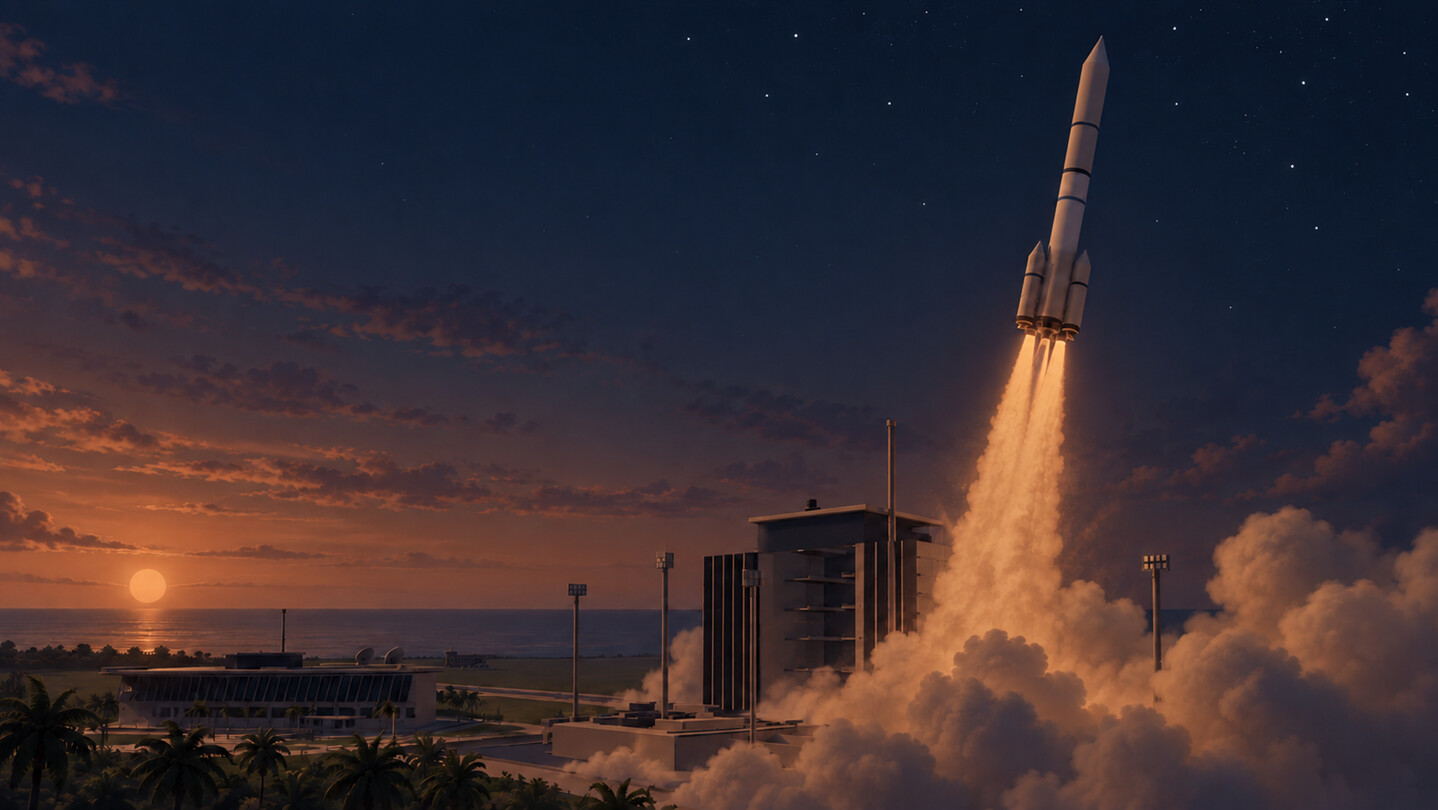

A Walk to the Stars is exactly what it says: a walk… to the stars. Sit back in your chair, relax, and enjoy watching your very first rocket leave the ground. Learn how it works, then, step by step, leave Earth behind, find your way around near space, and finally set out for deep space.

Zaloguj się, aby dodać tę pozycję do listy życzeń, zacząć ją obserwować lub oznaczyć jako ignorowaną

Polski język nie jest obsługiwany

Ten produkt nie obsługuje twojego lokalnego języka. Przed zakupem zapoznaj się z listą obsługiwanych języków, która znajduje się poniżej.

Ta gra nie jest jeszcze dostępna na Steam

Wkrótce dostępne

Interesuje cię ten produkt?
Dodaj go do swojej listy życzeń i otrzymaj powiadomienie, gdy stanie się dostępny.
 

O tej grze

A Walk to the Stars is exactly what it says: a walk… to the stars. Sit back in your chair, relax, and enjoy watching your very first rocket leave the ground. Learn how it works, then, step by step, leave Earth behind, find your way around near space, and finally set out for deep space.

This is not a heavy management game, nor a hardcore simulator. It is a walk: every shot is meant to be a painting, every launch a moment to take in.

A real solar system

The solar system in A Walk to the Stars is not a backdrop. The Sun, the planets and their moons move along their real orbits, computed from real astronomical data, at their true scale. The sky above the launch pad is the real sky.

Your rockets obey the same laws. Every launch is computed from the rocket you designed — its mass, its thrust, its stages — and follows a real trajectory, from lift-off to orbit.

Built on real data

  • The planets and their orbits — positions computed from NASA/JPL orbital data; the Moon follows JPL Horizons ephemerides (DE441).
  • The night sky — NASA Goddard's Deep Star Maps 2020, built from the Hipparcos, Tycho-2 and Gaia star catalogues (ESA).
  • The worlds themselves — the Sun, the planets, Earth, the Moon and Saturn's rings from Solar System Scope maps based on NASA data; Phobos and Deimos from the Viking missions.
  • The International Space Station — NASA's own 3D model.
  • Kourou and French Guiana — the land around the space center comes from Landsat satellite imagery, with coastlines, rivers and lakes from OpenStreetMap.

The road ahead

The journey starts with a program as real as it gets: the first rockets, the first orbits, then the exploration of the solar system. But if the adventure goes on… we'll probably need antimatter or nuclear propulsion to visit Proxima Centauri!

About the developer

A Walk to the Stars is made by a solo developer, with AI tools helping with the models, voices and code.

Oświadczenie w sprawie treści generowanych przez SI

Producenci opisują, jak ich gra korzysta z treści generowanych przez SI, w następujący sposób:

Generative AI tools were used to create the 3D models, images, voices, sound effects, music, dialogue and translations, and to help write the code. Every element was chosen, edited and put together by the developer. Nothing is generated by AI while you play.

Wymagania systemowe

    Konfiguracja minimalna:
    • Wymaga 64-bitowego procesora i systemu operacyjnego
    • System operacyjny: Windows 10 / 11 (64-bit)
    • Procesor: Intel Core i3-8100 / AMD Ryzen 3 3100
    • Pamięć: 8 GB RAM
    • Karta graficzna: NVIDIA GeForce GTX 1650 (4 GB) / AMD Radeon RX 570
    • DirectX: Wersja 12
    • Miejsce na dysku: 5 GB dostępnej przestrzeni
    Konfiguracja zalecana:
    • Wymaga 64-bitowego procesora i systemu operacyjnego
    • System operacyjny: Windows 10 / 11 (64-bit)
    • Procesor: Intel Core i5-10400 / AMD Ryzen 5 3600
    • Pamięć: 16 GB RAM
    • Karta graficzna: NVIDIA GeForce RTX 2060 (6 GB) / AMD Radeon RX 5700
    • DirectX: Wersja 12
    • Miejsce na dysku: 5 GB dostępnej przestrzeni
Filtry recenzji