

Rule your society through 12,000 years – from the Stone Age to the present day – in a grand strategy game with a living simulation where real historical processes are recreated, but nothing is predetermined. Build, conquer, exploit. Crisis is part of history: keep power or side with the revolution

Sign in to add this item to your wishlist, follow it, or mark it as ignored

This game is not yet available on Steam

Planned Release Date: 2027

Interested?
Add to your wishlist and get notified when it becomes available.
 

About This Game

*treud- is proto-indo-european word means "to press, to apply force, to squeeze" which evolved in many forms including English "threat" or Russian "труд" (meaning labour/work)

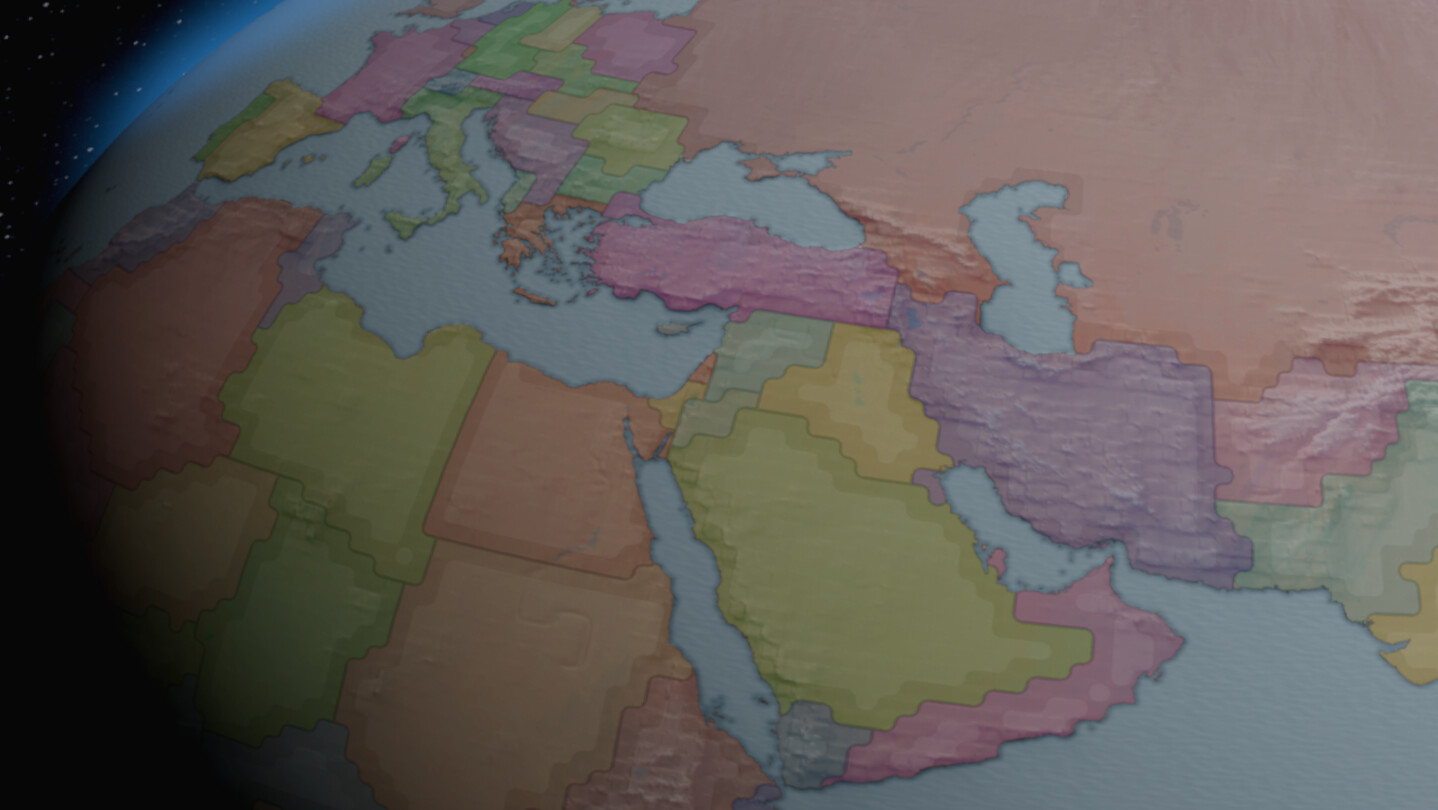
All game systems – production, society, control, war, and others – create a realistic simulation of the last 12,000 years of history (the Holocene), involving hundreds of tribes and states. The game broadly reproduces real historical processes: the formation and collapse of regional empires, technological development, population growth and revolutionary processes

For example, some kind of Mediterranean hegemon (like the Roman Empire) will likely emerge, but the development of iron and intensive agriculture in forested Europe will create a crisis and make the formation of a new empire there extremely difficult. Meanwhile, empires in China will form regularly

No scripts. Only systems 

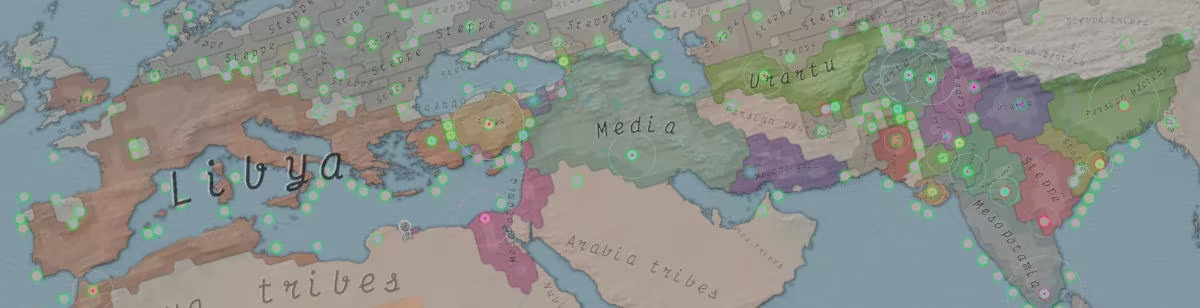
One of the results of a simulation from the Stone Age to antiquity. Isn't it beautiful?

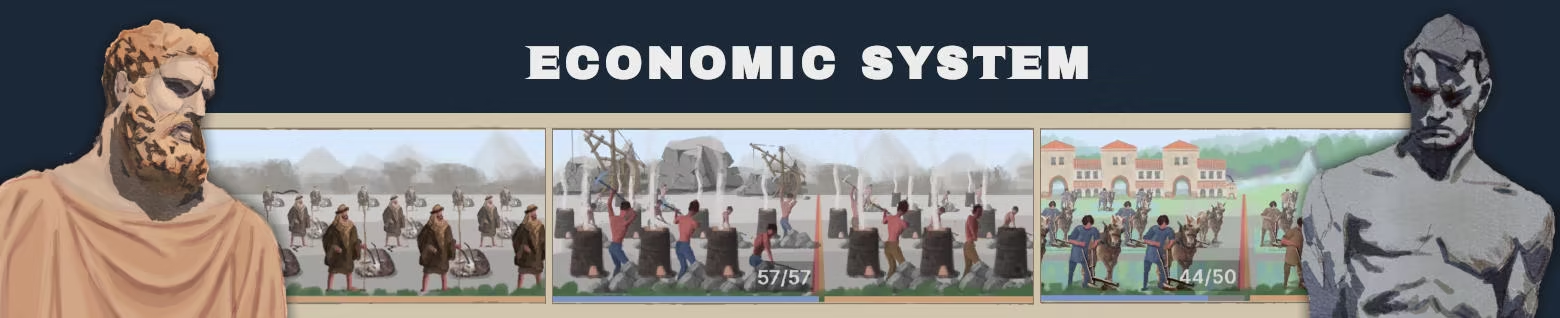
In the TREUD world there's a closed economy; nothing comes from nowhere: food, weapons, raw materials – everything is produced by people. The game simulates both national and global markets; products must find a consumer, otherwise, for example, the producer won't be able to exchange them for food for their slaves or wages for workers (although within tribes or in a planned economy, production is distributed outside the market)

There are no predetermined prices; they are determined by the model based on supply and demand, which are tied to the income of the population, the desire of the owners to maintain profitability, etc

The player, acting as the ruling class, can build workplaces or take them away from other owners who are building on their own. Don't forget to find the labor force

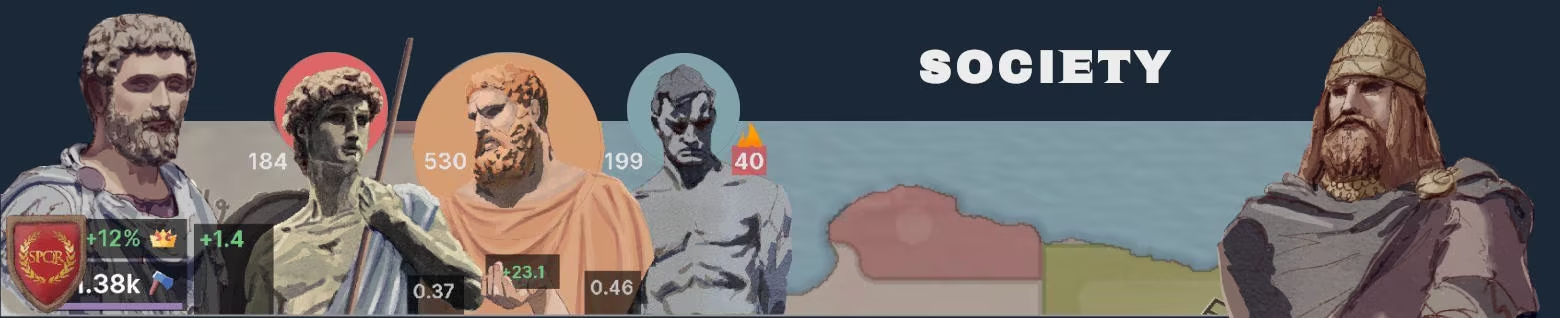
People are divided into social strata – classes: landowners, petty owners, capitalists, slaves, and workers. The player represents the will of the current ruling class (or rather, its ruling group) and can interact with other classes (e.g., tax, enslave, hire, etc.)

If the needs of a class aren't met, it accumulates discontent and may rebel. And within our own class, we must maintain the vertical power structure: build governance structures, ensure profits, otherwise a political crisis will brew – which could lead to provincial separatism or a coup

A political crisis could turn into a revolution if another class comes to power in the separatist territories. We have the opportunity to continue playing as rebels country (was it planned?)

The class picture varies across different eras: slaves can only work in simple jobs, while industrialisation, for example, will lead to the strengthening of not only our army, but also the capitalists who own factories – allowing them to lay claim to the role of the ruling class

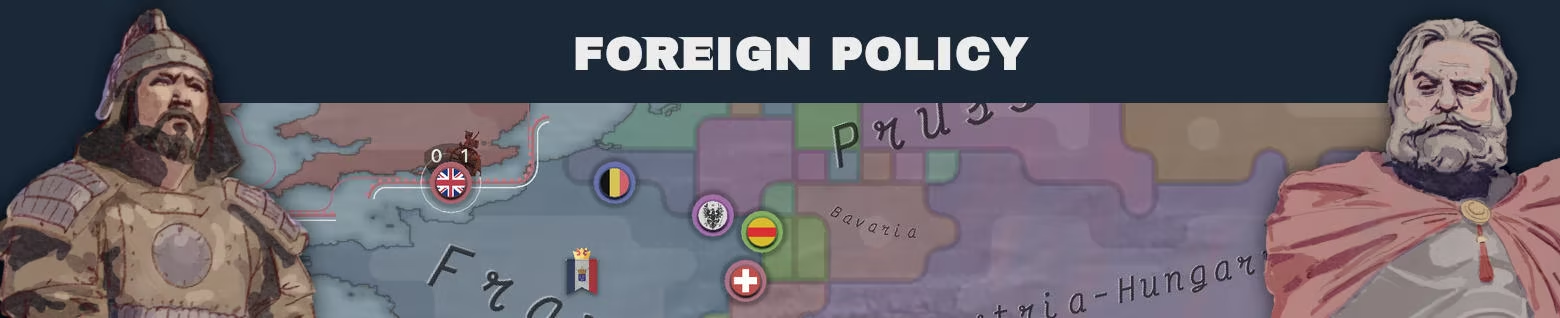
The game features a military system based on "fronts", between which we distribute our army. Army is our primary diplomatic resource: only a secure border can ensure a secure peace. You can control another country's trade, invest in it, and establish colonies

The broader our state, the more extensive its provinces – the entire territory must be within our control (with terrain and infrastructure taken into account in distances). Systems of control and legitimacy create a balance that resolves the snowball problem: expansion is always economically profitable, but not always politically stable. The stronger the core, the more extensive the provinces. Under developed capitalism, usually it's more profitable to invest into countries with cheap labor than to capture their territories

System Requirements

Windows
macOS
SteamOS + Linux
    Minimum:
    • OS *: Windows® 7/8/10/11 64-bit
    • Processor: 1.8 GHz Single Core
    • Memory: 2 GB RAM
    • Graphics: Hardware Accelerated Graphics with dedicated memory
    • Storage: 1 GB available space
* Starting January 1st, 2024, the Steam Client will only support Windows 10 and later versions.
    Minimum:
    • OS: Mac OS X 10.7.3
    • Processor: 2.7 GHz Single Core, Apple Silicon, Intel
    • Memory: 2 GB RAM
    • Graphics: Hardware Accelerated Graphics with dedicated memory
    • Storage: 1 GB available space
* Starting February 15, 2024, the Steam Client will no longer support 32-bit games or macOS 10.14 or lower.
    Minimum:
    • OS: Ubuntu 12.04 LTS
    • Processor: 2 Ghz
    • Memory: 2 GB RAM
    • Graphics: Hardware Accelerated Graphics with dedicated memory
    • Storage: 1 GB available space
Review Filters