

You don't steer the chicken. You program it. Write real scripts in a fake desktop OS and send your bird into fields that reseed every run, so hardcoded coordinates work exactly once. Upgrades aren't +1% damage: they're if statements, for loops, and the memory to hold a list.

Sign in to add this item to your wishlist, follow it, or mark it as ignored

This game is not yet available on Steam

Planned Release Date: Q4 2026

Interested?
Add to your wishlist and get notified when it becomes available.
 

About This Game

You don't steer the chicken.

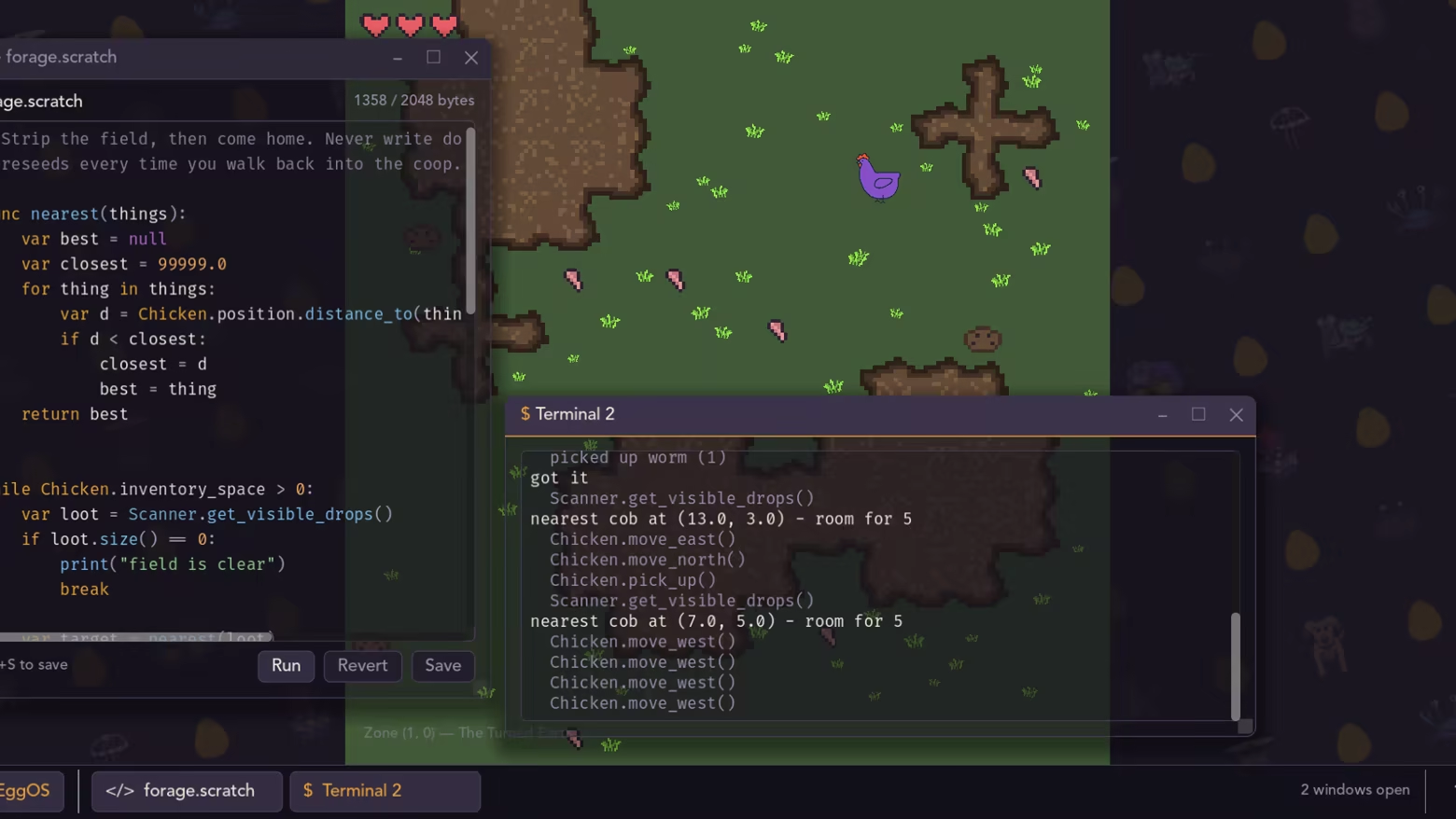
There is no movement key. There is a terminal, a text editor, and a bird standing in a field waiting to be told what to do. You write a script, you press run, and you watch it work, or watch it walk into a hedge forty times while you read your own logic back and realise what you actually said.

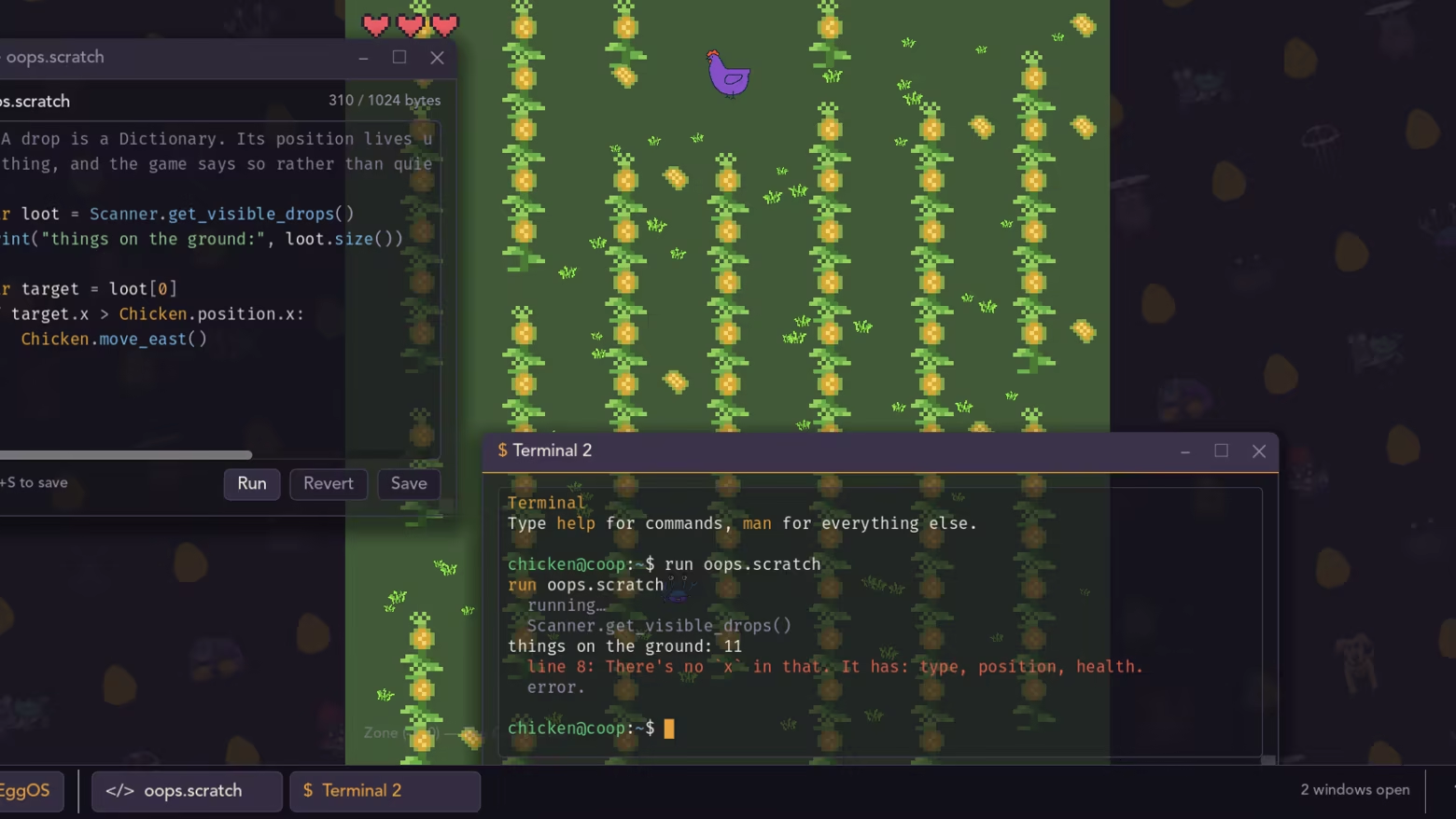
var loot = Scanner.get_visible_drops()

if loot.size() > 0:

Chicken.move_east()

Chicken.pick_up()

That is the whole game. Everything else is pressure on it.

The language is real, and it is one you already know

ChickenScratch is syntactically identical to GDScript: significant indentation, var and func, if / elif / else, for and while, Arrays and Dictionaries, integers that stay integers. Not a visual scripting toy, not a fake language with three verbs. It compiles to bytecode and runs on its own virtual machine, one instruction at a time, so you can watch the line your chicken is on.

If you have written code before, you will be productive in about ninety seconds. If you haven't, the game is built to teach you in the order the world makes you need things.

Upgrades are syntax

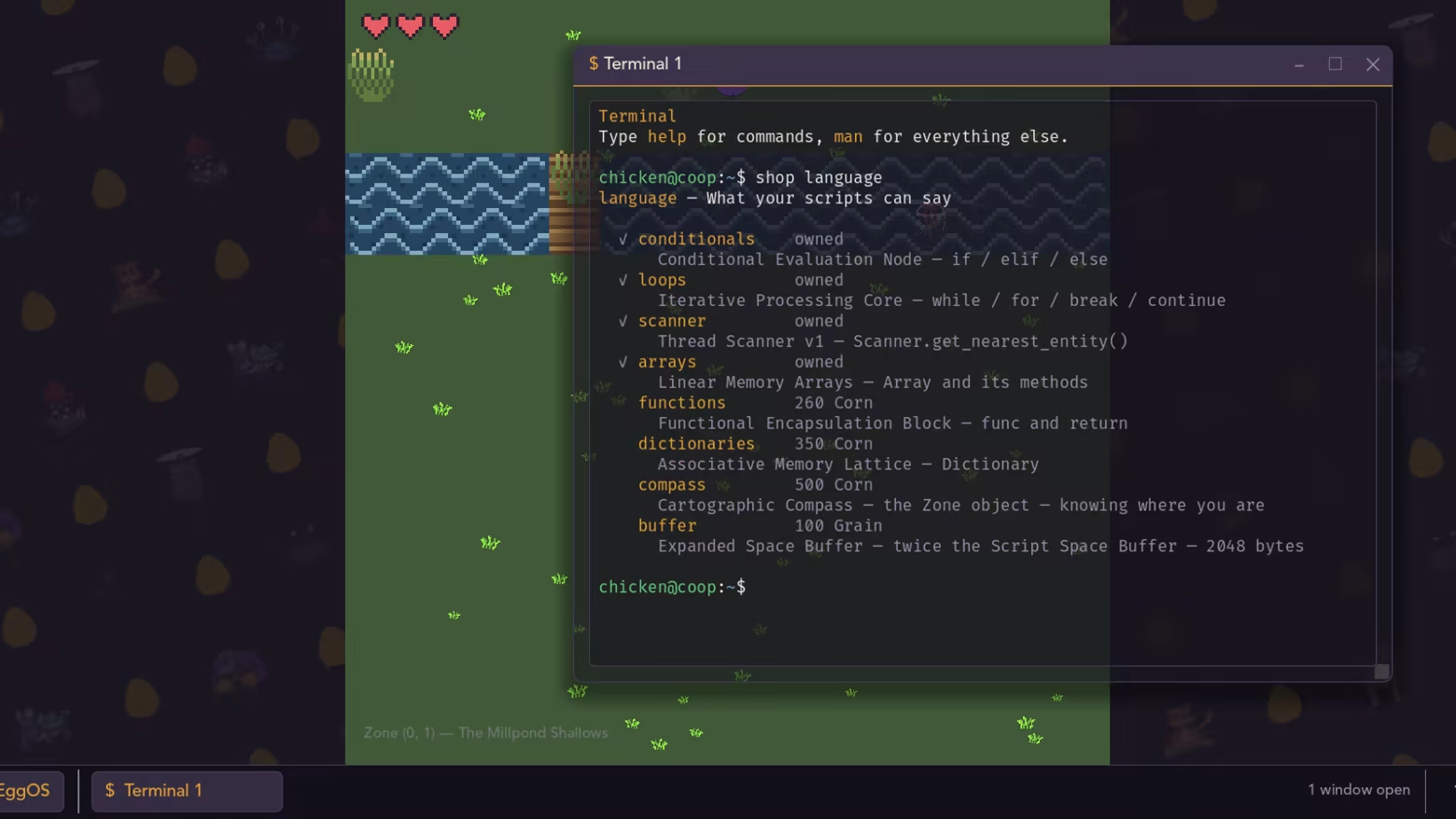
There is no damage percentage to buy. The shop sells language.

  • Conditional Evaluation Node, 50 Corn. Now you have if.

  • Iterative Processing Core, 50 Worms. Now you have while and for.

  • Linear Memory Arrays, 100 Berries. Now you can hold a list of what you found.

  • Associative Memory Lattice, 350 Corn. Now you can remember where you have been.

  • Cartographic Compass, 500 Corn. Now you know where you are.

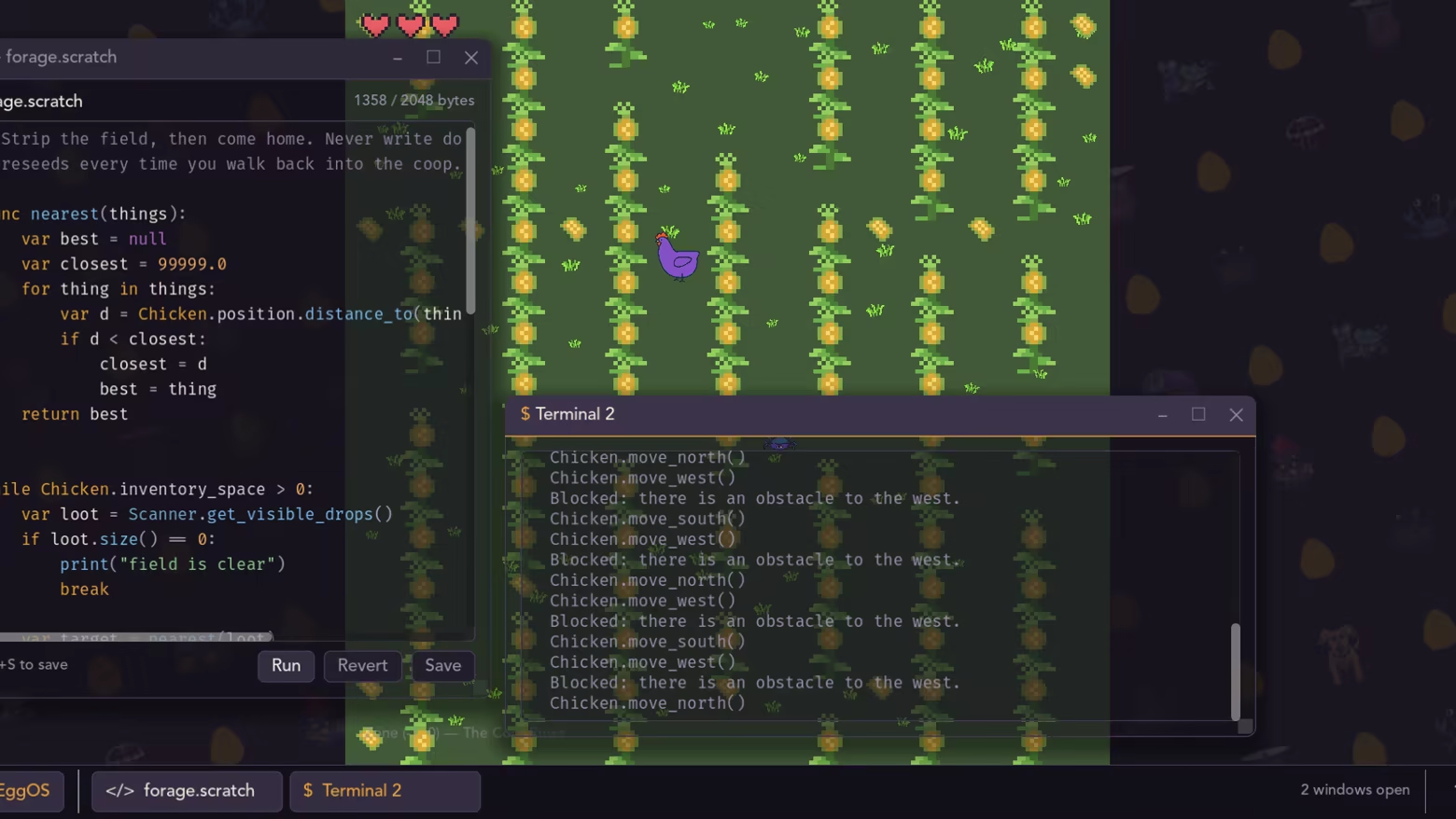
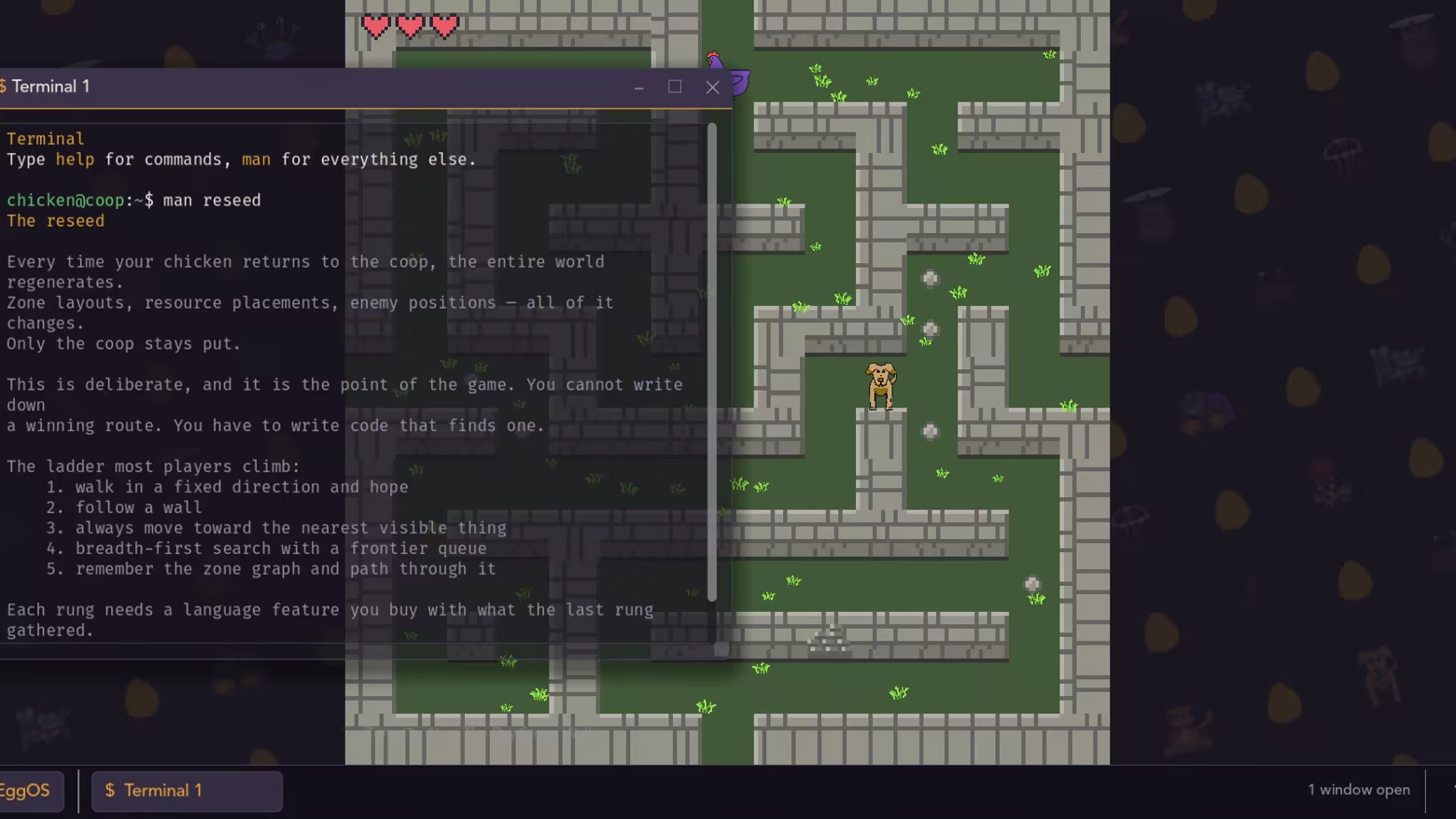
With nothing bought, your best script is a straight line of move_west() calls. That works, because a blocked step only costs you the step, and with no if in your script there is nothing listening for the failure anyway. Nine trips of that buys you the ability to ask a question. The curve is the ladder from "walk in a fixed direction and hope" to a real breadth-first search, and every rung is paid for by the last one.

The first two purchases are priced in different currencies on purpose, so you cannot farm one field and skip the other's lesson.

The world reseeds, so you cannot cheat

Every time your chicken walks back into the coop, all twenty-five zones regenerate. Layouts, drops, resources, where the crab is standing. All of it.

What a zone is never changes. The Corn Rows are always corn rows. But the route through them is new, which means a script that writes down coordinates works exactly once. The game ships one seed script, hardcoded_trap.scratch, that exists purely to prove this to you.

Searching is the skill. The upgrades are what let you search better.

It is a whole fake operating system

The Coop is a desktop, and the terminal is the interface, not a menu with a terminal in it. Everything is a command.

  • ls, cd, cat, cp, mv, grep, more and less, with pipes and && and ; chaining

  • vim inside the terminal, with modes, operators, motions, visual mode, / search and :%s/a/b/g with a live preview. There is a plain editor window too, if you would rather

  • man is the in-game compendium: the language, the API, the mechanics, and a bestiary that fills in as your chicken meets things

  • shop, stats, resizable translucent windows, a settings panel, and an inbox

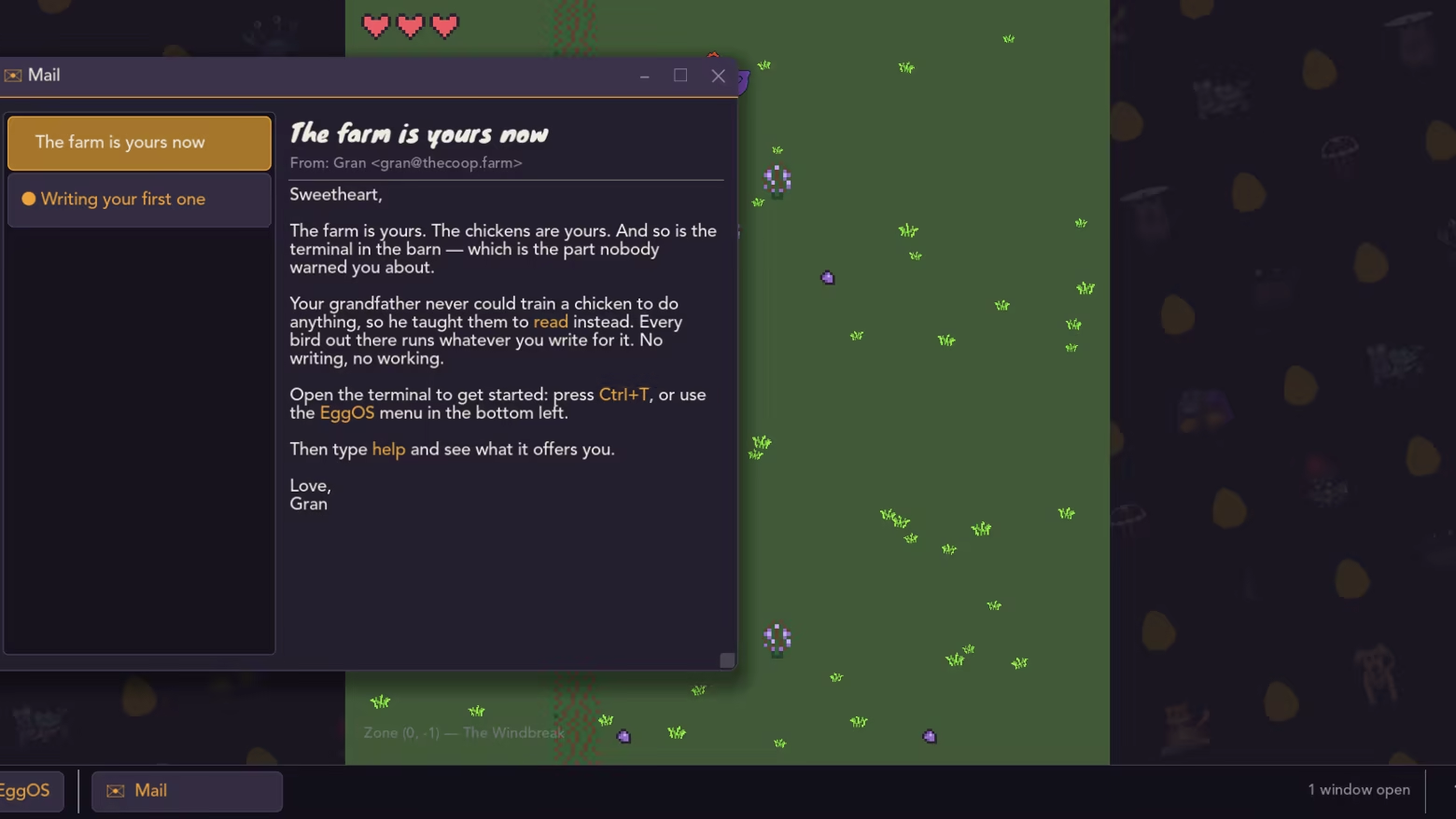
Nobody explains the game to you in a tooltip. Your gran explains it, by email, because she left you the farm.

Errors are the game

When your script does something impossible, it does not fail silently and it does not throw an engine error at you. It tells you what you asked for and what was actually there:

[quote]line 8: There's no `x` in that. It has: type, position, health.[/quote]

A blocked move returns false rather than stopping. That is information, and it is how a good script finds a gap in a hedge without ever being told where the gap is. A move you cannot make names the tool or the equipment you are missing. Every refusal is a hint.

Two clean hits from a crab ends a run, and everything your chicken was carrying is gone. What you already banked is safe. The only question a run really asks is: one more field, or go home now?

Every zone teaches one thing

  • The Corn Rows. You cannot walk straight at anything. There is a crab in here, it hunts you, and it is greedy about which direction it closes in on, which means a row of corn genuinely shelters you if you notice.

  • The Turned Earth. The worms crawl. A position you read at the top of a loop is already wrong. Mud slows you and swallows what falls in it.

  • The Windbreak. One hedge, two gaps. Which gap is nearer depends on where you are, so it is a question rather than a route.

  • The Millpond Shallows. Water, while it is still free to look at. Nothing here pays you until you own a tool.

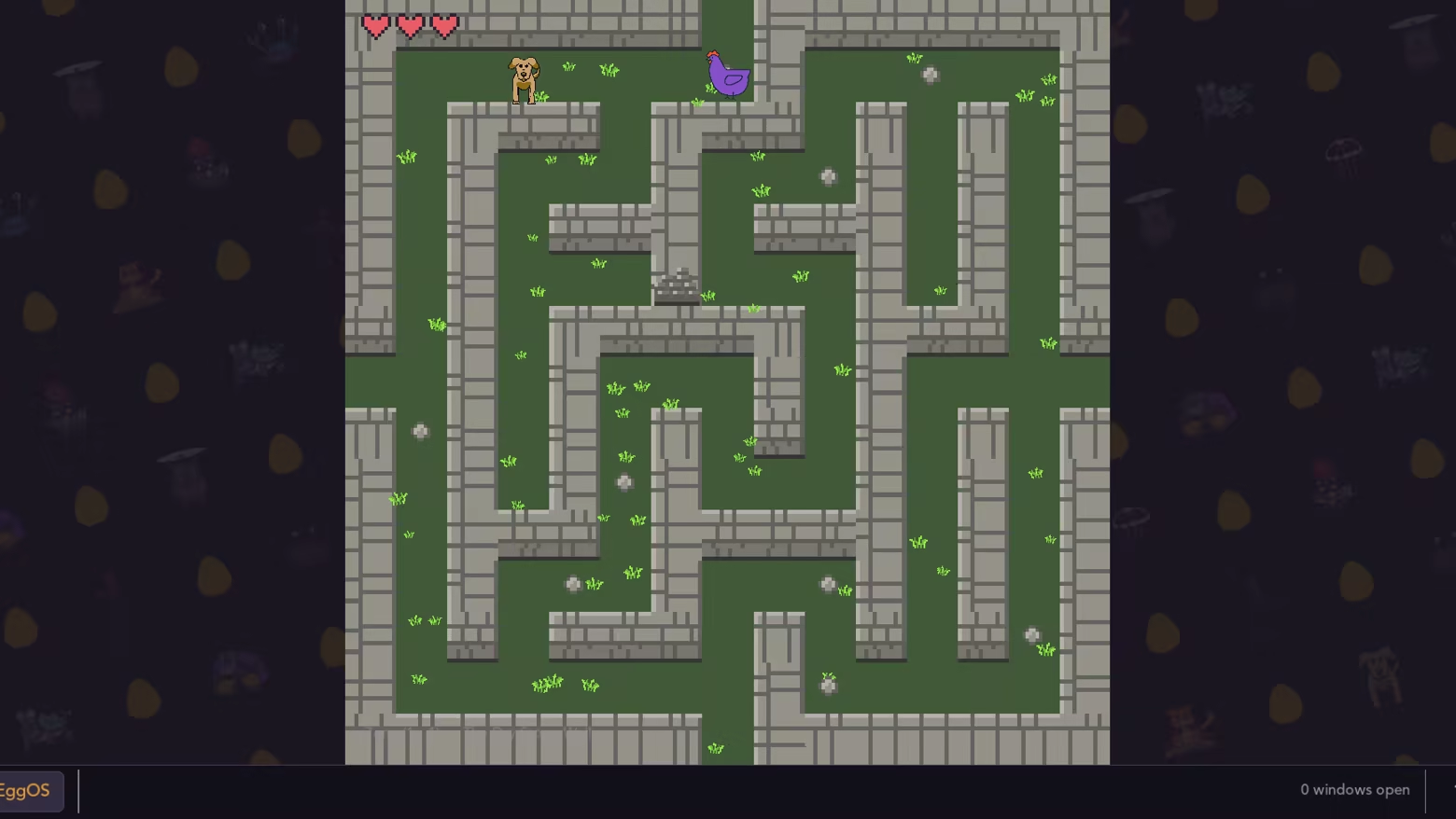
  • The Dry Stone Wall. A real maze, one tile wide, solid by default. Follow a wall and you will get out. One section of it can be broken open, permanently, if you bought the Pick.

A five-by-five map, twenty-five zones, with the coop at the centre. Further out: ore seams, bogs that need equipment, packs that need a weapon, and corners designed as the endgame economy.

Also

Two terminals can run two scripts at once: a long collection loop in one while you check your inventory in the other. They share the same bird, so two scripts that both issue moves will fight over it. That is your problem to notice. The world never stops: the crab keeps patrolling while you sit and read your code. Thinking is free, so a script that measures six distances before it moves is not punished for being legible. And there is no instruction limit, so a loop that runs until you stop it is a perfectly reasonable thing to write.

System Requirements

Windows
macOS
SteamOS + Linux
    Minimum:
    • Memory: 2 GB RAM
    • Storage: 1 GB available space
    Minimum:
    • Memory: 2 GB RAM
    • Storage: 1 GB available space
    Minimum:
    • Memory: 2 GB RAM
    • Storage: 1 GB available space
There are no reviews for this product

You can write your own review for this product to share your experience with the community. Use the area above the purchase buttons on this page to write your review.

Review Filters