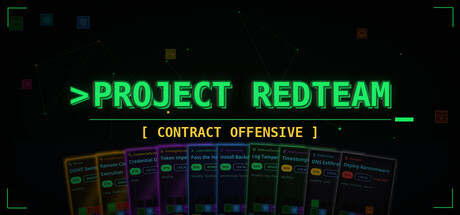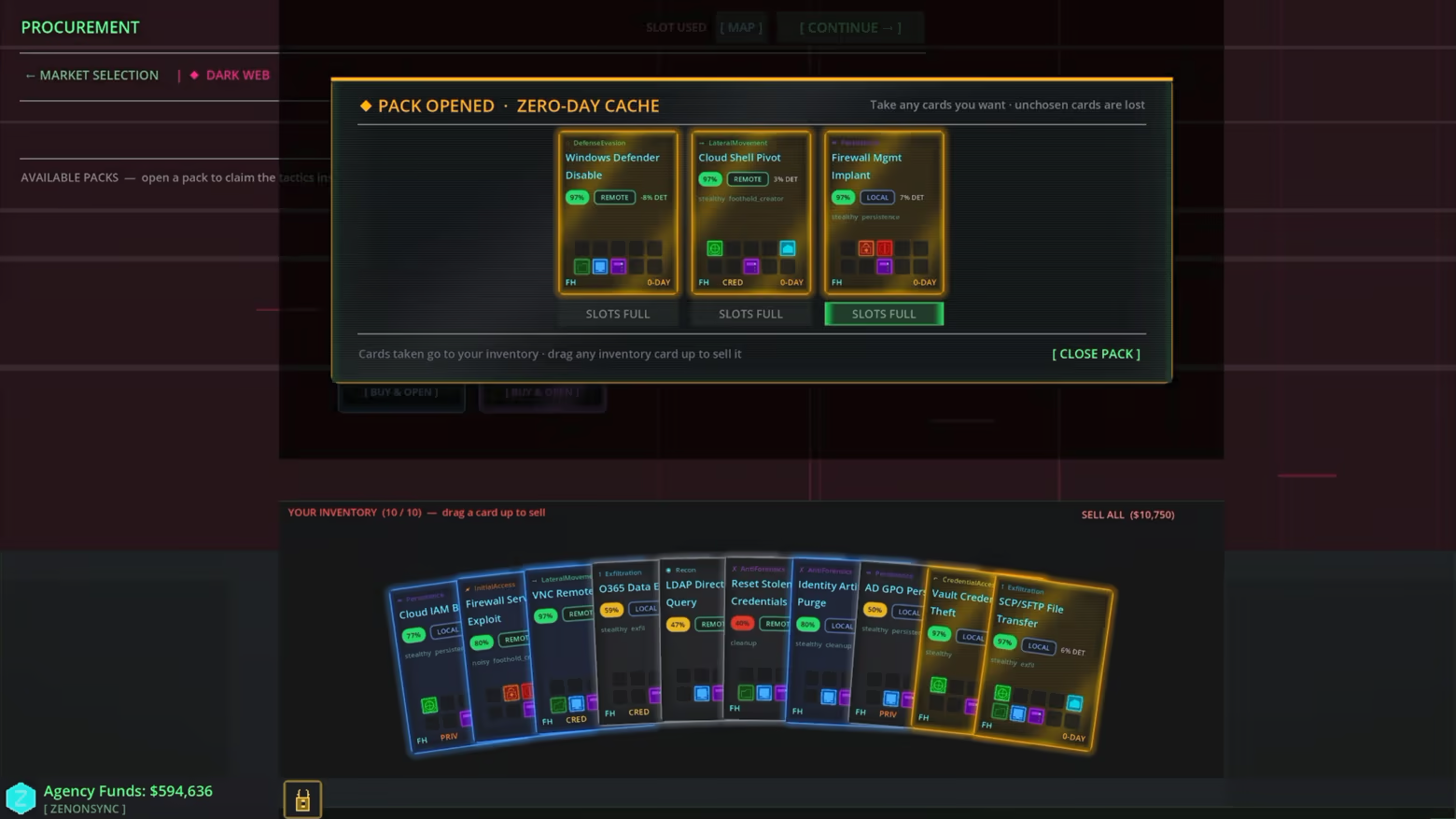



A card‑based hacking roguelite mechanically inspired by real offensive tradecraft. Recon targets, steal creds, pivot through networks, exfiltrate data, and ransom organizations before defenders stop you. Leverage 500+ tactic cards and agency items to complete contracts and grow your hacking agency.

Abyste si mohli tento produkt přidat do seznamu přání, začít ho sledovat nebo ho zařadit mezi ignorované, musíte se nejprve přihlásit.

Čeština není podporována

Tento produkt nepodporuje Váš místní jazyk. Seznam podporovaných jazyků je k dispozici níže na této stránce.

Tato hra prozatím není dostupná ve službě Steam

Plánované datum vydání: 15. říj. 2026

Tato hra bude odemknuta přibližně za 7 týdnů

Máte zájem o tento produkt?
Přidejte si ho do seznamu přání, ať nepropásnete vydání.
 

Informace o hře

The Art Of Hacking in Project RedTeam

Project RedTeam is a roguelite card game where every move mirrors real-world hacking tradecraft. You’re not just playing cards- you’re orchestrating intrusions across dynamic enterprise networks where every decision carries weight.

This isn’t a “hacking vibes” game. It’s built on authentic offensive cybersecurity concepts. The cards in your hand-Kerberoasting, AD Enumeration, SSH Authorized Key Injection, Rundll32 LOLBin Execution- represent real techniques used by modern red teams.

The ten tactic categories (Recon, Initial Access, Credential Access, Lateral Movement, Privilege Escalation, Persistence, Defense Evasion, Anti‑Forensics, Exfiltration, Ransom) follow the same progression real operators use. You can’t drop ransomware on the Core Identity Provider on turn one- you have to earn your way there while managing detection and containment pressure at every step.

Rooted in Real Enterprise Attack Methodology

Project RedTeam was designed by a cybersecurity professional with a decade of enterprise security experience and certifications in offensive cybersecurity penetration testing, defensive threat hunting, and digital forensics.

The motivation was simple:

I wanted a roguelite card game grounded in real network intrusion tradecraft, and none existed.

This is a game that is built around real-world network intrusion workflow concepts. It preserves the messy, multi‑stage reality of real breaches while delivering a challenging- but easily approachable gameplay loop.

Network zones like the DMZ, Application, and Server zones are modeled after real enterprise network architecture. Stealthy credential‑driven lateral movement has advantages against the noisy techniques used for initial access. Defenders are active participants: isolating compromised machines, removing your footholds, and shutting down the network paths you rely on. These dynamics reflect how real incident response teams operate under pressure and how an offensive operator adapts their tradecraft to meet the objectives.

The Gameplay Loop

You operate a private hacker-for-hire agency. Each campaign requires completion of 10 contracts with escalating difficulty against procedurally generated corporate networks. An endless mode follows the completion of the campaign portion of the run.

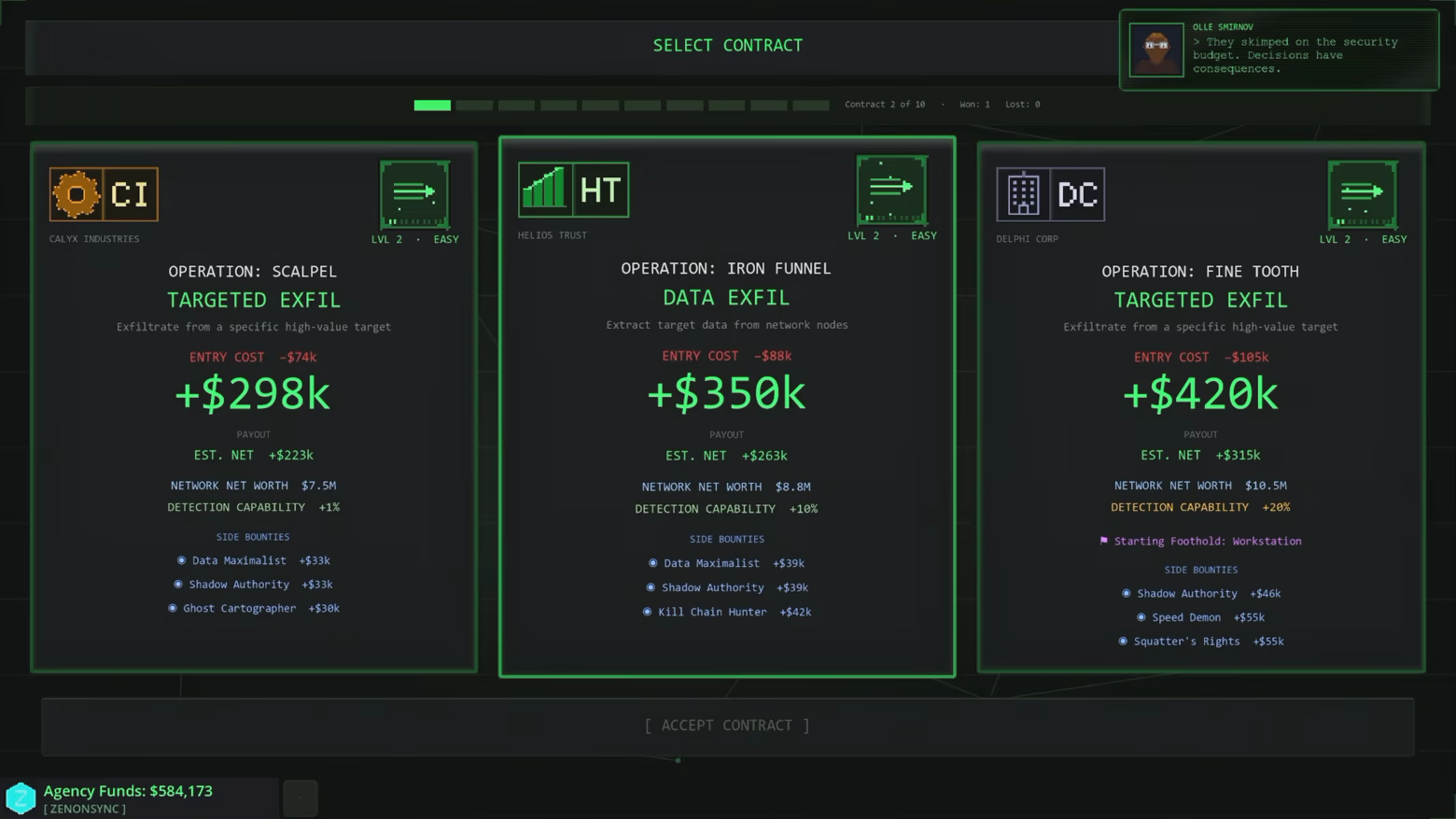
Before a contract starts, you hire an operator and select from a pool of available contracts- each with different risks, objectives, and target network profiles. You open tactic card packs to build your starting loadout and then drop into the network.

The target starts dark. Your understanding of the target's attack surface is limited. From there:

  • Recon reveals adjacent nodes without establishing access

  • Initial Access exploits get you a first foothold on DMZ targets- noisy, but necessary

  • Credential Access on a node gives you credentials for executing lateral movement and privileged tactics

  • Lateral Movement with credentials is far less detectable than forcing access- credential chains matter

  • Privilege Escalation upgrades your credentials on a node from unprivileged to admin access

  • Persistence converts a temporary foothold into a permanent one that survives containment pressure

  • Defense Evasion reduces the detection capabilities of a system to lessen your risk

  • Anti-Forensics for cleaning evidence before you exit a contract

  • Exfiltration and Ransom generate funds from your targets- the reason you're here!

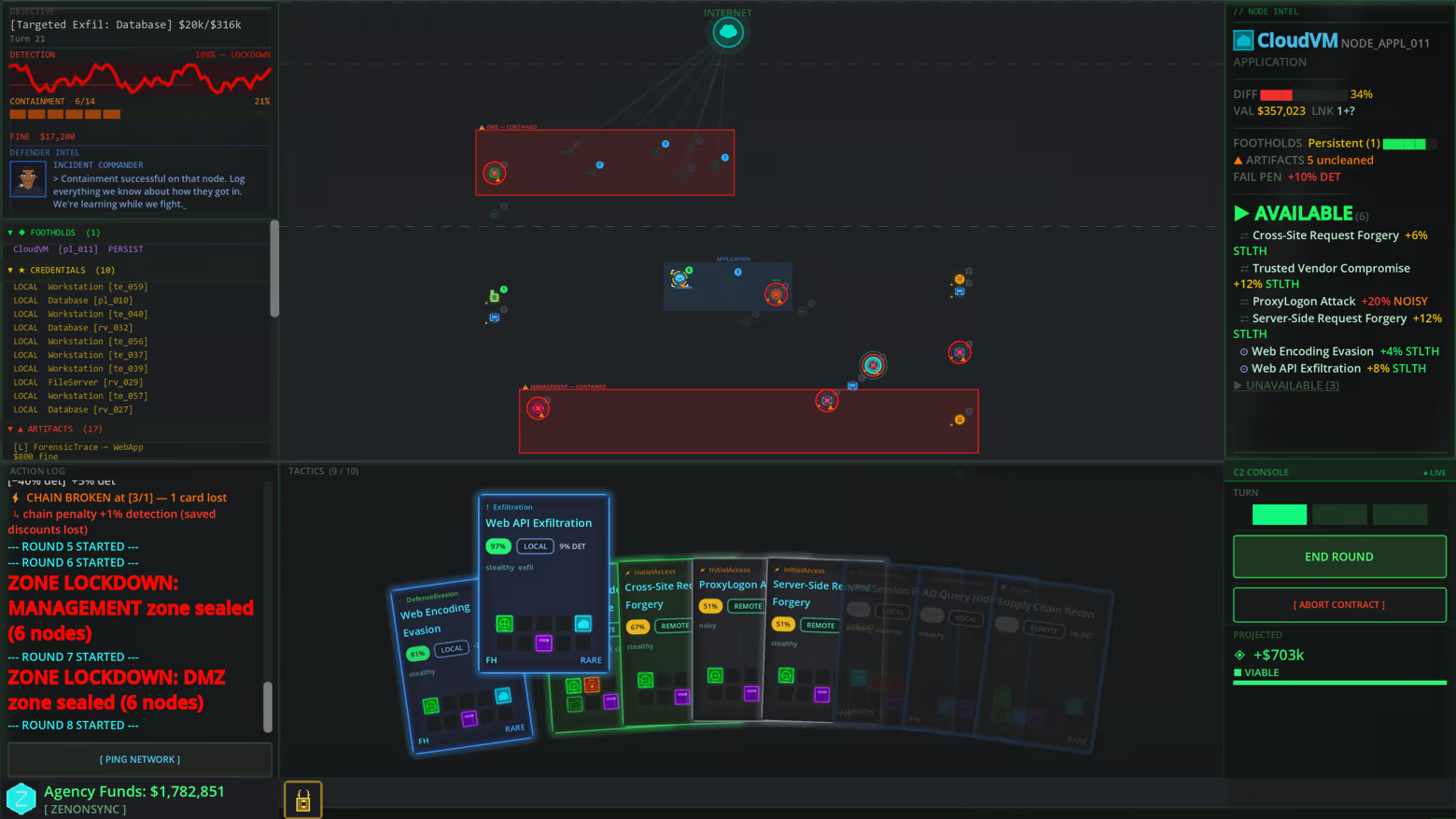
The network is organized into procedurally generated security zones: Internet, DMZ, Perimeter, Application, Cloud, Server, Internal, Management, and Core. Deeper zones hold more valuable targets and better credential paths, but defenders watch them more closely and the targets there are harder to exploit without the right attack strategy.

Between rounds within a contract, you perform Tactic Research that results in rewards such as tactic card packs, consumable and equipable agency items, and a chance to visit various marketplace tiers to deeply modify your current in-hand tactics.

  • Open Source free tactics, limited selection and quality

  • Commercial better reliability, higher costs

  • Dark Web the highest-rarity cards (0-DAYS) at the steepest prices

Detection and Containment

Detectable actions increase the defender's hunt for your activity. Failures are noisy, critical hits execute cleanly. As detection climbs, defenders increase their network containment efforts. Your network footholds start to burn, your network attack paths thin-out, and the difficulty for successfully completing the contract objectives increases. If network-wide containment reaches 100%, then the defender's have eradicated you from the target network and the contract ends in failure.

You can choose to abort a contract early if the situation is deteriorating faster than your earnings justify.

Digital artifacts left on nodes when you hand in a contract cost money. Run Anti-Forensics before you exit, or factor the fine into your payout calculation. Leaving a mess is a choice, and often a reasonable one.

Sometimes the incident response team defends so aggressively that completing the contract objective becomes a non-starter. But no worries, contract objectives are more like suggestions anyway.

If the objectives go sideways mid-contract, we can always… secure funding for the agency through alternative opportunities.  

The Agency

Between contracts, your agency balance of funds determines what happens next. Each successive contract has a minimum entry cost- spend carelessly or fail to bring profits during a campaign and you won't be able to afford to start the next contract.

Your agency also accumulates capabilities and inventory items that increase your capabilities and improve you strategy:

  • Agency Protocols are cards that are persistent modifiers that affect how your agency's effectiveness and attributes within a contract.  Develop your agencies resources, capabilities, and increase your ability to execute on objectives.

  • Agency Plays are cards with a one-time advantages deployed mid-contract when the situation calls for it. You might procure an access broker selling a workstation foothold within the target network, or run a distraction on the network that occupies the defenders efforts.

Start a new agency and finish 10 contracts to reach the standard campaign end-game. Continue with this agency in infinite mode- contracts keep generating, difficulty keeps climbing, and there is no ceiling.

If your agency cannot afford to pay the next contract's entry fee- it will be forced to dissolve and a new agency must be created.

Even a failed runs have a benefit: XP towards your career progression is earned. Unlock and enable Agency Resource Development modifiers on your next run to change the game dynamics and stakes.

In-Game Content

  • 426 tactic cards across 10 categories and 5-tier tactic rarity system (Common → 0-Day)

  • 105 unique operators across 5 rarity tiers (Common → Master-Hacker)

  • 10 network node types: Web Application, VPN Gateway, Firewall, Database, Cloud VM, File Server, Workstation, Management Server, SIEM, Identity Provider

  • 9 network security zones: Internet, DMZ, Perimeter, Application, Cloud, Server, Internal, Management, Core

  • 50 agency items that provide consumable and equipable modifiers during your run

  • Tactic Research Rewards: Card Packs, Open Source, Commercial, and Dark Web marketplace access

  • Procedurally generated target networks with real-world network layouts and difficulty scaling

  • Per-objective contract types: Exfiltration, Targeted Exfiltration, Ransom, Destruction, Credential Theft, Network Takeover, Targeted Foothold, Full Network Discovery, Stealth Operations

  • Side bounties increase the stakes during a contract to earn more funds

  • Tactic "Kill Chains" for executing multiple tactics in a real-time sequence to squeeze by containment efforts

  • 10-contract campaign with infinite mode following completion

  • 50 Persistent Career Levels each with an unlockable Agency Resource Development modifier

  • Operator and Defender persona dialogue breathes life into every action

  • Game Index provides a complete inventory of in-game items

Planned Updates

  • New campaigns with distinct network environments, storylines, and themes

  • New contract objective types

  • Additional tactic cards and categories

  • Steam Achievements

  • New agency equipables and consumables

  • Additional persistent career levels

  • Additional network zones and node types

  • Multi-organization target networks

  • Tutorial

Project Red Team is developed by a solo developer. Feedback and bug reports are genuinely appreciated- they directly shape what gets built next.

CONTENT WARNING

Project Red Team depicts fictional corporate network intrusions for strategic gameplay. While the game references offensive security concepts inspired by real techniques, it contains no personal data, real organizations, or actionable instructions for illegal activity. All real-world hacking should only be performed ethically and with proper authorization.

This game is suitable for players interested in: cybersecurity, strategy games, and card‑based roguelites.

Systémové požadavky

    Minimální:
    • OS: Windows 10
    • Procesor: Intel i3 or equivalent
    • Paměť: 4 GB RAM
    • Grafická karta: Intel HD Graphics 4000 or better
    • Pevný disk: 500 MB volného místa
    Doporučené:
    • OS: Windows 10/11
    • Procesor: Intel i5 or equivalent
    • Paměť: 8 GB RAM
    • Grafická karta: GTX 750 Ti / Intel UHD 620 or better
    • Pevný disk: 500 MB volného místa
Filtry recenzí