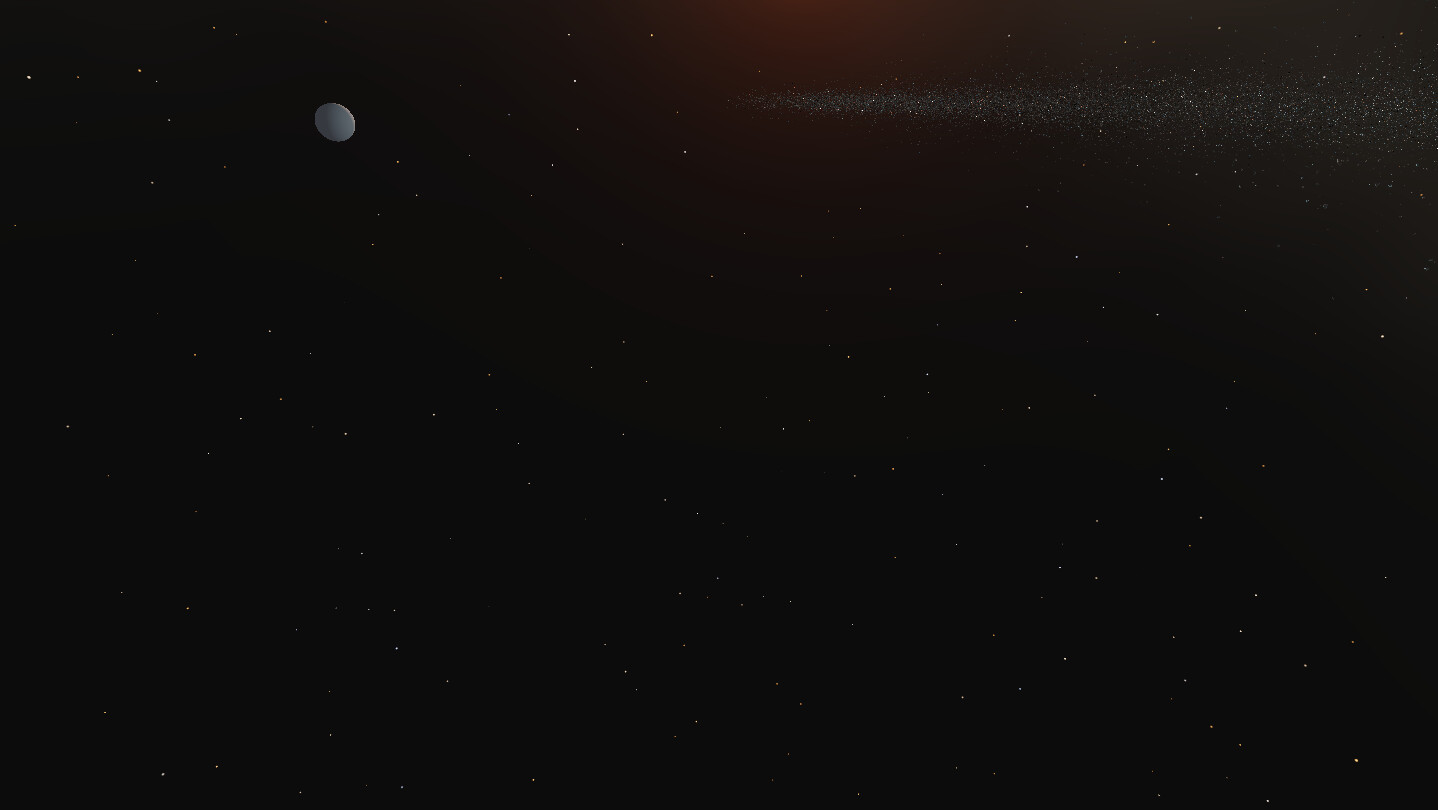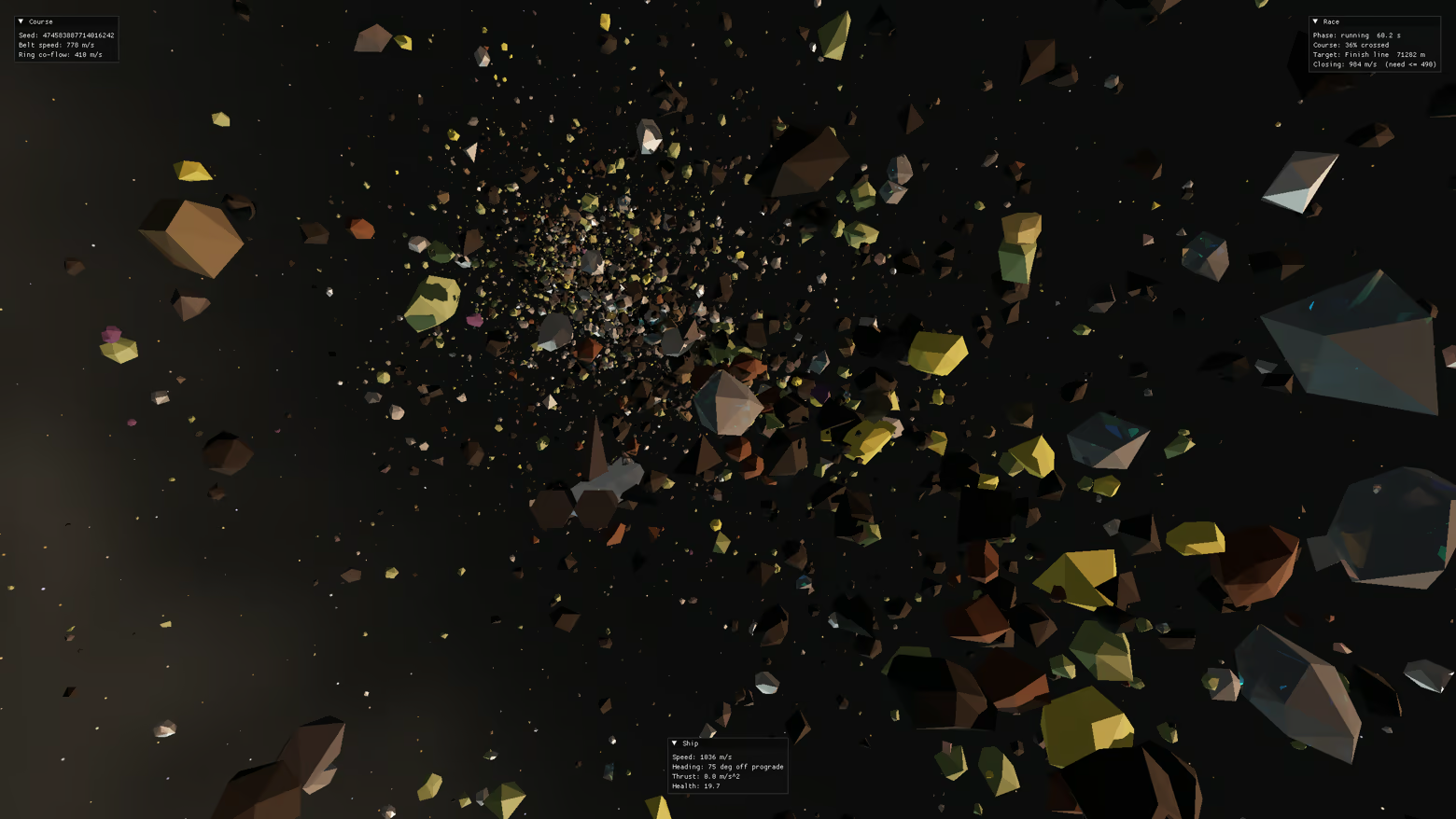


Plan your flight path, execute a perfect flip-and-burn manoeuvre and pray that your hull survives any impact in this space flight simulation/racing game. Can you avoid collision and finish your flight?

Sign in to add this item to your wishlist, follow it, or mark it as ignored

This game is not yet available on Steam

Coming soon

Interested?
Add to your wishlist and get notified when it becomes available.
 

About This Game

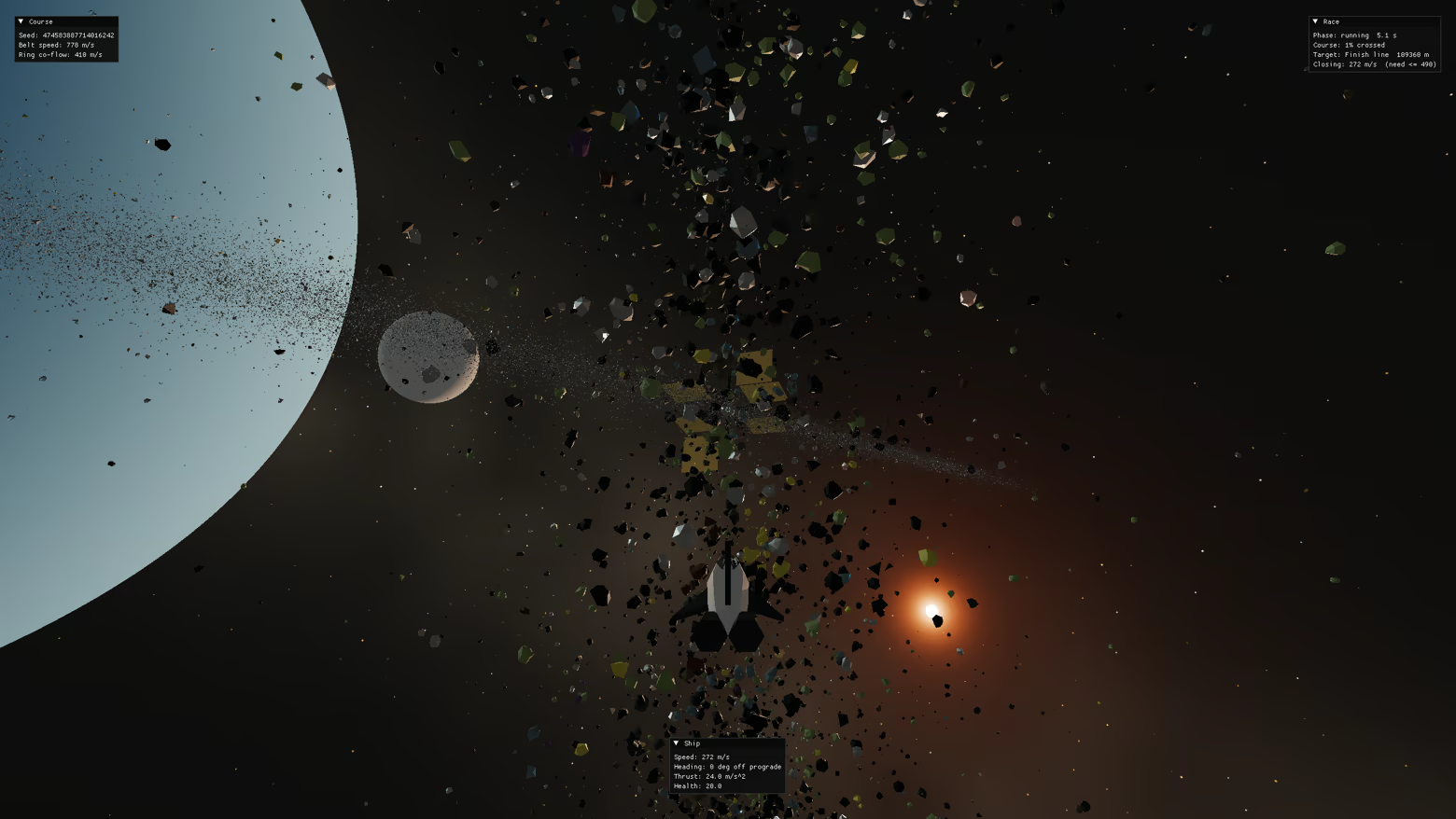
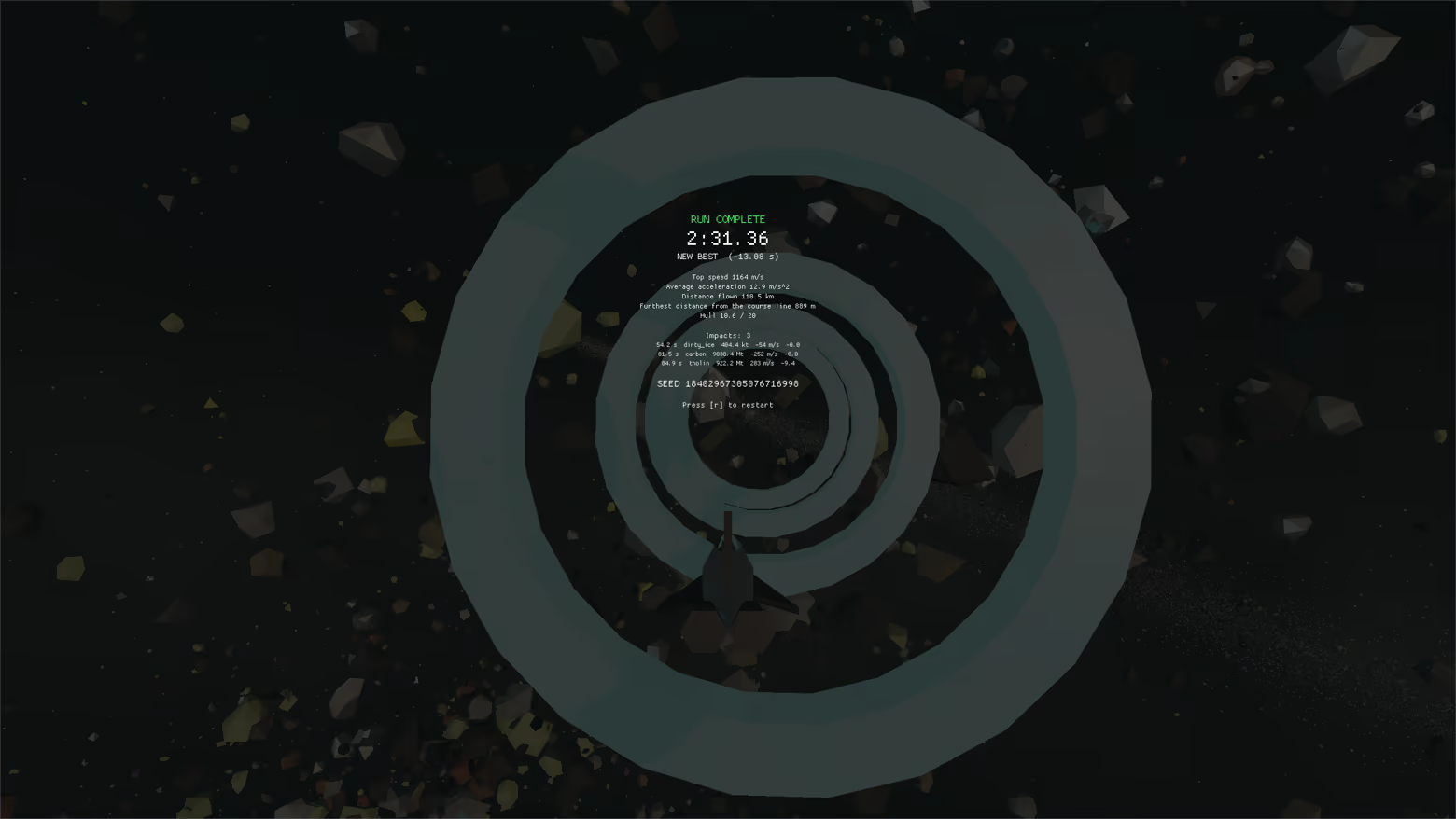
Ionic Drive asks you to take the pilot's seat in a spaceship pushing over 2Gs of acceleration, threading the needle through an asteroid belt that is dramatically colliding* with a planetary ice ring, and be precise enough to flip-and-burn to decelerate and dock at the station on the other side - burning retrograde on the final stretch.

It's easy to hit a number of asteroids and ice chunks and destroy your hull, it's easy to burn 1 degree off center and miss the gate, and it's likely you will fail to slow yourself down enough for it to count as a win - but if you do the satisfaction is immense.

This game is unapologetically minimal in its design.

I am adding additional features and improvements, but right now there is no shareable roadmap.

The initial release is a near-complete experience. If you don't like it now, I won't likely change your opinion later.

Ionic Drive is, to me, about having a game built on top of my custom game engine (PlayPhys), which ships and forces me to develop useful tooling.

PlayPhys is bare bones, serving the purpose today of shipping Ionic Drive, and now with a solid base I plan on continuing with post-release support at a slow drip.

But the engine itself, and this initial product, are something special.

Although the min spec is quite high for a game like this, it's because the game:

  • Simulates and runs physics updates for over 600k objects at ~60FPS on min spec

  • Renders entirely using Vulkan 1.4 + hardware ray tracing (except UI)

  • Utilises your CPU to its fullest extent with a multi-threading native execution loop

  • Tightly packs your RAM and stays under 4GB of usage (depending on your OS and Vulkan drivers)

  • Entirely programmatically defined assets - the entire binary ships in under 9MB

  • Unifies physics and rendering, with objects appearance and physics properties based on real world materials

If you buy this, I thank you, but I don't expect that many will.

Expect to see improvements over time, especially to the physics (collision) systems, and the small issue of there being no audio (yet).

*Dramatically colliding is WIP and improving every week. Because of how vast space is, collisions themselves are annoyingly rare, even with how densely I've packed it.

System Requirements

Windows
SteamOS + Linux
    Minimum:
    • OS: Windows 11
    • Processor: Ryzen 7 3700X
    • Memory: 8 GB RAM
    • Graphics: NVIDIA 2080 Super (supporting Vulkan 1.4 and hardware raytracing)
    • Storage: 100 MB available space
    • Additional Notes: This is (roughly) the development machine I test on
    Minimum:
    • OS: Kernel 6.8+ (6.12+ preferred), glibc 2.29+ - e.g. Ubuntu 24.04 LTS, SteamOS 3.8, etc.
    • Processor: Ryzen 7 3700X
    • Memory: 8 GB RAM
    • Graphics: NVIDIA 2080 Super (supporting Vulkan 1.4 and hardware raytracing)
    • Storage: 100 MB available space
    • Additional Notes: This is (roughly) the development machine I test on
Review Filters