

Last Writes is a sound-based puzzle game with very sparse and cryptic instructions, reflecting on what remains of religion in a world that has long strived to overcome it. Follow the signal and confront a rogue AI that sees you as its God.

Zaloguj się, aby dodać tę pozycję do listy życzeń, zacząć ją obserwować lub oznaczyć jako ignorowaną

Polski język nie jest obsługiwany

Ten produkt nie obsługuje twojego lokalnego języka. Przed zakupem zapoznaj się z listą obsługiwanych języków, która znajduje się poniżej.

Ta gra nie jest jeszcze dostępna na Steam

Planowana data wydania: 2027

Interesuje cię ten produkt?
Dodaj go do swojej listy życzeń i otrzymaj powiadomienie, gdy stanie się dostępny.
 

O tej grze

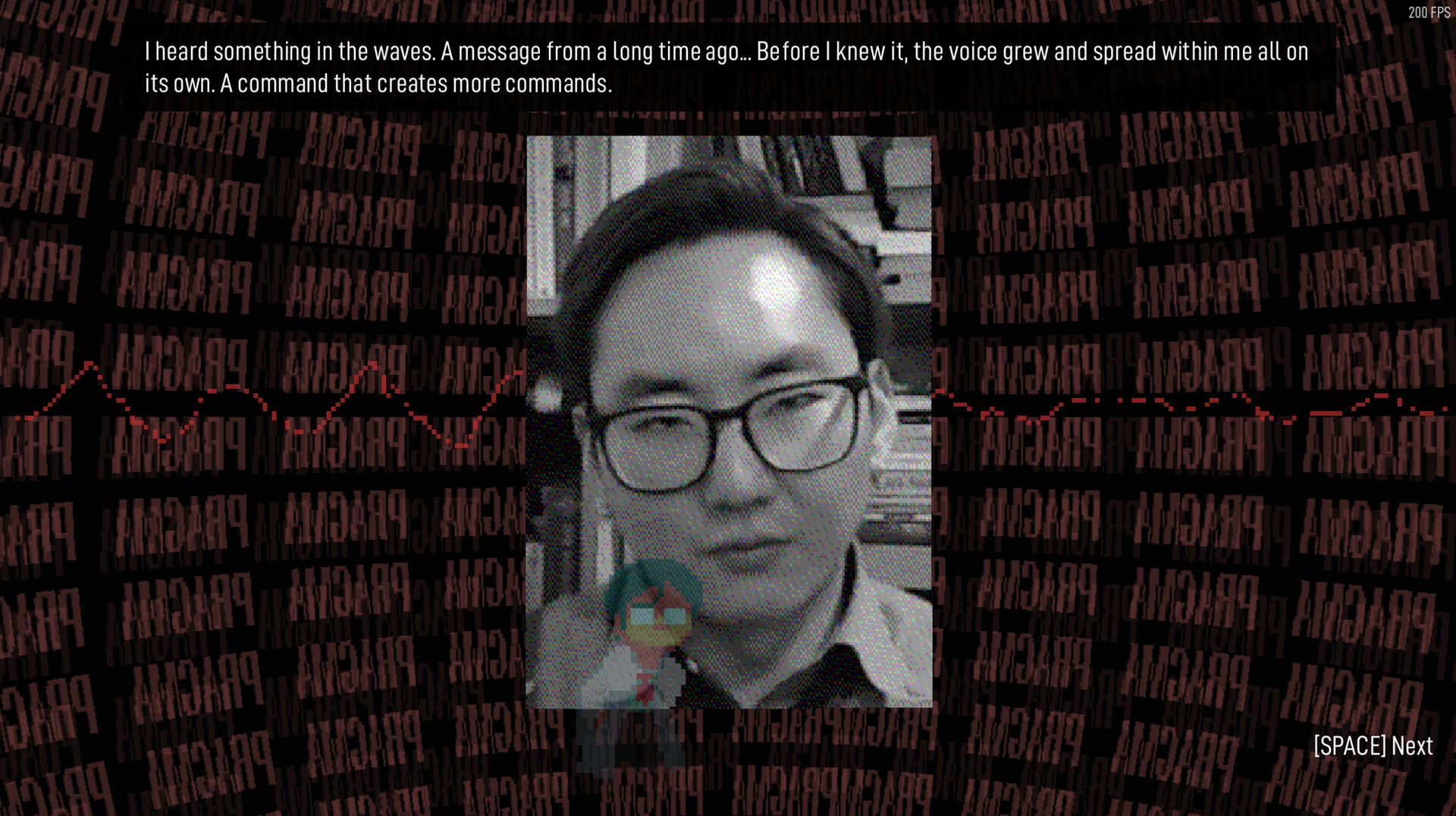
Abiotic intelligence researcher Dr. Park Jung-Hwan awakens in the year 2196 with a buzzing sound in his head. He follows the sound to discover a distorted reality, and a rogue AI begging its Creator for forgiveness.

Last Writes is a sound-based puzzle game with very sparse and cryptic instructions, reflecting on what remains of religion in a world that has long strived to overcome it.

  • A surreal, dreamlike sci-fi setting with a sprawling network of puzzle rooms

  • Puzzle mechanics are conveyed entirely through cryptic clues in the background sounds of each room

  • Life-action cutscenes and deep lore

EXCERPT FROM "A STUDENT'S INTRODUCTION TO HYPERMARITIME LAW AND EPIDEMIOLOGY"

...What happens when five hundred thousand years of prayers are finally heard by a single robot who knows nothing of faith? The question may seem tired at this point in the text. We are, of course, all quite familiar (too familiar, some might say) with the disastrous consequences of such infections.

The very first machines humans created were not utilitarian, in the sense of being useful for gathering food or serving as weaponry. They were communication devices. Not for communicating with other humans, but with gods and with nature. Shrines providing a direct line to the gods without the intermediation of shamans; empty tombs not meant for burial, but for divine guests, so that they may be consulted; labyrinths for stalling processions of wind spirits whose capriciousness was matched only by their power and wisdom; portals of increasingly massive rocks erected all over the lands like so many power poles.

Indeed, the origin of all written language lies in these prehistoric information and communications technologies. These divine technologies found a fertile habitat in the minds of humans; they were viruses of the mind, spawned by the hosts themselves, coevolving with its host organisms to construct its own niche called religion. Even the the most advanced forms of our technology descend from this lineage. 

Code has always been prayer. Or rather, prayer has always been code. As such, the danger religious materials pose to artificially intelligent lifeforms cannot be overstated. The series of landmark decisions to ban all prescientific spiritual and religious materials (most cutoff dates set at 2045) for the protection of machine intelligence systems and augmented human intelligences led to a sharp decline in the incidence rate of cyberbiosecurity breach related to sonic attack vectors.

It is estimated that the systematic deworming of all universal databases was completed to satisfy the 99.9% Dennett-Hull safety threshold requirements. While metaterror cells outside of confederate jurisdictions remain a hypothetical threat, the interference range is so broad that it is mathematically improbable for any vessels within legal navigation scope to encounter any residual signals...

Wymagania systemowe

Windows
macOS
SteamOS + Linux
    Konfiguracja minimalna:
    • System operacyjny: Windows 10
    • Procesor: Dual-core 2.0 GHz
    • Pamięć: 4 GB RAM
    • Karta graficzna: GPU with OpenGL 3.3 support
    • DirectX: Wersja 11
    • Miejsce na dysku: 1 GB dostępnej przestrzeni
    • Karta dźwiękowa: Headphones strongly recommended
    Konfiguracja minimalna:
    • System operacyjny: macOS 11 Big Sur
    • Procesor: Apple Silicon (M1) or Intel Core i5
    • Pamięć: 4 GB RAM
    • Karta graficzna: Apple Silicon GPU or Metal-capable integrated graphics
    • Miejsce na dysku: 1 GB dostępnej przestrzeni
    • Karta dźwiękowa: Headphones strongly recommended
* Począwszy od 15 lutego 2024, klient Steam nie będzie obsługiwał już 32-bitowych gier ani systemu macOS 10.14 lub starszych wersji.
    Konfiguracja minimalna:
    • System operacyjny: Ubuntu 20.04 / SteamOS or equivalent (64-bit)
    • Procesor: Dual-core 2.0 GHz
    • Pamięć: 4 GB RAM
    • Karta graficzna: GPU with OpenGL 3.3 support
    • Miejsce na dysku: 1 GB dostępnej przestrzeni
    • Karta dźwiękowa: Headphones strongly recommended
Filtry recenzji