

Orbit Earth as a survey satellite. Sweep the surface with sonar, hunt down real places one ping at a time, and identify them. Every discovery is real science and pays for the instruments that reveal the next one. Hard-science exploration built on real astronomical data.

Sign in to add this item to your wishlist, follow it, or mark it as ignored

This game is not yet available on Steam

Coming soon

Interested?
Add to your wishlist and get notified when it becomes available.
 

About This Game

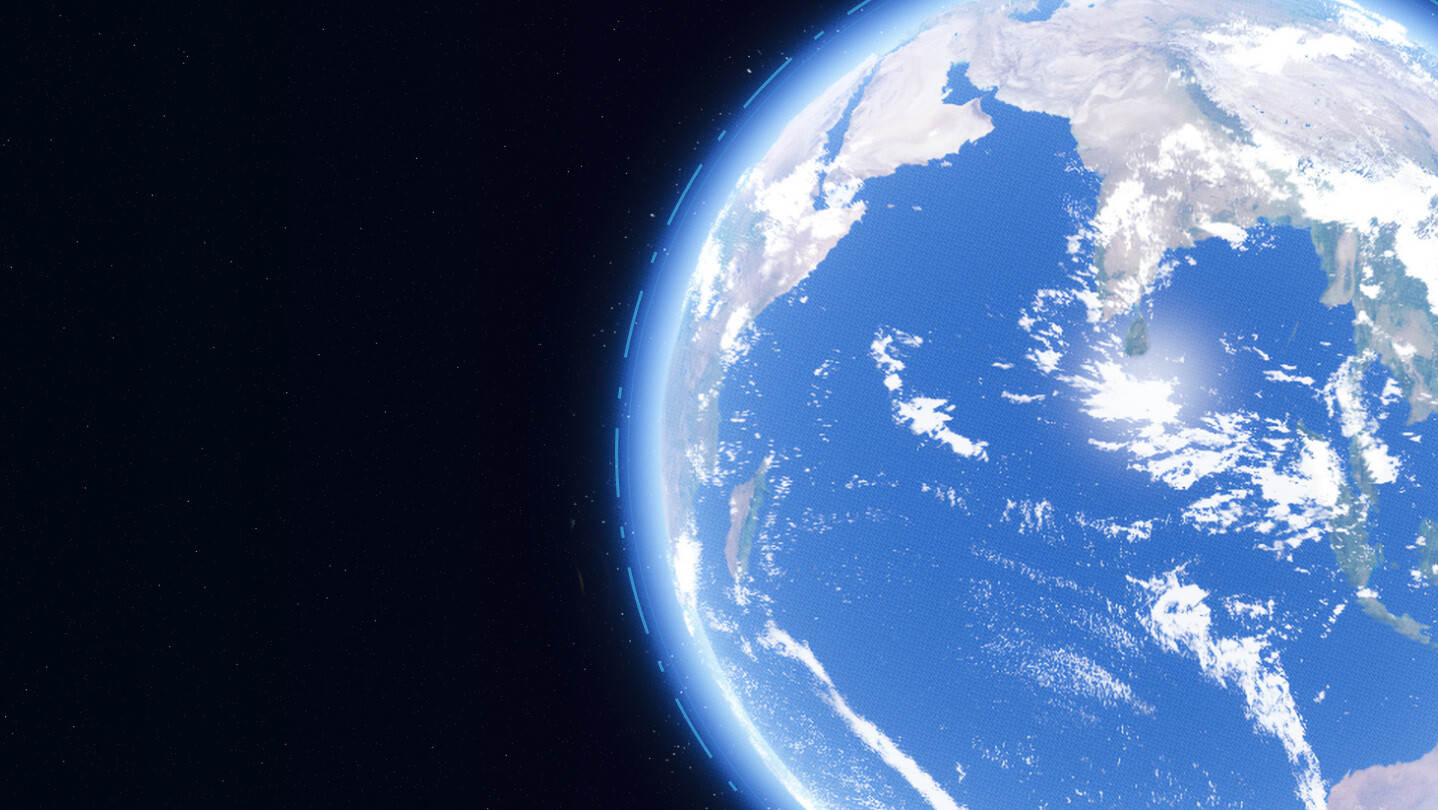
You fly a survey satellite in low orbit. Below you is Earth. The real one, built from NASA imagery, with real terrain, real city lights, and a day/night terminator crossing it as the planet turns.

Somewhere down there are 35 Points of Interest: Everest, the Amazon, the Mariana Trench, Angkor Wat, the volcano buried under Antarctic ice. You cannot see them. You have to find them.

Fire the sonar and it answers with a distance, not a location. The rest is yours to narrow down, sweep by sweep, battleship played on a globe. Hold the beam on a contact and the instrument resolves it into a real place, with the real science attached: what it is, how it formed, what lives there.

Every identification pays research data, spent at the ISS. A wider sonar. Faster analysis. Infrared, for the dark half of the planet. A polar orbit, for latitudes you currently cannot fly over. Better instruments don't just make the work faster, they reveal sites the old ones could not read at all.

  • A real satellite in a real orbit around a real Earth, from NASA, ESA and USGS data

  • Discovery, not collection: sonar tells you how close you are, never where to go

  • 35 Points of Interest, each with its own geology, fauna and flora: researched, not invented

  • Upgrade at the ISS: three survey levels, and sites you literally cannot detect until you earn them

  • Day and night matter: the unlit half needs infrared, or patience

AI Generated Content Disclosure

The developers describe how their game uses AI Generated Content like this:

Space Planet Explorer uses generative AI to create assets that ship with the game, including planet surface textures, cinematic sequences, voice narration, and music. All of this content was generated during development — no AI content is generated live during gameplay. Planet visuals are AI-generated interpretations based on real scientific data, not actual NASA photography.

System Requirements

    Minimum:
    • OS: Windows 10 64-bit
    • Processor: Intel Core i5 / AMD Ryzen 3 or equivalent
    • Memory: 4 GB RAM
    • Graphics: GPU with Vulkan support — NVIDIA GeForce GTX 1050 / AMD Radeon RX 560 or better
    • Storage: 2 GB available space
    • Additional Notes: Keyboard & mouse
Review Filters