


CD Market is a music industry management sim where you build a record label on your own terms, from vinyl to digital. Stay small, or grow into something bigger. Discover artists, shape careers, and survive decades of changing formats, trends, rivals, and crises.

Sign in to add this item to your wishlist, follow it, or mark it as ignored

Download CD Market - Music Label Sim Demo

This game is not yet available on Steam

Coming soon

Interested?
Add to your wishlist and get notified when it becomes available.
 

About This Game

CD Market is a music label management game about taking a small record label through decades of music history.

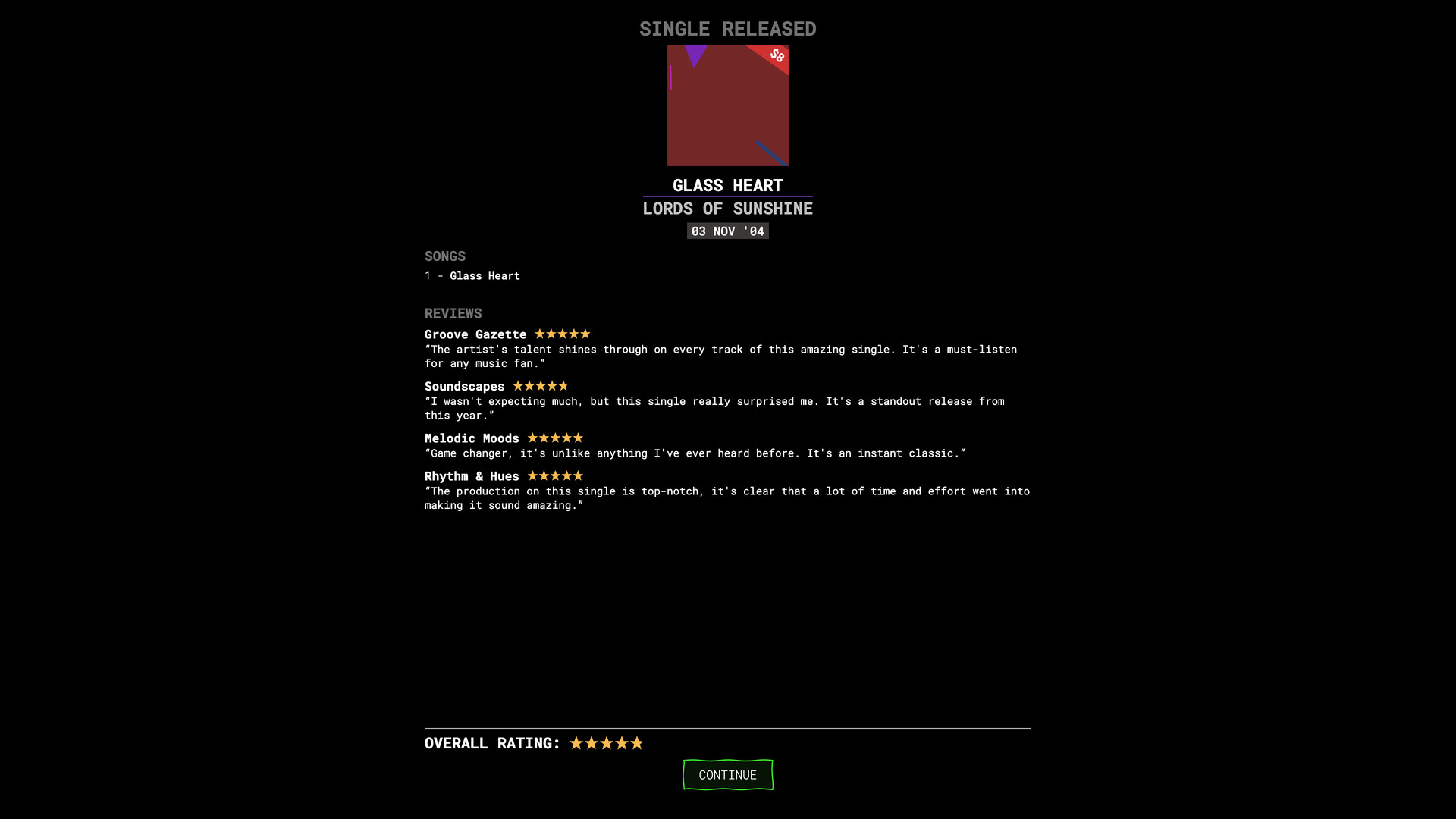
You sign artists, shape their careers, release records, send them on tour, chase charts, and try to keep the whole thing from collapsing when the industry changes around you.

Some weeks are simple: a single sells well, a tour date goes smoothly, a new artist looks promising. Other weeks, a band is falling apart, a legal case lands on your desk, piracy eats into sales, a rival label makes an offer to your biggest act, and your next album still is not ready.

That is the job. Build the label anyway.

Start Anywhere From 1970 To 2020

Starting in the 1970s means dealing with a world built around physical formats, regional distribution, and record stores. Start later and the business has already changed. CDs rise, piracy appears, digital platforms arrive, and the comfortable old ways of selling music become harder to rely on.

You can keep playing beyond 2020 and see how long your label can survive.

Sign Artists And Manage Their Careers

Scout new artists through your A&R department, negotiate contracts, pay advances, set royalties, renew deals, and decide who deserves a long-term place on your roster.

Artists are not just sales machines. They have creative energy, stress, boredom, happiness, chemistry, traits, and problems of their own. A talented band can still burn out, fall apart, lose a key member, or become difficult to manage at the worst possible time.

Make The Music Before You Sell It

A release starts before the release screen.

Set the creative direction for a project, choose the style and theme, book demo sessions, hire writers and producers, record songs, and decide what should become a single, album, EP, promo single, compilation, greatest hits release, or special edition.

You can release music in different regions and formats, including Vinyl, Cassette, CD, and Digital. Each era changes what makes sense, what sells, and what risks you are taking.

Promote The Release

A great song can still disappear if nobody hears it.

Run marketing campaigns, schedule PR events, send music to radio, create videos for TV, build hype before an album, and grow artist recognition across different regions. You may also get offers for commercial placements, collaborations, award-show performances, or other opportunities that can help a release take off.

Tour, Sell Merch, Or Build A Festival Legacy

After an album, send the artist out into the world.

Choose venues, set ticket prices, plan dates, build setlists, add supporting artists, manage travel and amenities, rehearse, and watch each show affect reputation, stress, ticket sales, and future demand.

You can also create merch sets, work with suppliers, order stock, set prices, and turn fan excitement into another part of your label’s income.

As your label grows, festivals become part of its identity. Get your artists onto festival lineups, or create your own festival, book the venue, set the schedule, invite label and global artists, manage budgets, and try to turn a risky event into a name fans remember.

Survive The Industry

The music business does not stay still.

Global charts move every week. New styles appear. Rival labels grow. Artists retire, get poached, or become famous enough to demand better terms. Awards can raise your profile. Legal cases can drain your cash. Piracy can destroy sales if you ignore it for too long.

Build departments, hire better employees, bring in executives, run anti-piracy campaigns, settle or fight lawsuits, and make the kind of decisions that decide whether your label becomes a legend or a warning story.

Grow Into Something Bigger... And Delegate The Chaos

If your label becomes successful enough, the business expands beyond signing artists and releasing albums.

You can build your own studio, move into better offices, hire executives, open distribution centers, run your own record stores, buy radio stations, make distribution deals with rival labels, and even acquire other labels.

As the company grows, you can start delegating some of the chaos. Marketing executives can run ongoing PR work for your artists. HR executives can recruit and manage department staffing. Tour executives give you better forecasts before you risk money on the road. Distribution executives help with retail infrastructure, store costs, and rival-label deals.

You can also hire release executives to help manage an artist’s album cycle. They can plan demos, schedule recordings, prepare singles, build release drafts, and wait for your final approval before anything goes out.

By then, your label is not just surviving the industry anymore. It is part of what shapes it.

Explore The Game In Sandbox Mode

If you want less pressure, or just want to experiment, Sandbox mode lets you bend the game around your own ideas.

Edit your label’s cash, recognition, genre popularity, release settings, ticket price limits, manufacturing costs, employee setup, and more. You can also create and edit artists, adjust members, change traits, boost happiness, fix chemistry, or set up the exact roster you want to play with.

Use it to test strategies, build a dream label, skip the early struggle, recreate a specific music scene, or just make the numbers do something ridiculous and see what happens.

Features

  • Start in any year from 1970 to 2020 and continue endlessly

  • Manage a record label through vinyl, cassette, CD, piracy, and digital eras

  • Scout artists, solo members, and future stars through A&R

  • Negotiate contracts, advances, royalties, renewals, and EP deals

  • Manage artist happiness, chemistry, stress, boredom, burnout, addiction, and band drama

  • Create demos, record songs, choose writers and producers, and build full album projects

  • Release singles, albums, EPs, compilations, greatest hits, promo singles, and special editions

  • Choose formats, regions, prices, publishers, marketing budgets, and distribution options

  • Track sales, profit, certifications, piracy impact, chart positions, and regional recognition

  • Run PR events, marketing campaigns, radio promotion, TV exposure, and commercial deals

  • Plan tours with venues, ticket prices, setlists, support acts, travel, amenities, and show ratings

  • Create merch sets, manage suppliers, order stock, and sell to fans

  • Compete for awards and perform at major ceremonies

  • Create your own festivals and invite label or global artists

  • Handle legal cases, settlements, court outcomes, and anti-piracy campaigns

  • Compete with rival labels, counter their offers, sign global artists, or acquire subsidiaries

  • Build distribution centers, open record stores, and make deals with other labels

  • Buy radio stations and strengthen your control over promotion

  • Use Sandbox mode to edit your label, artists, money, recognition, and more

  • Create or import custom music templates with different genres, styles, regions, stores, publishers, and radio stations

  • Unlock achievements across sales, tours, awards, formats, legal cases, stores, and digital music

It is about watching a label history grow one choice at a time. The first scouted artist. The risky single that worked. The expensive tour that did not. The band that almost broke up. The album that kept the company alive. The rival that took your star. The comeback you had to build from whatever was left.

AI Generated Content Disclosure

The developers describe how their game uses AI Generated Content like this:

AI was used to help with translations and spelling.

System Requirements

Windows
macOS
SteamOS + Linux
    Minimum:
    • Requires a 64-bit processor and operating system
    • OS: Windows 10 (64-bit)
    • Processor: Intel Core i3 / AMD Ryzen 3 (or equivalent)
    • Memory: 4096 MB RAM
    • Graphics: Integrated Graphics (Intel HD 4000 or equivalent)
    • Storage: 1000 MB available space
    • Sound Card: Any
    • VR Support: None
    Recommended:
    • Requires a 64-bit processor and operating system
    Minimum:
    • OS: macOS 11 (Big Sur)
    • Processor: Apple M1 or Intel Core i3
    • Memory: 4096 MB RAM
    • Graphics: Integrated Graphics
    • Storage: 1000 MB available space
    • Sound Card: Any
    Recommended:
      Minimum:
      • OS: Ubuntu 20.04 / SteamOS
      • Processor: Intel Core i3 / AMD equivalent
      • Memory: 4096 MB RAM
      • Graphics: Integrated Graphics
      • Storage: 1000 MB available space
      • Sound Card: Any
      • VR Support: None
      Recommended:
      There are no reviews for this product

      You can write your own review for this product to share your experience with the community. Use the area above the purchase buttons on this page to write your review.