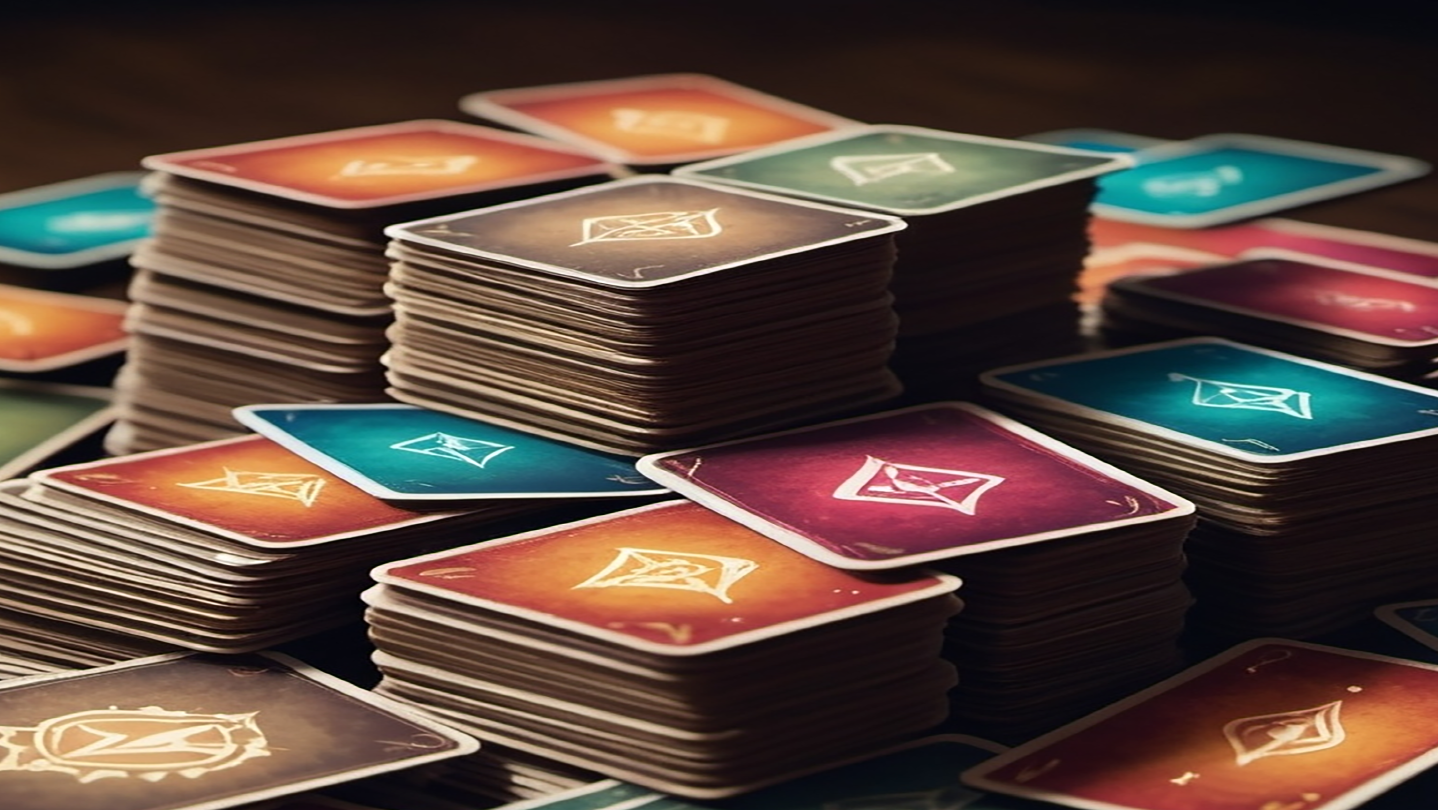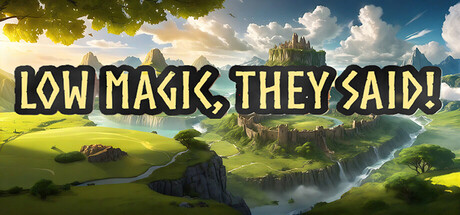

A dark fantasy roguelike deckbuilder where broken builds are a feature, not a bug. Think Slay the Spire meets the unforgiving difficulty of Dark Souls, with Diablo 2's philosophy of letting you discover ridiculously powerful builds yourself. They lied about the magic being low.

Sign in to add this item to your wishlist, follow it, or mark it as ignored

Download Low Magic They Said Demo

This game is not yet available on Steam

Planned Release Date: Q2 2026

Interested?
Add to your wishlist and get notified when it becomes available.
 

About This Game

About This Game

Low Magic, They Said!

In this dark fantasy roguelike deckbuilder, every run tells a different story of power, madness, and the lies they told about magic.

Every Run Is a New Story

Navigate procedurally generated maps, choosing your path through enemy encounters, elite fights, events, shops, and rest sites. Every decision matters - do you risk the elite for a powerful upgrade, or play it safe and hit the shop? Do you dare enter the optional dungeon mid-run, or save your health for the boss ahead? Runs are fast, brutal, and endlessly replayable.

Build Something Absurdly Powerful

Play the Berserker - a rage-fueled warrior with a massive card pool, devastating synergies, and upgrades that turn simple attacks into game-breaking combos. Every relic changes your approach, and the right combination turns a desperate run into an unstoppable rampage. This isn't about perfect balance - it's about discovering that broken combo and riding it to glory. If it feels overpowered, you earned it. More character classes are coming throughout Early Access.

Temple Magic

Beyond your class cards lies an ancient magic system waiting to be unlocked. Temple magic opens up entirely new abilities - and as you push deeper into the game, you can share magic across classes, breaking the boundaries of what each character was meant to do. The deeper you go, the more the rules bend.

Earn Your Power

Your arsenal grows with every accomplishment. Defeat bosses in specific ways, discover hidden interactions, complete challenging feats - and permanently unlock new cards and relics for all future runs. That impossible boss that crushed you? Defeating it unlocks the very power it used against you. The more you play, the more tools you have, creating a satisfying progression that spans across deaths.

Optional Dungeons - If You Dare

Optional dungeons exist completely separate from the main path. These aren't just difficulty spikes - they're entirely different experiences with exclusive events, unique enemies, and rewards that exist nowhere else in the game. The entrance fee is steep, the enemies are brutal, and death is likely. But the power waiting inside? Legendary. This is where good runs become god runs... if you survive.

Summon the Gods at Your Peril

Deep within the optional dungeons lie ancient altars. Here, you can attempt to summon deities - but you never know who will answer. Will you draw the attention of a benevolent god who grants you game-breaking power? Or will you summon something that makes you wish you'd never found that altar? Some gods give you wings. Others clip them. The only certainty is uncertainty.

A Story Worth Unraveling

This isn't a roguelike that skips the narrative. A deep story unfolds across acts, events, and discoveries - pieced together through gameplay, not cutscenes. Collect journal pages scattered throughout the world, each with audio lore you can listen to while you play. The world has secrets, the characters have motives, and the deeper you go, the more you realize nothing is what it seemed. Pay attention. The lore rewards those who look.

A World That Transforms

Journey through multiple acts across distinct biomes, witnessing the world's transformation from vibrant fantasy into something far darker. The atmosphere evolves with your progress, creating a narrative told through environment, music, and increasingly desperate battles.

The Prestige System

Beat the game? That's where it really begins. Each prestige level automatically makes enemies tougher - that part you can't control. But after each victory, fate draws two cards from a massive pool: one that strengthens the world, one that weakens you. You pick one. The other is gone forever. Your choices stack as you climb, and the pool is deep enough that no two playthroughs draw the same combination. Your prestige 5 might be a nightmare. Someone else's might be a cakewalk. And with each level, the world reveals new secrets hidden from lesser adventurers. Legends speak of secret levels of magic that only the most persistent will ever find.

A Soundtrack That Hits Different

Every track in the massive original soundtrack was composed during development - no stock audio. The music shifts with the world, from epic fantasy to dark, oppressive soundscapes that match the tone of each biome and act. This game sounds as good as it plays.

Early Access - March 2026

Built with love by a solo dev gamer, for gamers. As a former Senior GM on World of Warcraft at Blizzard Entertainment, I know what makes games great. Now I'm building the one I always wanted to play. The core experience is complete and fully playable from start to finish. All major systems are in place: deckbuilding, achievement unlocks, optional dungeons, god summoning, prestige progression, and a deep meta-game. This is a full experience, not a skeleton.

What's Coming During Early Access

Additional character classes, new biomes and acts, town building, expanded endgame content including raid mode and secret dungeons, and more layers of depth we're not ready to reveal yet. Some darkness is better left undiscovered... for now.

In a world where the gods themselves might answer your desperate call, where optional dungeons promise power beyond imagination, and where every achievement makes you permanently stronger, one thing is certain:

They lied about the magic being low.

AI Generated Content Disclosure

The developers describe how their game uses AI Generated Content like this:

AI-Generated Content Disclosure

I am a solo developer with no programming background. Before using AI, I spent three months following YouTube tutorials, deleted everything and restarted three times, and typed every line of code myself until the foundation of this game clicked.

From there, I used AI — primarily Claude — as a teacher and debugging partner across 7,000+ conversations over 16 months to learn GDScript and build every system in the game. The first line in my prompts is always "Stop being a yes sayer and always be brutal and honest."

Here is exactly what AI was and wasn't used for:

Code: I spent my first three months writing every line of code by hand. As the project grew, AI became a development partner — drafting code from my descriptions, which I then reviewed, debugged, and integrated. AI taught me programming concepts and helped me solve problems. Every design decision and system architecture is mine.

Art: AI-generated with extensive human direction and manual editing. Some pieces required 15 pages of descriptions. I often assemble final art from multiple elements — finding references, combining parts, and making hands-on edits until it matches my vision.

Animation: The first 14 enemies and 2 bosses were animated by me personally in DragonBones. For newer content, I'm exploring AI-generated animations and working to make them feel personal and consistent with the game's style — you can see examples with the later bosses. Some of these I'm still not satisfied with and will redo, which is just part of the process.

Music: I produced 350+ tracks using AI music tools and curated the best for the game. All creative direction — mood, style, placement — is mine.

Writing: All card text, lore, descriptions, and UI text are written by me. AI occasionally helps with polish.

Game Design: Every mechanic, card interaction, and balance decision comes from a lifetime of gaming — hundreds of board games, decades of Magic: The Gathering, a career at Blizzard Entertainment, and more consoles than most people can count. AI does not design games. That part is entirely human.

EDIT1: I felt the need to mention that I got diagnosed with ADHD last year, at the age of 47. The reason I could never learn coding in a traditional way is my attention span. If I am not interested it is super hard, and if I am interested it is super awesome. I get excited when I can talk and describe how I want my game to feel and function. The AI converts that to code, and together we've created a way for me to follow my dream and make a game that I want to play. I have thought to myself many times during development that I wish I knew how to make this myself, and I wish I was able to just learn and do things like most people. But here we are, and I am starting to consider that this route might have been more punishing on me than the other way could have ever been. I am not sure, but willing to discuss it further if anyone is facing a similar decision.

"EDIT2: I updated the Code section to be more precise. I only wrote code entirely by hand for the first three months. After that, AI and I worked together — I designed and described what I needed in detail, AI drafted it, and I reviewed, debugged, and integrated everything."

System Requirements

    Minimum:
    • OS *: Windows 7 SP1+ (64-bit)
    • Processor: Intel Core i3 or equivalent
    • Memory: 2 GB RAM
    • Graphics: Intel HD Graphics 4000 or better
    • Storage: 8 GB available space
    • Sound Card: DirectX-compatible
    Recommended:
    • OS: Windows 10 (64-bit)
    • Processor: Intel Core i5 or equivalent
    • Memory: 4 GB RAM
    • Graphics: Dedicated GPU with 1 GB VRAM (e.g. NVIDIA GeForce GTX 660 or equivalent)
    • Storage: 10 GB available space
    • Sound Card: DirectX-compatible
* Starting January 1st, 2024, the Steam Client will only support Windows 10 and later versions.
There are no reviews for this product

You can write your own review for this product to share your experience with the community. Use the area above the purchase buttons on this page to write your review.