
Aby zagrać w tę zawartość, wymagana jest podstawowa wersja gry Train Simulator Classic na Steam.

Zaloguj się, aby dodać tę pozycję do listy życzeń, zacząć ją obserwować lub oznaczyć jako ignorowaną

Polski język nie jest obsługiwany

Ten produkt nie obsługuje twojego lokalnego języka. Przed zakupem zapoznaj się z listą obsługiwanych języków, która znajduje się poniżej.

Zawartość do pobrania

Aby zagrać w tę zawartość, wymagana jest podstawowa wersja gry Train Simulator Classic na Steam.

Kup Train Simulator: Tennessee Pass


O tym DLC

The Rio Grande Railroad’s Tennessee Pass route across the Colorado Rockies: It was legendary, tough, scenic, and steep, and, in reaching an elevation of 10,221 feet above sea level, was the highest standard-gauge main line in the United States. And now, Rio Grande’s renowned Tennessee Pass route comes to Train Simulator Classic!

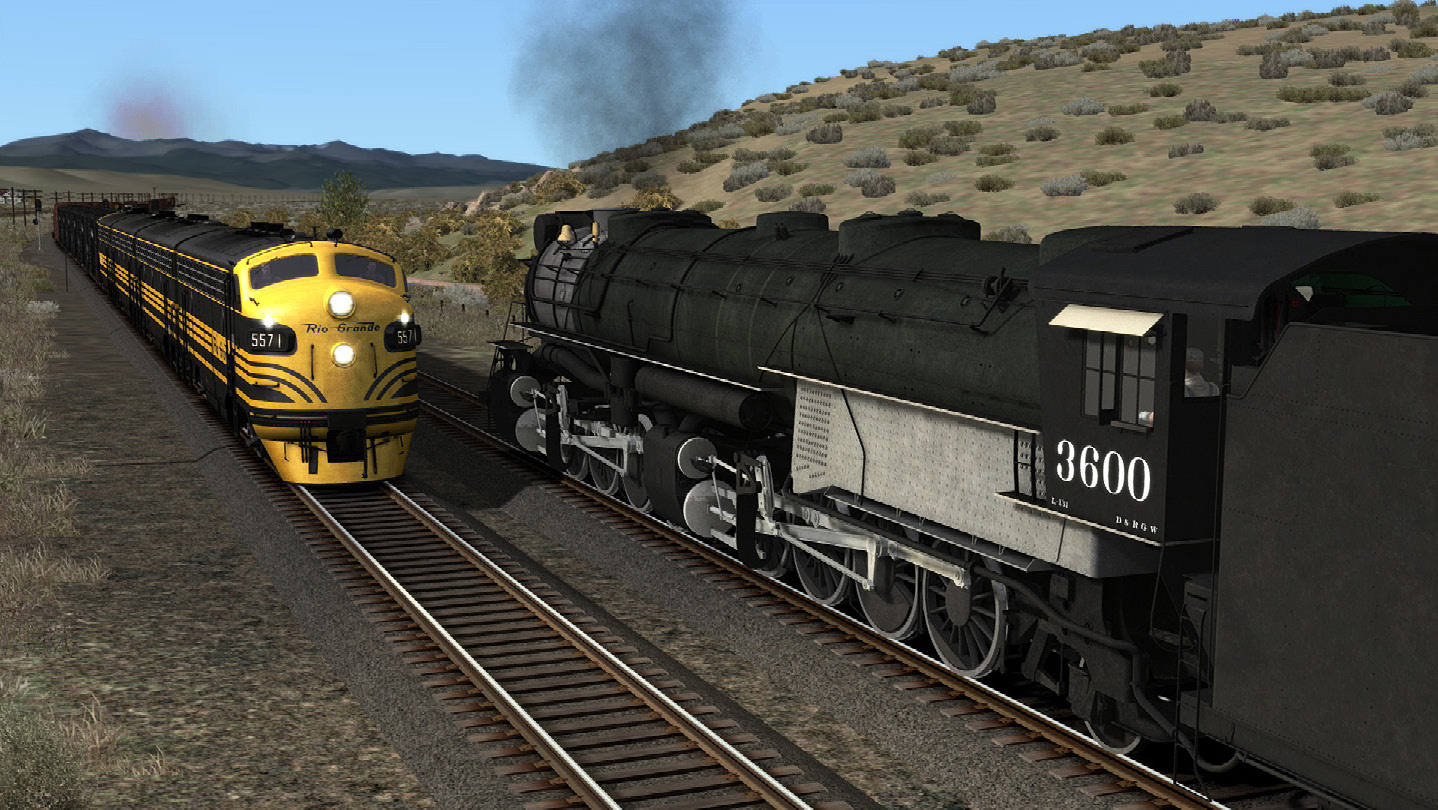
Created by accomplished developer Milepost Simulations, the Tennessee Pass route for Train Simulator Classic extends 62 main line miles from Buena Vista to Minturn, Colorado, includes the famed Rio Grande (D&RGW) Leadville Branch (extending five miles from Malta to Leadville), and brings to life memorable steam-to-diesel transition-era railroading featuring Rio Grande’s massive and powerful Alco-built L131 2-8-8-2 articulated steam locomotive plus stylish Rio Grande Electro-Motive F7 and GP7 diesels!

In the late 1870s, two great western railroads – the Rio Grande and the Santa Fe – battled toe-to-toe in a quest to acquire the best route across the spine of the Colorado Rockies. Santa Fe won legendary Raton Pass, while the Rio Grande gained control of a route westward from Pueblo, along the Arkansas River and through the magnificent Royal Gorge. Extending westward toward a rail link with Salt Lake City, Utah, the Rio Grande in the early 1880s pushed farther west along the Arkansas River and across towering Tennessee Pass, which rose to an elevation of more than 10,000 feet above sea level. Rio Grande’s chosen route extended northwest from Salida via Buena Vista, Malta, the summit of Tennessee Pass, and Minturn to Glenwood Springs and beyond.

To conquer Tennessee Pass was a monumental undertaking that required tracing the path of the Arkansas River; numerous tunnels, cuts, and fills; and, to reach the summit, lengthy main line grades of up to 3 percent. Indeed, D&RGW’s Alco L131 2-8-8-2s were designed and built specifically to tame the grades of Tennessee Pass and when constructed were the most powerful locomotives in North America. Even then, however, it regularly took three, or even four, of the massive articulated locomotives to lift tonnage up the unforgiving 3 percent eastbound climb from Minturn to the 10,221-foot summit of Tennessee Pass.

In the era modeled by Milepost Simulations for Train Simulator Classic, the route was operated with a mix of train orders, Absolute Block Signals (ABS), and Centralized Traffic Control (CTC). Along with the line’s blend of single- and double-track, the route delivers diverse and challenging operations. The line via Tennessee Pass remained D&RGW’s primary standard-gauge path across the Rockies until the opening of the Moffat Route and the Dotsero Cutoff in 1932, and thereafter continued to serve as a busy freight artery even after Rio Grande was merged into Southern Pacific in 1988. With SP’s merger into Union Pacific in 1996, however, the line became largely redundant and today remains in place but inactive.

Thanks to Milepost Simulations’ Tennessee Pass route for Train Simulator Classic, we can return to the glory days of the D&RGW during the 1940s and 1950s when a steady flow of heavy tonnage climbed over the heights of the Rockies, powered by massive steam and brand-new diesel locomotives. In addition to stunning and dramatic Rocky Mountain scenery, the route features detailed and authentic re-creations of D&RGW yards, structures, and servicing facilities at locations including Minturn, Malta, Buena Vista, and Leadville. The diesels included with the Tennessee Pass route are dressed in Rio Grande’s beautiful “as delivered” black-and-gold liveries, and the route also features a selection of eleven types of freight rolling stock in the colors of D&RGW and other era-appropriate railroads. Among the selection of equipment are Rio Grande steel and wood cabooses.

With the Tennessee Pass route for Train Simulator Classic, you will climb aboard steam and diesel power and get right to work thanks to a selection of eight career scenarios and two free-roam scenarios, plus the route is also quick-drive enabled.

Rio Grande’s Tennessee Pass route was one of America’s most remarkable, challenging, and historic main line mountain railroads, and the steam-to-diesel transition era was a time of unmatched and dramatic railroading. All of this – and much more – now comes to vivid and memorable life with the Rio Grande Tennessee Pass route for Train Simulator Classic!

Included Scenarios

Eight challenging career scenarios plus two free-roam scenarios realistically re-create operations on the Rio Grande’s 1940s/1950s-era Tennessee Pass route. More scenarios are available on Steam Workshop online and in-game.

  • Winter Diesel Manifest Part I

  • Winter Diesel Manifest Part II

  • Autumn Westbound Part I

  • Autumn Westbound Part II

  • Leadville Local Part I

  • Leadville Local Part II

  • Fruit Express Part I

  • Fruit Express Part II

More scenarios are available on the Steam Workshop online and in-game. Train Simulator’s Steam Workshop scenarios are free and easy to download, adding many more hours of exciting gameplay. With scenarios being added daily, why don’t you check it out now!

Key Features

  • Rio Grande’s legendary Tennessee Pass route across the Colorado Rockies

  • 62 mainline route miles plus the five-mile Leadville branch

  • At 10,221-feet above sea level, the highest standard-gauge main line in the U.S.

  • Detailed yards, servicing facilities, and structures at notable locations such as Minturn, Leadville, Malta, and Buena Vista

  • Rio Grande’s massive and powerful Alco-built L131 2-8-8-2 steam locomotive

  • Electro Motive F7 (A/B) and GP7 diesels in “as delivered” Rio Grande liveries

  • Eleven types of period-authentic freight rolling stock, including D&RGW steel and wood cabooses

  • Eight career scenarios and two free-roam scenarios representing operations over the length of the route.

  • Quick Drive ready and compatible

  • Download size: 1.6 GB

Wymagania systemowe

    Konfiguracja minimalna (wersja 32-bitowa):
    • System operacyjny: wymagany Windows 7 32-bitowy z dodatkiem Service Pack 1, Windows 8.1 lub 10 (inne wersje i typy systemu operacyjnego nie są obsługiwane)
    • Procesor: Intel Core-i3 4330 3,50 GHz Dual Core lub AMD A8 6600K 3,90 GHz Quad Core lub lepszy
    • Pamięć RAM: 4 GB
    • Karta graficzna: NVIDIA GeForce GTX 750 Ti lub AMD Radeon R9 z co najmniej 1 GB dedykowanej pamięci VRAM
    • DirectX®: 9.0c
    • Połączenie sieciowe: łącze szerokopasmowe (korzystanie może wiązać się z dodatkowymi kosztami)
    • Powierzchnia dyskowa: 40 GB lub więcej wolnego miejsca na dysku (dodatki mogą wymagać więcej miejsca)
    • Karta dźwiękowa: kompatybilna z DirectX
    • Dodatkowe uwagi: Wymagana mysz oraz klawiatura lub kontroler konsoli Xbox

    Mobilne, laptopowe, notebookowe wersje komponentów w podanych konfiguracjach sprzętowych oraz ich odmiany o niskim poborze mocy (w tym układy Intel® lub zintegrowane układy graficzne) mogą działać, ale nie są obsługiwane. Może być konieczna aktualizacja sterowników układu, karty graficznej i karty dźwiękowej. Aby uzyskać informacje dotyczące zalecanych specyfikacji dla 64-bitowej wersji Train Simulator, należy zapoznać się z podręcznikiem użytkownika Train Simulator 2019.
    Konfiguracja zalecana (wersja 32-bitowa):
    • System operacyjny: Windows 7 32-bitowy lub 64-bitowy z dodatkiem Service Pack 1, Windows 8.1 lub 10 (inne wersje i typy systemu operacyjnego nie są obsługiwane)
    • Procesor: Intel Core-i5 4690 3,50 GHz Quad Core lub AMD Ryzen 7 1700 3,80 GHz Quad Core lub lepszy
    • Pamięć RAM: 4 GB (maks. wielkość dostępna dla 32-bitowej wersji systemu Windows)/16 GB lub więcej (dla 64-bitowej wersji systemu Windows)
    • Karta graficzna: NVIDIA GeForce GTX 970 lub AMD Radeon RX 480 z co najmniej 4 GB VRAM lub lepsza
    • DirectX®: 9.0c
    • Połączenie sieciowe: łącze szerokopasmowe (korzystanie może wiązać się z dodatkowymi kosztami)
    • Powierzchnia dyskowa: Wysokoparametrowy dysk SSD 40 GB lub więcej wolnego miejsca na dysku (dodatki mogą wymagać więcej miejsca)
    • Karta dźwiękowa: kompatybilna z DirectX
    • Dodatkowe uwagi: Wymagana mysz oraz klawiatura lub kontroler konsoli Xbox

    Mobilne, laptopowe, notebookowe wersje komponentów w podanych konfiguracjach sprzętowych oraz ich odmiany o niskim poborze mocy (w tym układy Intel® lub zintegrowane układy graficzne) mogą działać, ale nie są obsługiwane. Może być konieczna aktualizacja sterowników układu, karty graficznej i karty dźwiękowej. Aby uzyskać informacje dotyczące zalecanych specyfikacji dla 64-bitowej wersji Train Simulator, należy zapoznać się z podręcznikiem użytkownika Train Simulator 2019.
* Począwszy od 1 stycznia 2024, klient Steam będzie obsługiwał wyłącznie system Windows 10 i jego nowsze wersje.

Recenzje klientów dla produktu Train Simulator: Tennessee Pass O recenzjach użytkowników Twoje preferencje

Ogólne recenzje:
Recenzje użytkowników: 9 (9)


Aby zobaczyć recenzje w wybranym zakresie dat, kliknij i przeciągnij zaznaczenie na powyższym wykresie lub kliknij na wybrany słupek.


Pokaż recenzje w wybranej kolejności wyświetlania


Dowiedz się więcej
Filtry
Wyłączanie okresów występowania recenzji nie na temat
Czas gry:
Głównie Steam Deck
System operacyjny:
CPU:
GPU:
Typ urządzenia: