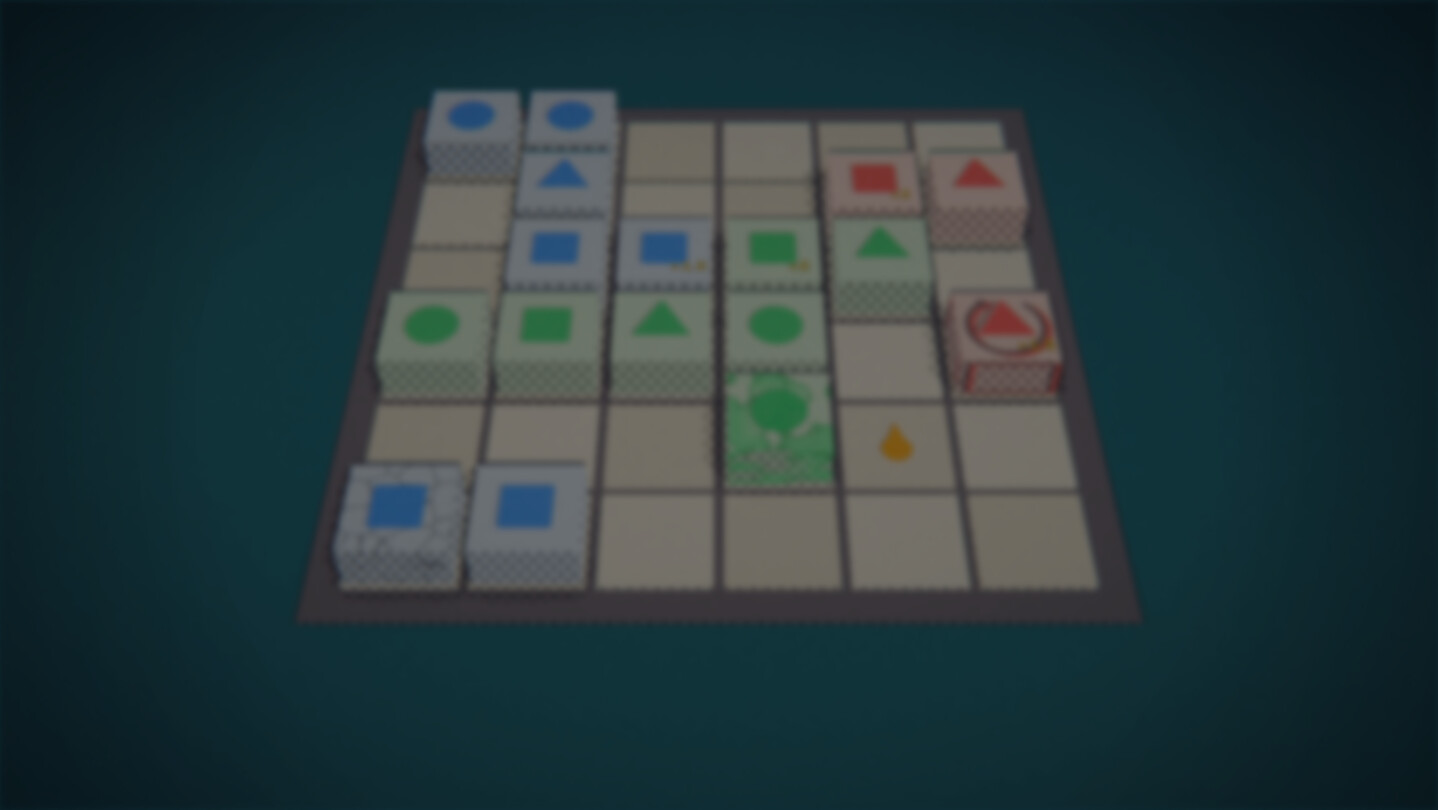



A roguelike tile puzzle. Draft a deck of tiles, chain colors and shapes across the board, and learn when to stop pushing. Level up your deck with powerups or new tiles in the shop between levels and get to the top of the leaderboards!

Sign in to add this item to your wishlist, follow it, or mark it as ignored

This game is not yet available on Steam

Planned Release Date: 2027

Interested?
Add to your wishlist and get notified when it becomes available.
 

About This Game

A tile puzzle that keeps raising the target

tri MI no is a single-player roguelike about one table and one tile at a time. Open a few sealed booster packs, keep the tiles you like the look of, then lay them on a paper grid and chain colours and shapes into a score big enough to clear the page. Every level asks for more than the last one. Ten of them finish a run, and the shop opens after every single one.

Score the chain, not the tile

A tile on its own is worth nothing. Dropped into the gap between two runs of green, it welds them into one chain — and a chain pays for every block in it, multiplied by its length, by the contacts you made, by the badges on the blocks and by the streak you are riding. The difference between forty points and four thousand is where you put one triangle. Nothing previews that number for you: reading the table is the skill, and the preview is something you have to buy.

Hitting the target is where the decision starts

Reaching it does not end the level — it starts overtime, where every further placement turns its score into coins instead. Nothing that happens there can take back what you have banked, but the bank is capped, the ink drops on the table dry out a little with every placement, and the bonus for stopping early shrinks every time you draw. How long to keep milking a good table is the question the whole game is built around.

Tons of powerups, and a counter that is new every level

Coins are spent at the ink shop between levels, and it is restocked every single time you walk in. Bigger tables. Wider hands. A colour that scores double and another that scores half. Tiles bought straight into your deck. One-shot multipliers that arm instead of firing, stack into each other, and turn a carefully built board into one absurd placement. Cannot afford the thing you want yet? Pin it, and it survives the restock while you save up. There are dozens of cards and services in the pool, and no single run gets to see them all.

Re-print your own deck

This is the part no other game in the genre does. The services counter edits the tiles you already own, one block at a time: recut a symbol, dab a colour, trim a block off so a tile squeezes in where nothing else fits, graft one on. Then start stamping blocks with things they should not be able to do — ink that dyes its neighbours the moment it lands, so a chain runs straight through the block that was blocking it; a plate that fires every chain it touches a second time; tracing paper that hangs off the edge of the board; a coin struck into the face that pays out the money you are sitting on. A handful of tiles, edited over ten levels, turns into a deck nobody else is playing.

A different run every time

Packs, shop stock, ink drops and the table itself are rolled fresh for every run, and the achievements you earn unlock modes that tear the rules up: no discards at all, a hand that only ever holds one tile, no shop for the whole run, a clock on every level, a page with holes torn in it, inks that print but refuse to score, a board locked down to four by four. Each one wants a different deck and a different kind of greed. Clear the tenth level and you can keep going into endless, where the target never stops climbing.

Play the same table as everyone else

Every run has a seed: type one in and you and a friend get the same packs, the same drops and the same shop, so the only variable left is what the two of you did with them. Global leaderboards are on the way — highest run, biggest single placement, and a daily seed everyone plays at once — so there is a top to climb and not just a run to survive.

Printed badly on purpose

All of it looks like a board game printed on cheap stock: flat inks, halftone shadows, paper grain, every symbol a hair out of register. Traits are printed onto the blocks instead of labelled, so one look at the table tells you what everything on it is about to do.

In the box

  • A roguelike run of about twenty minutes: booster packs, ten levels, a shop after each one, endless after that if you want to keep going.

  • Dozens of powerups, supplies, one-shot multipliers and deck-editing services.

  • Block traits that change what a block does, printed straight onto it rather than labelled.

  • A stack of run modes unlocked by achievements — the only progression that carries over between runs.

  • Seeded runs you can hand to a friend, with global leaderboards on the way.

  • Mouse, keyboard or gamepad, with full parity — and a tutorial that gets out of the way.

System Requirements

Windows
macOS
SteamOS + Linux
    Minimum:
    • OS: Windows 10 64-bit (version 21H1 or newer)
    • Processor: Intel Core i3-6100 / AMD FX-6300
    • Memory: 4 GB RAM
    • Graphics: DirectX 11 GPU with Shader Model 5.0 and 1 GB VRAM (GeForce GTX 750 Ti / Radeon R7 260X / Intel UHD 630)
    • DirectX: Version 11
    • Storage: 500 MB available space
    • Additional Notes: 1280×720 minimum resolution; mouse, keyboard or gamepad
    Recommended:
    • OS: Windows 10 64-bit (version 21H1 or newer)
    • Processor: Intel Core i5-8400 / AMD Ryzen 5 2600
    • Memory: 6 GB RAM
    • Graphics: GeForce GTX 1050 Ti / Radeon RX 570 or better
    • DirectX: Version 12
    • Storage: 500 MB available space
    • Additional Notes: 1280×720 minimum resolution; mouse, keyboard or gamepad
    Minimum:
    • OS: macOS 11 Big Sur
    • Processor: Apple M1, or Intel Core i5 (2015 or newer)
    • Memory: 4 GB RAM
    • Graphics: Metal-capable GPU (Apple Silicon or Intel Iris Plus / AMD Radeon Pro)
    • Storage: 500 MB available space
    • Additional Notes: 1280×720 minimum resolution; mouse, keyboard or gamepad
    Recommended:
    • OS: macOS 14 Sonoma or newer
    • Processor: Apple M1 Pro or newer
    • Memory: 6 GB RAM
    • Graphics: Apple Silicon GPU or discrete AMD
    • Storage: 500 MB available space
    • Additional Notes: 1280×720 minimum resolution; mouse, keyboard or gamepad
* Starting February 15, 2024, the Steam Client will no longer support 32-bit games or macOS 10.14 or lower.
    Minimum:
    • OS: Ubuntu 22.04 LTS or SteamOS 3 (64-bit; glibc 2.35 or newer)
    • Processor: Intel Core i3-6100 / AMD FX-6300
    • Memory: 4 MB RAM
    • Graphics: Vulkan 1.1 GPU with 1 GB VRAM and an up-to-date Mesa or proprietary driver (GeForce GTX 750 Ti / Radeon RX 460 / Intel HD 520)
    • Storage: 500 MB available space
    Recommended:
    • OS: Ubuntu 24.04 LTS
    • Processor: Intel Core i5-8400 / AMD Ryzen 5 2600
    • Memory: 6 MB RAM
    • Graphics: GeForce GTX 1050 Ti / Radeon RX 570 or better
    • Storage: 500 MB available space
Review Filters