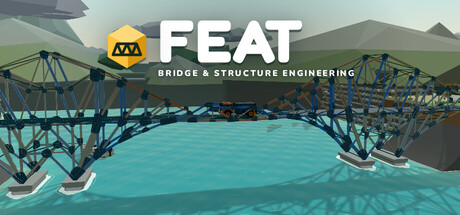

Design bridges, roofs, towers and cranes. Test them under trucks, snow and wind, find the weak member, and improve your design within budget. A real finite-element solver makes bars buckle, materials yield and structures collapse for a reason. Learn the forces. Build something that survives.

Sign in to add this item to your wishlist, follow it, or mark it as ignored

This game is not yet available on Steam

Coming soon

Interested?
Add to your wishlist and get notified when it becomes available.
 

About This Game

Build. Test. Find the weak point.

Design bridges, roofs, towers and cranes, choose your materials and cross-sections, and make your structure work within the contract's budget and mass limits.

Then put it to the test: trucks cross your bridge, snow loads your roof, wind hits your tower, and a crane lifts its cargo. Watch the forces move through every member. Blue means compression; orange means tension.

Understand the failure. Improve the design.

When a structure gives way, FEAT highlights the first member that failed and shows the collapse. Find the weak point, change your design, and run the same load again. Aim for a structure that survives, then refine its cost, mass and utilisation for three stars.

You can learn as you build. Everyday examples and a bridge lab explain the forces behind your decisions, one change at a time.

Four materials, four personalities

  • Steel — strong both ways, but pricey.
  • Timber — cheap and light, but brittle in tension.
  • Concrete — cheap in compression, cracks in tension.
  • Reinforced concrete — takes compression and tension, but it is heavy.

What is inside

  • A campaign of 40 contracts in four worlds — Valley, Quarry, Coast and Alpine Passes: bridges, snow-loaded roofs, towers in wind storms and cranes.
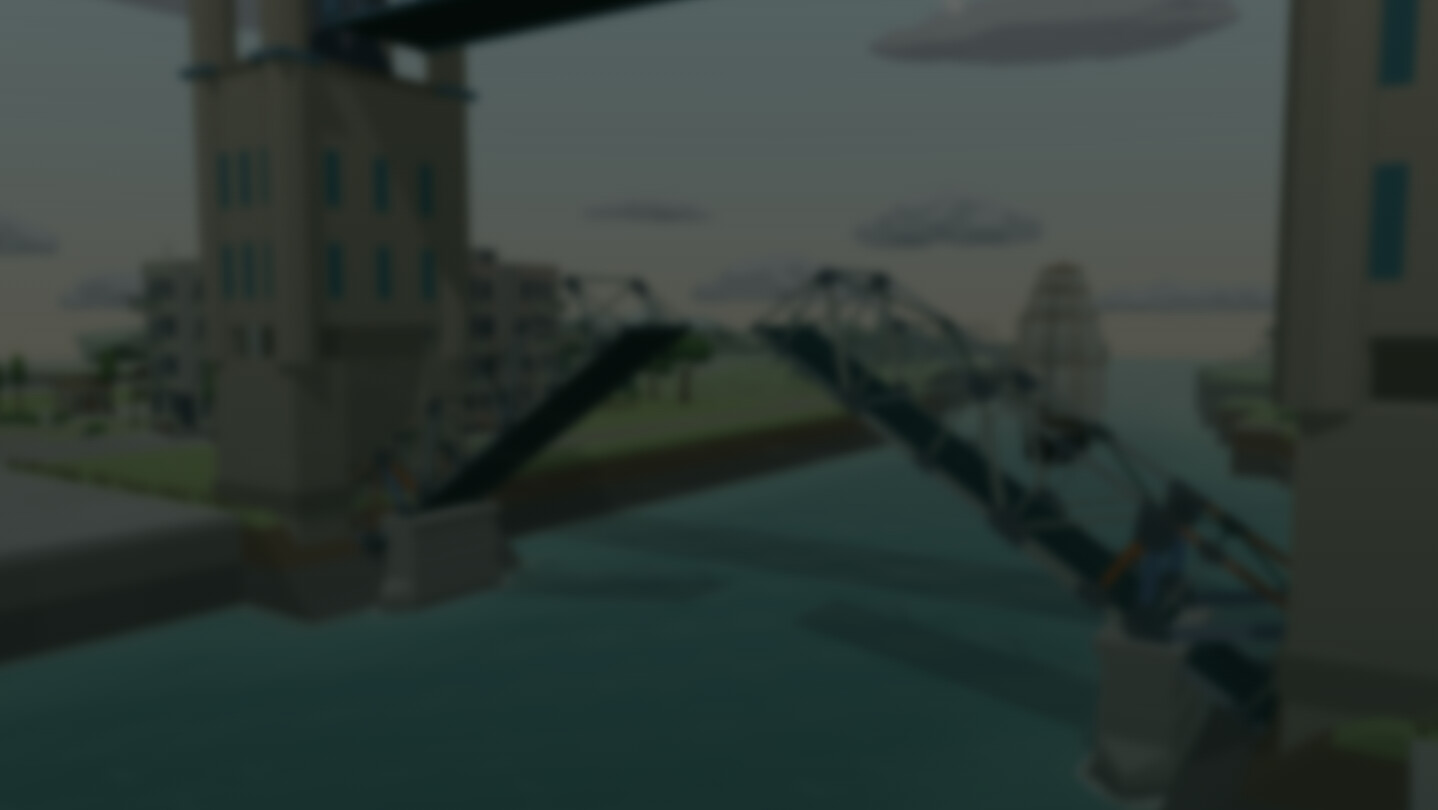
  • Engineering heritage — 20 famous structures on a globe: the Forth Bridge, the Royal Albert Bridge, the Garabit Viaduct, the Eiffel Tower, and Tower Bridge with other movable bridges that open for passing ships.
  • Two collections of real-world trusses — 21 levels from industry, energy, the city and leisure: a tower that catches a landing rocket booster, a Big Air ramp, a Ferris wheel, a chairlift tower and more.
  • Roller coasters — 10 levels where the track is fixed and you engineer the structure that carries it.
  • Sandbox and level workshop — build anything, design your own levels.
  • Learn by building — a short course explains every idea with everyday things (a drinking straw, a ruler on two books) before it gets a name, and a bridge lab lets you test one change at a time.

Real engineering behind every test

FEAT uses a custom finite-element (FEA) solver written in Rust. Cross-sections, materials and member lengths affect the result: slender compressed bars can buckle, steel can yield, and brittle materials can fail. Nonlinear dynamics simulates the collapse after a failure.

Same design, same result — bit for bit

The simulation is fully deterministic. An identical design under an identical load gives an identical result: the same verdict, the same moment and place of failure, the same wreck. That is what makes the star ratings for cost, mass and utilisation fair.

Made by an engineer

FEAT is made by Owlnut, a one-person studio run by a civil engineer who started the project about ten years ago and came back to finish it.

AI Generated Content Disclosure

The developers describe how their game uses AI Generated Content like this:

The in-game texts (lessons, level briefs, translations) and this store page were written with the help of AI language models and reviewed by the developer. The 3D models and scenery are procedural geometry generated by code written with AI coding assistance.

System Requirements

Windows
SteamOS + Linux
    Minimum:
    • Requires a 64-bit processor and operating system
    • OS: Windows 10 64-bit
    • Processor: 64-bit dual-core 2.0 GHz (e.g. Intel Core i3-6100 / AMD Ryzen 3 2200U)
    • Memory: 4 GB RAM
    • Graphics: WebGL 2.0-capable GPU with Direct3D 11 support (e.g. Intel HD Graphics 620 / AMD Radeon Vega 3 / NVIDIA GeForce GT 1030)
    • DirectX: Version 11
    • Storage: 1 GB available space
    • Additional Notes: Requires a 64-bit processor and operating system and a GPU with WebGL 2 support. Provisional requirements; final values after testing.
    Recommended:
    • Requires a 64-bit processor and operating system
    • OS: Windows 10 / 11 64-bit
    • Processor: Quad-core 3.0 GHz (e.g. Intel Core i5-8400 / AMD Ryzen 5 2600)
    • Memory: 8 GB RAM
    • Graphics: NVIDIA GeForce GTX 1060 / AMD Radeon RX 580
    • DirectX: Version 11
    • Storage: 1 GB available space
    Minimum:
    • OS: SteamOS 3 or 64-bit Linux (e.g. Ubuntu 22.04 LTS or newer)
    • Processor: 64-bit dual-core 2.0 GHz (e.g. Intel Core i3-6100 / AMD Ryzen 3 2200U)
    • Memory: 4 GB RAM
    • Graphics: WebGL 2.0-capable GPU with Direct3D 11 support (e.g. Intel HD Graphics 620 / AMD Radeon Vega 3 / NVIDIA GeForce GT 1030)
    • Storage: 1 GB available space
    • Additional Notes: Requires a 64-bit processor and operating system and a GPU with WebGL 2 support. Provisional requirements; final values after testing.
    Recommended:
    • OS: SteamOS 3 or 64-bit Linux (e.g. Ubuntu 22.04 LTS or newer)
    • Processor: Quad-core 3.0 GHz (e.g. Intel Core i5-8400 / AMD Ryzen 5 2600)
    • Memory: 8 GB RAM
    • Graphics: NVIDIA GeForce GTX 1060 / AMD Radeon RX 580
    • Storage: 1 GB available space
Review Filters