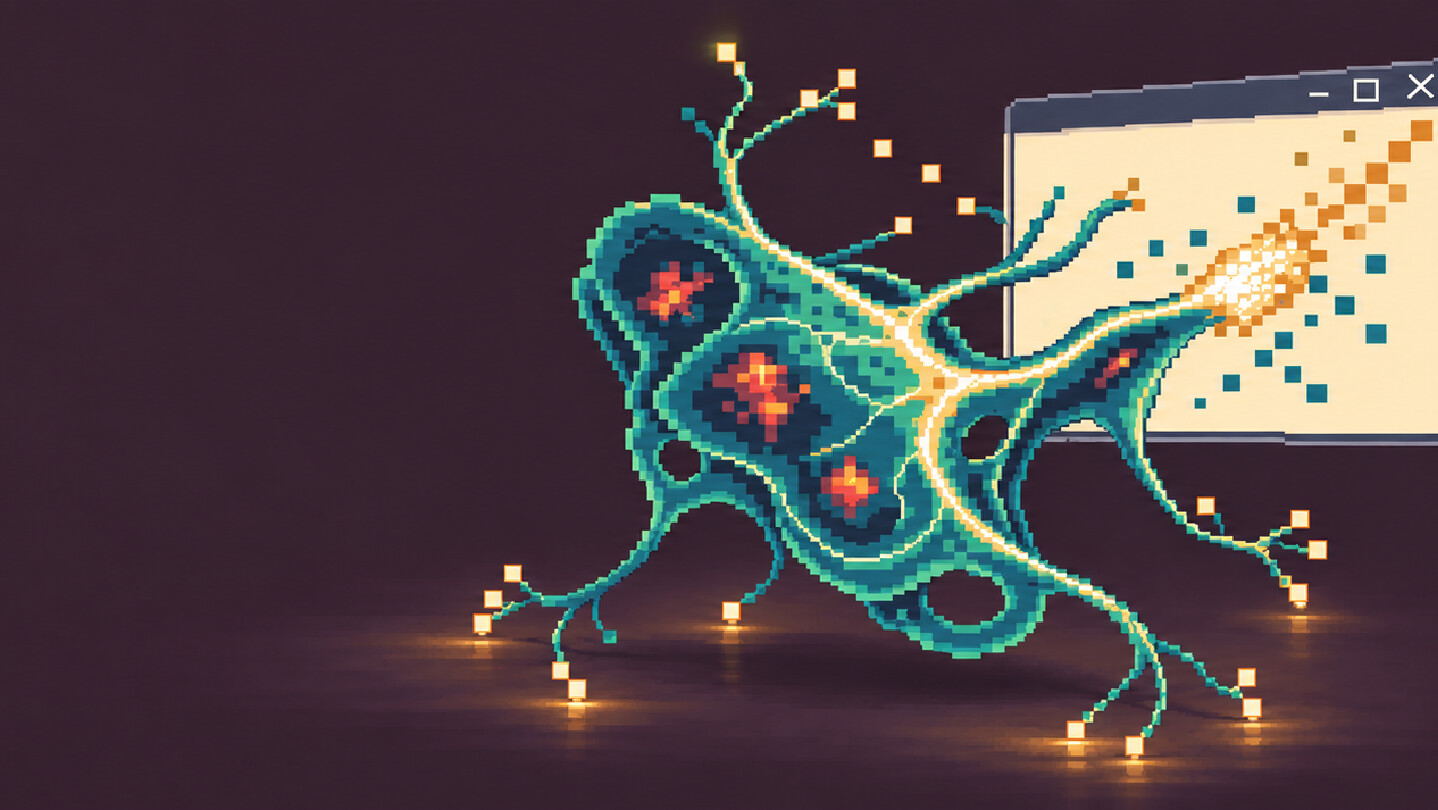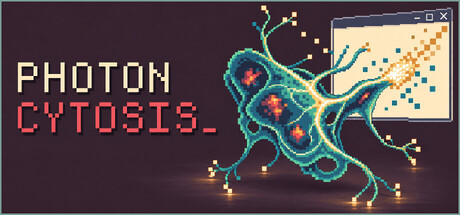


Photoncytosis is an idle desktop life simulation. A tiny organism feeds on the light of your screen, stores energy in its cells, and grows while you work. Shape its evolution, inspect it under the microscope, and help it survive a changing desktop ecosystem.

Sign in to add this item to your wishlist, follow it, or mark it as ignored

This game is not yet available on Steam

Planned Release Date: Q1 2027

Interested?
Add to your wishlist and get notified when it becomes available.
 

About This Game

Your desktop is its habitat.

Begin with a single cell and watch a living experiment grow across your screen. Photoncytosis runs alongside your everyday work: its organisms search for light, store energy, develop specialized cells, and respond to the desktop around them. Let them live on their own, then step in when you want to guide the experiment. 

Light keeps it alive. Color shapes its biology.

Bright screen pixels charge cell batteries. Every cell has its own reserve, and energy gradually flows through the connections between cells. Those reserves help the creature survive time away from a good light source.

The colors it absorbs influence how it develops. Red supports activity and movement, green supports biomass and growth, and blue supports perception. White light provides a balanced mixture. Changing the environment changes the conditions your organism must adapt to.

Look closer

Open the microscope to see the creature's cells, flexible membrane, and living connections. Select individual cells to inspect their role, charge, age, and color compounds. Pan the view and follow a body that stretches, moves, reproduces, and changes over time.

Guide its evolution

Earn experience as the organism grows and survives, then choose timed research in its mutation tree. Feeders, sensors, and motors handle harvesting, perception, and movement. Further adaptations can produce battery, collector, repair, and muscle cells with distinct roles in the body.

Drag a creature toward useful light or confine it to an application window. Bodies can split into independent fragments, each keeping its own energy reserves. Compatible creatures can regroup and join into one organism again.

Share the desktop with other life

Other organisms can share the same light sources, creating competition for the space around you. Attack and defense cells, infection, retreat, and recovery give encounters consequences for the colony's survival.

Check in when you want

Leave Photoncytosis running while you do other things. When you return, the "Since you last checked" report summarizes cell births and losses, new specializations, completed research, cures, and reclaimed cells from the running session. Tutorials and a cell guide help you understand what you are seeing.

Photoncytosis uses mouse and keyboard on the Windows desktop. Photo Mode lets you capture screenshots and recordings of the organism and microscope. Save your experiment and continue it when you next launch the game.

AI Generated Content Disclosure

The developers describe how their game uses AI Generated Content like this:

Marketing material are created using AI.

System Requirements

    Minimum:
    • Requires a 64-bit processor and operating system
    • OS: Windows 10 (64-bit)
    • Processor: 64-bit dual-core processor, 2.0 GHz
    • Memory: 4 GB RAM
    • Graphics: OpenGL 4.3-compatible GPU with up-to-date drivers
    • Storage: 100 MB available space
    • Sound Card: Windows-compatible audio device
    • Additional Notes: Mouse and keyboard required. Runs as a desktop overlay. Performance depends on organism population and other applications.
    Recommended:
    • Requires a 64-bit processor and operating system
    • OS: Windows 11 (64-bit)
    • Processor: 64-bit quad-core processor, 3.0 GHz
    • Memory: 8 GB RAM
    • Graphics: OpenGL 4.3-compatible GPU with up-to-date drivers
    • Storage: 100 MB available space
    • Sound Card: Windows-compatible audio device
    • Additional Notes: Mouse and keyboard required. OpenGL 4.3 is required for GPU simulation. Performance depends on organism population and other applications.
Review Filters