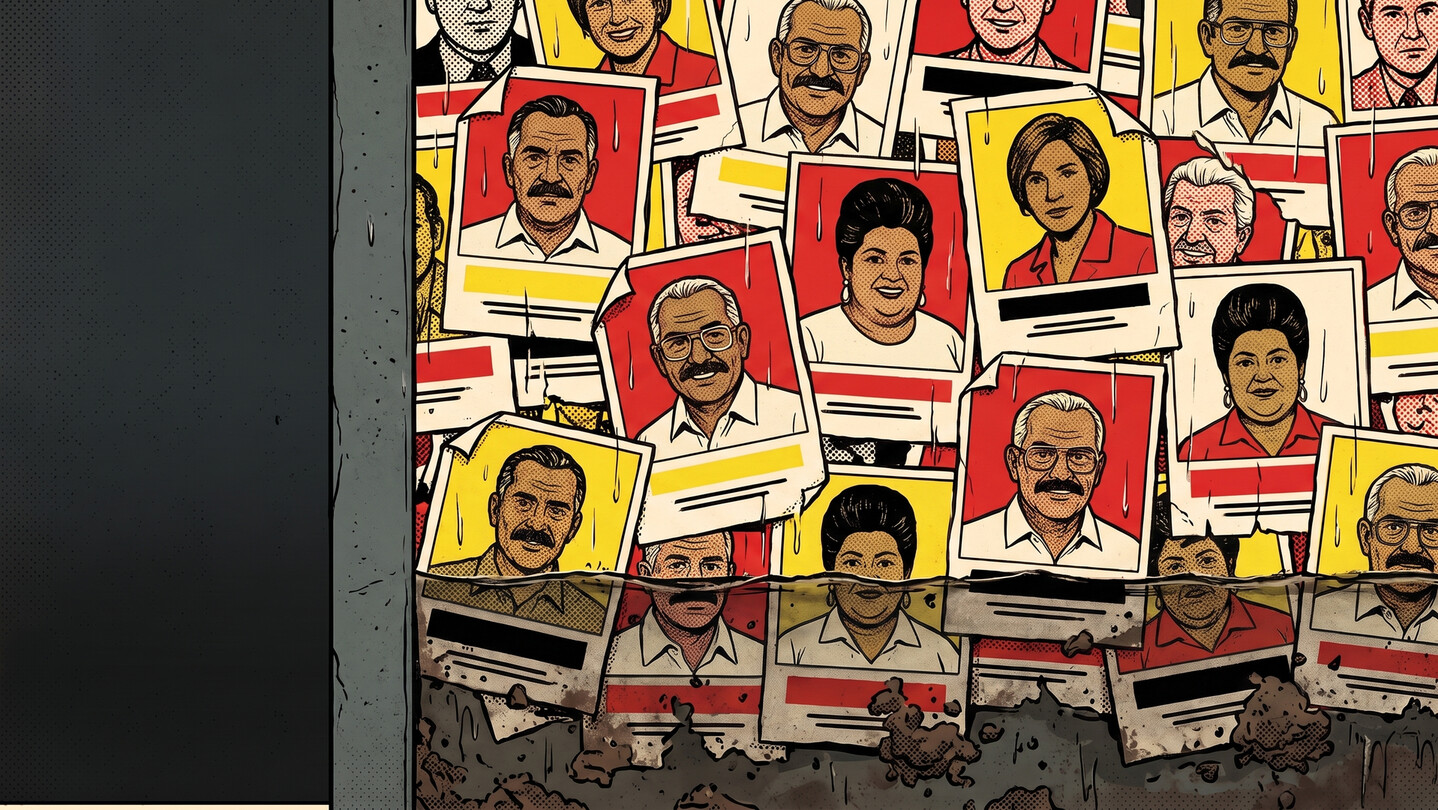


An investigation and courtroom visual novel set in the electoral courts of a small Brazilian city. A first-case lawyer, a doctored campaign flyer, and a document with a date that does not add up. Two routes of around eight hours, six endings and a final act.

Daftar masuk untuk menambah item ini ke senarai hajat anda, ikuti atau tandakannya sebagai diabaikan

Bahasa Bahasa Melayu tidak disokong

Produk ini tidak menyokong bahasa tempatan anda. Sila semak senarai bahasa yang disokong di bawah sebelum membuat pembelian

Permainan ini belum tersedia di Steam lagi

Akan datang

Berminat?
Tambah ke senarai hajat anda dan terima pemberitahuan apabila permainan sudah tersedia.
 

Tentang Permainan Ini

Belo Porto is a mid-sized town in election season, and it has been raining since May.

Íris Vasconcelos opened her practice in February, in the back of a shop in the Baixada. Her name is on the door, her bar certificate is on the wall, and the first case that walks in is small: a doctored campaign flyer, election material that does not match the registry. The kind of case you close in an afternoon.

It does not close in an afternoon. At the end of the first hearing there is a document left over with a date that does not add up, and that date carries the rest of the game.

What it is. ÁGUA SUJA (NOBODY DIES HERE) is an investigation and courtroom visual novel, played alone and by reading. A prologue and six acts inside the electoral courts of an invented Brazilian town: the night-shift courthouse, the flyer print shop, the community radio, the registry office and the corner bar. No voice acting and no minigames: what you do is examine, talk, take notes and confront.

The investigation. You walk the places where the town keeps its paper and examine what is on the table. Every clickable spot earns a line, useful or not. You talk by topic with people who would rather not answer. You collect evidence into the case folder, and every piece of evidence has an animal, because in Belo Porto the old numbering of the jogo do bicho, the animal lottery, is still how people remember things.

The notebook. Everything anyone says that matters goes into Íris's notebook, in the words of the scene: what is happening now, who is who, and the timeline of the case. The notebook never deduces for you. At the end of each act you write your hypothesis in it, and the game does not tell you whether it is right. Whoever pays for it, later, is you.

The hearing. Late at night, with the judge on duty and her thermal mug, the testimony comes one sentence at a time, and you move between sentences as often as you like. To press is to confront a sentence with a note from your notebook. To present is to put a piece of evidence against a contradiction. Mistakes cost: the bar on screen is voting intention, and it measures what the town thinks, not what you proved. Keeping a true piece of evidence in the drawer is a choice too, and it always collects later.

Two routes, one case. From Act 2 on, the investigation splits, and the two halves of the story do not see the same evidence. Each route takes five to seven hours, depending on your reading pace, and reaches one of six endings. None of them is clean. The final act opens afterwards, with a full notebook, and closes what the two routes leave open.

The town answers. The people of Belo Porto are not puzzle pieces. The lady with the market bag knows everything and does not tell for free. The twenty-two-year-old printer swears that cutting the margins is not censorship, and believes it. The kid who printed the wrong flyer is twenty and has red ink on his hand.

  • An investigation and courtroom visual novel, a prologue and six acts, in a Brazilian small town that exists on paper, not in folklore

  • Examination spots, conversations by topic, and a case folder of 25 pieces of evidence, one per animal, collectible in a notebook

  • Testimony one sentence at a time: press with a note from the notebook, present a piece of evidence, and voting intention as the price of a mistake

  • Two routes of five to seven hours each that see different evidence, six endings, and a final act that opens with a full notebook

  • Cheap newsprint art and typography in place of voice: no voice acting, and no AI-generated voice

Pendedahan Kandungan Dihasilkan AI

Pembangun menerangkan cara permainan mereka menggunakan Kandungan Dihasilkan AI seperti berikut:

This game uses generative AI tools in production, under human direction. Part of the 2D art (characters, backgrounds, icons, interface) and part of the text go through these tools, always from direction, references and rules I define, and always reviewed, corrected and approved piece by piece before entering the game. Other art and text in the game were made by hand. All decisions about story, script, scene design, mechanics and art direction are mine. The game has no voice acting, and no AI-generated voice. Nothing is generated while you play: everything the game shows is a fixed file in the package.

Keperluan Sistem

    Minimum:
    • Memerlukan pemproses 64-bit dan sistem pengendalian
    • OS:
    • Pemproses:
    • Memori: 2 GB RAM
    • Grafik:
    • Storan: 4 GB ruang tersedia
    Dicadangkan:
    • Memerlukan pemproses 64-bit dan sistem pengendalian
    • Storan: 4 GB ruang tersedia
Penapis Ulasan