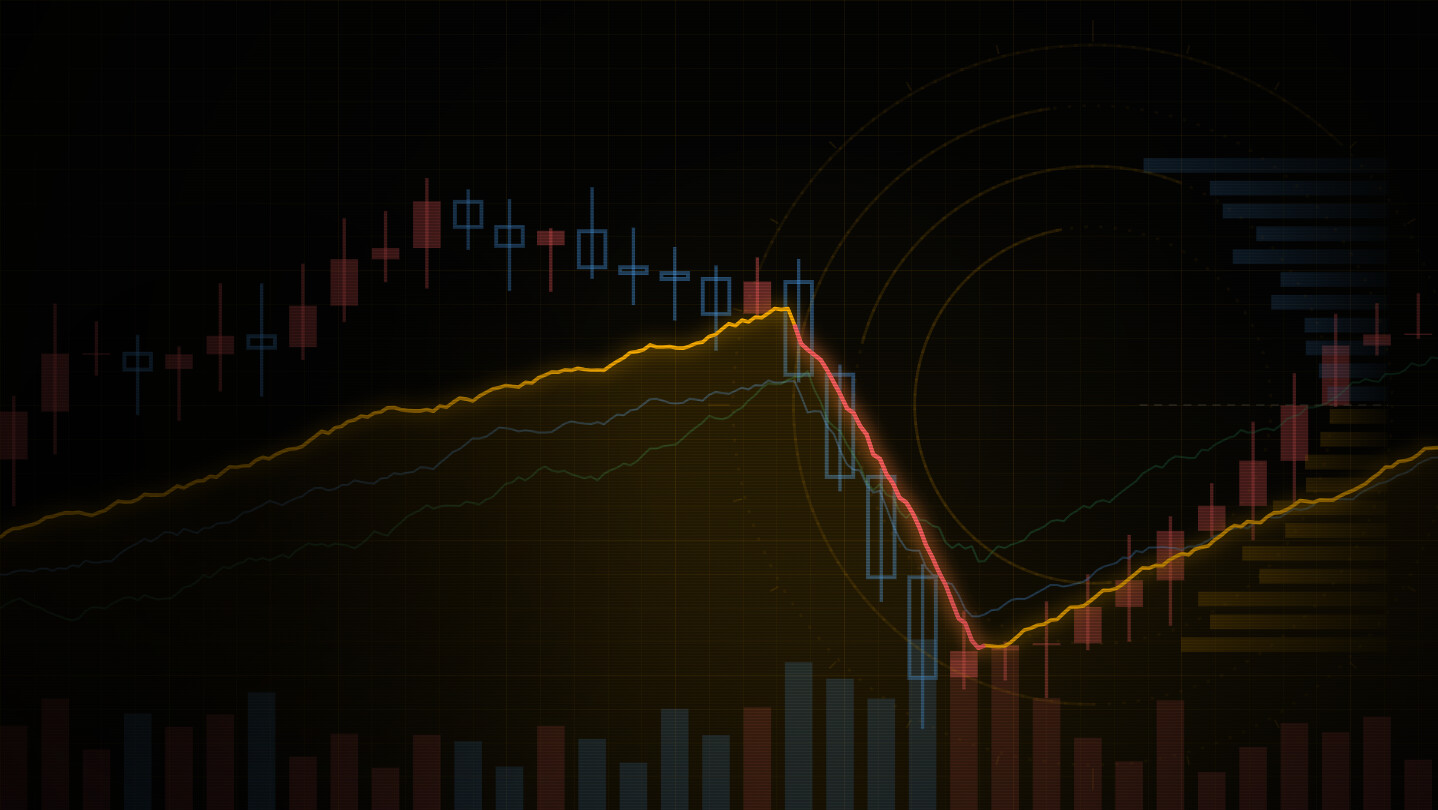



An asset-management simulation about other people's money. Raise capital into a public ETF and a private fund, earn fees, and grow the firm. Three worlds move on rates, FX, commodities and earnings — not random numbers — and every price is a trade between thousands of bots on a live order book.

Sign in to add this item to your wishlist, follow it, or mark it as ignored

This game is not yet available on Steam

Planned Release Date: 20 Sep, 2026

This game plans to unlock in approximately 9 hours

Interested?
Add to your wishlist and get notified when it becomes available.
 

About This Game

Manage money. Keep it.
You are not a trader. You run an asset-management firm. Investors hand you their money, you run it in funds, and the firm keeps only the fees it earns for managing it. It is other people's money, but the name on it is yours.

Money comes in, and money leaves.
Good returns pull investors in. Deep losses send them away. When investors pull money out of a fund, that is a redemption, and you have to raise that cash by selling. If you hold a lot of thinly traded stock, selling pushes down the price of what you still hold, and the lower price brings more redemptions. That loop is the heart of the game.

Two products, two rulebooks.
The public ETF can be bought and sold by anyone, every day, and lives under regulation: no oversized position in one stock, no portfolio full of names you cannot sell. The private fund takes money from a few investors and can use a lock-up (no withdrawals for a set period) and a gate (a temporary halt on redemptions). Raise the gate, and your reputation collapses the moment you do.

When too much money comes, close the door.
Good numbers bring in more money than you can put to work. There is only so much stock you can buy, so cash piles up, cash lags the index, and lagging sends investors away. So you can close a fund to new money (a soft close). The price is the fees you give up. A closed ETF cannot issue new units, so its market price drifts above its net asset value, and the moment you reopen, that premium is gone.

Three worlds, three time zones.
Aurelia, Seiran and Verdant. Each has its own central bank, interest rates, currency, commodities and 250 listed firms, 750 in all, and they trade on different clocks, so one market opens as another closes. Rates move exchange rates, exchange rates move commodities, commodities move earnings. To invest in another world you first buy its currency, and from that moment its exchange rate is part of your results.

The world shakes.
Natural disasters, armed conflict, terror. Some events come with a warning days ahead; some come with none. Insiders who know first sell first, before the news breaks. Read volume and price moves that nothing explains, and you can stand behind them. Events grow more frequent as the decades pass.

Prices are traded, not computed.
There is no formula that sets a stock price. Thousands of bots that weigh value, chase trends and quote both sides post orders on a live order book, and your orders fill among them. A big order moves the market, and the moved market reprices everything you still hold.

Not only stocks.
Buy government bonds by maturity at the dealer desk, and corporate bonds on the issuer's credit. Coupons (interest paid on set dates) come in and principal comes back at maturity, but rising rates cut the value of the bonds you hold, and if the issuer defaults you recover only part. When redemptions hit, bonds are the first thing sold.

Run the firm.
Hire analysts and give them sectors. Publish a market call (a thesis) to pull in more money, knowing that if it goes wrong the money leaves just as fast. At year end the firm pays corporate tax on its profit; a loss pays nothing and carries forward. Break the rules and the penalties climb: warning, fine, a freeze on new money, then revocation of your licence, which closes the firm.

Bid in IPOs.
Read the listing notices and bid at the offer price, a discount set before the shares start trading. Promise not to sell for a set period (a commitment) and you get a bigger allocation, but you cannot sell during that time. If redemptions hit while you are locked in, the shares you cannot sell are the ones that hurt.

Get a verdict.
The firm's whole record is set beside a blended index of the three worlds. Beat the index, or keep up on the way up while losing less on the way down, and you pass. Even a good-looking return fails if investors spent too long gone. It is the same yardstick they use when they add money or pull it.

Pick a mandate and get a report card.
10, 20, 50 or 100 years, or open-ended. When the mandate ends your final results are tallied, and you can keep managing after that.

Five ways to start.
  • Tutorial: guided in three parts, from your first fund to theses, the private fund, IPOs and bonds.
  • Firm: the main game.
  • Scenario: start in a set moment. In The Tightening Year, inflation is well above target and the central bank is raising rates as you open the firm.
  • Lab: set your own starting capital and conditions and experiment with the market.
  • Observer: no firm, just watch the markets move.

AI Generated Content Disclosure

The developers describe how their game uses AI Generated Content like this:

Generative AI tools were used during development: to assist with writing the game code, to draft in-game and store text, and to produce store graphics (capsules, icons). The simulation itself runs on deterministic algorithms; no content is generated by AI at runtime.

System Requirements

    Minimum:
    • OS: Windows 10 64-bit
    • Processor: Intel Core i3 / AMD Ryzen 3 or equivalent
    • Memory: 4 GB RAM
    • Storage: 300 MB available space
    • Additional Notes: 1280x720 or larger display
    Recommended:
    • OS: Windows 10/11 64-bit
    • Processor: Intel Core i5 / AMD Ryzen 5 or equivalent
    • Memory: 8 GB RAM
    • Storage: 300 MB available space
    • Additional Notes: 1920x1080 display
Review Filters