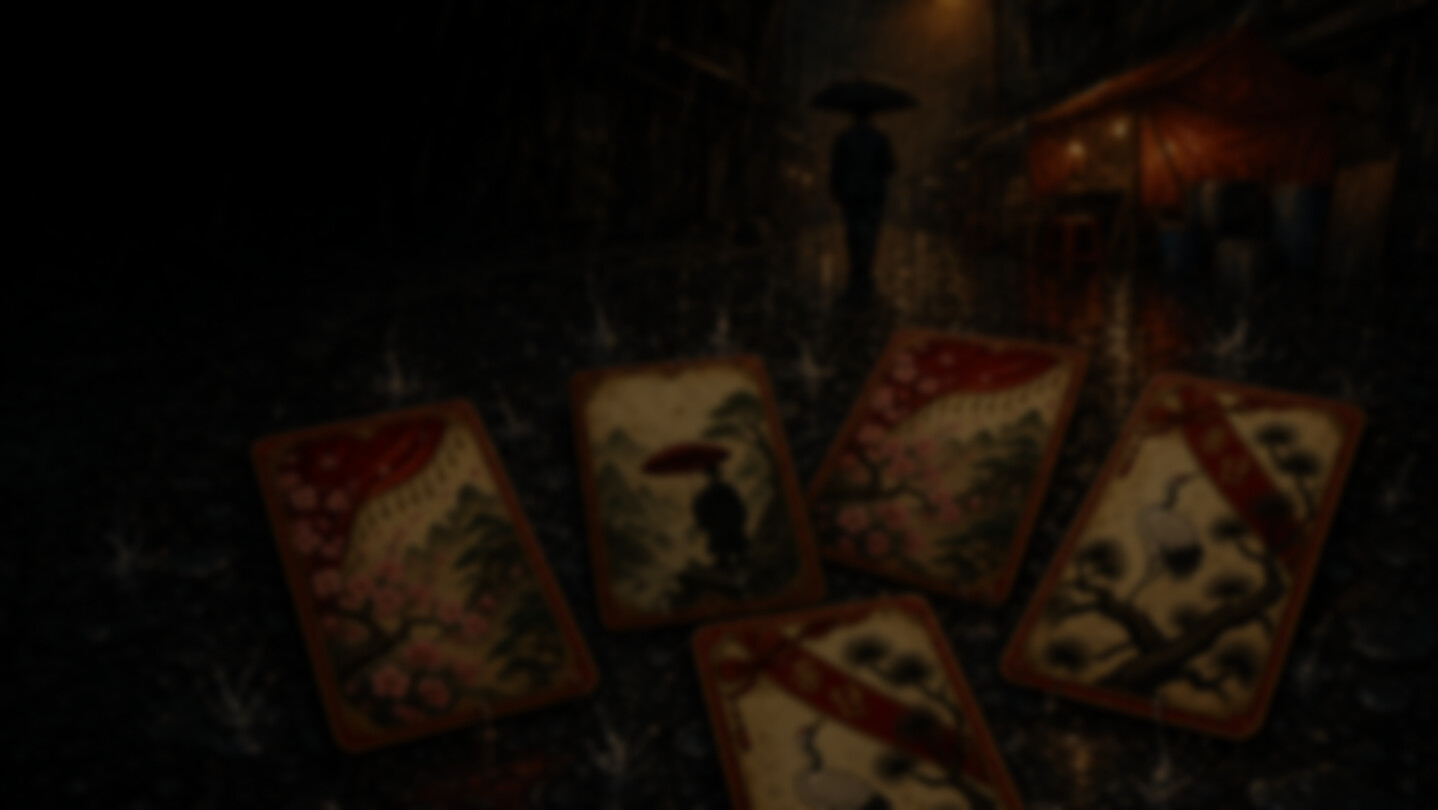



A roguelike deckbuilder built on hwatu, Korea's flower cards. It's 1999 and you owe a Busan loan shark ₩200,000,000. Match cards, stack charms, blow up the multiplier, and call "Go" to double the pot. Interest comes due every third night.

Sign in to add this item to your wishlist, follow it, or mark it as ignored

Download GO, STOP Demo

This game is not yet available on Steam

Planned Release Date: November 2026

Interested?
Add to your wishlist and get notified when it becomes available.
 

About This Game

You owe 200 million won to men who don't take excuses.

It's 1999. A folding table in a back room in Busan. Between you and the collector there are forty-eight hwatu cards and nothing else.

GO, STOP is a roguelike deckbuilder built on the flower-card game Koreans have played for a hundred years. At funerals, at holidays, and in rooms like this one. Match the month. Sweep the floor. Turn flowers into money before sunrise.

Never held a hwatu deck?
Neither had our testers. There's no tutorial that sits you down. Every card carries its month, the codex is one click away, and the game explains each situation the first time it happens. By the second night you'll be reading the floor like you grew up on it.

Sets aren't points. They're multipliers.
Three Brights is ×5. Godori is ×6. Land both in one round and you're at thirty times the pot. Charms bend the scoring rules; gwipae — sixty cards that exist on no real hwatu deck — multiply the whole total on top. Stack them and the numbers stop looking like a card game.

The choice the game is named after
Hit the target and the table asks: take it now, or call Go and double the multiplier. Every Go doubles what's on the table. It also raises the target and hands the man across from you one more chance to take everything. Lose it and he takes your wallet too.

Stop is safe. Stop is also how you end the night short of what you owe.

Cheating is a feature. Getting caught is the problem.
Pull a card from the bottom of the deck. Shake the table when you're holding three of a month. Bury the floor with a bomb. Every trick works — until the man across from you notices. One card from the bottom is an 8% chance. Three is a third of the time. And every attempt that night makes the next one worse.

What you build across a night
Fifty charms that break the scoring rules in ways they shouldn't. Sixty gwipae. Consumables, card editions, and scoring sets that sharpen every time you grind them. Eight cities, eight bosses, each one breaking a different rule of the game.

The debt doesn't sleep
The principal grows every time you move to a new city. Interest comes due every third night whether you're ready or not. Short? Borrow more. That's how they get you.

Three nights per city. Eight cities from Busan to Seoul. And one ledger with your name on it.

AI Generated Content Disclosure

The developers describe how their game uses AI Generated Content like this:

All 2D artwork (hwatu card illustrations, character portraits, backgrounds) and music tracks were created using generative AI tools, then curated, edited, and assembled by the developer. All AI content is pre-rendered during development — nothing is generated live at runtime. Localization was machine-assisted and human-reviewed. Store page assets were produced the same way.

System Requirements

    Minimum:
    • Requires a 64-bit processor and operating system
    • OS: Windows 10 64-bit
    • Processor: Dual-core 2.0 GHz
    • Memory: 4096 MB RAM
    • Graphics: Intel HD 4000 or equivalent
    • Storage: 2048 MB available space
    • Additional Notes: 1280×720 or larger display
    Recommended:
    • Requires a 64-bit processor and operating system
    • OS: Windows 11 64-bit
    • Processor: Quad-core 2.5 GHz
    • Memory: 8192 MB RAM
    • Graphics: Any modern GPU
    • Storage: 2048 MB available space
    • Additional Notes: 1920×1080 display recommended
Review Filters