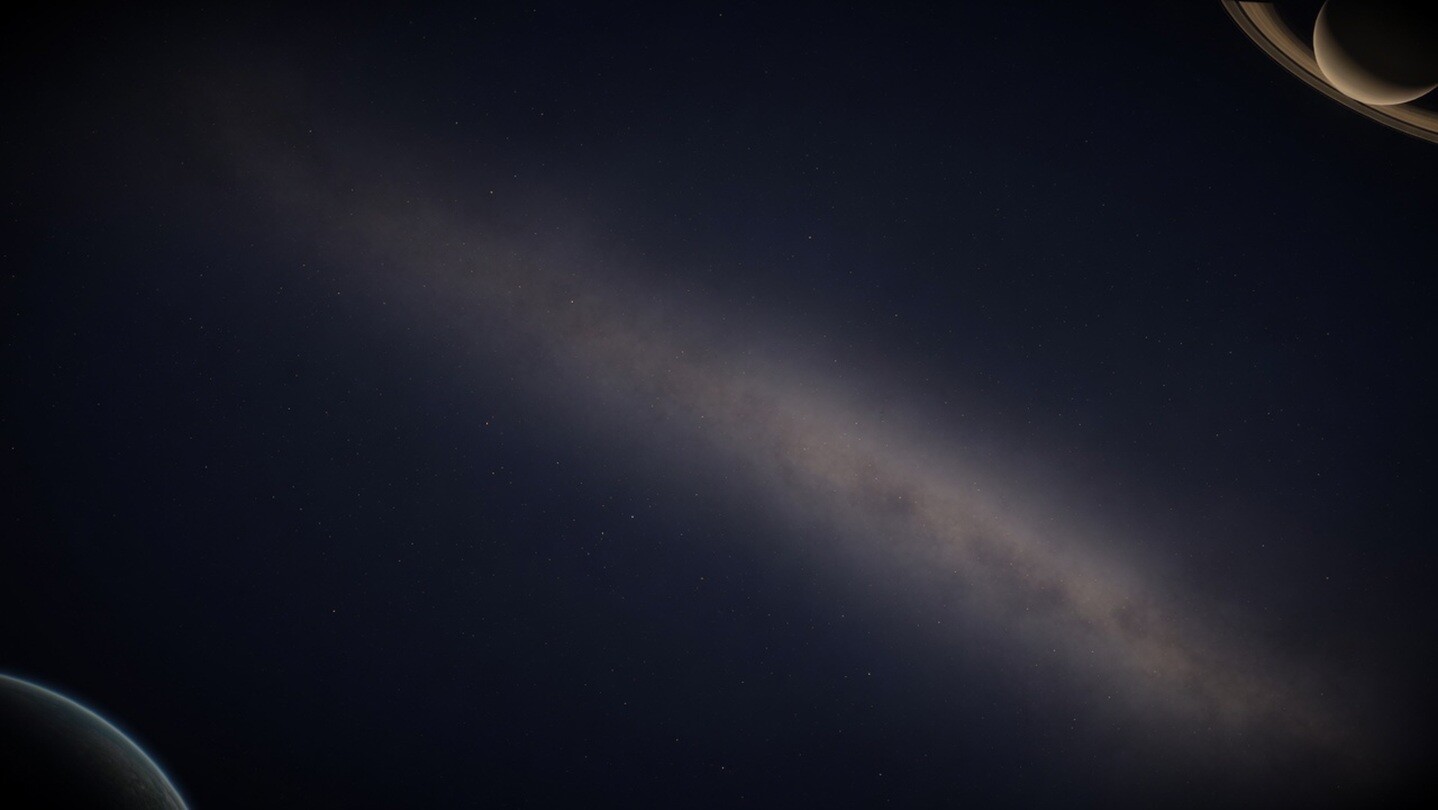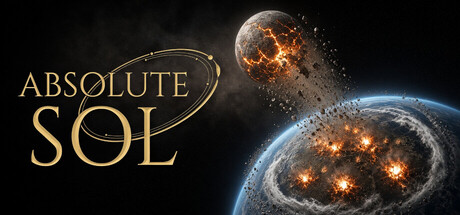


A physics sandbox of our Solar System. Fly the planets, change orbits, and watch Earth freeze, boil, or take a hit. Spawn worlds, cross Roche limits, and inspect atmospheres, magnetospheres, rings, and stellar heatmaps.

Sign in to add this item to your wishlist, follow it, or mark it as ignored

Coming Soon To Early Access

The developers of this game intend to release as a work in progress, developing with the feedback of players.

Note: Games in Early Access are not complete and may or may not change further. If you are not excited to play this game in its current state, then you should wait to see if the game progresses further in development. Learn more

What the developers have to say:

Why Early Access?

“Absolute Sol is playable today, but it is not finished. The solar system is in, the sandbox works, and we are still in heavy daily development — climate, impacts, Roche breakup, overlays, and a lot of polish.

We want players in the room while that work is happening. A sim like this gets better when people drag Earth into the Sun, park a moon inside a Roche limit, or spawn something ridiculous and tell us what felt right, what broke, and what they wish they could try next. Early Access is how we do that in public, with regular updates, instead of disappearing for a year and hoping we guessed correctly.”

Approximately how long will this game be in Early Access?

“We are targeting about 3 to 9 months. That is a goal, not a promise. If a system needs more time to feel honest, we will take it. If things land faster, we will leave Early Access sooner. We would rather ship a solid 1.0 than rush the calendar.”

How is the full version planned to differ from the Early Access version?

“We plan to keep the same core: a living Solar System you can inspect, edit, and break, with scientific behavior as the first priority. Whatever we add, we want the sim to stay trustworthy.

On top of that, we plan to raise the visual quality — sharper textures, stronger effects, better explosions and impact feedback — and to keep expanding the sandbox: Earth climate response, science overlays, Roche and impact tools, and more ways to create or destroy bodies. Some of that will shift based on what you actually play with. Nothing below is a guarantee, just the direction we are building toward.”

What is the current state of the Early Access version?

“You can start a game, fly the Solar System, and start messing with it today.

In the current build you get the Sun, the planets, major moons, rings, and belts, plus science readouts (atmosphere, magnetosphere, rings, stellar heatmaps). Earth already responds to heat, cold, and impacts. You can spawn and edit bodies, fire probes, drop asteroids, and watch Roche limits tear things apart.

There are also a few sandbox toys that are there for fun, including a Superlaser Platform — a constructed, moon-scale body you can use to test large impacts. It is our own sandbox object, not a licensed franchise asset.

Expect frequent updates, rough edges, and systems that are still being improved. Buy it for what it does now, not for a feature we have not shipped yet.”

Will the game be priced differently during and after Early Access?

“Yes. We plan to raise the price as we add content and polish, including when we leave Early Access.

We also plan to keep Absolute Sol priced below any other major titles in this genre. Early Access is the cheaper seat. If you come in now, you lock that price and help steer the game while it is still being built.”

How are you planning on involving the Community in your development process?

“Development is daily, and we read what players do.

The best feedback is specific: a bug, a body that behaved wrong, a tool you reached for and could not find. Post in the Steam Discussions, leave a review that says what you tried, or reply on update threads. We plan to keep posting regular patch notes so you can see what changed and what we are looking at next.

If a lot of people bounce off the same thing — spawn flow, Roche, Earth climate, overlays — that is what we will prioritize. You do not need a formal report. “I moved Earth here and this happened” is enough. ”
Read more
This game is not yet available on Steam

Coming soon

Interested?
Add to your wishlist and get notified when it becomes available.
 
See all discussions

Report bugs and leave feedback for this game on the discussion boards

About This Game

Absolute Sol is a living sandbox of our Solar System. You fly it, inspect it, and then start changing it.

Move Earth. Drop a moon inside a Roche limit. Hit a world with a probe or an asteroid. Time is yours — pause it, speed it up, or bake years ahead and watch climates, orbits, and surfaces respond.

This is a simulation first. The pictures should look good, but the point is that the system behaves like a system: heat, gravity, breakup, and the things you can read off a planet when you actually look.

What you can do now

  • Fly the Solar System — the Sun, the planets, major moons, rings, and belts, from a wide overview down to a single world. Default scale keeps inner worlds readable from the Sun; true physical scale is one toggle away.

  • Edit and create — change orbits, spin, mass, air, and water, or spawn new bodies and see what they do to everything else.

  • Watch Earth react — oceans, ice, atmosphere, weather, and surface damage as you move it, heat it, freeze it, or hit it.

  • Roche limits — push a moon or small body too close and watch it stretch and come apart into grit and debris.

  • Impacts — probes, asteroids, and collisions, with scars, debris, and secondary hits.

  • Science overlays — atmosphere layers, magnetosphere, ring profiles, and stellar heatmaps, with plain-language (i) tips on every inspector number. Built so a curious kid and a tired adult can both follow along.

  • Scenarios — guided starts: free play at today’s date, Apollo 11, a true-size lineup, a Goldilocks parade at 1 AU, a tide-locked Earth, or a look-only grand tour of the family.

  • Bake Studio — run the clock forward (orbits, belts, Roche drama, or climate) then play the result back. Compute once; watch at a human pace. A Research fidelity is there for classrooms that want denser steps.

  • Runs on more than a beast PC — Low / Medium / High / Ultra, optional surface shadows, and belt-density toggles (main belt, Trojans, Kuiper, and the rest) so a laptop can still fly the system.

  • Sandbox extras — a few toys for testing the system at scale, including a Superlaser Platform (our own constructed, moon-scale body).

What this is — and isn’t

Absolute Sol is Early Access. The Solar System is playable, the sandbox works, and development is daily. Visuals, effects, and tools will keep getting better. Scientific behavior stays the priority.

Buy it for what you can do today: sit in the system, break a rule, and see what happens.

AI Generated Content Disclosure

The developers describe how their game uses AI Generated Content like this:

Some store, library, and marketing images were created with a generative image tool, then cropped and composited to Steam sizes. The playable game does not generate AI content at runtime. In-game planets, textures, and simulation are not live AI.

System Requirements

    Minimum:
    • Requires a 64-bit processor and operating system
    • OS: Windows 10 64-bit (version 1909 or later)
    • Processor: Intel Core i5-8400 / AMD Ryzen 5 2600 or equivalent
    • Memory: 16 GB RAM
    • Graphics: NVIDIA GTX 1660 / AMD RX 5600 XT (6 GB VRAM) or equivalent
    • DirectX: Version 12
    • Storage: 8 GB available space
    • Sound Card: DirectX compatible
    • Additional Notes: 1920×1080 recommended at Minimum. Lower Graphics (Low/Med) and avoid very high particle/belt counts for best performance.
    Recommended:
    • Requires a 64-bit processor and operating system
    • OS: Windows 10/11 64-bit
    • Processor: Intel Core i7-10700 / AMD Ryzen 7 3700X or better
    • Memory: 32 GB RAM
    • Graphics: NVIDIA RTX 3060 / AMD RX 7600 XT (16 GB) or better
    • DirectX: Version 12
    • Storage: 8 GB available space
    • Additional Notes: 2560×1440 or 4K supported. High/Ultra and dense asteroid belts are GPU/CPU heavy
Review Filters