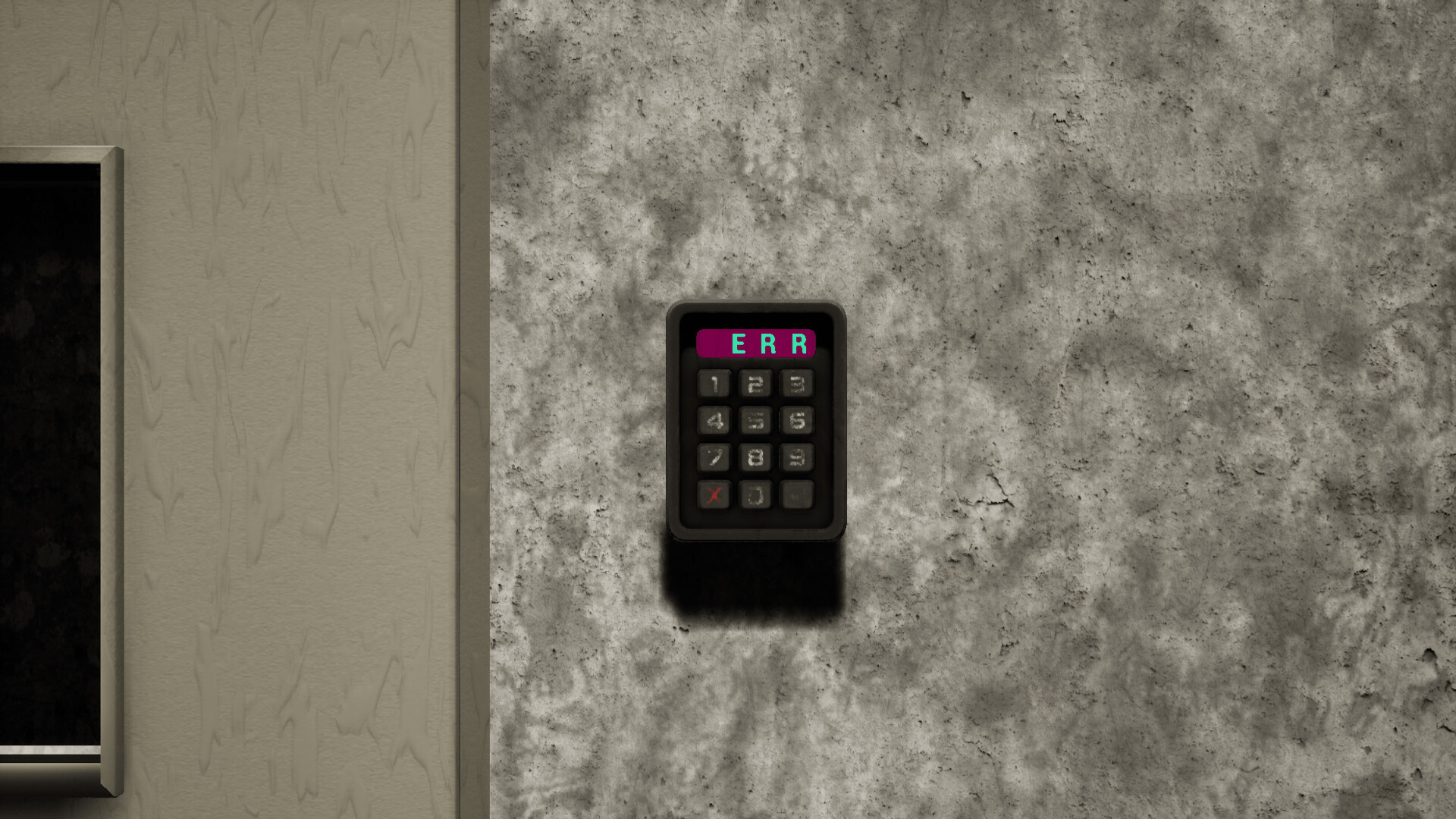

Try to guess a randomly generated 4-digit code on a keypad. It resets each day or when someone guesses it correctly. You only have one try each day. If you guess right, you earn a point.

Daftar masuk untuk menambah item ini ke senarai hajat anda, ikuti atau tandakannya sebagai diabaikan

Bahasa Bahasa Melayu tidak disokong

Produk ini tidak menyokong bahasa tempatan anda. Sila semak senarai bahasa yang disokong di bawah sebelum membuat pembelian

Demo Percuma

Main Keypad Simulator Demo

Lihat permainan penuh


Tentang Demo Ini

There is a keypad next to a sturdy, metal door. You have to guess the passcode, and you only get one try per day. The code is the same for everyone and resets each day or with each successful guess.

In the full version, you earn a point for each successful guess, added to a global leaderboard. The demo has no leaderboard.

The demo is limited to 3 tries per user! You can make only 1 guess in the 24 hour round window. The round resets when someone guesses the combination correctly.

The keypad is an input device consisting of a set of physical or touch-sensitive buttons used to enter numeric codes or simple commands. Keypads are commonly found wherever compact and reliable user input is required, particularly in access control systems, alarm panels, industrial machinery, and consumer electronics.

Door access systems employing numeric keypads became practical with the introduction of electronic access control during the 1960s, although mechanical push-button combination locks had already existed for several decades. These early electronic installations were primarily found in government facilities, research laboratories, offices, and industrial complexes where issuing physical keys to every employee was impractical.

Must security requirements change over time, keypad-controlled systems can usually be reprogrammed in minutes, eliminating the need to distribute new physical keys.

Not every keypad is intended for security. Similar devices are widely used in automated teller machines (ATMs), elevators, vending machines, calculators, telephones, safes, industrial control panels, and alarm systems, where their durability and simplicity make them a practical method of entering numerical information.

Be aware, that while considered exclusively a modern invention, mechanical push-button combination locks predate electronic keypads by several decades, although electronically controlled keypad entry systems first emerged during the 1960s before becoming widespread throughout commercial and industrial facilities during the 1970s and 1980s.

Opened by entering the correct numeric sequence, a keypad-controlled door grants access without requiring a physical key. This flexibility remains one of the principal advantages of keypad-based security, even as many contemporary systems now incorporate RFID cards, biometric authentication, or smartphone-based credentials.

Keperluan Sistem

    Minimum:
    • Memerlukan pemproses 64-bit dan sistem pengendalian
    • OS: Windows 10 or 11 64-bit
    • Pemproses: Any modern CPU
    • Memori: 2000 MB RAM
    • Grafik: Any modern GPU
    • DirectX: Versi 11
    • Rangkaian: Sambungan Internet jalur lebar
    • Storan: 1000 MB ruang tersedia
    Dicadangkan:
    • Memerlukan pemproses 64-bit dan sistem pengendalian
    • OS: Windows 10 or 11 64-bit
    • Pemproses: Any modern CPU
    • Memori: 2000 MB RAM
    • Grafik: Any modern GPU
    • DirectX: Versi 11
    • Rangkaian: Sambungan Internet jalur lebar
    • Storan: 1000 MB ruang tersedia
Penapis Ulasan