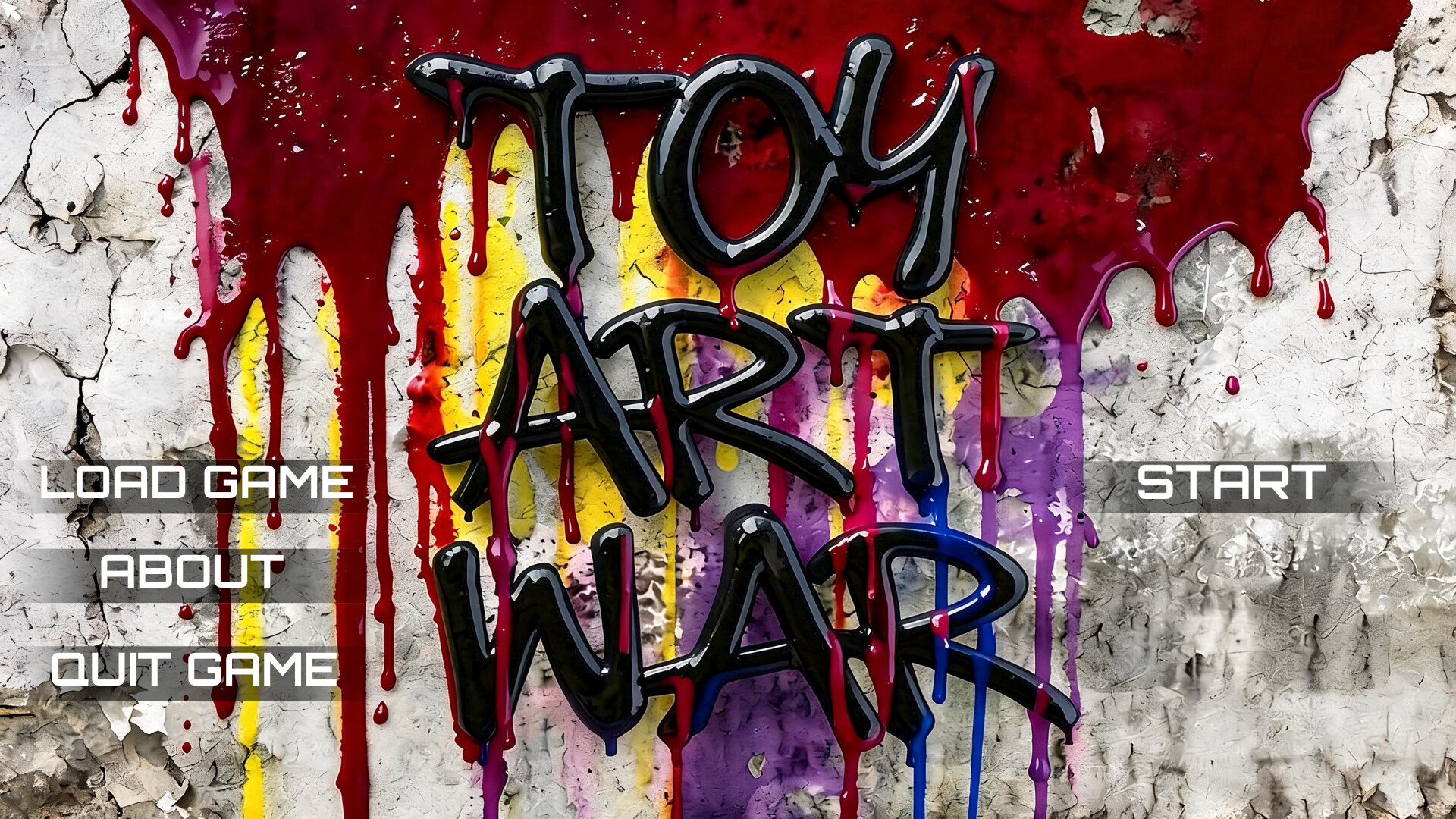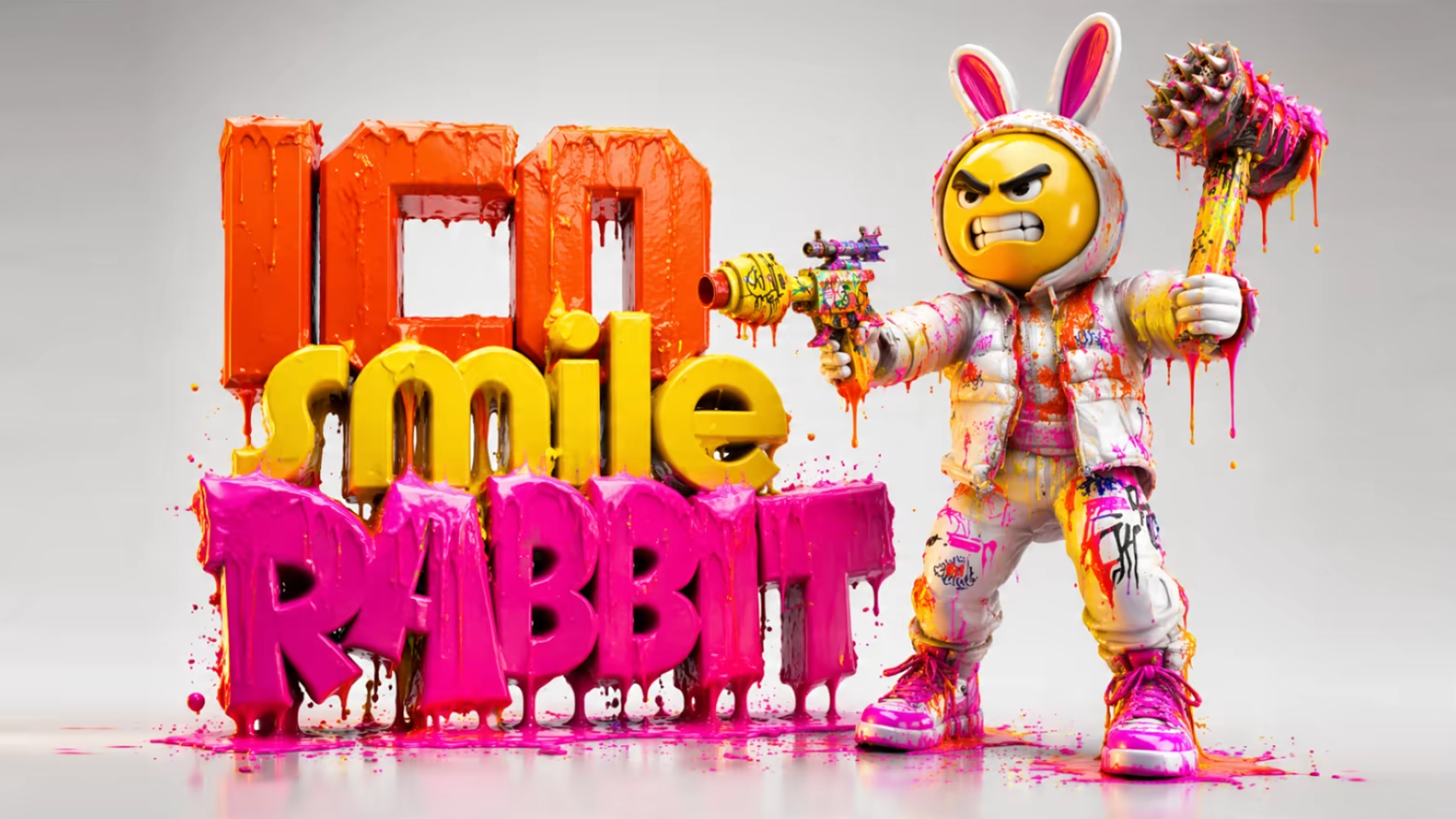

TOY ART WAR is a surreal FPS where hats hold memories and the past is a weapon. Wear unique hats, distort reality, and face factions in a war for control of history. Original art, frenetic gunplay, and a plot where every shot can rewrite time. The past has never been so dangerous.

Sign in to add this item to your wishlist, follow it, or mark it as ignored

This game is not yet available on Steam

Coming soon

Interested?
Add to your wishlist and get notified when it becomes available.
 

About This Game

In a world where everyone wears hats that store memories and identities, the discovery of the legendary *Big Hat—an artifact capable of rewriting history—triggers the TOY ART WAR, a chaotic war between factions fighting for control of the past.

Bento, known as BigHatBoy, is a young man with no memories in his hat, making him immune to temporal manipulation. While the Toy Artists distort history as a joke, the Ego Collectors erase identities, the Chrono-Anarchists burn the past, and the Soul Surgeons perform cruel experiments, Bento discovers that the Big Hat is actually a trap: its wearer does not control time, but is consumed by it. Now, he must decide whether to destroy the artifact and condemn the world to oblivion, or become its new host, carrying the weight of the past alone—while dark secrets about his own origin come to light.

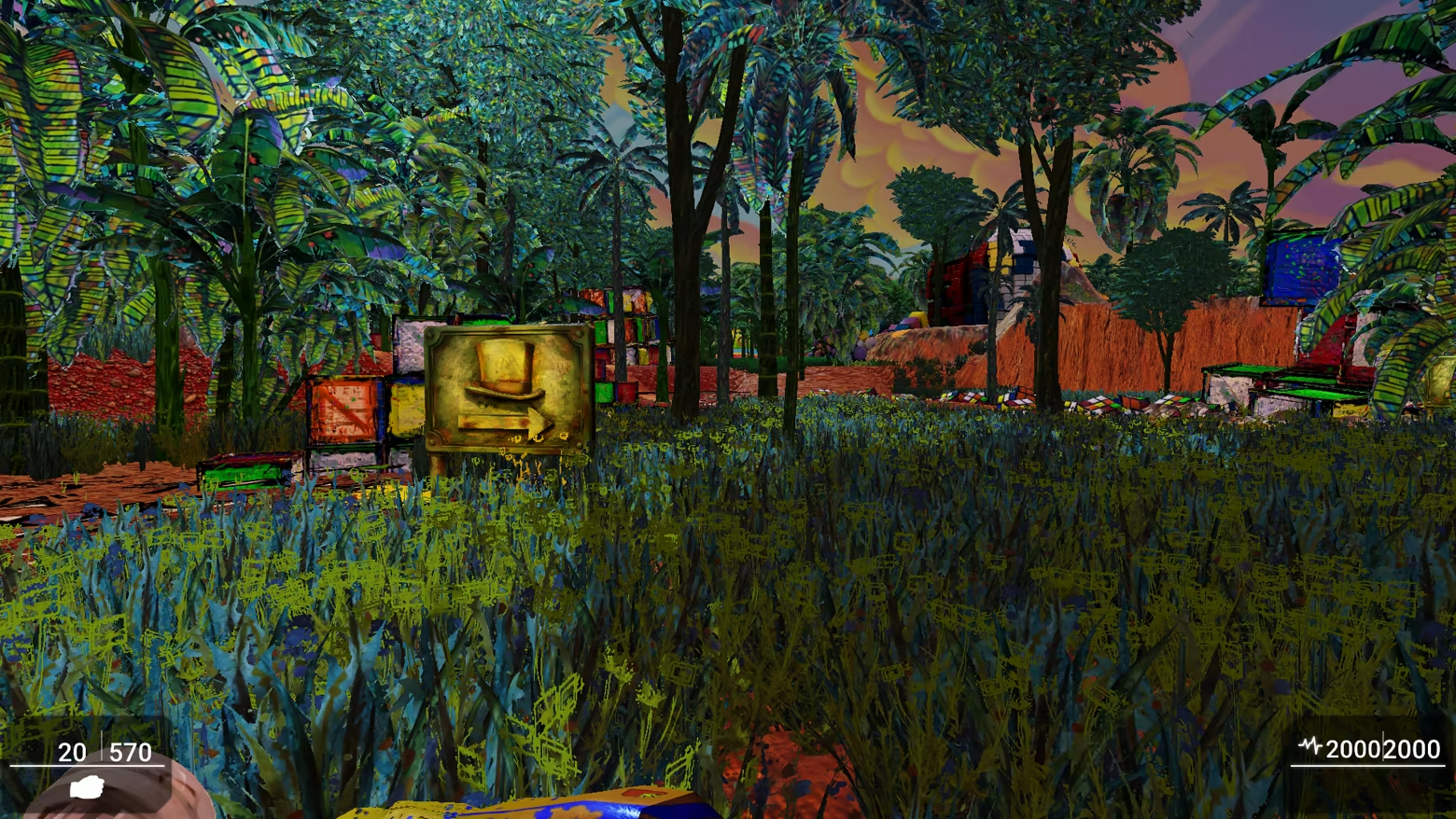
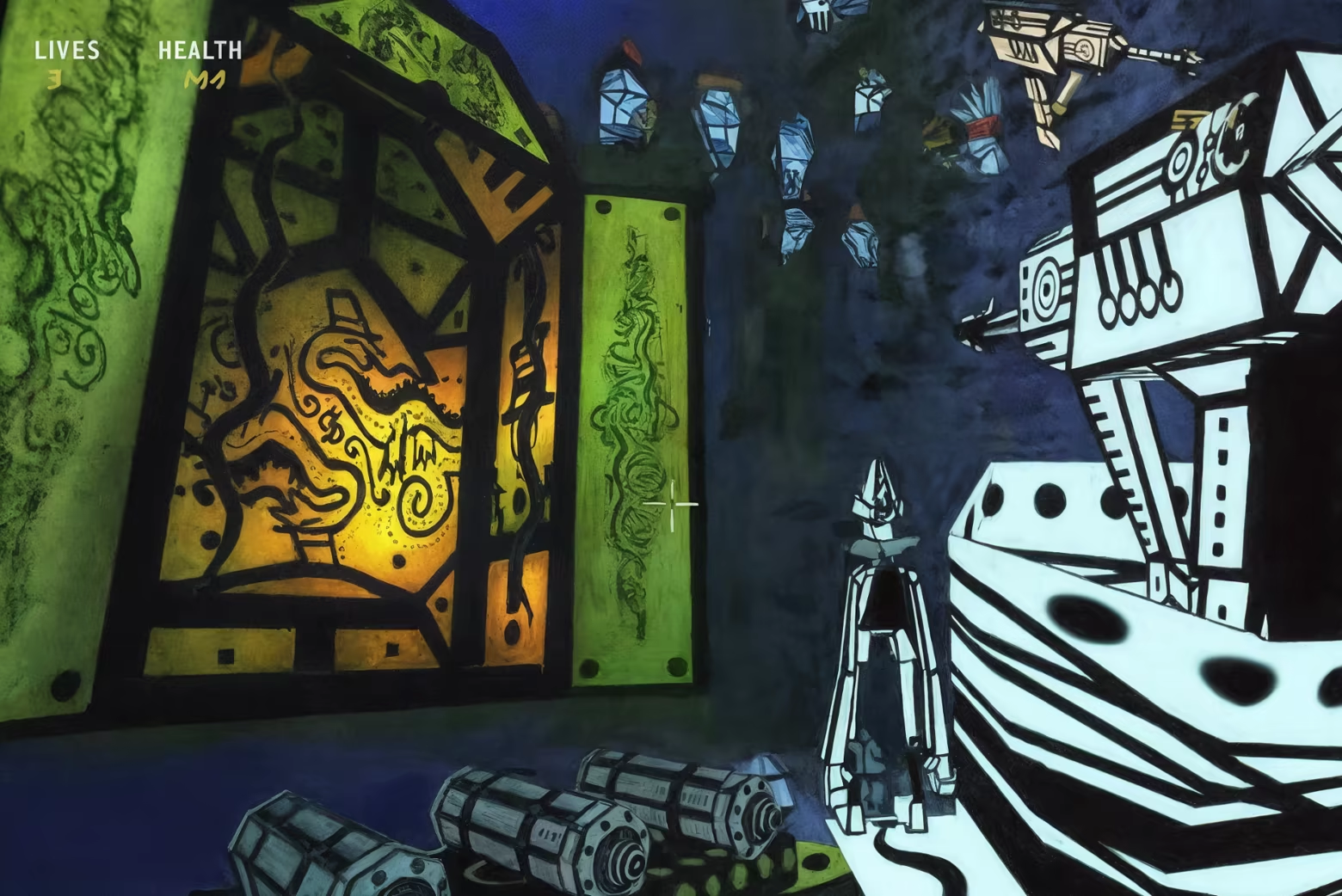
TOYARTWAR breaks with any traditional aesthetic expectation by delivering a decidedly differentiated art that mixes digital collage, rough textures, and unconventional geometric shapes. Each setting and character seems to have emerged from a psychedelic pop dream, where the familiar is distorted to become extraordinary. Originality pulses in every stroke, as there is no copy or obvious reference, but rather an authorial reconstruction of childhood imagination and street culture. The work's signature style is unmistakable, flirting between 80s retro and futuristic cyberpunk, creating a unique mood. And all of this is bathed in a colorful and vibrant palette, where neon, magenta, lemon yellow, and electric blue compete for attention, turning the screen into a constant visual spectacle.


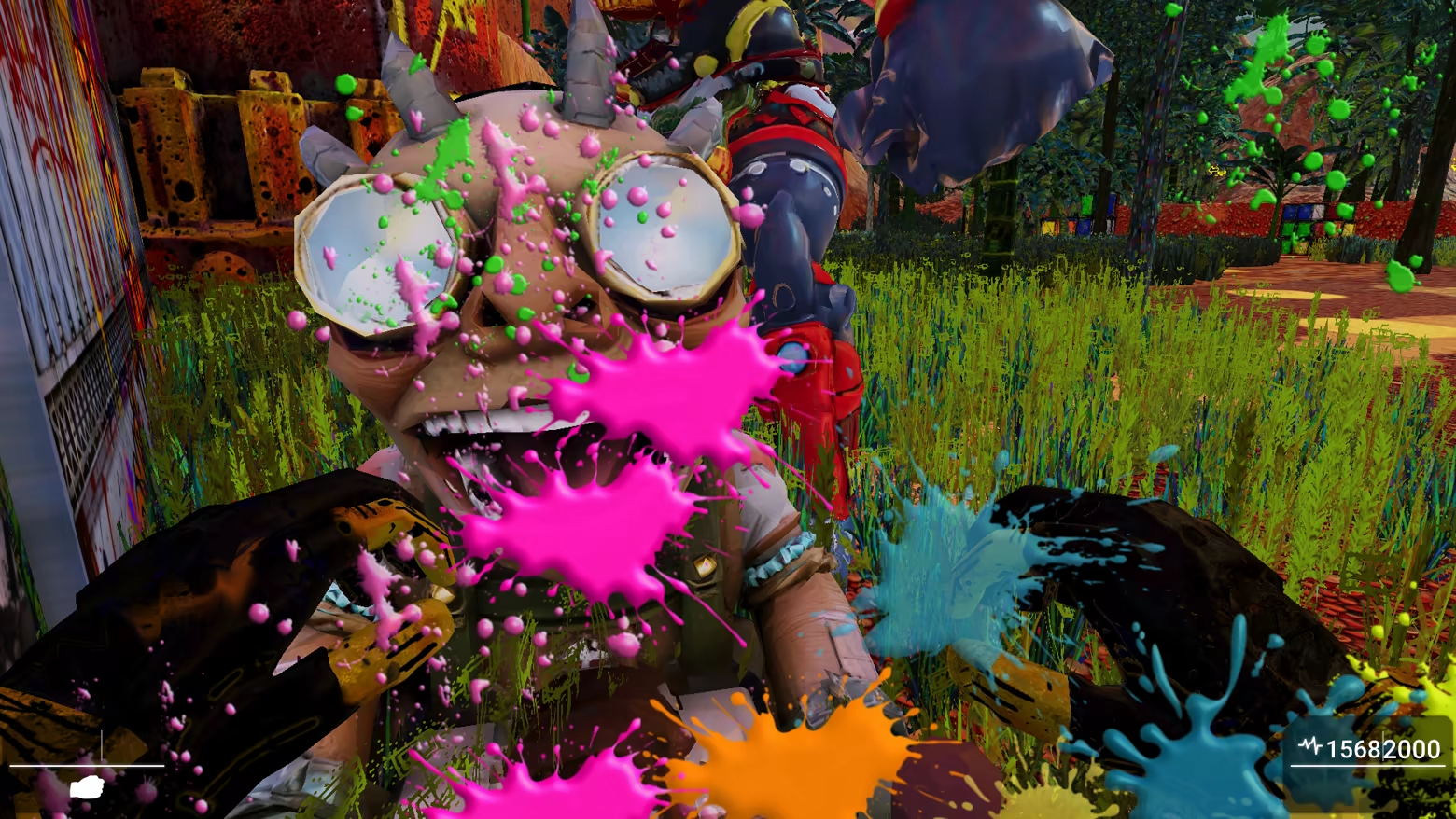
The characters in TOYARTWAR are extremely stylish, with visuals that blend urban fashion, futuristic armor, and flashy accessories, while gang bosses command respect with their threatening presence and lethal skills. The different factions, such as the "Skull Rust" and the "Neon Vipers," fight over territories in fortifications protected by watchtowers, barricades, and force fields, making each invasion a tactical challenge. Amidst gunfire and explosions, funny yet aggressive zombies emerge, stumbling in a comical manner but attacking with unexpected ferocity, adding chaos and humor to the battles. The iconic Toyart characters, with their bright eyes and exaggerated proportions, move through this scenery as almost mythical figures, carrying the essence of rebellion and creativity. Finally, the crazy hats grant varied powers, such as temporary invisibility, lightning shots, triple jumps, or energy shields, turning every match into an unpredictable experience full of surprising strategies.


This chromatic explosion is not mere decoration, for each color in TOYARTWAR carries symbolism and narrative intent, guiding the player's gaze toward important elements in the scenery. The strong contrasts and colored shadows add depth and movement even to static scenes, creating a living, pulsating atmosphere. The differentiated art also reveals itself in the composition of the scenarios, which are true portable galleries, full of hidden graphics and visual signatures from the involved artists. This stylistic originality makes each match a new experience, as eyes always find previously unnoticed details. Thus, TOYARTWAR is not just a game, but an interactive art exhibition in constant evolution.


At the heart of the gameplay lies the ingenious mechanic of keys that open artifacts scattered across the maps, each guarding precious secrets such as rare hats and collector's items. These keys are not easily found; they demand careful exploration, deciphering visual clues, and sometimes even cooperation between players to unlock secret doors. The artifacts, once opened, can reveal anything from a simple soldier's cap to a legendary boss hat, each with aesthetic attributes that alter the character's perception. There are also hidden objects in obscure corners, such as ancient coins, playing cards, and broken clocks, which activate side missions and score bonuses. This layer of collection and discovery turns every match into a treasure hunt, where the reward goes beyond victory and fuels the desire to complete the entire collection.

When exploration gives way to combat, TOYARTWAR delivers an intense and frantic fight, with high-speed gunfire and luminous projectiles that streak through the air like meteors. The explosions are grand, with colorful shockwaves that distort the screen and shards flying in slow motion, creating a breathtaking pyrotechnic spectacle. The arsenal is vast and creative, including conventional firearms, guided missile launchers, plasma rifles, and even explosive boomerangs, each with its own firing rate and specific damage. For close-quarters moments, there are melee weapons like serrated baseball bats, battle axes, and brass knuckles, allowing for brutal and satisfying fistfights. The physics of hits and shots is precise, with visceral responses to every impact, making each confrontation a chaotic and addictive choreography of pure adrenaline.

Behind all this action and color, TOYARTWAR hides a surprising narrative depth, with a story that goes far beyond "kill or be killed." Central characters like soldier K-7 and hacker Lila possess complex motivations and interconnected pasts, involving betrayal, loss, and redemption in a post-apocalyptic world dominated by artificial intelligences. Secondary characters, such as the cynical mercenary Rat and the mad scientist Dr. Pygmalion, add layers of humor and tragedy, enriching the dramatic fabric with their own agendas. The narrative arcs unfold across multiple phases, with moral choices that affect the fate of entire factions and reveal secrets about the origin of artifacts and keys. This construction transcends the gaming universe, engaging with philosophical themes such as free will, memory, and identity, ensuring that TOYARTWAR is remembered not only for its action but for the emotion it evokes.

Finally, TOYARTWAR establishes itself as a total work, where art, mechanics, combat, and narrative merge into an immersive and unforgettable experience. The aesthetic differentiation and visual originality attract all eyes, while the collection mechanics keep engagement and curiosity always alive. The intense combat and explosions guarantee the dose of spectacle and testosterone that action fans crave, without ever sacrificing the emotional depth of the plot. The characters and their arcs invite the player to reflect on choices and consequences, elevating the game to the level of interactive narrative art. Thus, TOYARTWAR is not merely a game, but an expanding universe that promises to transcend generations and inspire new ways of telling stories in video games.

AI Generated Content Disclosure

The developers describe how their game uses AI Generated Content like this:

This game uses AI to assist in generating 3D models, videos, and studies of characters and environments.

System Requirements

    Minimum:
    • Requires a 64-bit processor and operating system
    • OS: windows 10
    • Processor: intel core i3
    • Memory: 4 GB RAM
    • Graphics: NVIDIA GeForce GTX 960
    • DirectX: Version 11
    • Storage: 20 GB available space
    Recommended:
    • Requires a 64-bit processor and operating system
    • OS: windows 11
    • Processor: Intel Core i5-2300
    • Graphics: NVIDIA GeForce GTX 1080
    • DirectX: Version 11
    • Storage: 20 GB available space
There are no reviews for this product

You can write your own review for this product to share your experience with the community. Use the area above the purchase buttons on this page to write your review.

Review Filters