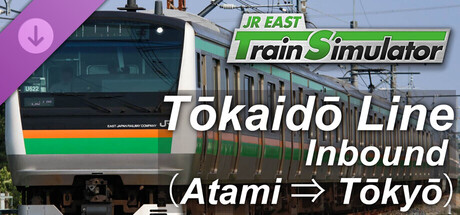

This content requires the base game JR EAST Train Simulator on Steam in order to play.

Sign in to add this item to your wishlist, follow it, or mark it as ignored

Downloadable Content

This content requires the base game JR EAST Train Simulator on Steam in order to play.

This content is not yet available on Steam

Coming soon

Interested?
Add to your wishlist and get notified when it becomes available.
 

About This Content

・JR EAST Train Simulator First-Ever Reverse-Direction Route on an Existing Line!

・Auto Announcements, Real Crew Voices & Randomized Signals!

・Compatible with 185 Series and E231 Series Content!

The section of the Tōkaidō Line operated by JR EAST connects three prefectures: Shizuoka, Kanagawa, and Tokyo. By operating through services via the Utsunomiya Line and the Takasaki Line through Tōkyō Station as the Ueno-Tōkyō Line, it forms an extensive through-service network.

To date, various train models have operated on this line, including the 113 Series, the 211 Series, the 215 Series, and the 185 Series on the “Odoriko” Limited Express, as well as the 251 Series on the “Super View Odoriko” Limited Express. Currently, the E231 series, the E233 series, the E257 series used on the “Odoriko” and the “Shōnan” limited express trains, and the E261 series used on the “Saphir Odoriko” are in service.

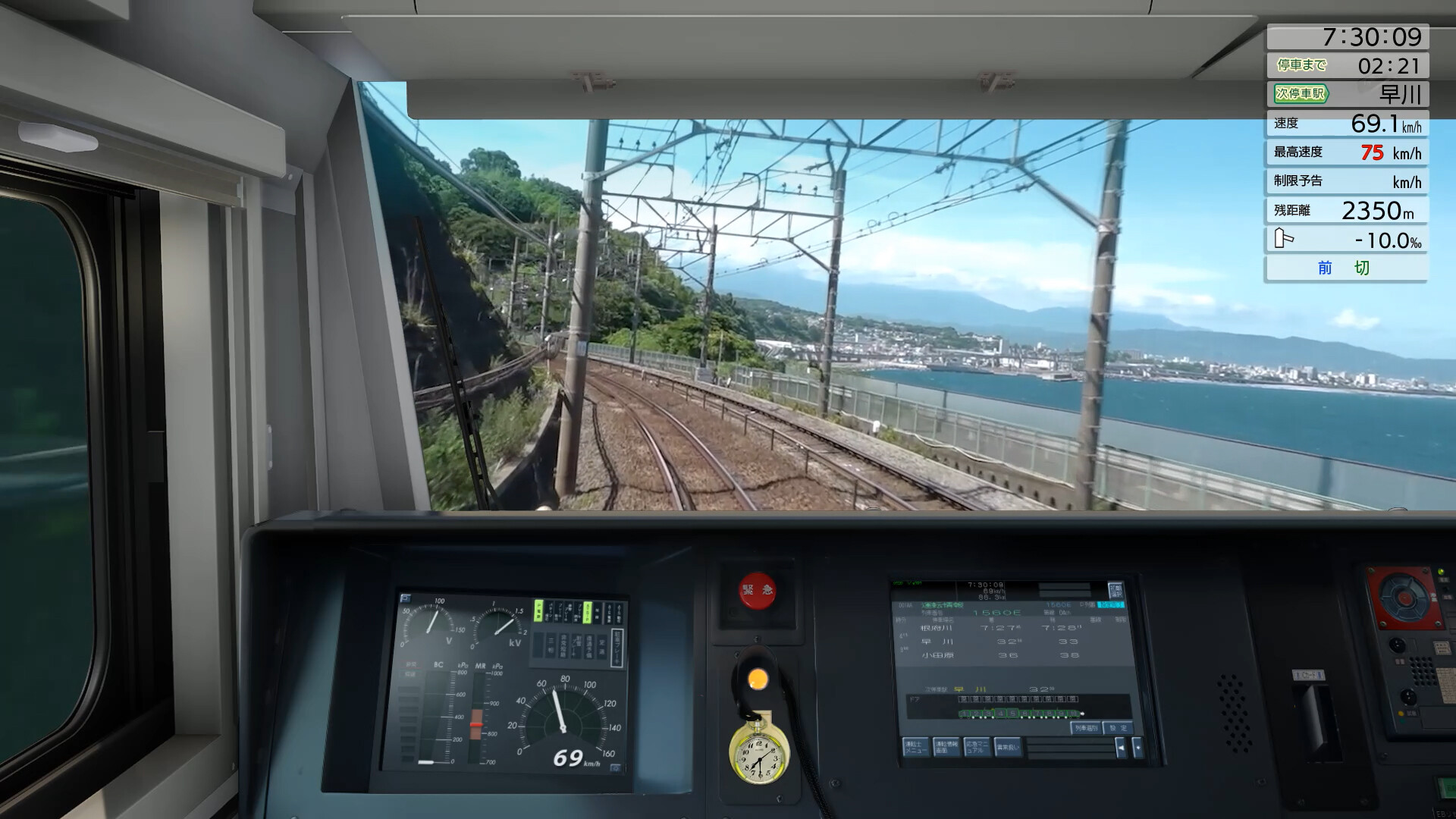
Passing through the renowned hot spring resorts of Atami and Yugawara, the train offers beautiful coastal views along the Nebukawa and the Hayakawa rivers and takes passengers through the historic castle town of Odawara, with the majestic Mount Fuji visible in the distance. You can enjoy the sophisticated harbor town scenery of Yokohama and the vibrant urban atmosphere of Kawasaki, and once you cross the Tama River, you’ll be overwhelmed by the grandeur of Tokyo’s metropolis. This line is popular with many passengers not only for commuting to work and school but also for sightseeing and business travel.

Be sure to enjoy the magnificent scenery of the Tōkaidō Line as it runs between the sea and the mountains and speeds through the skyscrapers of Tōkyō.

Highlight

□Atami Station

A distinctive feature of this station is that trains from the JR Central trains share the same platform, allowing passengers to see trains from other JR companies.


□Atami ~ Yugawara

The route passes through the Izumigoshi Tunnel; upon exiting the tunnel, the train enters Kanagawa Prefecture from Shizuoka Prefecture. Additionally, the cherry blossoms near the Chitose River are exceptionally beautiful in the spring.


□Yugawara Station

In front of the station, there is athe “Yugawara Hand Bath”—a free, easy-to-use facility similar to a foot bath.


□Yugawara ~ Manazuru

The up line has an uphill gradient all the way to Manazuru Station, so trains tend to slow down.


□Manazuru Station

The platform on the Atami sideAtami-side platform is a popular photo spot.

Although the number of staff has decreased recently, the station is known for having station attendants on duty.


□Manazuru ~ Nebukawa

Trains travel at high speed through the Manazuru Tunnel.

The Shiraito River Bridge, located just before Nebukawa Station, runs high above the sea.


□Nebukawa Station

This is an unstaffed station. In the early morning and at night, there are many trains that turn aroundreverses direction on the middle track.

The view of the ocean from the station is beautiful.


□Nebukawa ~ Hayakawa

There are many photo spots along the line, such as the Ishibashi Bridge. You can enjoy views of the sea from the train window.


□Hayakawa Station

Hayakawa Fishing Port is nearby, where you can enjoy delicious seafood.


□Hayakawa ~ Odawara

You can see a Buddhist statue on the mountainside.


□Odawara Station

The station is served by JR East, JR Central, Odakyu Railway, Hakone Tozan Railway, and Izuhakone Railway.


□Odawara ~ Kamonomiya

Crosses Trains cross the Hayakawa River. Mount Fuji is visible in the distance.


□Kamonomiya Station

It is close to the birthplace of the Shinkansen. There is also a statue monument to commemorate the development of the Shinkansen here.


□Kamonomiya ~ Kōzu

On the ocean side, you can see the remains of an old track—a remnant of a past connection to a nearby factory.

Seishō Freight Station can be seen on the lefthand-side as you travel forwardin the direction of travel.

From the rear of the train, you can get a beautiful view of Mount Fuji.


□Kōzu Station

A This station is a junction station with the JR Central Gotemba Line. Some trains perform shunting operations here.

There are tracks up to Platform 9. The station has 9 tracks, including those which are on the Tōkaidō freight line. 

Once you exit the station, National Route 1 is right in front of you, and you’ll can reach the ocean sea immediately in  no time.


□Kōzu ~ Ninomiya

This is a section of track with steep ups and downs.


□Ninomiya Station

The station grounds are spacious because the station it used to handle freight.


□Ninomiya ~ Ōiso

The track has steep gradients. Steep ups and downs.

The straight section is a great spot for taking photos.


□Ōiso Station

The birthplace of Shōnan is near the station.


□Ōiso ~ Hiratsuka

Sagami Freight Station is visible on the lefthand-side as you travel. You can see lots of many shipping containers.


□Hiratsuka Station

It is home to one of Japan’s three major Tanabata festivals.

Many trains make turnarounds or are coupled here. Some trains operate as a shuttle service towards Tōkyō, while others couple or uncouple the 5-car sets here.


□Hiratsuka ~ Chigasaki

On the ocean side of Hiratsuka Station, remnants of a former spur line leading to a nearby factory can still be seen.

The train crosses the Banyu River.

The bridge over the Banyu River collapsed during the Great Kanto Earthquake. The aftermath of that event the earthquake can still be seen today.


□Chigasaki Station

This station provides a connection to the Sagami Line.


□Chigasaki ~ Tsujidō

Along the tracks is a place called “Chigasaki Sakura Square,” known for its beautiful cherry blossoms.


□Tsujidō Station

Wide The station has wide platforms.


□Tsujidō ~ Fujisawa

Trains can reach high speeds on this straight section. There used to be a factory here, but after it closed, a shopping mall and residential area were built in its place.


□Fujisawa Station

The line runs parallel to the Odakyu Line for a portion of the route.


□Fujisawa ~ Ōfuna

The Kamakura Rolling Stock Center is located on the right-hand side of the track, offering views of trains like E235 series and E259 series.

The planned site for the new Muraoka Station is located here. The grounds are spacious because there used to be a freight station here.


□Ōfuna Station

The station is a transfer station hub for the JR Yokosuka Line and the JR Negishi Line.

The Great Buddha of Ōfuna can be seen from the platform.


□Ōfuna ~ Totsuka

You can see the line running parallel to the JR Yokosuka Line, with trains passing at high speed.


□Totsuka Station

The simultaneous arrival of trains from on the JR Yokosuka Line is a spectacular sight.


□Totsuka ~ Yokohama

The line runs parallel to the JR Yokosuka Line, and near when approaching Yokohama, the Sotetsu Line also runs alongside.

The Shimizuyato Tunnel is the oldest active railway tunnel in Japan.


□Yokohama Station

This station is a major interchange with many connecting services. You can see a variety of train types here.

In the morning, upbound inbound trains depart and arrive alternately from Platforms 7 and 8.


□Yokohama ~ Kawasaki

The line runs parallel to the Yokosuka Line, the Keihin-Tōhoku Line, the Keikyū Line, and the Tōkaido Freight Line.

The section running parallel to the Yokosuka Line is quite long.


□Kawasaki Station

The Tōkaidō Line platforms are spacious.


□Kawasaki ~ Shinagawa

Trains Ccrosses the Tama River. Features It features a long straight section.

The cherry blossoms along the route are beautiful.

Between Kawasaki and Kamata, there is Nishi-Rokugō Park (Tire Park) can be seen along the line.


□Shinagawa Station

Just before arrival, the Keikyū Line tracks cross overhead on the right side of the track.

There are many connecting trains services.


□Shinagawa ~ Shimbashi

The tracks will run parallel to the Yamanote Line, the Keihin-Tōhoku Line, and the Tōkaido Shinkansen. Since the Ueno-Tōkyō Line (Jōban Line system through service) also runs here, trains run alongside a variety of other trains.


□Shimbashi Station

There is an SL Plaza in front of the station.


□Shimbashi ~ Tōkyō

The train weaves its way through the gaps between buildings.


□Tōkyō Station

This station is a terminus station for the Tōhoku Shinkansen and the Tōkaidō Shinkansen.

On the Atami side of the Tōkyō Station, the speed limit is 45 km/h regardless of which platform the train departs from or arrives at.

Route information

  • Section: Tōkaidō Line (Inbound) Atami → Tōkyō

  • Total length: 104.6km

  • Number of Stations: 21

  • Security equipment: ATS-P

Train schedules that can be operated

  • Train Number:Weekdays 1838E

  • Type/Destination:Local to Kagohara

  • Section where you can drive:Ninomiya (departure 07:33) → Tōkyō (arrival 08:54)

  • Type of train:Series E233-3000, 15-car train

  • Responsible for real voice train announcements: Shōnan・Sagami unification center

  • Train Number:Weekdays 1560E

  • Type/Destination:Local to Ueno

  • Section where you can drive:Atami (departure 07:13) → Tōkyō (arrival 09:12)

  • Type of train:Series E233-3000, 15-car train

  • Responsible for real voice train announcements: Shōnan・Sagami unification center

  • Train Number:Weekdays 1866E

  • Type/Destination:Local to Takasaki

  • Section where you can drive:Atami (departure 11:53) → Tōkyō (arrival 13:37)

  • Type of train:Series E233-3000, 15-car train

  • Responsible for real voice train announcements: Shōnan・Sagami unification center

  • Train Number:Weekdays 1874E

  • Type/Destination:Local to Kagohara

  • Section where you can drive:Odawara (departure 13:35) → Tōkyō (arrival 14:58)

  • Type of train:Series E233-3000, 10-car train

  • Responsible for real voice train announcements: Shōnan・Sagami unification center

  • Train Number:Weekdays 3532E (March 2020 Timetable)

  • Type/Destination:Rapid ACTY to Utsunomiya

  • Section where you can drive:Atami (departure 15:15) → Tōkyō (arrival 16:47)

  • Type of train:Series E233-3000, 15-car train

  • Responsible for real voice train announcements: Shōnan・Sagami unification center

* If you own the E231 Series DLC, you can also operate the above timetables with the E231 Series (no additional timetables are included).

185 Series DLC owners can also operate the following additional services.

  • Train Number:Weekdays 3722M (March 2013 Timetable)

  • Type/Destination:Shōnan Liner No. 2 to Tōkyō

  • Section where you can drive:Odawara (departure 06:19) → Tōkyō (arrival 07:50)

  • Type of train:Series 185, 15-car train

  • Responsible for real voice train announcements: Tōkyō unification center

  • Train Number:Weekends and Public Holidays 9064M (March 2013 Timetable)

  • Type/Destination:Limited Express Odoriko No. 174 to Tōkyō

  • Section where you can drive:Atami (departure 13:01) → Tōkyō (arrival 14:12)

  • Type of train:Series 185, 10-car train

  • Responsible for real voice train announcements: Tōkyō unification center

  • Train Number:All days 3034M (March 2013 Timetable)

  • Type/Destination:Limited Express Odoriko No. 114 to Tōkyō

  • Section where you can drive:Atami (departure 16:27) → Tōkyō (arrival 17:44)

  • Type of train:Series 185, 15-car train

  • Responsible for real voice train announcements: Tōkyō unification center

Together with the existing Tōkaidō Line DLC, enjoy driving both directions of the Tōkaidō Line!

System Requirements

    Minimum:
    • Requires a 64-bit processor and operating system
    • OS: 64-bit Windows 11
    • Processor: Intel Core i5-8500 or AMD Ryzen 5 2600
    • Memory: 16 GB RAM
    • Graphics: NVIDIA GeForce GTX 1060(VRAM 6GB)
    • DirectX: Version 12
    • Storage: 25 GB available space
    • Additional Notes: need resolution 1920×1080@60Hz
    Recommended:
    • Requires a 64-bit processor and operating system
    • OS: 64-bit Windows 11
    • Processor: Intel Core i5 12400 or AMD Ryzen 5 5500
    • Memory: 16 GB RAM
    • Graphics: NVIDIA GeForce RTX 3060 (VRAM 8GB)
    • DirectX: Version 12
    • Storage: 25 GB available space
    • Additional Notes: Recommended SSD
There are no reviews for this product

You can write your own review for this product to share your experience with the community. Use the area above the purchase buttons on this page to write your review.

Review Filters