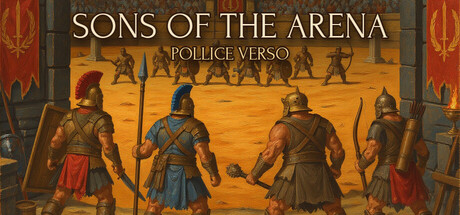


A small ludus is yours, and it has to reach the great games. Build the estate, pick fights from the hosts’ calendar, fight off the rival. Turn-based fights on hexes: a kick drops a man, a wedge breaks a shield wall. Four classes, six weapon types, and all a man wears shows on him.

Sign in to add this item to your wishlist, follow it, or mark it as ignored

This game is not yet available on Steam

Planned Release Date: Q2 2027

Interested?
Add to your wishlist and get notified when it becomes available.
 

About This Game

You have been handed a small ludus, a gladiator school on the edge of town, and the part of its young lanista. The task is one: bring the school through everything the city throws at it to the great games and prove it belongs there. That means building and counting, hiring men, winning fights, raising gladiators and finding, buying and forging their kit. Everything you put on a man shows on him in every swing.

What's in the game


The ludus: building and keeping it fed


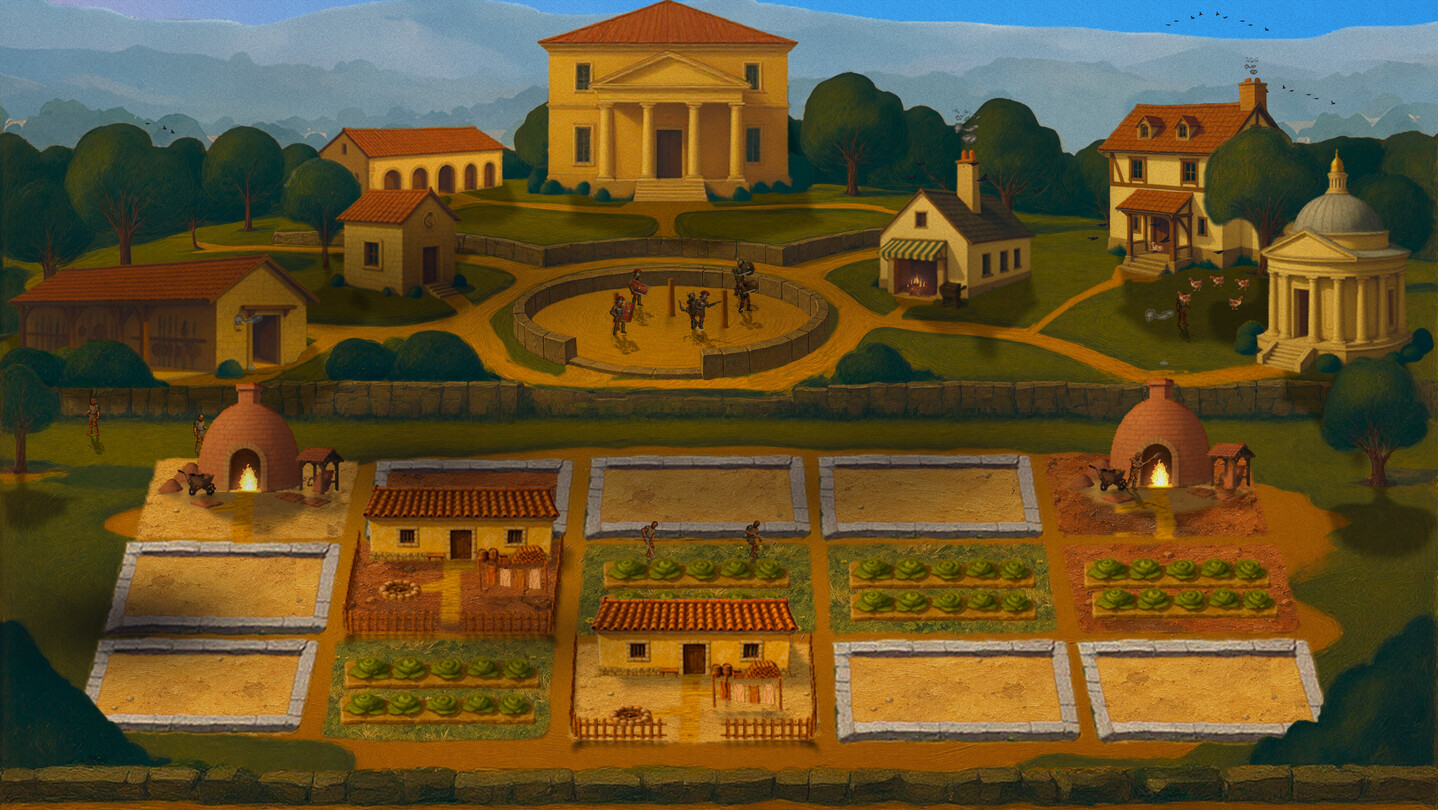
You build the estate yourself, and its buildings come in two kinds. The working ones keep the school alive: bunkhouses for the workers, the farm feeds everyone who lives in the ludus, the kiln gives material to build with. Every plot has its own soil, and the soil helps or hurts: the same farm yields more on loam and less on poor land, and the soil is laid out anew in every game. The other buildings open possibilities: the barracks widens the roster, the smithy forges and melts down trophies, the hospital heals faster, the tavern brings cheap recruits. Building is expensive and not building is not an option, so resources have to be planned ahead: pay everyone, stay in the black and live through whatever next month brings.


The calendar and the hosts


The fights are put on by the hosts of the games, and a month ahead you decide which ones your ludus enters. A fight brings gold and trophies, and risk: lose, and men can be gone for good, and the host, disappointed, offers less next time. To have fights at all you have to show up to the hosts and win. The one you ignore you lose: he stops calling and goes to the rival ludus. A host who stands behind you gives the school money on top of the prizes, and a whole caste of hosts gives a bonus of its own. Until the scouts from your tavern have gone to look, a fight day shows only a question mark: who takes the sand, how many and with what, you learn from them.

The enemy does not sleep


You are not the only one pushing for the top: there is another ludus in the city. Start poaching its hosts too openly, or show weakness, and one day its men come to your estate with torches to show you what they think of you. Whoever is home that day fights them off.

The fight on the hexes


Fights are turn-based, on hexes, two actions a turn. The main thing done here: melee does not stand still. Two things decide how it goes.

The first is the knockdown. A kick or a charging formation throws a man to the ground if a pillar, a wall, a trapdoor or his own comrade stands behind him. A man on the ground loses his turn and gets finished: against a barbarian's plain hunting spear the best armor will not save him. So you keep moving and re-forming after the lines have met, not only before.

The second is the price of defense. You can take the guard: nobody moves you off your hex, but you do not strike this turn. You can carry a shield: it holds against shoves all the time, but it is heavy. A man with it tires faster and walks slower, a man out of breath gets one action instead of two, and he can go down from exhaustion alone.

And every blow is staged: a sword stays in the chest until a kick frees it, a greatsword takes the head off, a hammer splits a shield in half, a man on the ground gets the blade from above. The arena is a show, and the stands answer every fall.


The men and their kit


Four classes, and a recruit picks his at the second level. The swordsman holds the line behind a shield and answers a blow with a blow. The spearman strikes over a hex, from behind a comrade's shoulder, and sets a wall of spears nobody walks through. The archer shoots from afar, farther from high ground, and holds no zone. The mace fighter breaks through a guard and knocks pieces of armor off a man. Each class has its own perk branch, and it opens the class up differently for different jobs: as a man levels up, some perks are a choice of two, others come on their own.

Experience comes from the fights, and between them the estate's training pit does the work: fighters raise their stats there and learn their new perks. Who goes to a dangerous contract and who stays to grow in the sand is your call every time.

A man has his own stats and his own stamina, and his kit is picked to fit them. Ten equipment slots, and every piece has a weight and properties of its own: scout leather stops almost nothing, but the man in it acts earlier and dodges more; in barbarian kit he is slower to step in but gets his breath back faster; a big shield blocks more, weighs more and eats stamina. Everything he wears shows on him and moves with him.


Six weapon types, each with a fight of its own. The one-handed sword for one on one. The mace to crack open a thick opponent. The spear strikes over a hex and zones. The bow shoots from afar. The greatsword gives the most damage and catches the neighbors. The two-handed hammer splits a shield when the enemy has dug in behind shields.

Formations


One more layer of the tactics, and the one with the most fun in it. A formation is made of whoever you have, and each solves its own problem. The shield wall: it cannot be pushed from the front. The wedge: a run and a blow into a line, the enemy's formation breaks, the first man falls. The phalanx: spears over the front rank, a zone nobody enters. The testudo: nine shields locked into a roof, and the archers' volley bounces off it. The volley: the archers shoot together at one spot. The moment the chain breaks it is a brawl again, and you re-form under the blows.


Will you bring the school to the great games, or watch it burn?

AI Generated Content Disclosure

The developers describe how their game uses AI Generated Content like this:

Visual and audio assets in this game were generated using AI tools and then edited and integrated by the developer. Character animations were created manually by the developer using rotoscoping. The game's design, balance, and integration are the developer's own work.

Mature Content Description

The developers describe the content like this:

Sons of the Arena: Pollice Verso depicts gladiatorial combat with realistic violence and gore: blood, severed limbs and heads, fighters impaled on stakes or finished off on the ground, and on-screen deaths. Fighters can be wounded, maimed or killed in battle, with permanent consequences for your school. There is no sexual content and no drug use. The mature content is limited to combat violence.

System Requirements

    Minimum:
    • OS: Windows 10 (64-bit)
    • Processor: Intel Core i3-4000 / AMD equivalen
    • Memory: 4 GB RAM
    • Graphics: Integrated graphics with OpenGL 3.0 support
    • Storage: 500 MB available space
    • Sound Card: Any
    Recommended:
    • OS: Windows 10/11 (64-bit)
    • Processor: Intel Core i5 / AMD equivalent
    • Memory: 8 GB RAM
    • Graphics: Dedicated GPU with 1 GB VRAM
    • Storage: 1 GB available space
    • Sound Card: Any