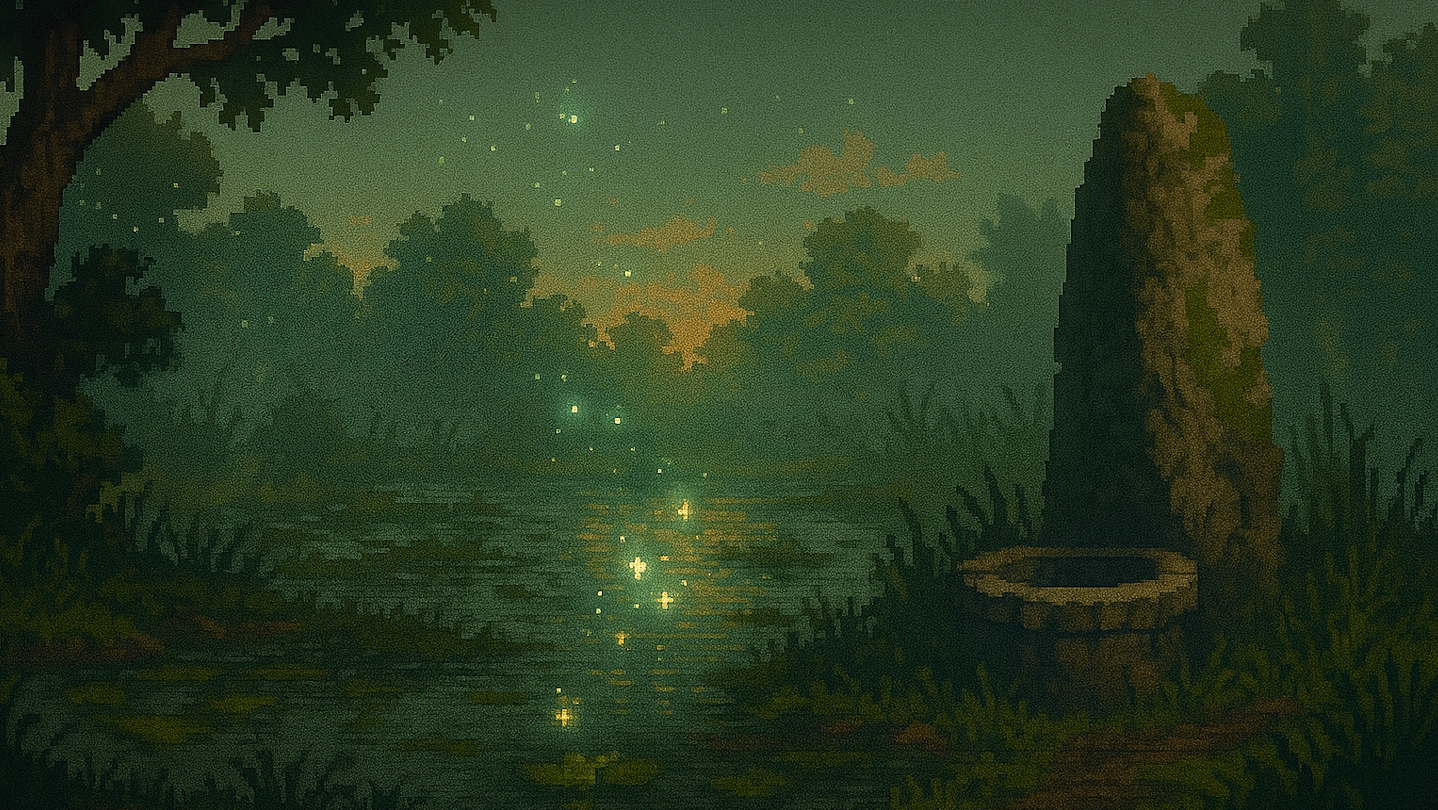


A turn-based druid strategy sandbox where every terrain elevation is a musical note. Terraform, grow gardens, brew potions and calm the wolves to hold Rome back. Campaign, endless Zen mode or a cosmic map editor, in 42 languages. No war, just ecology. Grow the peace.

Sign in to add this item to your wishlist, follow it, or mark it as ignored

Coming Soon To Early Access

The developers of this game intend to release as a work in progress, developing with the feedback of players.

Note: Games in Early Access are not complete and may or may not change further. If you are not excited to play this game in its current state, then you should wait to see if the game progresses further in development. Learn more

What the developers have to say:

Why Early Access?

“"Don't win the war. Grow the peace."

Nature, shamanism, tending your garden, keeping the peace. This is not a war game, it is a peace game!

Gardens of Lutonia is a turn-based musical druidic gardening game. You grow plants from five elements depending on terrace elevations, brew potions, and enchant the equipment carried by Gaulish warriors on the front. The Romans advance from the horizon while you tend the garden; the world only stays peaceful if your cycle of seeding, harvesting, and crafting keeps pace. The Romans remain invisible on screen, only the maximum distance to the marsh-village is shown: the tension is there, but the game never slips into a wargame. Wolves, on the other hand, are visible, and they act as a living barometer of Roman pressure. The closer the Romans get, the angrier wolves become, eating your crops and shifting into werewolf mode. When peace is high, they stay calm and Campaign naturally drifts closer to a Zen experience.

The terrain is musical in a literal sense: each elevation tier matches a note (C major scale), and terraforming produces audible harmonics in real time. The druid's harp-staff is not a symbol, it is an actual mechanic!

The game lives at three nested scales: territorial (off-screen Roman pressure plus visible wolves), tile (terraforming and germination), and micro (entering a tile reveals the fauna and flora through small pixel-art animations). On top of these scales sits the original vision of the project: composing geometric garden patterns that behave like light-emitting automata (fireflies, plant halos), influencing farming at the world scale.

The Zen mode is designed for those who want to create without pressure, purely for the joy of it. And for those who want even more fun, the Map Editor itself is a game in its own right: you surf through space while sculpting the world!

A personal note, because this matters too. I'm writing this in 2026, I'm 46 years old, almost a grandpa-gamer by now. Gardens of Lutonia is my synthesis of three decades playing strategy and sandbox games. The turn-based strategic feel, the emergent sandbox layer, the tile-by-tile composition, the patient farming, the diplomacy that replaces brawling: I've chased these across many titles, never finding them all in one. So I'm building it. Early Access is what allows me to build it with other players rather than in isolation, and to avoid freezing the vision too early.

What we need real players for:

- the CAMPAIGN PACING, the back-and-forth between gardening rhythm and Roman pressure
- the ECOSYSTEM BALANCE across the species roster, fauna/flora per-tile card system included
- the TRANSMEDIA INTEGRATION with the book, the comic, and another game in development in the same universe (a dungeon crawler / roguelite) connected via the magic die called "dicebone"
- the GLOBAL PLAYFULNESS COHERENCE: each medium explores Lutonia in its own way, with intentional differences for gameplay clarity

Early Access lets us tune all of this with the community rather than guessing in isolation.

Approximately how long will this game be in Early Access?

“We plan to stay in Early Access for roughly 8 to 12 months, with 2027 as a realistic milestone for opening the complete Campaign mode.

The length depends on several layers we want to stabilize together with the community:

- the CAMPAIGN PACING under Roman pressure, and the cyclical mechanic of 100% peace that unlocks the main victory condition (the ending is not a one-shot, the counter can drop again, the player can keep playing or restart)
- the BALANCE of the species roster and the fauna/flora card system facing emergent player builds
- the STABILIZATION OF THE DICEBONE SYSTEM and its in-game potion effects, shared with the roguelite crossover game
- the INTEGRATION ACROSS SCALES (territorial, tile, micro) and the rollout of the day/night lunar cycle and weather system
- the TRANSMEDIA COHERENCE with the book, the comic, and the crossover game, plus the progressive arrival of advanced lore elements (the sixth moral element, underground levels, etc.)

We would rather take the time to stabilize these layers than commit to a date that would force compromises on the vision!

How is the full version planned to differ from the Early Access version?


We plan to expand the following between Early Access and the full version:

- FULL CAMPAIGN: Early Access ships with the first acts of the Roman pressure storyline. We plan to open the main victory condition, a state of total harmony reached by sustaining peace for a given duration, plus the option to continue the run afterwards since peace is never eternal in Lutonia. The peace counter resets past a threshold to preserve replayability.

- SIXTH ELEMENT, THE HEART: on top of the five classic elements (fire, water, earth, air, ether) we plan to add a sixth moral element, the Heart, which unlocks a victory path through empathy rather than production. This mechanic pivots the Roman confrontation toward a non-military outcome, true to the core theme.

- SEVENTH ELEMENT (POST-EA TEASE): a still-secret seventh element will articulate music and harmony as a synthesis of the whole ecosystem. Deliberately reserved for Act II after 1.0.

- LORE ANCHORING WITH BOOK AND COMIC: progressive integration of characters, places and rites from the universe being written in parallel. The Fluid Age ritual, by which the druid Luto ages back and forth between 20 and 70 along narrative cycles, is part of this. The game offers its own reading of Lutonia, complementary to the book and the comic rather than identical.

- EMERGENT SANDBOX: unlike classic city builders, Lutonia mixes nature, structures, and druidic activities. The world is never built from standardized buildings, it emerges from the player's actions: gardening, tectonic-wave terraforming, brewing, narrative choices.

- MAP EDITOR INTEGRATED INTO ZEN AND CAMPAIGN: community-edited maps will serve as starting points for both Zen and Campaign runs. On these maps, "rock" and "dungeon" tiles become a non-editable underlayer during the run. An automatic balance check will verify that an imported map contains enough playable nature tiles before launch.

- FULL POTION AND EFFECT COVERAGE: the species and potion roster baseline is in. We plan to round out remaining effects and tune their interactions to match emergent player builds.

- FAUNA/FLORA CARD GAME PER TILE: very soon, a card system will let you balance each garden tile to influence germination cycles and try, at your own risk, to make seeds sprout faster.

- POTION AND WEAPON CRAFTING VIA THE DICEBONE: also very soon, weapon crafting flows through a potion-creation system driven by a magic die called the "dicebone". This system is a crossover with another in-development game in the same universe, a dungeon crawler / roguelite. Each die face can be rerolled over time, and both games share a common visual language ("Pentacle Vital" paradigm, fractal trees mapped to creature anatomy).

- IN-GAME POTION EFFECTS: crafted potions trigger in-game bonus/malus effects whose power scales. The more advanced the recipe, the stronger the swing, in both directions, creating tense tactical choices.

- GEOMETRIC GARDEN PATTERNS: composing geometric garden patterns that behave like light-emitting automata (fireflies, glow-worms, plant halos). These patterns influence farming at the world scale and complement the fauna/flora card system that already harmonizes each micro-garden.

- GARDENS WITH THEIR OWN WILL / EMERGENT PVE: gardens are not inert, they have a will of their own. Certain patterns trigger large-scale transformations: a harmonious composition can spawn a mountain, a forest, a lake. An imbalanced one can decay into a swamp, a viral zone, or a wasteland. Without intervention, these transformations propagate and can corrupt the map. Nature itself becomes an opponent when you neglect it.

- COMBAT PHILOSOPHY, OR RATHER ECOLOGY: no combat at the start. As Early Access progresses, PvE is layered in, but never as hack-and-slash. You don't kill wolves, you calm them. You can even turn them against the Romans, or use them as ecological guardians of a precious crop against invasive species. Gardens of Lutonia tends, over time, toward an ecology game more than a martial strategy game. That said, the priority is fun: this is not going to become a "serious game" or a preachy educational tool! Ecology is the frame, fun is the goal.

- DIPLOMACY AND TRADE: as Lutonia expands, diplomatic and commercial layers come in. Trading rare seeds with other druidic villages, bartering potions, temporary alliances, negotiations with dissenting Roman factions. The player will be able to physically draw trade routes along the edges of the map, visible tangible links to the outside that you either maintain or let break. This sits naturally within the long-term Lutonia → Lunara → Lutetia trajectory.

- ZEN MODE AS MUSICAL SANDBOX: pushing Zen mode toward a fully assumed musical sandbox dimension. Each garden tile acts as a sound pad on top of the C-major elevation system already running. Placing species composes tracks like a DJ or a sequencer. These compositions can be combined with visual automata (multicolored voxel waves, glowing aqueducts, pollen patterns) to create complete audiovisual installations, shareable with the community.

- MULTIPLE LEVELS AND DUNGEONS BENEATH THE GARDEN: a vertical system of playable and editable levels, connected by stairs, letting you explore a dungeon beneath the garden. The soil you cultivate becomes the ceiling of another world below. This dungeon prepares the narrative link toward the Paris catacombs: geological strata, fossils (including shark teeth that recall the ancient marine past of the Paris basin), and the first traces of Roman necromancy contaminating cycles at the root, as foreshadowed in the book.

- MAP EDITOR / ZEN / CAMPAIGN INTEROPERABILITY: smooth back-and-forth between the editor and the game modes. A map you edited can launch directly into Zen or Campaign, and a running game can be sent back to the editor, modified, and relaunched, with no break. Editing and playing stop being separate activities.

- LANDSCAPE BLUEPRINTS AND PIXEL ART CONSTRUCTIONS: further along the roadmap, we plan to let the player "blueprint" the landscape and place custom constructions, composing their own architectural, urban and landscape vocabulary tile by tile. Pixel art urbano-architectural-landscaping, if you want the fancy term! Concretely, you sketch a blueprint (a path, a pier, an aqueduct, an altar, a hamlet, a formal patterned garden), replicate it, combine it with terraforming and geometric patterns. The player stops just placing species on tiles, and starts sculpting a territory with their own visual language.

- WEATHER TO MANAGE: a dynamic weather system (rain, drought, mist, storms, snow depending on biomes) influencing germination, species propagation, and wolf mood. Weather is not a visual effect, it integrates into the gardening cycle and forces anticipation.

- DAY/NIGHT LUNAR CYCLE: short-term, a lunar cycle modulating brightness, audio ambience, and certain gardening interactions according to the moon phase.

- AI-DRIVEN ECOSYSTEM (VERY LONG TERM): the post-1.0 roadmap plans to turn pixel-art species into agents responding to a symbiosis/toxicity compatibility matrix across the 98 species. The ecosystem stops being a set of scripted sprites and becomes a dynamic system.

- MULTIPLE GAMEPLAY SCALES: Lutonia lives at three nested scales.

1. Territorial: Romans stay off-screen, only the distance to the marsh-village is shown. Wolves are visible on the map and act as the living barometer of Roman pressure.
2. Tile: each tile is terraformable and runs its own germination cycle.
3. Micro: entering a tile reveals fauna and flora through small pixel-art animations, where the player can act directly on the micro-garden.

- POLISH: passes on shaders, ambient effects, cinematics, accessibility.

- LOCALIZATION CORRECTIONS across the 42 supported languages, driven by native-speaker reports.

Long-term vision: Lutonia is designed as a living project. In a future narrative update, we plan to offer the possibility of evolving Lutonia into Lunara then Lutetia depending on the collective choices of players, in a community-scale gamebook logic. This trajectory is not a gadget: it is the deeper meaning of the project. The game is deliberately driven to evolve in order to re-imagine the history of Paris, future "City of Lights", through a druidic lens. The dungeon below Lutonia, its marine fossils, and its upcoming catacomb strata are the geological memory of that journey. The 42 currently supported languages (and possibly more in the future) serve this goal: promoting Parisian and French cultural heritage internationally, and letting a French developer rediscover and reinvent his own roots. Much like musicians who go back to explore their cultural heritage, this game is also a return to the source.

In ten years, Gardens of Lutonia will not look the same, and that is precisely the point!

We do not plan to lock features behind paid DLC during Early Access. Standalone DLCs (Seasons, Automation, Advanced Magic, and possibly a medieval-castle editor post-Lutetia) are only considered after the 1.0 release, and only for features not already listed here.

What is the current state of the Early Access version?

“The Early Access version is fully playable and already rich. It includes:

- ZEN CREATIVE MODE, unlimited, no win or lose, for free-form gardening and composition
- CAMPAIGN MODE playable through its first acts, with the Roman pressure cycle and the peace dynamic
- MAP EDITOR playable as a mini-game of space-surfing world sculpting, with save, load, and share
- FULL SPECIES ROSTER across the seven elevation tiers (-3 to +3), covering the five primary elements (fire, water, earth, air, ether)
- MUSICAL TERRAIN: each tier emits a note from the C major scale, and terraforming produces audible harmonics in real time
- COMPLETE CHAIN of terraforming, seeding, harvesting, potion brewing, and equipment enchantment
- VISIBLE WOLVES, several thousand handled in parallel with a ghost-after-death system to preserve ecological coherence, serving as the barometer of Roman pressure
- CHATO THE CAT, the companion, with the peace-victory cinematic trigger already wired in
- 42-LANGUAGE LOCALIZATION with automatic English fallback
- DUAL CONTROL with gamepad AND keyboard/mouse active simultaneously, no mode switching, no friction
- STABLE RENDERING PIPELINE, day/night cycle already active
- DICEBONE INTEGRATION in progress for potion crafting and the crossover with the sister roguelite game

The full Campaign script, the sixth-element (Heart) victory condition, the underground levels, the lunar cycle, the weather system, and the extended musical sandbox are being written and will arrive during Early Access.

Will the game be priced differently during and after Early Access?


We plan to raise the price gradually as content is added. The Early Access entry price will be the lowest price the game ever offers, outside seasonal sales. Players who buy during Early Access will receive all updates through to the 1.0 release without paying again.

The target price at 1.0 sits in the range of established indie reference games in the genre. The only additional paid content considered is standalone DLC after 1.0, focused exclusively on features not listed in the roadmap above (for example a medieval-castle editor post-Lutetia, an extended seasons mode, or an automation module). Everything announced in section 3 stays included in the base purchase.

How are you planning on involving the Community in your development process?


A public roadmap showing what is in progress, what is queued, and what depends on community feedback. Steam Community discussions watched daily, with weekly "behind-the-scenes" devlogs mirrored to YouTube. A Discord for direct conversation.

The Map Editor being central, player-built maps directly shape Campaign balance and the future underlayer integration (dungeon, catacombs). Across the 42 languages, native-speaker reports are essential to carry the French cultural heritage dimension internationally; corrections will be integrated continuously. Beta branches are planned to test major balancing changes before they reach the default build.

The transmedia layer (book, comic, OST, lore notes) is shared alongside the game, with links to the dicebone crossover game for players who want to extend the universe.

On a more personal note: I design Gardens of Lutonia as a living project that will not look the same in ten years. At 46, this game is also my way of bringing together what I loved across three decades of strategy and sandbox games, while searching for the druidic, peaceful tone that I often felt was missing in the genre. Community involvement is not a marketing add-on, it is what makes this adventure possible and its longevity credible.

Every player suggestion will be read with care. And wherever a request cannot be integrated directly into the core game, modding will be offered down the road (this is near-certain in the roadmap) so each player can customize their own Lutonia experience. The goal is clear: no one should be left at the door of a detail that matters to them. Thank you in advance to everyone who will walk a stretch of the road with Lutonia!
Read more

Download Gardens Of Lutonia Demo

This game is not yet available on Steam

Planned Release Date: Q4 2027

Interested?
Add to your wishlist and get notified when it becomes available.
 
See all discussions

Report bugs and leave feedback for this game on the discussion boards

About This Game

🌿 GARDENS OF LUTONIA

"Don't win the war. Grow the peace."

You play Luto, a Gaulish druid with a harp-staff and a small mystical cat named Chato. The Roman legions are advancing from the horizon — but this is not a war game. It's a peace game. You don't fight Rome. You hold it back by keeping your land alive: terraforming the terrain, growing gardens across five elements, brewing potions, and enchanting the gear of the warriors on the front line. The world only stays at peace if your cycle of seeding, harvesting and crafting keeps pace.

———

🎵 THE LAND IS LITERALLY MUSIC

Every elevation tier of the terrain is a note of the C-major scale. When you raise or lower the ground, you compose — and you hear it. The druid's harp-staff isn't a poetic name: terraforming generates real, audible harmonics in real time. Sculpt the world, play the world.

———

⚙️ CORE GAMEPLAY

• TERRAFORM by tectonic waves to shape seven elevation tiers (-3 to +3), each tied to one of five elements: fire, water, earth, air, ether.

• SEED, GROW, HARVEST across a full species roster of flora and fauna.

• BREW POTIONS and ENCHANT the equipment carried by Gaulish warriors.

• FREEZE plants mid-growth to compose living geometric garden patterns — your signature score.

• THREE NESTED SCALES of play:

1. Territorial — the Romans stay off-screen; only the distance to the marsh-village is shown. The tension is invisible but real.

2. Tile — every tile is terraformable and runs its own germination cycle.

3. Micro — step "into" a tile to watch and act on its fauna and flora through small pixel-art animations.

———

🐺 WOLVES — YOUR LIVING BAROMETER

Thousands of wolves roam the map as a living gauge of Roman pressure. The closer Rome gets, the angrier they grow — eating crops, turning into werewolves. Keep the peace high and they settle, and the Campaign drifts naturally toward calm. You never kill wolves. You calm them — and you can even turn them against the Romans, or set them as ecological guardians of a precious crop.

———

🎮 THREE WAYS TO PLAY

• CAMPAIGN — Hold back Rome by sustaining peace. The main goal is a state of total harmony reached by keeping the peace high long enough. Peace is never eternal in Lutonia: the counter can fall again, so every run stays tense. (Early Access ships the first acts of the story.)

• ZEN — An unlimited creative sandbox. No win, no lose. Just gardening, terraforming and musical composition for the pure joy of it.

• MAP EDITOR — A game in its own right: you surf through cosmic space while sculpting the world tile by tile. Save, load and share your maps.

———

🎮 PLAYABLE RIGHT NOW — FREE DEMO

A free demo is already live, and it's real running code — no pre-rendered fakery. It lets you play, today:

✅ ZEN creative mode — unlimited gardening, terraforming and musical composition, no win, no lose

✅ MAP EDITOR — surf through cosmic space, sculpting the world tile by tile

✅ MUSICAL TERRAIN — real-time audible harmonics across the elevation tiers

✅ Live wolves, Chato the cat, day/night cycle

✅ Dual control: gamepad AND keyboard/mouse, simultaneous, no mode switch

✅ 42-language localization with automatic English fallback

———

🌌 COMING IN THE FULL GAME (Early Access)

🗡️ CAMPAIGN — hold back Rome by sustaining peace: the full Roman-pressure / peace cycle, and a victory condition reached through total harmony

🧪 THE FULL CHAIN — terraform → seed → harvest → brew potions → enchant warriors' gear

🎲 DICEBONE CRAFTING — potion & weapon crafting driven by a magic die, a crossover with a sister roguelite game in the same universe

🕳️ UNDERGROUND DUNGEONS beneath the garden — the soil you cultivate becomes the ceiling of another world

🌦️ A dynamic WEATHER system that feeds the gardening cycle

🎶 An EXTENDED MUSICAL SANDBOX — each tile a sound pad, compose like a sequencer

🤝 DIPLOMACY & TRADE routes drawn along the map's edges

🔓 NARRATIVE SECRETS & treasure hunts unlocked by sustained peace

📖 Progressive LORE anchoring with the companion novel and comic

———

📖 A WHOLE UNIVERSE BEHIND IT

Gardens of Lutonia is part of a larger transmedia universe — a young-adult novel (Book One), a comic, and a sister roguelite game all set in the same world and connected through the "dicebone". The game offers its own reading of Lutonia, complementary to the book rather than identical. At its heart, it re-imagines the origins of Paris — the future "City of Lights", once Lutetia — from the Celtic, druidic side: the Romans get told over and over, the peoples they found living there far less often. A fantasy of those roots. That's why the game ships in 42 languages from day one — these origins belong to everyone.

🌿 Plant. Wait. Harvest. Thank. That's the cycle.

🌍 🇬🇧 🇫🇷 🇪🇸 🇩🇪 🇮🇹 🇵🇹 🇷🇺 🇺🇦 🇯🇵 🇰🇷 🇨🇳 🇹🇭 🇵🇭 🇲🇾 🇻🇳 🇮🇩 🇧🇩 🇮🇳 🇵🇰 🇲🇲 🇰🇭 🇱🇦 🇲🇳 🇱🇰 🇰🇪 🇪🇹 🇳🇬 🇿🇦 🇸🇦 🇹🇷 🇵🇱 🇳🇱 🇸🇪

42 ٤٢ ۴۲ ४२ ৪২ ૪૨ ੪੨ ௪௨ ౪౨ ๔๒ ໔໒ ៤២ ၄၂ 四十二 사십이 ፵፪ XLII μβʹ

አማርኛ ةيبرعلا বাং Deutsch English Esperanto Español Français Ἀρχαία Ἑλληνική ગુજરા Harshen Hausa हिन्दीBahasa Indonesia Italiano 日本語 ខ្មែរ 한국어 Latina ລາວ Монгол मराठी Bahasa Melayu မြန်မာစာ Nederlands ਪੰਜਾਬੀ Polski Português Русскиසිං හල Svenska Kiswahili தமிழ் తెలుగు ไทย Filipino Türkçe Українська ودرا Tiếng Việt Yorùbá 中文 isiZulu

AI Generated Content Disclosure

The developers describe how their game uses AI Generated Content like this:

AI was used to translate the game into several languages and generate some background images for the menus; the rest was done by hand.

System Requirements

    Minimum:
    • OS: Windows 10
    • Processor: Intel Core i3
    • Memory: 4 GB RAM
    • Graphics: compatible OpenGL 3.3 / Vulkan
    • Storage: 320 MB available space
    • Sound Card: Compatible Windows
There are no reviews for this product

You can write your own review for this product to share your experience with the community. Use the area above the purchase buttons on this page to write your review.

Review Filters