

Kirjautumalla sisään voit lisätä tämän tuotteen toivelistallesi, seurata sitä tai merkitä sen ohitetuksi

Osta Come Pray


Arvostelut

“THE MOST HOLY OF GAMES”
99999999999999999999999999999999999999999999999999999999999999999999999999999999999999999999999999999999999999999999999999999999999999999999999999999999999999999999999999999999999999999999999999999999999999999999999999999999999999999999999999999999999999999999999999999999999999999999999999999999999999999999999999999999999999999999999999999999999999999999999999999999999999999999999999999999999999999999999999999999999999999999 – Our Lord

Tietoa pelistä

The MOST SINLESS game.  Pure wholesome, virtuous, and righteous gameplay.  

This work features NO immoral, obscene, or unholy content that is not approved by Our Lord and Savior, Mediator Pecuniarius, the payment processors: Visa, Mastercard, et Spiritus Sancti, Hallowed Be Thy Name.

The genre of this game is PRAYING SIMULATOR.

The length of this game is SHORT, less than one hour, to give you more time to PRAY in real life, as Our Lord desires.

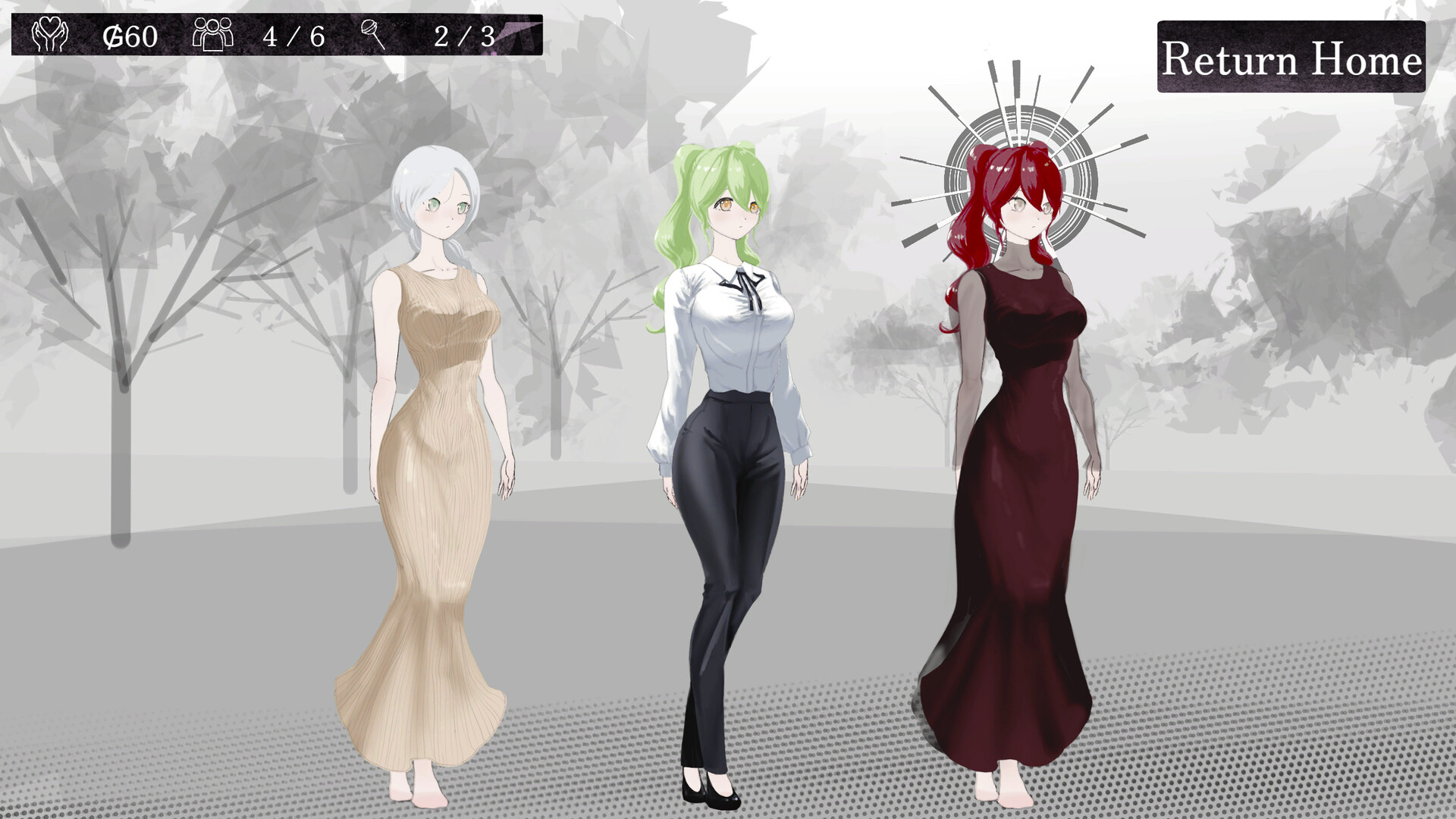
The goal is to recruit believers and then help them PRAY to Our Lord by cleansing them of sin.

As you PRAY you unlock ways to help you PRAY better and recruit more believers to PRAY.

As the believers become better at PRAYING they will become more and more blissful.

To reiterate, in this game all you do is PRAY, recruit believers to PRAY, and improve their ability to PRAY.

To reiterate, PRAYING is the opposite of SIN.  You must cleanse yourself of SIN to be a true believer.

In a PRAYING SIMULATOR, the main thing that you do is PRAY.

There is one game mode: PRAY.

The soundtrack is ESSENTIALLY NON-EXISTENT, because music is a SIN.

This work is unique in that other games are SINFUL and this game is SINLESS.

To reiterate, this is the MOST SINLESS game.

In this world of DEGENERACY and SIN, it is no exaggeration to say that this game is the SALVATION OF MANKIND.

What does it mean to PRAY?

To pray, a verb whose etymological genealogy meanders with almost labyrinthine convolution through the Late Latin precari (“to entreat, beg, supplicate”) and thence to the Proto-Indo-European root prek- (“to ask, request, woo”), though semantically refracted through the ecclesiastical Latinization of patristic discourse, is not merely to engage in the rudimentary act of uttering words heavenward, but rather to enact, in a profoundly performative and semiotically overdetermined gesture, the intersubjective interface between finite anthropic agency and the posited transcendental absolute. In patristic exegesis, for instance, Augustine in Confessiones (Book IX) renders prayer simultaneously as a vector of interior ascension and as a therapeutic recalibration of the ordo amoris; while in the medieval scholastic apparatus (see Aquinas, Summa Theologiae, II-II, q. 83), it is configured less as a spontaneous effusion of affect and more as a teleologically-structured actus secundus, the rational petitioning of divine omnipotence circumscribed within Aristotelian causality and subordinated to the metaphysical architecture of final causes. In Islamicate contexts, the Arabic ṣalāt (cf. Qur’ān 2:238), although frequently translated as “prayer,” is in fact a highly codified ritual praxis interweaving corporeal posture, verbal recitation, and cosmic orientation (qibla) into an intricate choreography of embodied devotion, thereby complicating any facile equivalence with Christian oratio. Furthermore, the anthropological record (cf. Mauss, Essai sur le don) illustrates that “prayer” frequently operates not as a unidirectional spiritual soliloquy but as a transactional and quasi-economic modality of symbolic exchange, wherein supplicant and deity engage in a reciprocal dialectic of request and obligation, an economy of grace that resembles, in certain respects, Marcel Mauss’ paradigmatic gift-cycle. Thus, to pray is not merely to speak piously, but to participate in a millennia-spanning ritualized semiosis, a nexus of linguistic performativity, socio-religious negotiation, and metaphysical aspiration, in which the human voice is both amplified into cosmic petition and simultaneously reduced to a trembling phoneme in the ontological theater of divine-human intercourse.

Game Features

  • Praying

  • Praying

  • Praying

Aikuissisällön kuvaus

Kehittäjät ovat kuvailleet sisältöä seuraavasti:

The game contains depictions of extreme prayer and devotion, resulting in religious ecstasy, such as flushed cheeks, open mouth, and shaking. The game features characters with large breasts, and religion.

The game has zero nudity. There are no depictions of sexual assault, non-consensual sex, BDSM, drugs/alcohol, or self harm.

Järjestelmävaatimukset

    Vähintään:
    • Vaatii 64-bittisen suorittimen ja käyttöjärjestelmän
    • Käyttöjärjestelmä: Windows 10 version 21H1 (build 19043) or newer
    • Suoritin: x86, x64 architecture with SSE2 instruction set support, Arm64
    • Muisti: 3 GB RAM
    • Grafiikka: DX10, DX11, DX12 or Vulkan capable GPUs
    • DirectX: Versio 10
    • Tallennus: 4 GB kiintolevytilaa
    Suositus:
    • Vaatii 64-bittisen suorittimen ja käyttöjärjestelmän

Sovelluksen Come Pray arvostelut Tietoa käyttäjäarvosteluista Asetukset

Kaikki arvostelut:
1 käyttäjäarvostelua (1 arvostelua)


Nähdäksesi arvostelut tietyltä aikaväliltä, klikkaa ja maalaa valinta yllä olevassa kaaviossa tai valitse haluamasi palkki.


Suodata arvostelut käyttäjän peliajan perusteella sillä hetkellä kun arvostelu on kirjoitettu:


Ei alarajaa / Ei ylärajaa

Näytä arvostelut valitussa järjestyksessä


Lisätietoja
Suodattimet
Epäolennaiset arvostelut suljetaan pois arvostelupisteistä
Peliaika:
Pelattu enimmäkseen Steam Deckillä
Ei löytynyt enempää arvosteluja, jotka vastaavat määritettyjä suodattimia
Muuta yllä olevia suodattimia nähdäksesi muita arvosteluja
Ladataan arvosteluja