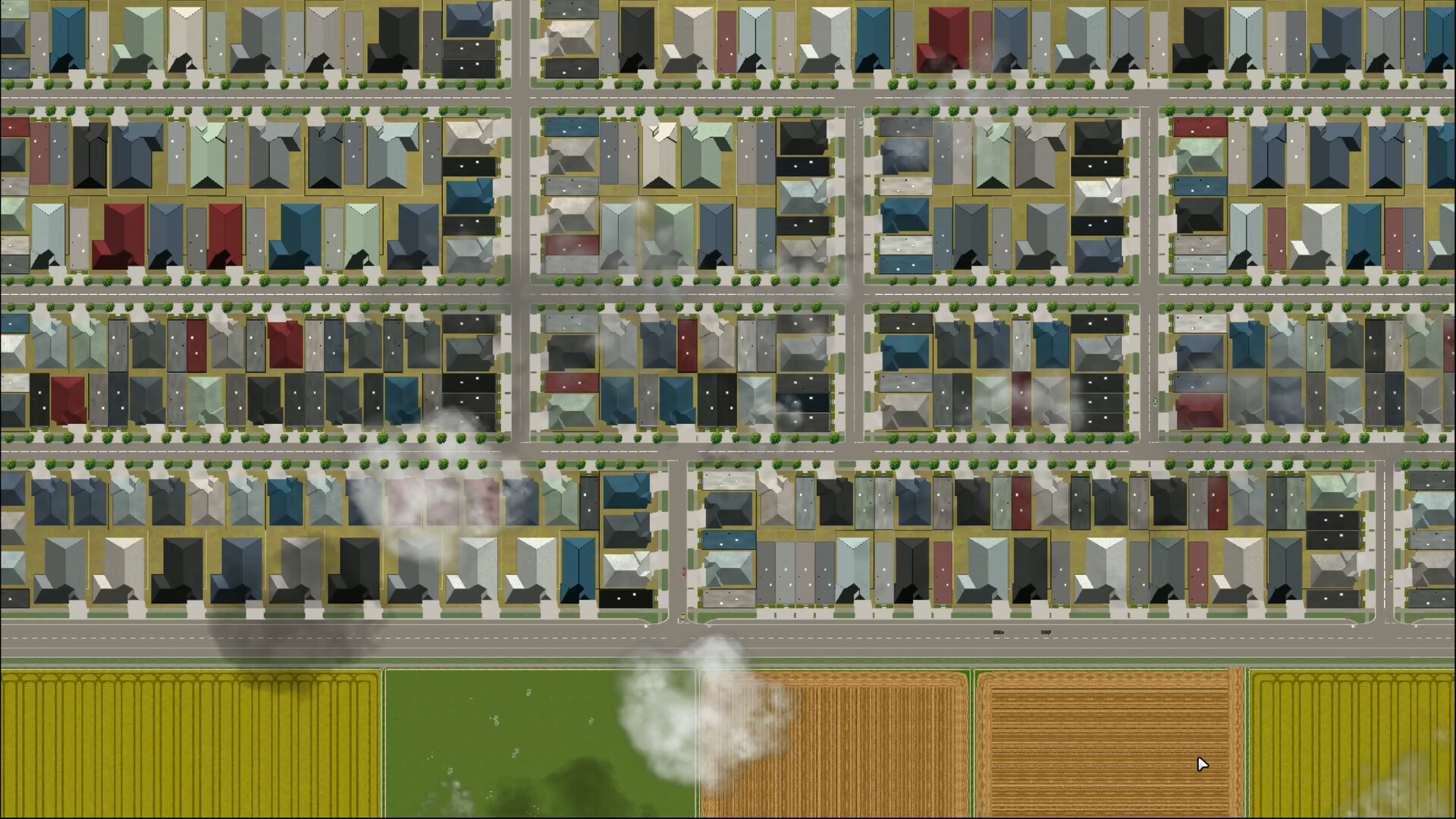


Build a property development company from the ground up. Find undervalued land, negotiate acquisitions, design profitable estates, navigate planning and construction, finance your projects and sell into a changing property market where every decision affects your return.

Sign in to add this item to your wishlist, follow it, or mark it as ignored

Coming Soon To Early Access

The developers of this game intend to release as a work in progress, developing with the feedback of players.

Note: Games in Early Access are not complete and may or may not change further. If you are not excited to play this game in its current state, then you should wait to see if the game progresses further in development. Learn more

What the developers have to say:

Why Early Access?

“Early Access gives us an opportunity to develop that experience with the community as we refine the gameplay mechanics and the economy simulation.
Player feedback will help us understand how these systems work across different play styles and where the game needs clearer explanations, better balance or more meaningful decisions.

”

Approximately how long will this game be in Early Access?

“We currently expect Lots at Stake to remain in Early Access for approximately 12 -18 months. This is an estimate; the timing may change depending on development progress and player feedback. We will keep the community informed if our plans change.”

How is the full version planned to differ from the Early Access version?

“We aim to deliver a more polished and balanced property development simulation, with clearer tutorials, improved usability and further performance improvements.

Our development plans include expanding the variety of development products and refining the planning systems that shape an estate’s progress. The scope and priorities may change as we learn from Early Access feedback.”

What is the current state of the Early Access version?

“The game is still under active development. Players should expect bugs, balance changes and areas of the interface or tutorials that need further refinement.

”

Will the game be priced differently during and after Early Access?

“Yes. We plan to offer Lots at Stake at a lower price during Early Access and increase the price when the game reaches full release.”

How are you planning on involving the Community in your development process?

“We plan to use player feedback to identify bugs, improve usability and assess the balance of the economy. We are particularly interested in where players struggle to understand a system, which decisions feel rewarding and how different approaches perform over longer games.”
Read more
This game is not yet available on Steam

Planned Release Date: Q1 2027

Interested?
Add to your wishlist and get notified when it becomes available.
 

Report bugs and leave feedback for this game on the discussion boards

See all discussions

About This Game

Lots at Stake is a property-development tycoon built on a detailed business simulation inspired by greenfield land development. Take charge of your property development business and see if you can succeed.. Many wont..

Fund and acquire parcels of land, navigate the planning rules and construction process to sell lots to consumers in a realistic market economy. 

  • Evaluate realistic greenfield sites through planning, servicing, environmental, stormwater, transport network, and financial constraints.

  • Build project feasibilities covering land size, yield, infrastructure costs, revenue, and delivery risk.

  • Spend limited weekly management attention on acquisitions, negotiations, introductions, appointments, events, and project problems.

  • Grow from a sole operator into an industry-leading developer with staff, offices, overhead, and genuine operating capacity.

  • Build separate reputations with lenders, planners, contractors, and buyers, each affecting a different part of the market.

  • Discover stronger counterparties through a living relationship network rather than selecting from a static vendor list.

  • Manage company strain as project load, complexity, staff pressure, and rent test the limits of the business.

  • Respond to a dynamic economy and event system where external events shape interest rates, government expenditure and policy, consumer confidence, and supply chain problems that can alter project outcomes.

  • Negotiate acquisitions and employment contracts where terms and relationships influence the result.

  • Plan, launch, sell, and deliver staged communities while every decision carries forward into the next opportunity.

FIND POTENTIAL BEFORE THE MARKET DOES

Every property has a price. Not all have genuine development potential.

Review parcel boundaries, planning controls, servicing requirements, environmental conditions and local demand. Compare opportunities, challenge your assumptions and recognise when an apparent bargain is really a liability.

Negotiate price and settlement terms with the landowner—but consider how far you are prepared to push.

TURN PADDOCKS INTO PROFIT

Lay out roads, residential lots, stormwater infrastructure and open space assets in a carefully designed staging plan.

Balance yield against amenity, access, infrastructure, approvals and delivery cost. Decide what should be delivered first, which works can wait, and how much capital each stage will require.

Every line on the plan changes the numbers—and what future buyers will see.

OPERATE IN A CHANGING ECONOMY

The market will not wait for you to act.

Interest rates move. Construction costs rise. Credit tightens. Buyer confidence changes. Policy decisions and economic events create new risks and opportunities.

Respond to a dynamic economic and event system where changing conditions affect land values, borrowing, construction, demand and affordability.

A project that worked when you bought the land may look very different by the time you are ready to sell it.

SELL THE PROMISE

Choose the product lot mix, price each lot and launch stages into the market.

Buyers respond to price/affordability, amenity, access and market confidence. Different buyers want different products, and demand does not automatically appear simply because land has been released.

Every lot must earn its buyer.

Lower prices may accelerate sales but weaken the margin. Holding firm may protect value but leave debt outstanding for longer. Decide what the project—and the company—can afford.

THEN DELIVER IT

Manage construction as the approved plan becomes a real project.

Delays, shortages, incidents and variations can turn a strong feasibility into a difficult delivery. Decide when to intervene, when to spend more and when to accept that the programme has changed.

Settle the sales, repay the debt and enhance the relationships that helped deliver the project.

BUILD A NETWORK, NOT A VENDOR LIST

The best person for a job may not know you yet.

Your professional network is a living web of individual relationships. Each relationship is directed: someone’s opinion of you may differ from your opinion of them.

Some consultants, contractors, lenders, and industry contacts are visible from the beginning. Stronger or more specialised people may remain beyond your reach until a trusted contact agrees to introduce you.

Requesting an introduction consumes action points, and access is never automatic. Your contact must know the target well enough—and trust you enough—to put their own relationship behind the introduction.

Negotiations, appointments, project outcomes and events can strengthen relationships or damage them.

A good relationship can reveal a better consultant, open a new negotiation path, or provide help when a project begins to fail. Handle people badly and the same network can close around you.

EARN A REPUTATION THAT CHANGES THE MARKET

Reputation is not a single popularity score.

Your company builds separate standing with:

  • Lenders

  • Planning professionals and authorities

  • Contractors and consultants

  • Buyers

  • Equity Markets

Each reputation channel affects a different part of the business.

A strong lender reputation can improve access to finance and borrowing terms. A credible planning track record can reduce friction around future applications. Contractors may offer better pricing, lower risk, or access to stronger teams. A trusted buyer brand can improve campaign reach and purchaser confidence.

Achievements and successful project outcomes can strengthen your reputation. Broken commitments, poor delivery, aggressive conduct, and failed decisions can damage it.

Cash may fund the next project.

Reputation helps determine which opportunities reach you in the first place.

SCALE WITHOUT BECOMING THE BOTTLENECK

Grow the company through a long-term maturity path:

Sole Operator → Structured Studio → Growing Developer → Established Developer → Industry Leader

Larger offices, better staff, and stronger internal systems increase project capacity, improve coordination, and allow the company to handle greater complexity.

But growth is not a simple upgrade tree.

New offices require fitout capital and add weekly rent. Additional staff create capacity but increase overhead. More projects generate revenue opportunities while placing greater pressure on the organisation responsible for delivering them.

Take on more than the company can support and strain begins to rise.

High strain can create:

  • greater internal coordination costs;

  • longer project programmes;

  • more operational events;

  • weaker capture of amenity, access, and quality benefits;

  • greater pressure during negotiations;

  • reduced ability to respond when something goes wrong.

Scale too slowly and worthwhile opportunities may pass you by.

Scale too quickly and your own company becomes the risk.

Lots at Stake - Build the business behind the city.

AI Generated Content Disclosure

The developers describe how their game uses AI Generated Content like this:

During development the use of procedural and AI-based tools are sometimes utilised to assist initial work. In every case, the final product reflects the creativity and vision of the development team.

System Requirements

    Minimum:
    • OS: Windows 10
    • Processor: intel Core i5-4570 (4 cores minimum)
    • Memory: 8 GB RAM
    • Graphics: NVIDIA GTX 750 Ti
    • Storage: 4 GB available space
    Recommended:
    • OS: Windows 10 / 11 (64-bit)
    • Processor: Intel Core i5-9600K (6 Cores)
    • Memory: 8 GB RAM
    • Graphics: NVIDIA GTX 1660
    • Storage: 6 GB available space
Review Filters