
SoloKing Poker - A professional poker AI game. Includes a suite of poker GTO calculation tools: win rate calculator, draw calculator, and EV calculator. Professional-level poker AI opponents. It teaches you one thing: 1: How pro players play Texas Hold'em.

Sign in to add this item to your wishlist, follow it, or mark it as ignored

Buy Solo King - Single Player : Texas Hold'em Poker


About This Game

This game includes:

Basic Functions:

1: Single-player mode: You can play against 2-9 AI opponents of professional player level.

Core gameplay concept: Range warfare.

1): The core concept of this game is range warfare. When you enable range viewing during the game, you can see your opponents' ranges. As equal competition, the AI ​​will also know your range. Then it's a range-based battle between you and the AI. The AI ​​knows your range, but it won't refine it based on your actions. However, you can manually assess which area your opponent's hole cards are more specifically biased towards within the known range based on the AI's actions.

Similarly, if you don't enable viewing opponents' ranges, as equal competition, the AI ​​won't know your range. It will only calculate its own hand strength, draw chance, nut chance, and whether the current board structure is advantageous to it based on its hole cards and the community cards. The AI ​​also makes its moves based on its own range. Poker Genius created 10 groups for the AI ​​bot, each with different playstyles. I replicated their strategies from Genius. If the range is visible, it calculates the EV based on the hero's range, increasing the chances of winning and making the competition fierce.

In this current war where both sides' ranges are revealed, you're essentially playing a range war with your opponent. The AI ​​doesn't know your hole cards, but it knows your range, and you know your opponent's range. This game is essentially a range war.

It's a war of exploitation based on known ranges.

The real-time hand display shows the ranges and draw odds, providing a comprehensive analysis of the range war, the nut war, and the board structure.

Essentially, I've provided a playing environment for training strategic thinking and familiarizing yourself with GTO (Golden Orphanage) playing style.

This game integrates position, stack depth, deep/medium/shallow stack size, bet size, range recognition, real-time win rate, hand strength, and EV based on the current showdown situation.

Because I haven't implemented real-time statistics on opponents' behavior on different streets like in Holdem Manager, I haven't incorporated exploitative techniques based on action habits into the decision-making process (this will be added in the next version, along with statistical items similar to HM3).

Furthermore, the current range isn't trimmed after each action on every street; the action decision EV is calculated based on the initial range of the hand. This means that the AI ​​and hero players can guess each other's ranges, but they don't know exactly where the opponent's hole cards are in that range. However, this is enough to make the game difficult for players; the more players there are, the more tiring and mentally taxing the game becomes.

This game essentially simulates high-stakes online poker games. Players use solvers or assistants to determine their ranges in real-time. GTO (Game Tottenham) is essentially based on the ranges after pre-flop actions between players, then trims the ranges based on those actions, and finds a Nash equilibrium point based on the transparency of each player's range. All EV (Effective Value) calculations in GTO are simulated and not perfectly accurate, but this EV simulates the general decision-making trend.

I've simplified this range estimation process.

Simplifying the range reduction process doesn't diminish the trend logic of actions during the game.

If the trend is correct, then the final comparison is still based on the players' and opponents' assessments of the game's progress and their respective strengths in the current game. The data provided is a calculation, and its results are responsible for the decisions made on the current street, not for the overall game outcome.

The result is simply the cumulative result of decisions made on each street.

(In the next version, I will switch to a pure strategy mode for finding the Nash equilibrium point in the GTO solver to simulate range pruning. Actually, that would be more difficult for players because current solvers are all hybrid strategy modes, which require more card-playing skills to prune decisions.)

2): The exploitative playstyle of human players on the four streets should be as follows, as this is the strategy of AI players in this game:

Preflop Street:

On the preflop street, you practice your ability to judge which street the hand will progress to based on SPR (Sweep Rate). This teaches you how to control the pot size based on your hand strength, showcasing your judgment of the overall hand trend and your betting sizing strategy.

Whether to steal the pot or blinds, control the pot and look at the next street, or push for a showdown on this street.

The charm of poker lies in the strategic planning and bold stealing on the preflop street and the timely probing of opponents' ranges on the flop.

1: Hand strength must match action:

Preflop, if you have a made hand, you can steal the pot or blinds. If your hand is weak, fold; don't limp or call blindly.

The essence of winning or losing is controlling your VPIP. Don't call blindly if you don't have a strong hand; blind calling is the root of losing money.

The difference in SPR (Street Ratio) determines roughly how far the showdown will go.

A low SPR means the game will end on the preflop street, requiring a push/fold strategy to force opponents to fold and maximize fold equity.

Don't try to call to the flop to see the board and increase your chances; that's the wrong approach.

2: In my games, during short-stack phases (stack < 30BB), AI habitually uses a push/fold strategy. Players complain that going all-in is unreasonable, but essentially, they don't understand stealing; they're novices.

If I'm short-stacked, in position, but with a weak hand, I'll definitely go all-in, hoping to steal the pot. If I'm out of position, have a weak hand, but a small stack (it's not like MTT where you just need to survive to the money), in a cash game, I'll go all-in.

When you go all-in, you're betting on your opponent to fold, not trying to get them to call. Even if they do call, it's still a game of luck, not skill. This negates the skill advantage between you and your opponent, forcing you to rely on chance.

At this point, you might try to play slowly, relying on skill, waiting for a good hand to play, thinking this guarantees victory. But that's impossible. Before you get a good hand, simply placing blinds will wear you down. Even if you get a good hand, deep-stacked players have the financial advantage to push and force you out.

Therefore, the push/fold strategy aims to avoid relying on skill and instead rely on luck when your stack is disadvantageous. This drives away tight players, while skilled players won't compete with you for small pots. Skilled players with bankroll control can then play slowly, executing a slow-play strategy.

3. Hand strength must match bet size; a good balance is essential:

If your SPR (Sweep Rate) is high and the preflop doesn't end well, and your hand is strong, you need to control the pot size preflop. Don't grow the pot; wait until the flop to see if the board can continue to expand. After building a large pot preflop, you need to maintain a consistent pot odds on the flop, which requires extremely large bets and makes you vulnerable to pot-ending, affecting your survival time in the hand.

Hand strength determines bet size; you get what you pay for. Betting large with a weak hand is suicidal. At most, make small bets to bluff and see if your opponent has a made hand, as a way to block them. If your opponent raises, you must fold; don't try to win by bluffing.

Flop Street:

This marks the official entry into the range war, the nut war, and the board structure analysis level. This is the most crucial element of flop street decision-making: fold, or keep? If keeping, do I drive out the weak, keep the strong (whether it's setting a trap or bluffing determines the bet size), or play it safe and hope for the next street?

4: On the flop street, the essence of playing is whether you can make the nuts and whether your nut ranking is advantageous. If you don't make the nuts but have a nut draw, you can make a small bluff.

If you can't make the nuts, or don't have a nut draw, and can't check, then fold.

Postflop: With more than two players, the more players there are, the weaker your hand becomes. Fold decisively. For example, on a postflop street with more than three players, if your set isn't strong, you can only call; don't think about raising.

Flop Street: With a short stack, if you have a set or two pair, showdown. Play for fold equity. Don't think about what the turn street is like, don't assume your opponents are calling stations, and don't fantasize. All actions should be based on your hand strength.

Turn Street:

Reaching the turn street is a crucial decision point: value or bluff. Regardless of the decision, betting involves extreme sizing.

Having built pots and roughly assessed your opponents' range on the preflop and flop streets, this street becomes the decisive battleground.

If you're playing value, assess your hand strength, the amount of value you want to capture, the betting size required to achieve it, and whether you should proceed to the river street. On the river street, is your hand strong enough to capture value? If not, end the battle on the turn street.

On the turn street, whether playing value or bluffing, you must build a very large pot and bluff with large bets to force your opponents to fold. Small bets will not achieve your goal, resulting in losses, exposed hand strength, and increased profits for your opponents.

Playing value also requires large bets to build a large pot, maximizing profits when the game ends on the river street.

If you find your hand weak on the turn street, check if you can, fold if you can't check, and avoid hesitation and wishful thinking.

River Street:

On the river street, the hand strength is determined, and whether you've hit your draw is clear. The strategy for the river street is a variation of the turn street strategy, but the bet size needs to be reduced.

Because the hand strength is already determined, a smaller bet size means you're playing value, your opponent will likely call, you maximize your winnings, and even if you continue bluffing, it will be a small bluff, minimizing your losses.

If your bet size is too large, your opponent might fold, and you won't be able to capitalize on the river street's profits with your high-value hand. Even if you're bluffing, if the size is too large, your opponent will likely call, leading to a significant loss. Therefore, the bet size on the river street needs to be reduced to ensure you consistently hit value or minimize losses if your bluff is caught.

These are the basic strategies employed by the AI ​​across the four streets in this poker game.

Regarding the consistency of value and bluff bet sizes:

Hero players should maintain consistency to avoid detection by AI opponents. However, maintaining consistency in bluffing is difficult, serving as a warning against bluffing without a strong hand.

Inconsistent bet sizes make it easy for opponents to discern the correlation between your bet size and hand strength.

In this game, the AI ​​makes betting decisions based on the value-bluff ratio on the turn and river, but inconsistent bet sizes are deliberate vulnerabilities.

To compete for large pots, your hand strength must match.

Understand that most poker profits come either from consistently stealing blinds or small pots preflop to accumulate wealth, or from winning large pots on the turn and river in crucial hands. To compete for large pots, you need at least a straight or flush; don't expect to get rich overnight with a set—hand strength doesn't allow for such fantasies.

Don't think you can win by bluffing. Even if you want to bluff, don't bluff with nothing. At least have a nut draw and bet small to try your luck, or be sure you can prevent your opponent from making the nuts, and be sure your opponent doesn't have a strong hand. Only then should you bluff with nothing; essentially, you're playing for fold equity.

GTO tools tell you that on the turn or river, the hand strength difference between you and your opponent is extremely large. Defend according to the MDF ratio. Calling with nothing is a sure way to lose. You can only raise to bluff, not call with nothing. But your stack and your mindset have already determined whether you have the confidence to bluff with nothing.

Science is a reference, but your psychological state is even more important.

Statistics tell you that on average, 10,000 to 20,000 bullets kill a soldier on the battlefield. But if you're a rookie on the battlefield, how many bullets can you dodge? You can't dodge many bullets even in an FPS game.

GTO balanced science tells you that you can bluff, but your personality, habits, and financial resources are the real factors that determine whether you can bluff effectively.

Science is only for wealthy bosses; it's not for the average person hoping to get rich through gambling. Don't fantasize about scientific probabilities; gambling, even with scientific brilliance, must be based on sound financial management. Your entire gambling bankroll should not exceed 3% of your disposable cash to survive. This limitation determines that you won't become rich overnight. Therefore, science is full of constraints, essentially telling you to be realistic, pragmatic, and abandon illusions.

Fairness, Cheating:

1: Dealing Cheating: I disdain cheating; I don't cheat at all.

In Normal Mode:

The dealing is random; the hole cards and community cards are all random. As a single-player poker game, I have no need to cheat on the dealing.

I offer the function of purchasing good cards with diamonds to get better cards.

This is an added-value feature to help you train your playing skills for specific hole cards.

Essentially, whatever hole cards or community cards you want to set, you can obtain them by spending diamonds.

However, aside from the specific cards obtained by spending diamonds, all other card dealing is random.

I would never intentionally make you lose in order to get you to buy diamonds.

Online multiplayer poker platforms sometimes engage in card dealing manipulation. Their logic is to balance player earnings. Regardless of the number of players, the overall earnings should be roughly balanced. If you're skilled and win for a period, while others are less skilled and lose, those who consistently lose will leave the platform. The platform earns money through commission, and as long as players don't leave, they'll continue playing, allowing the platform to consistently earn commission. Therefore, over time, less skilled players are given better cards to gradually win back their losses. This way, regardless of skill level, over a long period, the wins and losses are roughly equal.

My single-player, fixed-price game has absolutely no intention of controlling the card dealing to intentionally win against you. Intentionally winning against you doesn't generate profit for me; it would only bring me criticism. I'm running this to make money, not to seek negative reviews and abuse.

Conversely, to save time for players waiting for good hands, I've provided a feature to buy good cards with diamonds. Cards are dealt according to the player's needs, both to make the game enjoyable and time-saving, and to allow players to practice playing specific ranges and hands. My game's purpose is to teach players the basics of poker, not to rip them off.

If a human player buys good cards as their hole cards, the AI ​​won't know you have good cards; it will still play according to its range and hole cards.

In short, in terms of fairness, you and the AI ​​are equal. Winning or losing depends solely on your and the AI's understanding of strategy and tactics.

Regarding all-in choices, understanding push/fold strategies in the short-stack phase will explain why the AI ​​might go all-in.

Stack depth is defined based on the effective (minimum) stack between players.

In-game, opening the assistant shows each player's win rate and ranking on the current street, the next street, and all the way to the last street. This essentially shows their winning probability and implied odds.

The EVs currently displayed are calculated using a formula based on a push/fold strategy between the opponent (the last raiser) and the hero (a human player) in a 2-player mode. They are not calculated using a push/fold showdown based on a gametree.

Essentially, the formulaic EV is derived from push/fold. The fold rate in the EV is approximated by the opponent's calling range.

The EV is calculated using simulation, which only provides a general direction for decision-making. Therefore, the Advisor's decision suggestions are not 100% accurate.

This is the fundamental reason for the difference between theoretical and actual EV.

In this game, EV calculation requires the Advisor to be enabled, and both players must be able to see each other's ranges for calculations to occur. Without enabling the Advisor, there is no EV calculation, and decisions will not be made based on EV.

The decision-making criteria in the GTO tool, in order of importance, are: Action EV, Equity, Hand Ranking, Nuts Ranking, and Draw Opportunity.

This information is also displayed in the game and is used to assist in decision-making. The Advisor also displays various pieces of evidence for decision-making.

You'll see that the decisions made on each street may differ, and may not even match the actual outcome of the final hand.

This is the unpredictability of poker games.

Unless you're in a training simulation, where you deal fixed hole cards and community cards, set ranges and AI, this is all for training purposes and doesn't involve judging cheating.

In non-training mode, there's no cheating involved in dealing hole cards, community cards, or AI decision-making.

Hand Realism:

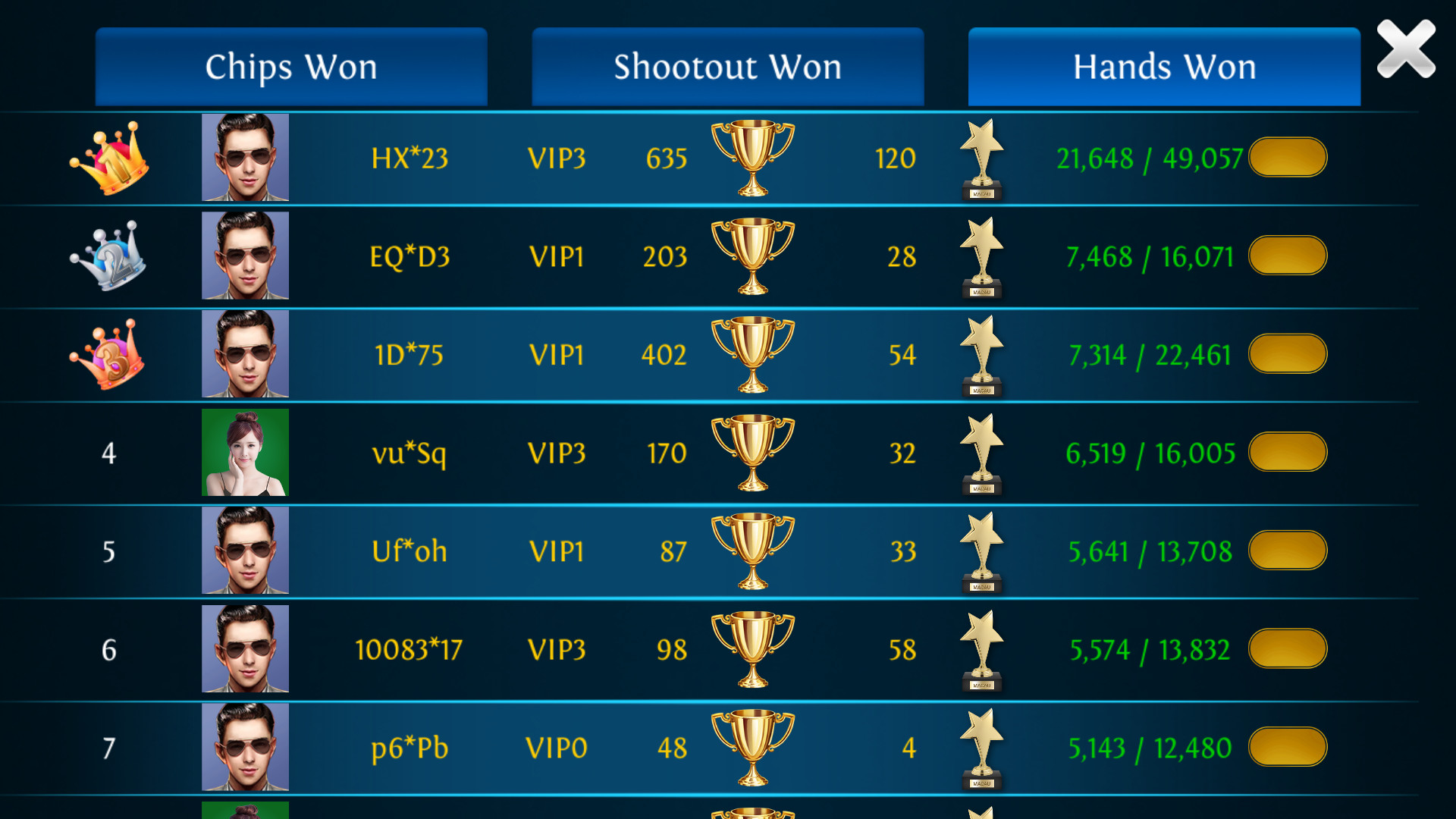
On the leaderboard, few players who have played hundreds or thousands of games are complaining. The vast majority in the comments section haven't even played 500 games and are just spouting nonsense; in short, they don't understand poker at all.

Look at the leaderboard; the top 20 players can achieve a 40%~50% win rate against this AI. The reason is that after playing tens of thousands of games, you've discovered the AI's patterns, and you know how to exploit and counter-exploit it.

The more times a player plays, the more exploits they can identify and gain opportunities to win. Public leaderboard data shows a trend: the more times a player plays, the closer their win rate gets to 50%, and the fewer times they play, the further they are from 50%. This reflects an equilibrium: the more times a player plays, the easier it is for them to discover their opponents' weaknesses. This is how players discover the principles of exploitation, allowing them to progress further and play thousands upon thousands of games.

A 50% win rate is actually quite impressive because in many situations, players have to fold due to weak hands.

For players who have played hundreds or thousands of games, AI almost completely dominates human heroes, especially since most players don't even understand the basic strategies and tactics of Texas Hold'em, nor do they understand the value and purpose of any assistive tools.

In reality, most players are recreational beginners who lack even the basic knowledge, yet they think they are smart and can win, when in fact they don't understand how to play poker at all. Therefore, I have directly explained how to play this game above; just follow my strategies and play patiently.

What is the value of playing poker?

Playing poker helps you understand luck, probability, and the uncertainty inherent in social laws. The more you play, the more you develop methods for dealing with uncertainty.

These decision-making methods and psychological approaches to dealing with uncertainty are the abilities that have a significant impact on your life.

Poker is a complex game of offense and defense where neither side has complete information. Offense and defense switch constantly, and you can always sense when you are in control or being controlled. Whether you are in control or controlled requires decisions at every turn.

What you practice in poker is the ability to discern the range of your opponents' hands based on their actions and bet sizes.

This is the so-called ability to read people's intentions.

Reading people involves two aspects:

First, reading your opponents: interpreting their hand range based on their actions and assessing whether they are bluffing.

Second, reading yourself: Does your interpretation of your opponents align with your own strategy? Do your actions conform to your strategic principles? Are they objective, impulsive, or driven by wishful thinking?

Poker is a game of observation and interpretation, using these observations to understand your opponents' thoughts.

Understanding someone's mind allows for both exploitation and counter-exploitation.

The final win or loss is merely a punishment or reward for this strategic exchange.

The focus of this game isn't on winning or losing, but on the accuracy of interpreting the opponent's actions, the ability to interpret and analyze incomplete information, and whether you ultimately develop a useful decision-making strategy.

Understanding the essence of this game is deciphering the opponent's range of cards; winning or losing is simply a quantification of the outcome. Most people are satisfied with superficial quantification, neglecting the training of understanding the essence.

In reality, everyone is busy making money, but they don't know the value and meaning of this money. By the time you realize that making this money is meaningless, you've already wasted a lot of time. The only chips in life are time and health.

Reading people is essentially reading their weaknesses. How to read them more accurately?

Use tools to assist.

The GTO assistant tool in this game addresses two core issues:

1: Real-time assistance in viewing your relative strength and knowing your hand's position—this is the power dynamic.

2. Real-time assessment of the opponent's range, and based on this range, whether the opponent's hand strength and actions match.

Whether the opponent's actions are consistent, and whether this consistency is assessed by evaluating the consistency of the opponent's previous and subsequent action ranges, is key to determining whether the opponent is bluffing.

Advanced Features:

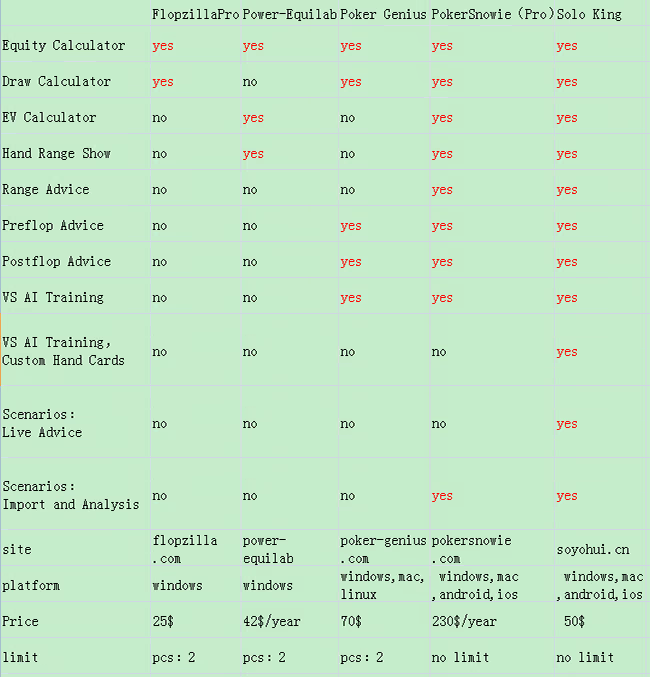
The table below shows the functional price comparison between the computing tools in the game and other Texas-related computing products on the market.

In this game, you can freely organize the table, freely set the blind level, freely set the hand range of each opponent, freely set the opponent's AI type, and freely set your own hand range, so that every time you deal You're dealt cards in this range, and you're free to set one of the 20 good cards for a definite workout.

In the game, the complete real-time calculation of each player's various winning rate data on each street, listening to the winning rate, and EV data saves you from the trouble of manual calculation, and will also give you AI decision-making suggestions from professional textbooks. These ensure you can complete on-demand training. and judging whether it makes sense to you.

The complete display of these information in the game is also to help you analyze the game, so that you can know the logic of your own winning and losing, where you win and where you lose.

manual:

core function:

1: Click the function board card to set the community card, and click the hole card icon to set the hole card.

2: Different player types can be set, and each player has a different range of actions. These ranges also determine different action logics.

3: Equity calculator, draw equity calculator, EV calculator, real-time poker simulator tool.

4: Real-time poker simulator tool, this is the most important for online professional players, which greatly simplifies the time consumption of thinking and performing calculations.

5: Advisor (advisor) provides you with a standard play, the basic guarantee is not to lose money.

6: Before the action decision, provide the EV value of different actions and betsize.

7: Practice the advisor and action EV in the battle mode.

Core value points:

1: Poker simulator tool: When playing poker online, professional players can display the complete mathematical data immediately after entering the opponent's range in real time according to the situation of the game table, saving users calculation time and energy, and providing standardized behavior suggestions. These real-time and accurate calculation data and standardized action suggestions help players make quick decisions.

Value point: It saves the player's energy consumption in mathematical calculations in the game, and allows the player to invest more energy to focus on the accurate determination of the player's playing range and the use of real-time data to make decisions based on experience.

Real-time display of all poker game data, which is not available in other tools. I combined the various data calculation functions scattered in multiple Texas poker calculation software into the real game. The player only needs to determine the opponent's range.

In the simulator, Preflop and postflop are also purchased professional range action data, which can be set in the simulator: stacks deep, bet size, and player position to see the real-time advisor. Now this advisor is conservative.

range data comes from

The core of the simulator is that you need to have the ability to judge the opponent's range of action. This is also one of the most basic and most important abilities of playing cards.

If you don’t have the ability to display the range of Texas Hold'em at all, then you can use this tool to repeatedly play poker to familiarize yourself with the range. In the battle mode I provide the ability to display the range in real time. Let you clearly see how different people in different ranges play, and those actions are standard textbook play styles for professional players.

Real-time display of complete data: The data standard provided comes from the result of 10,000 times Equity calculated by Monte Carlo method. In the battle mode with AI, you need to turn on the observer mode switch (observer)

Data in the avatar frame:

1): EV: 0.70BB, indicating the EV data after the current operation. BB stands for the big blind value.

2): equity data for each street:

2r: 4; 12.93%. Format: 2r (to river equity, calculated to river street Equity): rank (in the current surviving players, own 2r Equity ranked); equity (own real-time 2r Equity, 2r Equity calculated from your own perspective). Indicates that the Equity data to River Street is calculated based on the player's own hole cards against other players' range or hole cards.

nd: 1; 72.67%. Format: nd (next street equity, your own Equity on the next street): rank (ranked your own nd Equity among the current surviving players); equity (your own real-time nd Equity, nd Equity calculated from your own perspective). Indicates that the nd Equity data to the next street is calculated according to the player's own hole cards against other players' range or hole cards.

cp: 1; 88.23%. cp (current street pure equity, the pure Equity of one's current street): rank (ranked of one's own cp Equity among the current surviving players); equity (your own real-time cp Equity, cp Equity calculated from your own perspective). Represents the calculated cp Equity data on the current street based on the player's own hole cards against other players' range or hole cards.

Outs: 30, which indicates the number of draws made by players on that street. At this time, you can open the hands card strength information table, and you can see the probability of the current hole cards and board cards developing to various draws on each street.

1: In preflop and river street, showing 2r is enough.

2: On flop, turn street: displays the complete 2r, nd, cp data, and on flop, turn street, you can see the outs data of the player in that street at the same time.

These real-time Equitys and draw data assist in determining the hole cards against other players' hole cards or ranges, their own hands card strength and winning ability, and help them make action decisions on various streets.

The betsize window at the top of the interface shows the human player (self) under the current action menu, the EV value ranking of each action in the action menu, the leftmost is the best, and it decreases from left to right (if there is only the leftmost data, then it is According to EV evaluation, this action is the most appropriate, and other actions do not need to be considered). This is based on the action logic shown by the EV. This is also the EV data of each action calculated by the player himself before the action. (The EV data in the avatar range is the EV data after the action, and the meaning of the two is different).

This 4-speed EV table of betsize is the data display for making decisions based on EV when displaying the street.

In fact, EV has no absolute correct meaning in action guidance before and after the flop (preflop and postflop), and it is not correct to make decisions based on the positive and negative EV.

Advisor (Advisor): Shows the decision in this street, comprehensively assessing the following content: player's hole cards, opponents' range or hole cards, current own 2r, nd, cp Equity data and Equity ranked, and the player's own position Table position, player's current stacks deep, current number of people remaining at the table, EV data of each action in the current menu, and bankroll management. The current advisors tend to be conservative, and the goal is to try not to lose money.

Advisor also implements a standardized pre-flop strategy in preflop.

Advisor also implemented the post-flop strategy suggested by in postflop.

In the battle against AI mode, you need to turn on the advisor mode switch (observer).

Click on the user's avatar to open the user's scope, view or set the scope.

Click on the hole cards, you can open to view or set the hole cards.

Click on the board card, you can open to view or set the board card.

In the simulator, click the D icon to switch the position of the dealer.

Click the gray D icon to reset the position of the dealer.

Regarding range setting or selection:

1: Provides the standard range for various filling actions in the preflop stage.

2: Provide 24 kinds of action ranges commonly used by professional players. Each professional player divides all hole card combinations into 10 action groups. You can see the action ranges of tag, lag, rock, maniac, and nit players.

3: Provides a view of the opponent's mathematical action range based on the opponent's vpip and pfr. Vpip and pfr can view these two values ​​of opponents from third-party statistical software licensed online, such as holdem manager 2.

The graphical Equity calculator provides a complete and correct Equity calculation function.

I provide complete toflop, toturn, toriver's montecarlo and Enum calculation methods. It has the same effect as Power-Equilab, and its own data is guaranteed to be correct.

When Power-Equilab calculates toflop and toturn, the data is often incorrect (why it is not, you will know by playing with his montecarlo and Enum methods, the longer the calculation, the greater the deviation of the two data, which is wrong), But the calculation result of to river is correct. It sells for $40/year. It does not have a real-time calculation method in the game. It is not suitable for actual combat, but only for review calculations, lacking actual combat significance.

The provided Equity calculator, draw calculator, and EV calculator are all to ensure that you know the correctness of the data calculation results and allow you to trust the correctness and stability of the function.

The AI ​​in the battle mode comes from the range of 24 professional players. You can conduct targeted range confrontation strategy training.

1): Various AIs and advisors use the same standard professional gameplay action logic. The difference from yours is only the hole cards and the action range.

2): 14 types of chip depths (10BB~100BB, 200BB) are provided (different medals will open different new chip depths, and different chip depths will have different playing methods). Because of the different chip depths, the card game will be played The strategy is completely different.

3): AI adopts the textbook style of professional players. You can understand the AI's action logic in thousands of matches, you can learn this action logic, and you can also find the corresponding exploiting AI logic. Repeated training can help you quickly identify the opponent's ability and the opponent's range.

If it is in Steam, there is no sound.

0: under SteamsteamappscommonSolo King-Single Player Texas Holdem PokerWindows_Release, rename Windows_Release to Windows_Release1

1: Adjust your computer sound controller.

2: You can download the game from D:SteamsteamappscommonSolo King-Single Player Texas Holdem PokerWindows_Release

Move another folder, and then click TexasHoldEmSingle.exe to have sound.

System Requirements

Windows
macOS
    Minimum:
    • OS *: Windows XP
    • Processor: 2.0 GHz
    • Memory: 512 MB RAM
    • Graphics: 1024x768 monitor resolution
    • Network: Broadband Internet connection
    • Storage: 200 MB available space
    Recommended:
    • OS *: Windows 7
    • Processor: 2.0 GHz
    • Memory: 1024 MB RAM
    • Graphics: Reasonable
    • Network: Broadband Internet connection
    • Storage: 300 MB available space
* Starting January 1st, 2024, the Steam Client will only support Windows 10 and later versions.
    Minimum:
    • OS: Mac OSX 10.7+
    • Processor: 2.0 GHz
    • Memory: 512 MB RAM
    • Graphics: Reasonable
    • Network: Broadband Internet connection
    • Storage: 200 MB available space

Customer reviews for Texas Holdem Poker: Solo King About user reviews Your preferences

Overall Reviews:
Mixed (50 reviews)


To view reviews within a date range, please click and drag a selection on a graph above or click on a specific bar.


Filter reviews by the user's playtime when the review was written:


No minimum to No maximum

Show reviews in selected display order


Learn More
Filters
Excluding Off-topic Review Activity
Playtime:
Played Mostly on Steam Deck
There are no more reviews that match the filters set above
Adjust the filters above to see other reviews
Loading reviews...