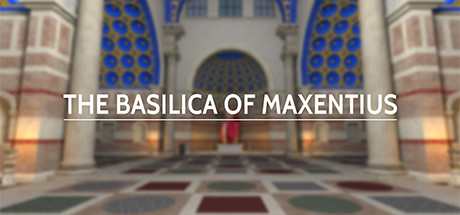


In this fully immersive application that supports free roaming, the Rome Reborn team is proud to host Beth Harris and Steven Zucker of Smarthistory, who present the Basilica of Maxentius and Constantine (also known as the Basilica Nova).

Zaloguj się, aby dodać tę pozycję do listy życzeń, zacząć ją obserwować lub oznaczyć jako ignorowaną

Polski język nie jest obsługiwany

Ten produkt nie obsługuje twojego lokalnego języka. Przed zakupem zapoznaj się z listą obsługiwanych języków, która znajduje się poniżej.

Uwaga: Produkt Rome Reborn: The Basilica of Maxentius nie jest już dostępny w Sklepie Steam.
 

Recenzje

“I am a professor of Archaeology at the University of Florence specialised in Topography of Ancient Rome. I have followed the development of Rome Reborn VR since its inception in the 1990s. Now that the first VR applications of the project are starting to appear in online stores, I am delighted to express my strong support for this unique initiative which combines archaeological accuracy with state-of-the-art technology. The goal is to make the core monuments of the Eternal City easily comprehensible even to non-experts, and to bring ancient Rome into the homes and schools of people wherever they may be. In my opinion, the Rome Reborn VR team has brilliantly achieved this goal. --Prof. Paolo Liverani”
5/5 – Dipartimento di Storia, Archeologia, Geografia, Arte e Spettacolo, University of Florence (Italy)

“As Director of the Civic Museum of Rieti, about 80 km north of Rome, on Saturday, May 26, 2018 I organized, at the museum, two public demonstrations of the Rome Reborn VR application presenting the Roman Forum. Over 100 people of all ages attended both demonstrations. I can report that the response was enthusiastically positive. The event showed that Rome Reborn VR has the potential to make the study of history come alive for students and the general public. Rome Reborn VR is a great tool for the museum world and for anyone around the world who wants to learn more about ancient Rome by going back in time to visit the city as it appeared at the peak of its development in AD 320. --Dr. Monica De Simone”
5/5 – Civic Museum of Rieti (Italy)

“This is an *amazing* pedagogical tool with lots of applications in secondary and higher education. As a professor of Classics, I consider Roman Reborn VR an indispensable tool for courses on Roman civilization, Roman history, Roman archaeology, even Latin literature. While this app has a lot to offer to faculty and students, it will also appeal to non-academics who are interested in ancient Rome. --Prof. Zoe Stamatopoulou”
5/5 – Department of Classics, Washington University (USA)

O tym programie

In this fully immersive application that supports free roaming, the Rome Reborn team is proud to host Beth Harris and Steven Zucker of Smarthistory, who present the Basilica of Maxentius and Constantine (also known as the Basilica Nova).

This was the last monumental civic building built in pre-Christian Rome. With a main entrance off the Via Sacra, it was constructed during the reign of Maxentius as part of a project that included rebuilding the nearby Temple of Venus and Rome. The vast hall (96 meters long and 65 meters wide) is covered by three cross vaults 35 meters high. The walls and floors were covered with marble.

Off the nave are two side aisles covered by barrel vaults. The central aisle on the north has an apse, as does the west end of the nave. Here the remains of the colossal statue of Constantine (estimated to have reached a height of ca. 15 meters) were found in the fifteenth century. The head, hands and feet can be seen today in the courtyard of the Conservators Palace (part of the Capitoline Museums).

It is thought that Maxentius planned to use the building as an imperial audience hall, but the plan came to naught with his defeat and death in AD 312 at the hands of Constantine, who finished the building. The Senate dedicated it to the new emperor and honored him with the colossal statue in the west apse.

Today, the building, like the colossal portrait of Constantine, survives only in a very damaged condition. The Rome Reborn team’s digital restoration allows you to re-experience the splendor of the monument as it appeared when new in the fourth century AD.

Wymagania systemowe

    Konfiguracja minimalna:
    • System operacyjny *: Windows 7/10
    • Procesor: Intel Core i5 4590 or greater
    • Pamięć: 4 GB RAM
    • Karta graficzna: GeForce GTX 970 or AMD Radeon R9 290 or better
    • Miejsce na dysku: 1 GB dostępnej przestrzeni
    • Obsługa VR: SteamVR
* Począwszy od 1 stycznia 2024, klient Steam będzie obsługiwał wyłącznie system Windows 10 i jego nowsze wersje.

Recenzje klientów dla produktu Rome Reborn: The Basilica of Maxentius O recenzjach użytkowników Twoje preferencje

Ogólne recenzje:
Recenzje użytkowników: 1 (1)


Aby zobaczyć recenzje w wybranym zakresie dat, kliknij i przeciągnij zaznaczenie na powyższym wykresie lub kliknij na wybrany słupek.


Filtruj recenzje według czasu gry użytkownika w momencie publikacji recenzji:


Bez minimum do Bez maksimum

Pokaż recenzje w wybranej kolejności wyświetlania


Dowiedz się więcej
Filtry
Wyłączanie okresów występowania recenzji nie na temat
Czas gry:
Głównie Steam Deck
System operacyjny:
CPU:
GPU:
Typ urządzenia:
Brak recenzji pasujących do filtrów ustawionych powyżej
Dostosuj filtry powyżej, by zobaczyć inne recenzje
Wczytywanie recenzji…