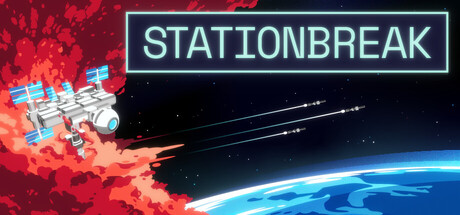

A grounded sci-fi station builder where you hold failing systems together while pursued by a relentless, energy-hungry swarm. As a fleet on the run, drop into hostile systems, gather what you can, and jump away before you are overwhelmed. Try to survive long enough to secure a future for humanity.

Melden Sie sich an, um dieses Produkt zu Ihrer Wunschliste hinzuzufügen, zu abonnieren oder als „Ignoriert“ zu markieren.

Dieses Spiel ist noch nicht auf Steam verfügbar

Geplantes Veröffentlichungsdatum: Bevorstehende Ankündigung

Interesse? Fügen Sie das Spiel Ihrer Wunschliste hinzu und erhalten Sie eine Benachrichtigung, wenn es verfügbar ist.
+ Wunschliste
 

Infos zum Spiel

Overview

Stationbreak is a grounded sci-fi station-builder roguelite, driven by creeping dread.

You lead a small fleet on the run, dropping into hazardous star systems to assemble temporary space stations just long enough to harvest the energy you need to jump again.

Every system is a tradeoff. Staying longer lets you build bigger, stabilise logistics, and squeeze more efficiency from the station. The longer you remain, however, the more hostile things become.

A relentless, energy-hungry Swarm is in pursuit, pressing closer with escalating intensity. You can hold it back for a time, but you cannot win the fight. You must decide when to abandon your station and run.

Core Features

  • Station Building Under Pressure

  • Systems Management

  • Defensive Trade-offs

  • Roguelite Progression

Core Features Expanded

  • Station Building Under Pressure

    • Assemble temporary space stations from whatever resources a system can offer.

    • Station building is a spatial puzzle: starlight exposure, orbital paths, module adjacency, and spatial optimisation all drive the effective shape of a station.

    • You’re not building to last. Every station is a short-term solution, inevitably abandoned to the swarm.

  • Systems Management

    • Balance fragile interconnected systems under constant constraint.

    • Energy powers everything, heat and wear accumulate over time, and pushing too hard risks critical failures.

    • Manage limited resources and crew sanity carefully.

  • Defensive Trade-offs

    • Invest power into grounded sci-fi defences to buy time against the swarm. However, every watt spent holding off the tide is a watt not spent jumping away.

    • The Swarm arrives in escalating waves. You can survive it for a while, but you cannot win. Decide when to fortify and endure, and when to abandon the station and run, potentially leaving valuable resources or unfinished work behind.

  • Roguelite Progression

    • Each escape jump carries progress forward.

    • Develop and specialise your fleet between runs, unlocking new tools, capabilities, and strategic options.

    • Procedurally generated systems mean that every new system presents different constraints and challenges.

Goals

Each run has four simple objectives:

  • Produce and store enough energy for the next jump

  • Gather resources using your limited ships

  • Prepare defences for the arrival of the swarm

  • Survive until ready to jump

Long-term, your goal is to keep the fleet alive across multiple star systems and push deeper into unknown space.

---

Game Mechanics

You build modular space stations, assign ships to tasks, and manage several interlocking systems; power, heat, materials, crew sanity, threats, and fleet degradation. Each star system creates new constraints, forcing you to adapt your strategy every run.

Station Building

Construct your station by adding new modules. Modules provide energy, heat control, storage, defence, crew comfort, and other utility. 

  • Modules cost Materials, and each star system has different resource availability.

  • Design is a tactical puzzle with trade-offs in cost, efficiency, heat, and madness.

  • Stations are temporary; once you jump, you abandon the station.

Fleet Management

Your ships remain with you throughout the game. They are essential to the operation of your station, and the station’s main purpose is to ensure the ships can keep going. 

Ships perform tasks like resource gathering, defending the station, and docking to provide operational support. 

Resource Management

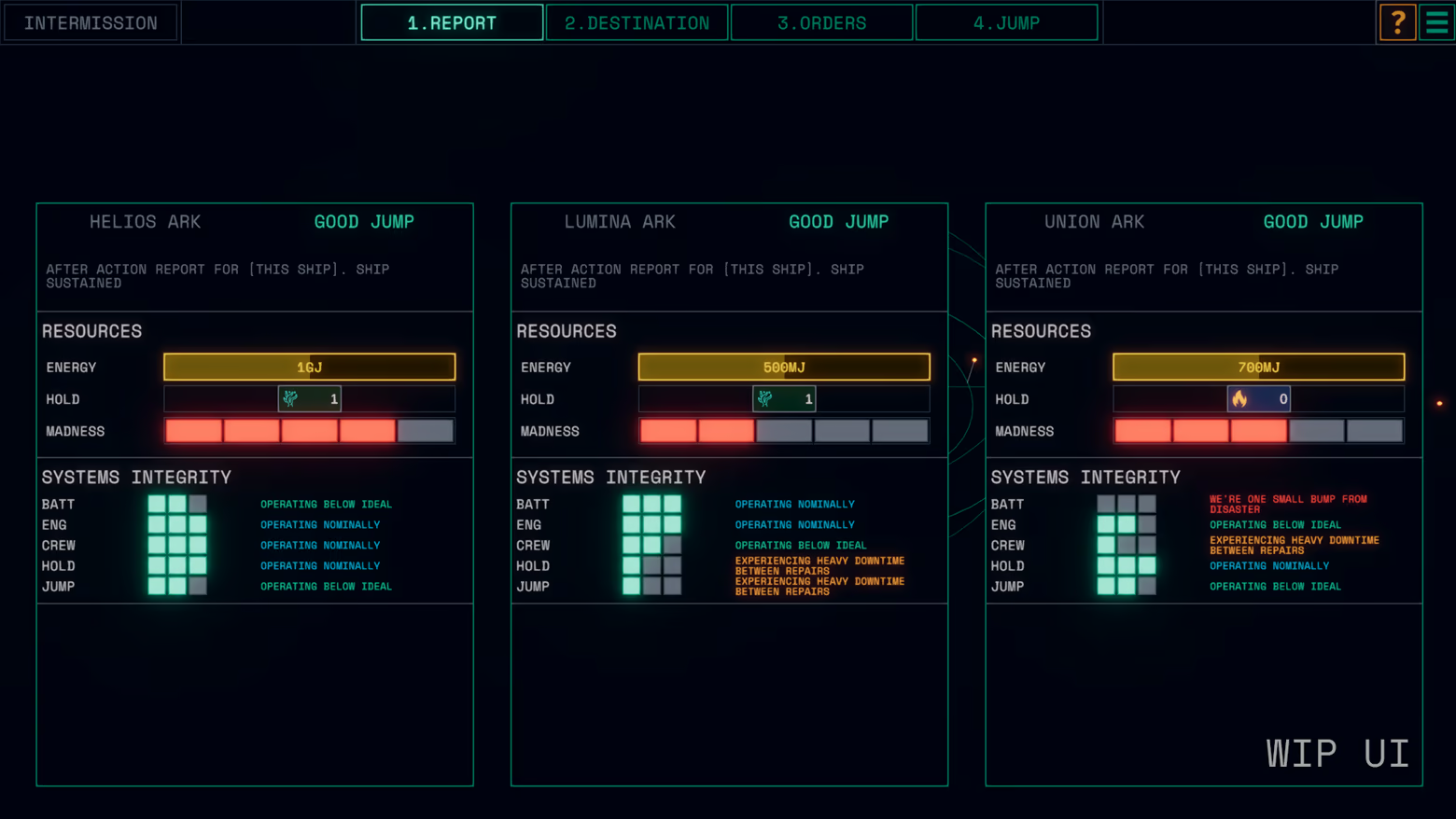
  • Energy: The main objective resource. Your goal is to stockpile enough energy to jump to the next system.

    • All activities - ship travel, defence, heat management - require energy. 

  • Materials: Used for building modules and defences. 

    • Each star system has a procedurally defined distribution of materials, which means that you’ll have to work with what you’ve got.

  • Madness: the pressure on your crew. 

    • If the pressure gets too much, your crews panic and jump out - even if you’re not ready. 

The Swarm

The swarm is an ever present threat, following you across the stars. Each run involves progressively larger waves of swarm attempting to consume your ships and station. 

The swarm escalates in size and ferocity; the waves keep getting bigger. You will have to determine when it's time to jump; do you have enough energy, have you secured enough materials, have you built what you needed to build? If not, do you risk another wave? 

Progression

Between star systems, you must choose how to spend limited crew capacity: 

  • repairing damaged ship systems, 

  • researching new tech for your ships and stations, and 

  • resting your crew to reduce madness. 

---

The Story & Aesthetics

Earth is dead. In an act of immense hubris humanity developed a nanotechnology to help harvest energy for the impending interstellar space age.

Unpredictably, the biomimetic nanotech broke free of its built in restrictions and rampaged across the solar system. All of humanity was consumed by this swarm, save for three ark ships which managed to jump away in time. 

These three ships are the last of humanity. Jumping from star system to star system, stopping only for enough time to refuel for the next jump. 

This is a cassette-futuristic world based on a combination of 1980s space command and mysterious powerful alien technology.

Systemanforderungen

Windows
SteamOS + Linux
    Mindestanforderungen:
    • Betriebssystem: Windows 10 (64-bit)
    • Prozessor: Intel Core i5-6400 or equivalent
    • Arbeitsspeicher: 8 GB RAM
    • Grafik: NVIDIA GTX 970 / AMD R9 290 or equivalent
    • DirectX: Version 11
    • Speicherplatz: 4 GB verfügbarer Speicherplatz
    Empfohlen:
    • Arbeitsspeicher: 16 MB RAM
    Mindestanforderungen:
    • Betriebssystem: SteamOS 3.0 / Ubuntu 20.04 (64-bit)
    • Prozessor: Intel Core i5-6400 or equivalent
    • Arbeitsspeicher: 8 GB RAM
    • Grafik: Vulkan-compatible GPU (e.g. AMD Radeon RX 570 or equivalent)
    • Speicherplatz: 4 GB verfügbarer Speicherplatz
Für dieses Produkt gibt es keine Rezensionen

Sie können Ihre eigene Rezension für dieses Produkt verfassen, um Ihre Erfahrungen mit der Community zu teilen. Nutzen Sie den Bereich über den Schaltflächen zum Kaufen, um Ihre Rezension zu verfassen.