
A gritty, turn-based tactical sandbox set in 2002. No XP grind. No class rails. No buy-your-way skill trees. // 'They said it wasn't our war. So we made it ours.'

Sign in to add this item to your wishlist, follow it, or mark it as ignored

Coming Soon To Early Access

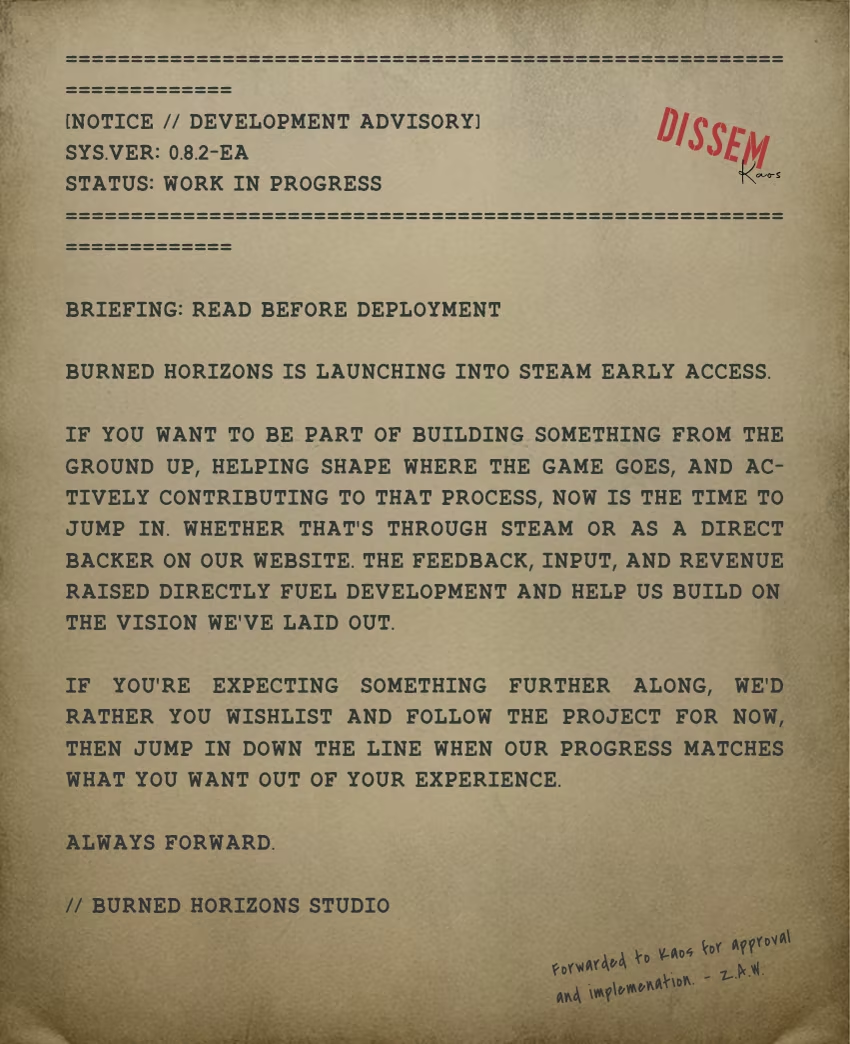
The developers of this game intend to release as a work in progress, developing with the feedback of players.

Note: Games in Early Access are not complete and may or may not change further. If you are not excited to play this game in its current state, then you should wait to see if the game progresses further in development. Learn more

What the developers have to say:

Why Early Access?

“Before you read further, a few things worth knowing plainly:

- You will encounter UI friction and rough edges. Some interactions take more steps than they should right now, we're actively working on this.
- Some systems here are early, simplified versions of what they'll become. What you're playing is the foundation, not the finished system.
- Bugs exist. We're fixing them continuously, but at this stage, you will find some.
- If you want a fully polished, finished experience, this isn't that yet. If you want to be part of building it and watching it grow, this is exactly that.

Burned Horizons is a tactical sandbox set in 2002, built around the idea that nothing resets and every decision leaves a mark. Operators who survive carry what they've been through into the next engagement. Wounds persist. Psychological trauma accumulates into SCARs that reshape how an operator thinks and fights. Teams are built, rotated, and lost across entire theaters of war. Consequences echo forward across the campaign rather than resetting at the start of the next mission.

We started mapping this out in the summer of 2025. First code in October. First playable build in front of players in December. We pushed through the holidays, through our Kickstarter in early 2026, and every week since. That hasn't changed and it won't.

We've been self-funding this since day one. The Kickstarter kept us in the fight. Early Access is how we finish it: more people, faster development, and the ability to see this through the way it deserves.

The other reason is you. The people who find this game know what war is supposed to feel like, what rings true and what doesn't, where the weight should land, when something looks right on paper but falls apart in the field. That's not something you manufacture in closed testing. Your feedback shapes how this gets built. We want you in early because this game gets better with you in it.

Approximately how long will this game be in Early Access?

“Approximately 12 to 18 months. The exact duration depends on how the core systems mature, how the deeper layers connect, and what we learn from players along the way. We'll keep updating and communicating openly throughout, and we'll move toward 1.0 when the game feels the way it's supposed to feel, not on a fixed calendar.”

How is the full version planned to differ from the Early Access version?

“Early Access is the foundation. Everything you play at launch is built to carry weight on top of it.

The core combat loop is there from day one: action points, suppression, overwatch, wounds that follow operators into the next fight, SCARs beginning to form from what they've been through. That's the base. But Burned Horizons is a game about layers, and most of those layers aren't in yet.

The operational campaign is coming: a sector-based system where the map is alive, enemy forces move with intent, controlling or losing ground has consequences that ripple outward into adjacent sectors, and ignoring a developing situation makes it worse while acting on it changes what comes next. You don't get handed missions. You read the operational picture and decide where to apply pressure and when. Contracts bring structure for players who want it. The world generates situations for players who don't. Either way, the map remembers what you did.

The full wounding and triage system is coming. What's in at launch is the foundation: wounds that restrict what operators can do, movement that reflects injury, the weight of a serious hit carried forward. What arrives through Early Access is the full depth of that system: specific wound types with specific consequences, fractures, punctures, neurological trauma, and a triage interface that forces real medical decisions under pressure where what you know matters as much as what you have.

The SCAR system deepens. At launch SCARs are forming and beginning to shape behavior. Through Early Access they compound, combining into new behavioral triggers and expressing differently under shifting operational conditions. Morale checks arrive where operators who get flanked, watch a teammate go down, or have been pushed past their limit react in unscripted ways.

Pathways and specializations deepen. At launch operators develop along early tracks. Through Early Access those tracks branch and expand into a visual progression history that shows where an operator has been and where they can go, built entirely on what they've actually executed in the field rather than what you chose from a menu.

SPARQ is coming: the combat computer network that ties team management, field operations, medevac pipelines, and campaign tracking together into a single operational picture. It's one of the most complex systems in the game and requires the tactical foundation in place before it can be built on top of it.

The field intelligence kit is coming: a physical artifact collection the player carries. Paper maps, operator service jackets, intelligence documents gathered in the field, orders received from clients, and personal journals. It is the tactile counterpart to what SPARQ handles digitally.

Vehicles and mobility layers are coming. Wider and smarter enemy AI is coming: an adversarial layer where the enemy is actively trying to win, pushing into weakened sectors, reinforcing threatened positions, and responding directly to your operational footprint. The full logistics pipeline is coming: supply routes, resource management, and the real cost of keeping a PMC unit operational across an extended campaign.

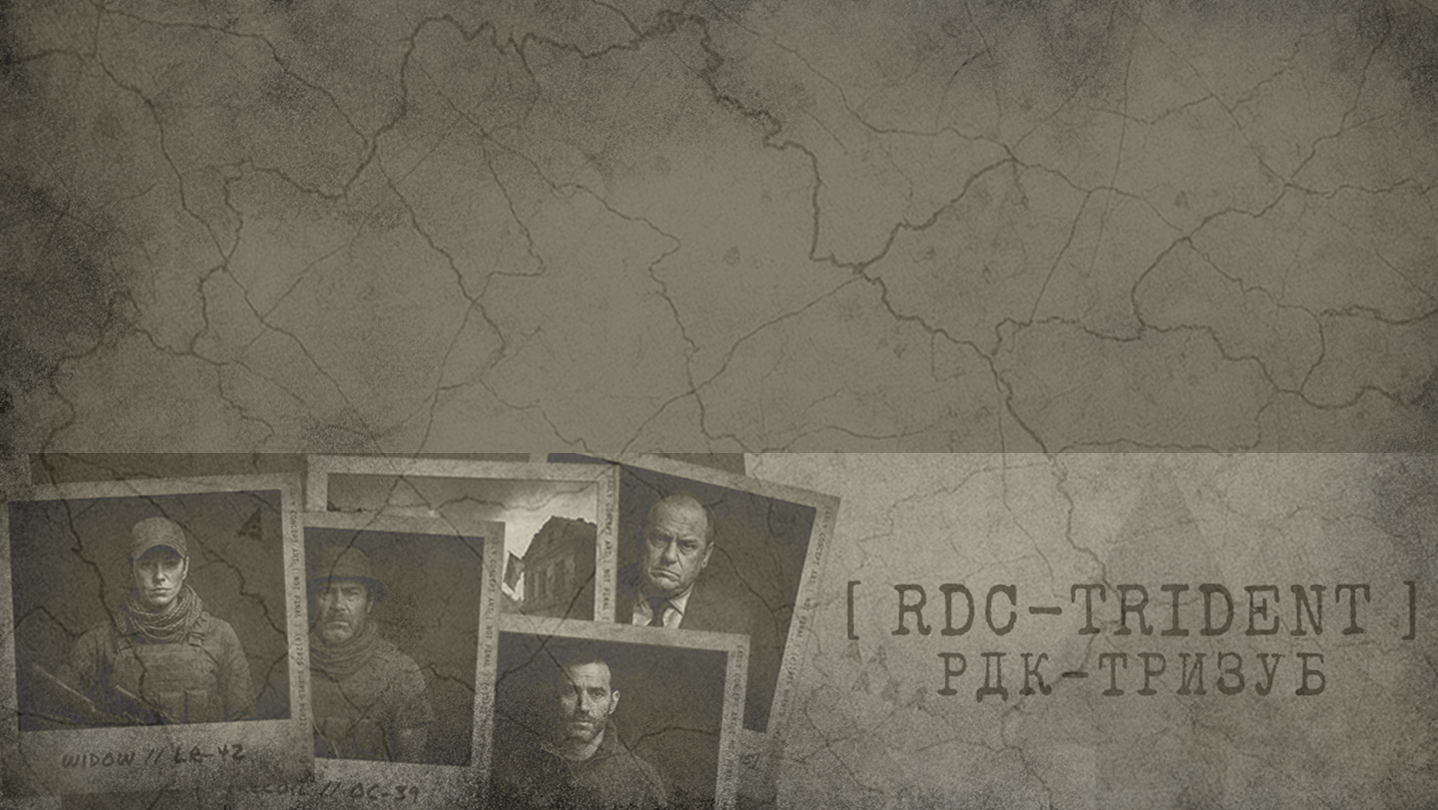
The maps will grow. RDC-TRIDENT spans Ukraine and beyond, and all twelve planned Areas of Operation will be in before we leave Early Access. What starts as one slice of one theater expands into the full shape of the campaign.

Technology progresses. Gear evolves through field modifications, captured equipment, and world events. What you're running in the early operations isn't what you'll be running by the time the campaign matures.

These are the major systems, alongside expanded base operations, a Forward Operating Base system that grows from a basic camp into permanent infrastructure, deep Operator Service Jackets, and targeted 1.0 multiplayer support. Early Access is a long road and this is just the start of what's on it.

By 1.0, those layers are connected and the game works the way it was always meant to. We're building toward that in public, update by update, and 1.0 isn't the end. New Regional Deployment Commands open new theaters of war, mechanics deepen, weather systems expand, and modding tools allow players to build their own maps and shape their own rules of engagement.”

What is the current state of the Early Access version?

“Burned Horizons launches with its core tactical framework in place, but with clear limitations. Key systems like overwatch and suppression are in early, functional states that will be rebuilt toward proper doctrine, and the launch area uses a placeholder map serving as a stand-in for a slice of 2002 Ukraine while the full operational theater is built out. Early Access is where we refine these early mechanics, deepen combat, and roll out the broader campaign layers alongside the community.

// EARLY ACCESS LAUNCH FEATURES

-Turn-based combat with action points, suppression, overwatch, and interrupts.
- Real-time movement outside of combat.
- Multiple camera perspectives: top-down, isometric, third-person with full pan and rotate.
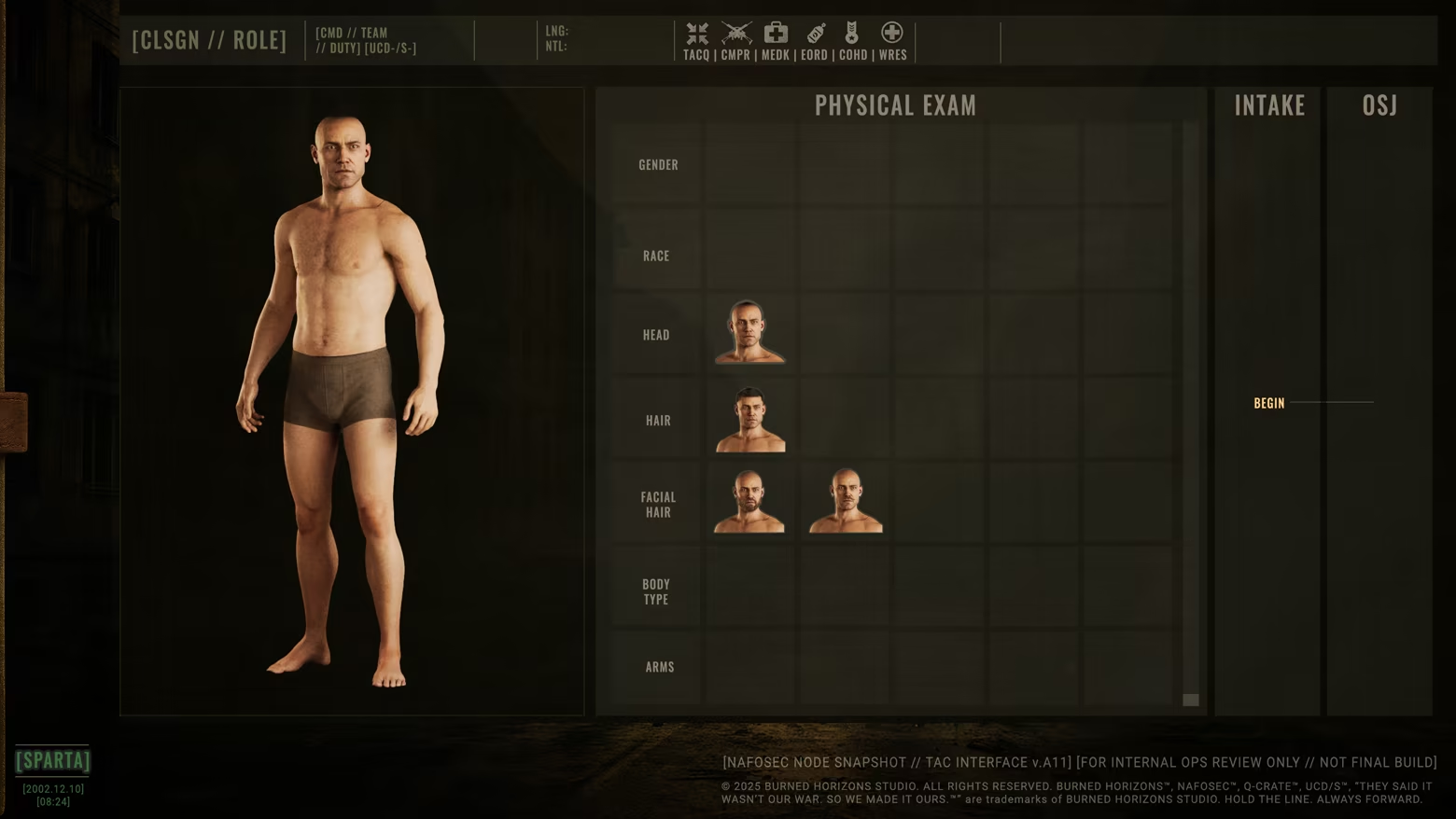
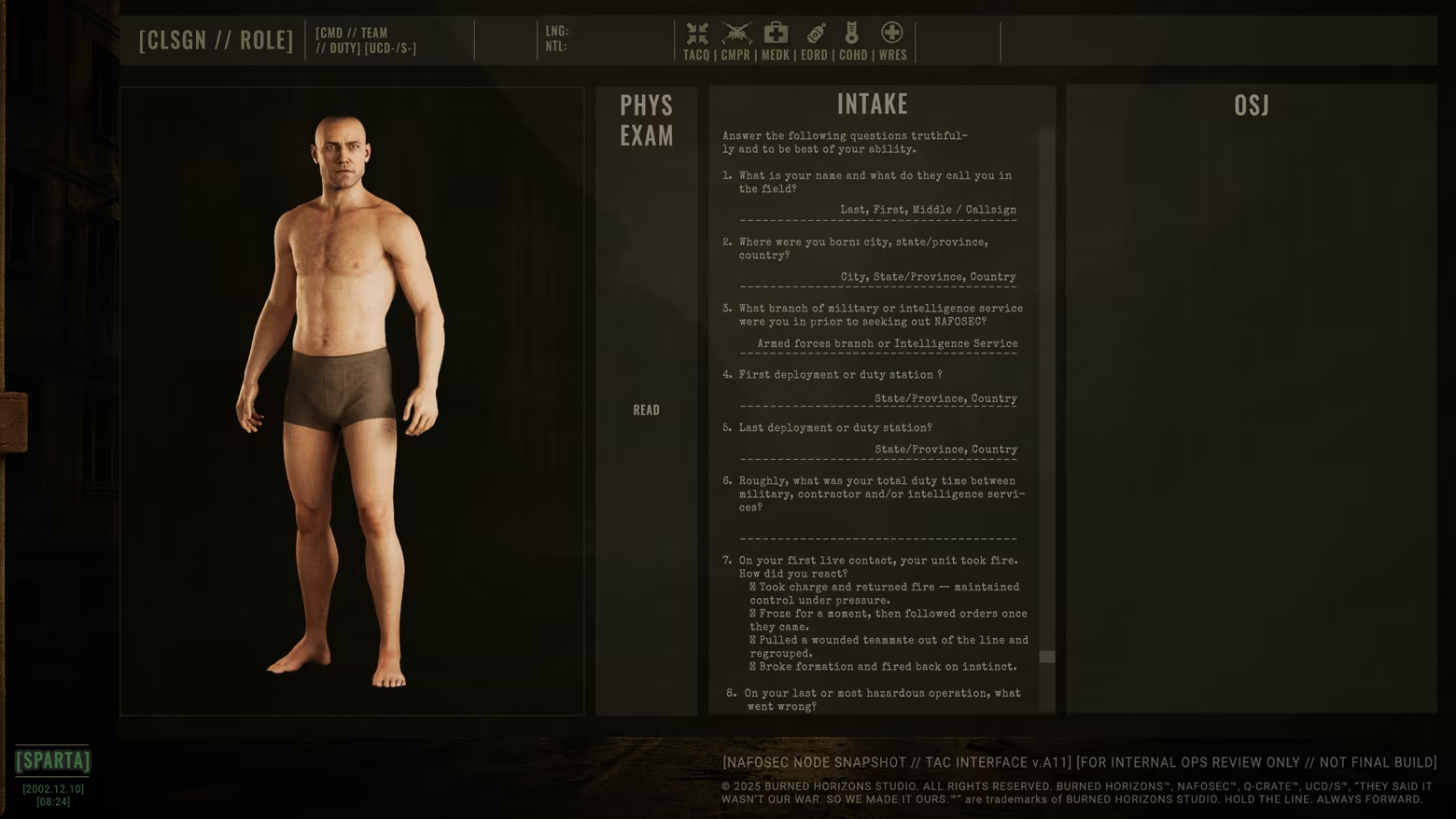
- Team building and management: build multiple teams, move operators between them, configure kit.
- Operator pool: select and build your teams from available contractors before deployment.
- Persistent operator state carrying forward between engagements.
- Wound system affecting operator movement and capability.
- Early SCAR system shaping operator behavior under fire.
- CASEVAC: call for extraction of seriously wounded operators in the field.
- Reinforcement and resupply calls from the field.
- Enemy forces that patrol, engage, and can be looted.
- One operational area: an early slice of RDC-TRIDENT, Ukraine, 2002.
- Save and load: operational state persists between sessions.
- Sandbox structure: no scripted missions, no objective markers. The AO is yours to work through on your own terms.
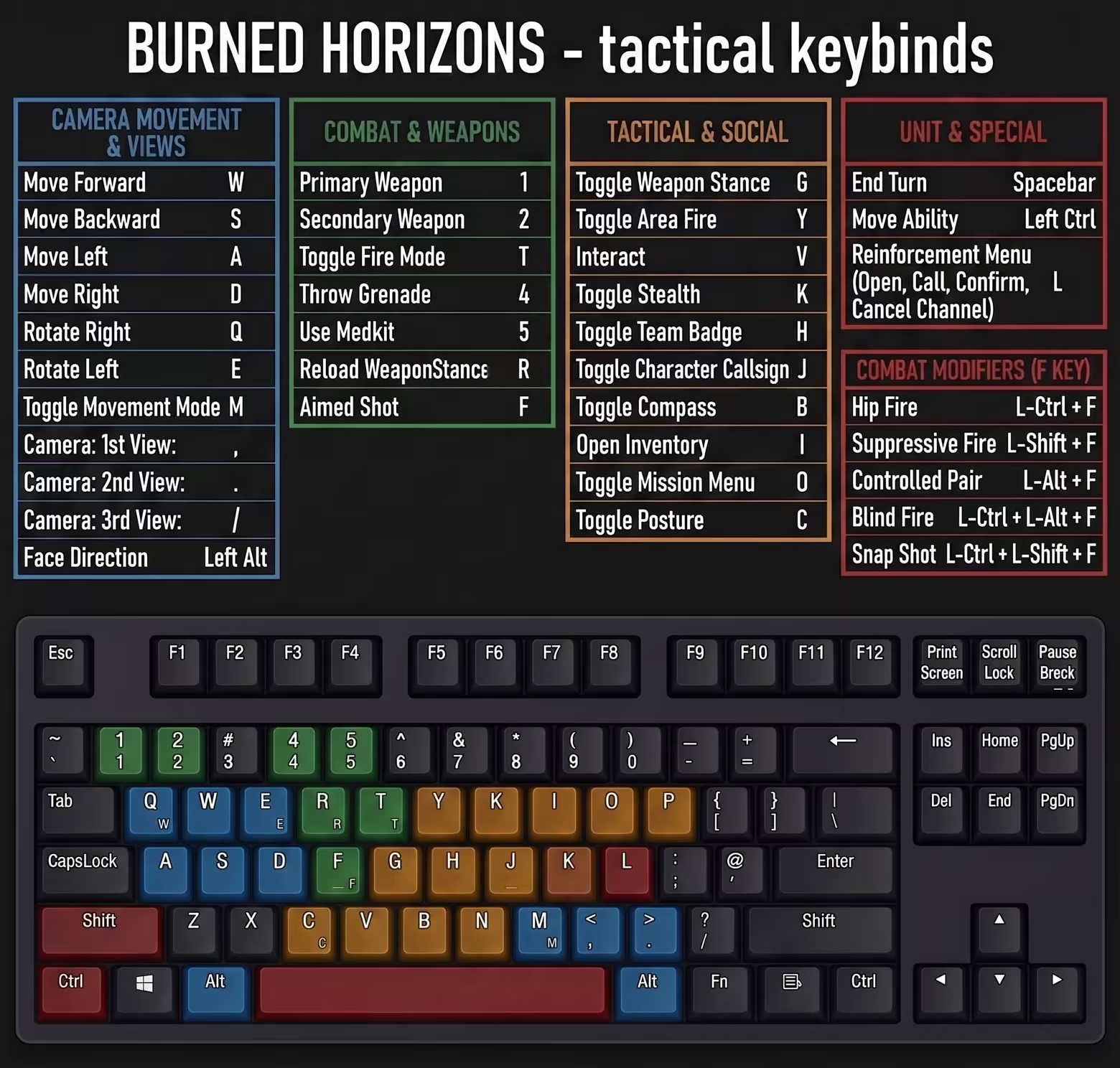
- Fully rebindable key bindings.
- Adjustable graphics settings.
- Carry system: carry incapacitated operators in the field.
- Wound animations: operator movement and posture reflect injury state.
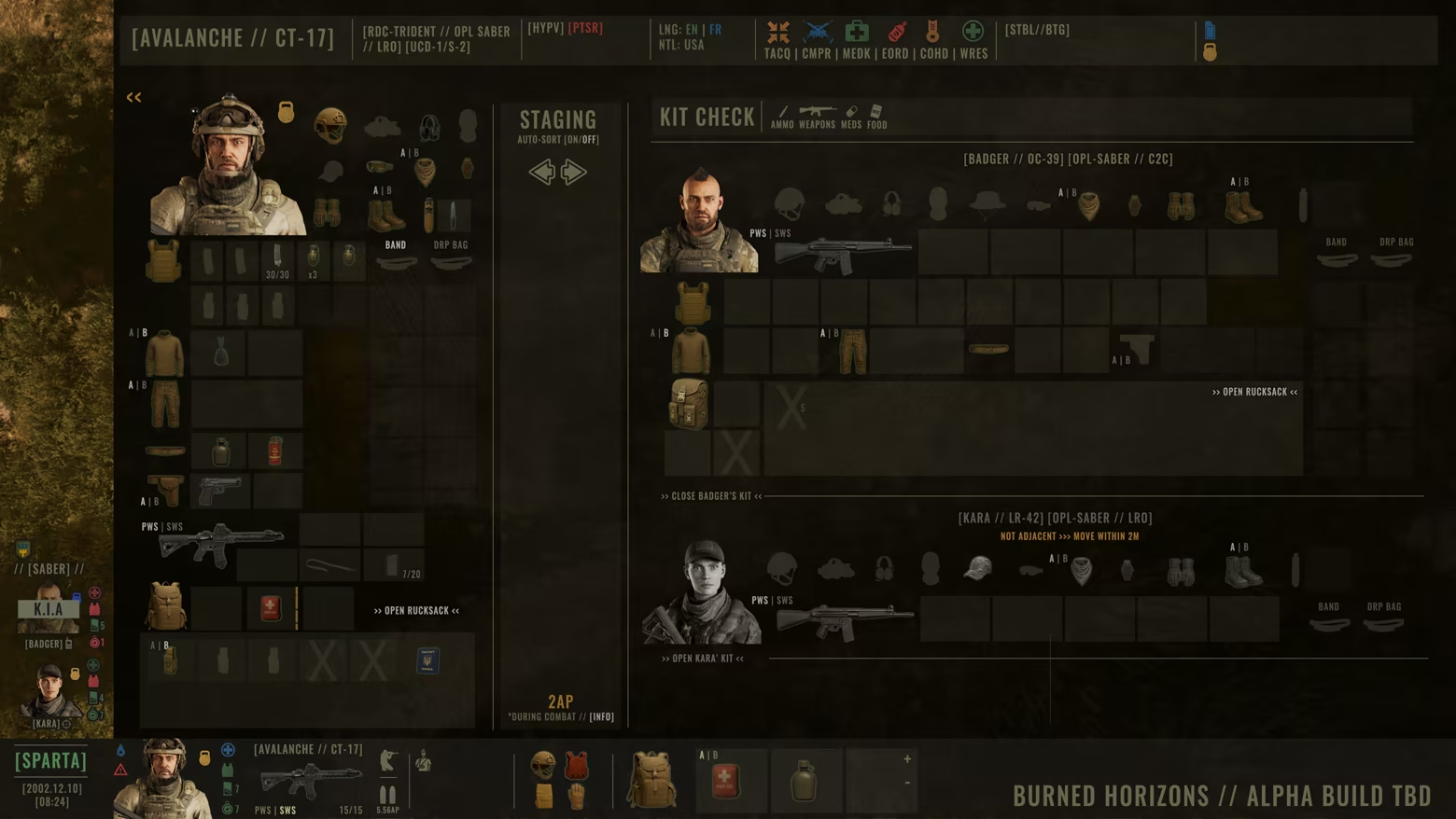
- Kit and inventory system: operators load out through rigs built for the job, with pouches determining capacity. Rigs attach to plate carriers, while armor plates degrade under sustained fire.
- Operator tracking: wound state, health, SCARs, core attributes, and pathway development visible per operator.

// LOCALISATION
Localizing is a significant technical and financial undertaking. Every language we add creates UI complications, font-rendering issues in Unreal Engine, and a cost barrier that doesn't make sense while the core gameplay is still being refined. The focus right now is on building out the foundation and deepening the experience.

For now, Burned Horizons ships in English. As we progress through Early Access, our priority will shift toward expanding localisations. We plan to roll out support for Français, Deutsch, Español, Nederlands, Українська, Polski, 简体中文, 日本語, Italiano, and others.”

Will the game be priced differently during and after Early Access?

“Burned Horizons launches in Early Access at $45. The price will increase to $59.99 at full release. Players who come in during Early Access lock in the lower price and receive the Forward-Deployed digital supporter pack as a way of recognizing those who backed the vision early. That pack keeps growing throughout Early Access, through 1.0, and beyond.”

How are you planning on involving the Community in your development process?

“Directly and regularly. We push updates every one to two weeks and communicate openly about what changed and why. We have a dedicated internal testing group drawn from our player community that evaluates specific mechanics before wider rollout. Ongoing discussion happens through Steam and Discord.

The people drawn to a game like this know what it's supposed to feel like: what rings true and what doesn't, where the weight of a decision should land, when something that looks right on paper falls apart in the field. That feedback is irreplaceable and directly shapes how the game gets built. We want them in early because the game gets better with them in it.

We push updates every week. Smaller fixes, polish, and stability improvements go out weekly. Larger feature updates arrive every two weeks. That cadence started when we began coding and it won't stop through Early Access, 1.0, or beyond.”
Read more
This game is not yet available on Steam

Planned Release Date: Aug 18, 2026

This game plans to unlock in approximately 2 weeks

Interested?
Add to your wishlist and get notified when it becomes available.
 
See all discussions

Report bugs and leave feedback for this game on the discussion boards

Reviews

“Gritty Turn-Based Tactical RPG Burned Horizons”
TURN BASED LOVERS

“Upcoming "Burned Horizons" Takes A New Approach At Turn-Based Tactical RPGs”
POPULAR AIRSOFT

BACK THE CAMPAIGN

// EARLY ACCESS

Continue the Fight. Back us directly through QCrate [DBX] on our website for exclusive gear, and put your support straight into development.

Burned Horizons is in active development, and Early Access reflects that. Systems are being refined, balance is still being tuned, and your feedback directly shapes where this goes next. If you want a tactical experience built on consequence and persistence, and you want a hand in shaping it early, this is your chance.

Build your fireteam. Always Forward.

About This Game

Contact, two hundred meters, tree line. Your team hits the dirt before you finish the thought. This isn't the first firefight your squad's walked into, and it won't be the last one that leaves a mark.

Ukraine, 2002. On paper, you're NAFOSEC's Operational Lead in the theater. On the ground, you're right there in the dust with your team—staging out of a forward bivouac, sorting kit, and making the calls when the shooting starts.

There are no clean breaks when the firing stops. You manage contractors who carry the physical and psychological weight of every engagement into the next. Wounds degrade capability, trauma shapes behavior under fire, and casualties require real field extraction. When you commit a squad to an operational area, you live with every call you make—long after the brass stops hitting the dirt.


"It's not just about winning the battle; it's about surviving the war, with all the scars that entails."Gungho Cowboy, Popular Airsoft

▬▬▬▬▬▬

Burned Horizons™ is a turn-based tactical sandbox built on persistent operator health, realistic ballistics, and unscripted squad operations across open sectors.

// HIGHLIGHTS

SCARS & Flashpoints

Combat leaves more than wounds. Some SCARs build slowly, small marks accumulating over weeks until they finally harden into something lasting. Some form in an instant; one bad moment is all it takes. What comes out the other side isn't guaranteed either. A SCAR might sharpen an operator, break them, or leave barely a trace. One guy might freeze when a room needs clearing. Another might snap and open fire before the stack is set, or carry enough raw anger back to the team that no one trusts him to hold his angle. And when SCARs stack on top of each other, the result isn't predictable: sometimes worse, sometimes not, but never quite what either SCAR would have been alone.

No two operators carry the same war.

UCD/S, Trust & Cohesion

A jacket and a fireteam are the exact same fight. UCD measures your history and standing within NAFOSEC, S-Grade is whether other operators trust you to execute, and Cohesion (COHD) is your raw capacity for leadership and command; whether you're leading a team or moving solo. None of these exist in a vacuum, and none of them guarantee a damn thing. A bad hit to your S-Grade can cause operators to hesitate on your callouts, introducing friction the second the shooting starts. Strong COHD gives you the tools to try and hold a squad together under fire, but even the best leadership can get overwhelmed if conditions turn bad enough. Your company UCD carries weight, but it won't stop a bad drop from testing the trust on your flank. Every one of these systems bleeds into the others. They create friction, exert pressure, and shift depending on how you react when the plan breaks down.

Wounding

Wounds are modeled after physical trauma and physiological breakdown, not a depleting HP bar. Bullets crush tissue, sever arteries, and break bone, and no amount of waiting behind cover brings that back. A hit to the leg ruins an operator's mobility; a hit to the arm destroys their ability to steady a rifle. Keeping your people alive isn't about waiting out a cooldown.  It's about applying tourniquets in the dirt, stabilizing trauma under fire, and calling in CASEVAC before they bleed out.

  • A hit to the leg changes how an operator moves

  • A hit to the arm changes how they shoot

"That's a permanent souvenir, a little something to remember the holiday by." — Gungho Cowboy, Popular Airsoft

Real Loadouts, Real Weight

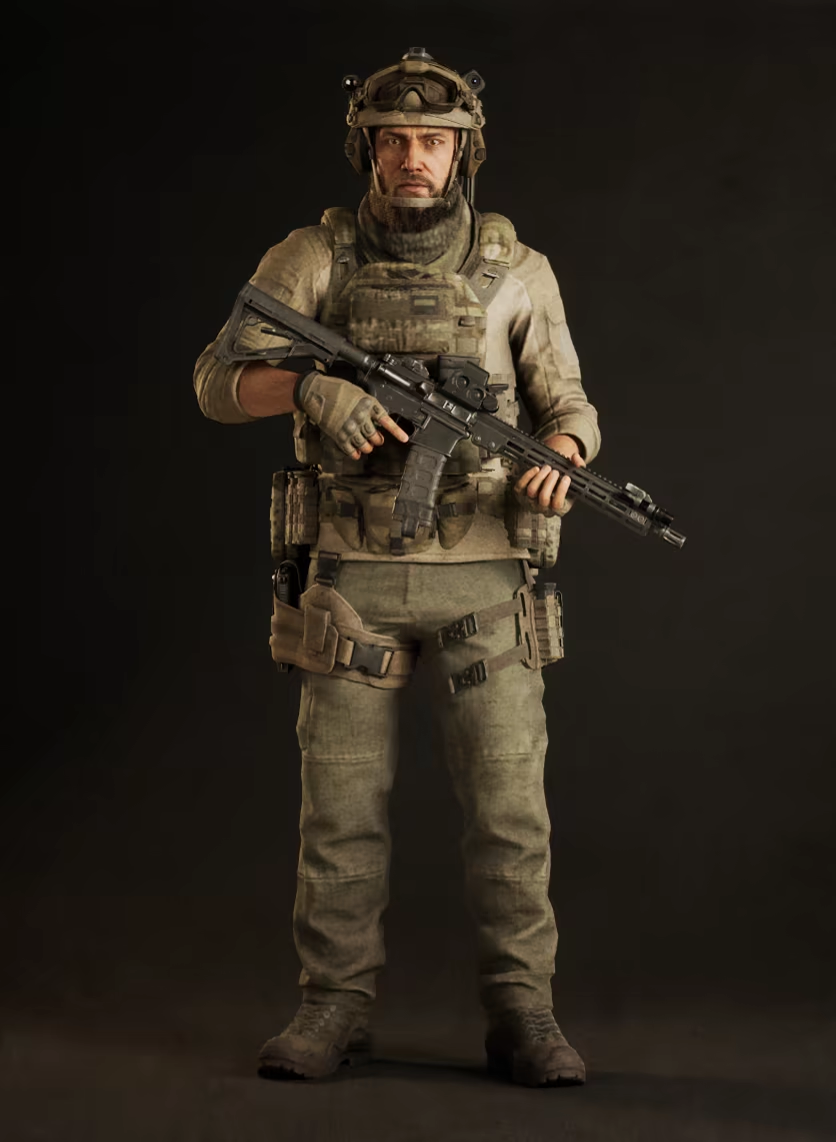
Gear isn't cosmetic, and weight isn't an abstract number. Plates only protect what they cover, chest rigs dictate how fast you pull mags, and heavy rucksacks drain stamina before you ever reach the target. Every weapon is customizable down to real components (slings, mounts, optics, and attachments) that change ergonomics, muzzle rise, and weapon handling. Outfit your people for the exact fight ahead of them, not a fixed kit, because a bad loadout will exhaust a squad faster than enemy fire.

Pathways, Specializations & Core Attributes

Nobody steps off the transport a finished product, and no two guys come out of the wash the same. What an operator brings into the theater (Core Attributes), whether that is a mind for a crisis, a head for triage, or how naturally others hold together on their flank, is just their capacity to learn when things go sideways. Put a designated marksman on point duty for three drops, and he isn't going to magically sharpen his cold-bore shots. He's going to learn how to breach a doorway, because that's the dust he actually swallowed. That time in the dirt, combined with what the old hands pass down between ops, is what carves out an operator's Pathway and builds real Specializations over time. You don't pick what your people become; the war does.

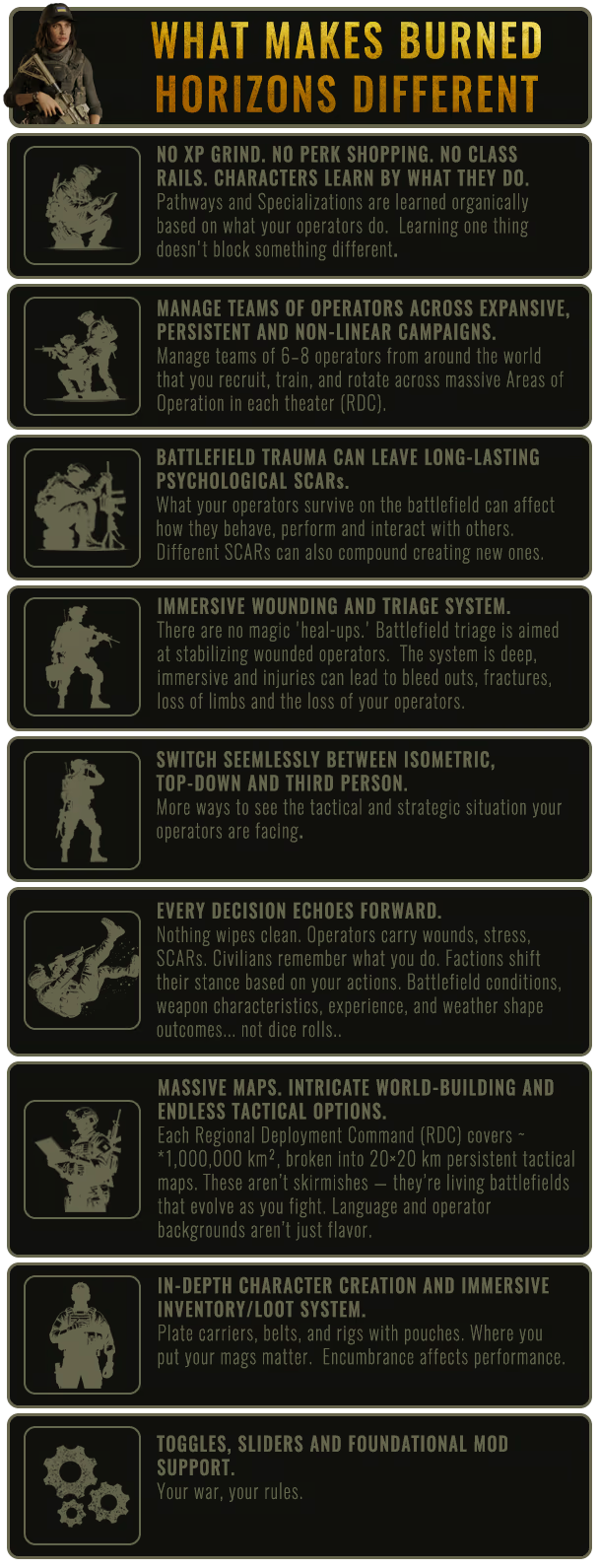
  • No XP Point-Buying: Operators gain proficiency strictly through field execution, not banked point trees.

  • Zero Class Locks: Initial roles never limit what an operator can learn or adapt to in the theater.

Regional Deployment Commands (RDCs)

Your operators fight across sprawling, persistent theaters, not isolated missions.

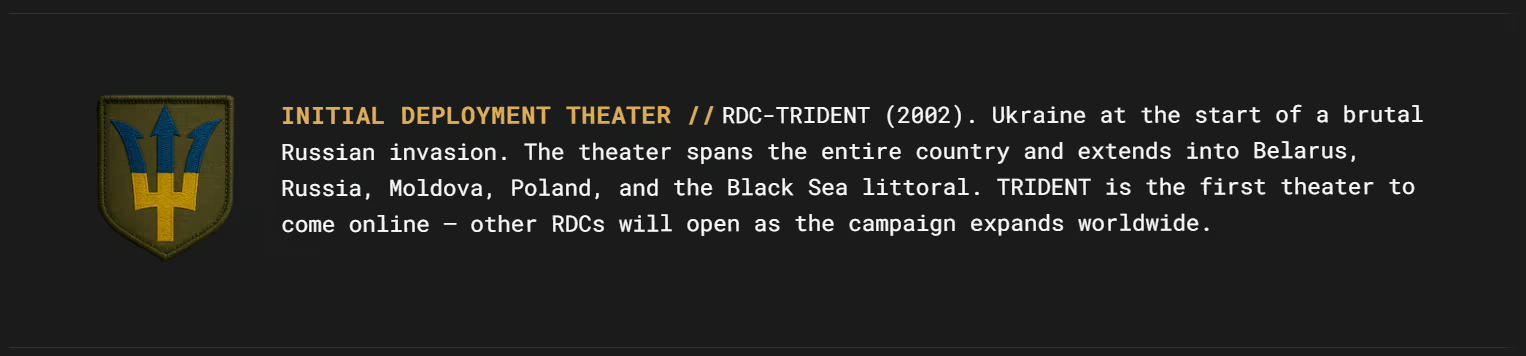
  • RDC-TRIDENT, 2002: Ukraine, at the start of a brutal Russian invasion

  • Victories shift front lines

  • Failures ripple outward

  • Other theaters open as the campaign expands

Standard Operating Procedures (SOP)

The default reality is cold and unforgiving: no health regeneration, no easy exits, and no second chances. But it's your command. Standard Operating Procedures (SOPs) allow you to tune the operational rules to your preferences. Adjust threat levels, mechanical friction, and campaign persistence from an uncompromising Iron Man baseline to a tailored mandate, without stripping away the tactical foundation of what the game is.

▬▬▬▬▬▬

// FEATURES

  • Deep tactical combat: action points, suppression, overwatch, interrupts

  • Realistic wounding system, no health bars, no auto-heal

  • CASEVAC and reinforcement support called in from the field

  • Full armor and loadout system: plate carriers, rigs, rucksacks

  • Deep weapon modding: real components, attachments, and slings

  • Pathway specializations that grow from what your operators actually do

  • Squad trust and cohesion that shifts based on shared experience

  • Switch perspectives: top-down, isometric, or third-person

  • Fully customizable SOP settings, tune the difficulty and experience to you

  • Full modding support: sliders, toggles, and beyond

  • Persistent squads and consequences that carry across the campaign

▬▬▬▬▬▬

// EARLY ACCESS: Q3/Q4 2026 — Targeted exit Q3/Q4 2027

Early Access is where the deeper layers take shape:

  • Logistics and supply networks, buying, selling, and trading gear

  • Wider AI behaviors

  • Strategic movement and maneuver

  • Advanced operator systems

  • Vehicles and mobility

  • Deeper wounding and SCARS integration

  • Deepening triage and recovery systems

  • Full mission and operational campaign system

  • Replacing generic placeholder maps with large, custom-built AOs, progressively expanding to fill out the full RDC-TRIDENT theater

  • Full persistence framework

  • Exploring a real-time planning phase, and potentially a plan-and-execute turn-based mode

  • SPARQ command and team management system

  • Base building, growing from a patrol base into forward operating infrastructure

  • Prisoner capture and recruit training

  • Weather and day/night systems, introduced early and deepened over time

  • Hunger and survival needs

  • Realistic tech progression, equipment follows historical timing where it applies, with room for operators to field-test, capture, or improvise gear ahead of its time, as real special operations units have always done

  • An ongoing authenticity pass, gradually replacing placeholder assets with assets that reflect the period accurately

  • Continued art passes, replacing placeholder and concept assets with original, final art

  • Localization for additional languages

  • Initial set of modding tools

▬▬▬▬▬▬

// BEYOND 1.0

Our roadmap doesn't stop at full release. These are big undertakings in their own right, and anything that isn't as deep as we want it by 1.0 keeps growing from here:

  • Multiplayer and self-hosted server support

  • New RDCs (theaters of operation), each a new world tying into the one you already know, bringing new factions, gear, and vehicles with them

  • Destructible environments, and continued expansion of them even once introduced

  • Continued deepening of every system, art, weather, fog of war, base building, modding tools, and beyond, wherever EA didn't get us all the way there

HOLD THE LINE. ALWAYS FORWARD.


Mature Content Description

The developers describe the content like this:

Burned Horizons contains depictions of realistic combat violence, blood, and strong language. Themes of war and trauma may not be suitable for all audiences.

System Requirements

    Minimum:
    • OS: Windows 10 (64-bit)
    • Processor: Intel Core i5-4430 / AMD FX-6300
    • Memory: 16 GB RAM
    • Graphics: NVIDIA GeForce GTX 1060 3GB / AMD Radeon RX 480 4GB
    • DirectX: Version 12
    • Storage: 40 GB available space
    • Additional Notes: SSD Recomended
    Recommended:
    • OS: Windows 10 (64-bit)
    • Processor: Intel Core i5-6600K / AMD Ryzen 5 1600
    • Memory: 16 GB RAM
    • Graphics: NVIDIA GeForce GTX 2060 / AMD Radeon RX 5700
    • DirectX: Version 12
    • Storage: 40 GB available space
    • Additional Notes: SSD Recomended
There are no reviews for this product

You can write your own review for this product to share your experience with the community. Use the area above the purchase buttons on this page to write your review.

Review Filters