War Thunder - TheShaolinMonk
In today's Development Blog we will present to you the Soviet Yak-9B - A bomber modification of the Yak-9D fighter and the long awaited Hawker Hunter F.1 - A British jet-powered fighter!
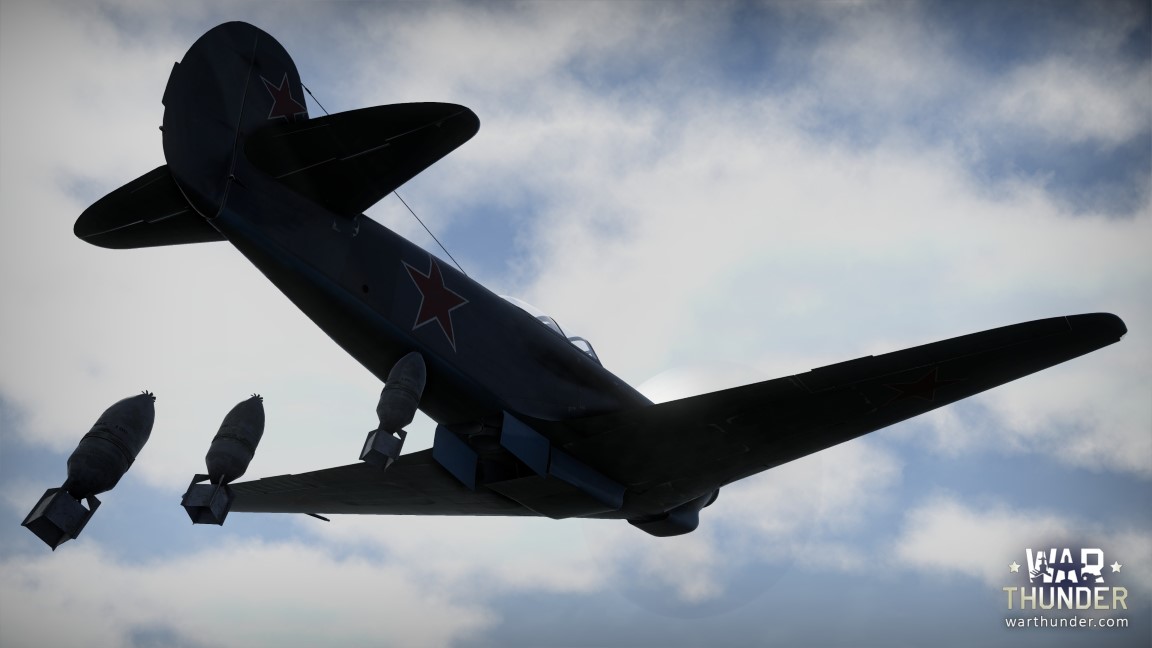
Yak-9B


Kirill Vostretsov, game designer:
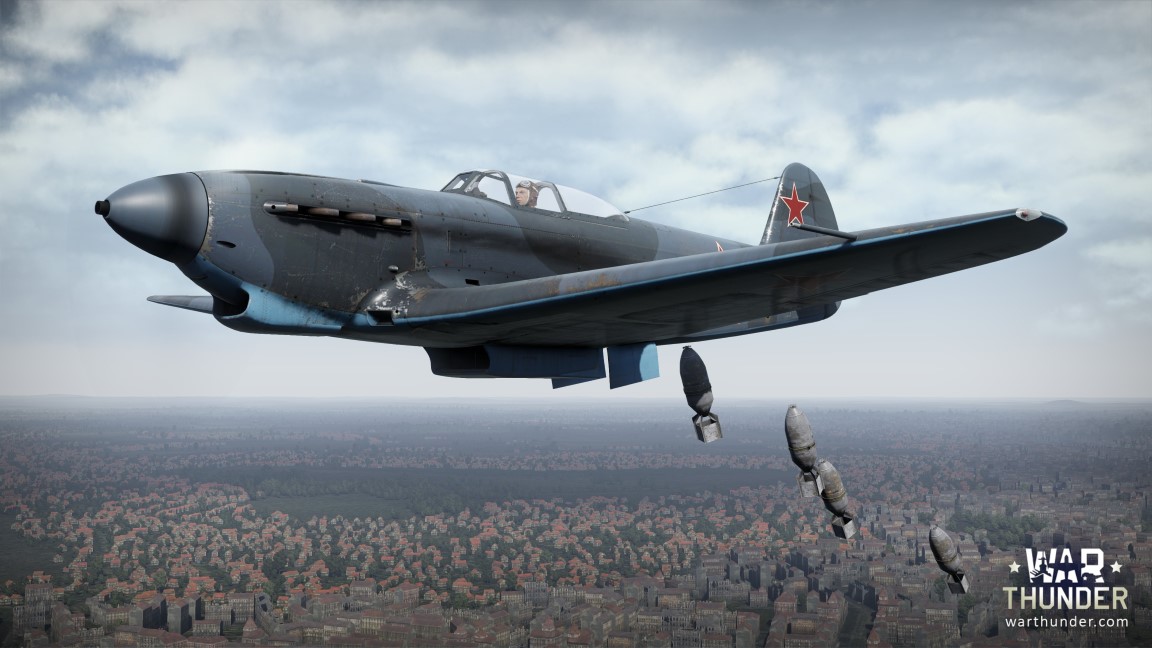
An interesting aircraft – your ordinary Yak-9, but capable of carrying 400 kg of bombs within its fuselage, which means without losing speed due to drag. The Yak-9B is a bomber modification of the Yak-9D. It was produced closer to the end of World War II. The aircraft’s frontal armament wasn’t weakened, which means that if necessary, it could stand up for itself in an air battle against enemy fighters.


http://steamcommunity.com/sharedfiles/filedetails/?id=508245631
http://steamcommunity.com/sharedfiles/filedetails/?id=508245688
Sergey Kapitsyn, artist:
The Yak-9B day bomber came as a result of further development of the Yak-9D, one of the Soviet union’s most popular fighters. Several visual differences can be seen in the Yak-9B, including a cockpit situated further down the fuselage, and four mounts onto which bombs were suspended.


http://steamcommunity.com/sharedfiles/filedetails/?id=508245787
http://steamcommunity.com/sharedfiles/filedetails/?id=508245813
The normal bomb load that was considered for these aircraft was 200 kg of bombs (two FAB-100 or two cassettes PTAB-2.5-1.5 in front holders). The mounting of 400 kg bomb loads was considered an overload, with testers and front-line pilots noticing a lack of aircraft stability due to a rearward displacement of the center of gravity.

The aircraft was intended to bomb an ‘area’ as opposed to precise locations, as dive-bombing at angles of up to 50 degrees was not possible due to sight related restrictions.
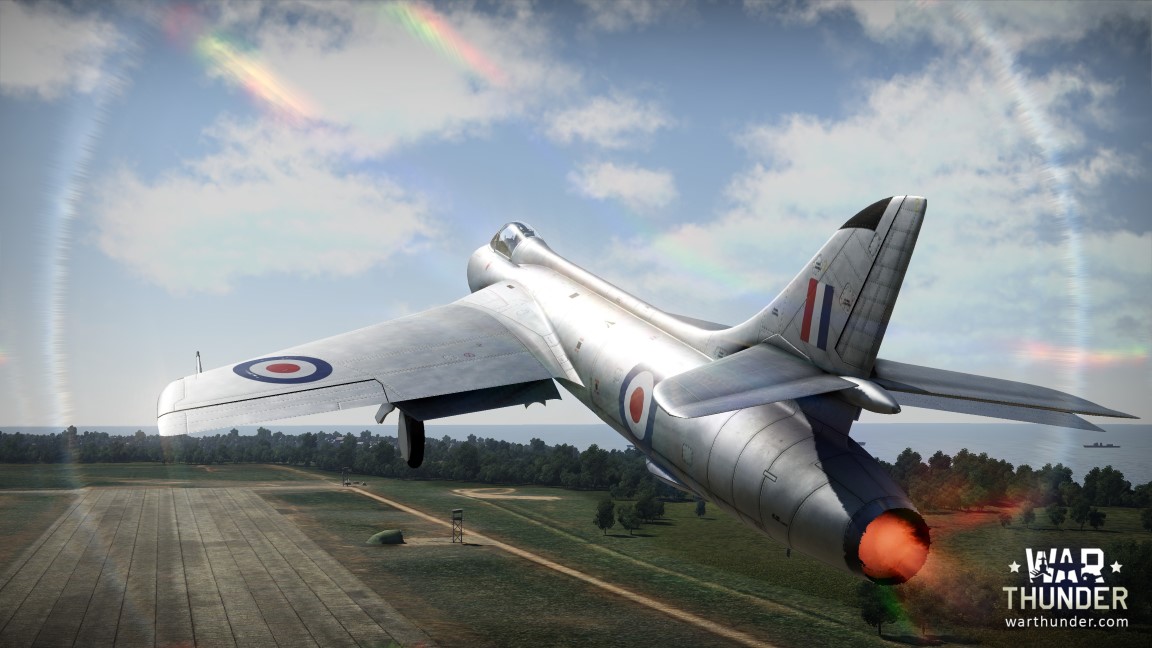
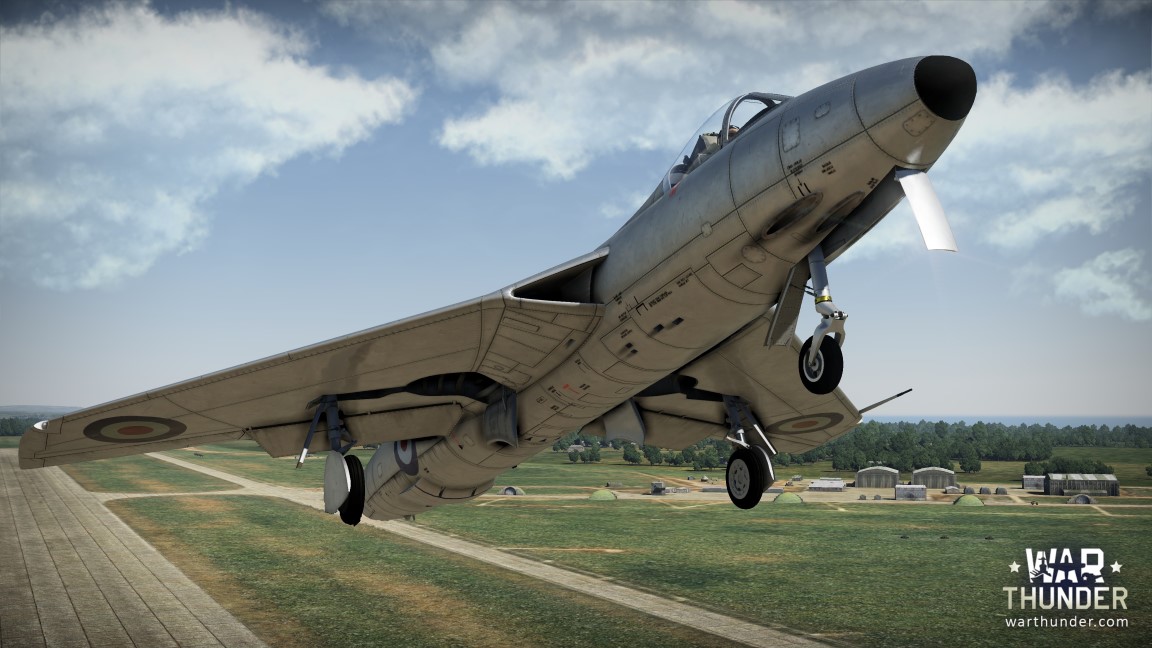
Hunter F.1


Kirill Vostretsov, game designer:
I think fans of British aviation have sometimes thought that the top-range British jet fighters, represented by the Meteor family, sometimes have a hard time in combat against the MiGs of the USSR and East Germany.


http://steamcommunity.com/sharedfiles/filedetails/?id=508245895
http://steamcommunity.com/sharedfiles/filedetails/?id=508246116
The new jet-powered British fighter, the Hawker Hunter F.1, should correct this situation. This post-war experimental aircraft will be an excellent top-range British jet-powered fighter, capable of giving any opponent a run for its money.


http://steamcommunity.com/sharedfiles/filedetails/?id=508246202
http://steamcommunity.com/sharedfiles/filedetails/?id=508246236
Alexander Porozov, artist:
The arrow-like wing, the tail, all the amazing lines of this wonderful aircraft tell us just one thing: it was built for speed. Yes, this fighter can amaze with its appearance alone. I think this is one of the most beautiful aircraft we’ve ever made.

See video of this aircraft in action here!


In the wake of the recent tragedy at the Shoreham Airshow involving a Hunter T.7,
thoughts and condolences are with those affected and involved in the incident.
War Thunder - TheShaolinMonk
In today's Development Blog we will present to you the Soviet Yak-9B - A bomber modification of the Yak-9D fighter and the long awaited Hawker Hunter F.1 - A British jet-powered fighter!

Yak-9B


Kirill Vostretsov, game designer:
An interesting aircraft – your ordinary Yak-9, but capable of carrying 400 kg of bombs within its fuselage, which means without losing speed due to drag. The Yak-9B is a bomber modification of the Yak-9D. It was produced closer to the end of World War II. The aircraft’s frontal armament wasn’t weakened, which means that if necessary, it could stand up for itself in an air battle against enemy fighters.


http://steamcommunity.com/sharedfiles/filedetails/?id=508245631
http://steamcommunity.com/sharedfiles/filedetails/?id=508245688
Sergey Kapitsyn, artist:
The Yak-9B day bomber came as a result of further development of the Yak-9D, one of the Soviet union’s most popular fighters. Several visual differences can be seen in the Yak-9B, including a cockpit situated further down the fuselage, and four mounts onto which bombs were suspended.


http://steamcommunity.com/sharedfiles/filedetails/?id=508245787
http://steamcommunity.com/sharedfiles/filedetails/?id=508245813
The normal bomb load that was considered for these aircraft was 200 kg of bombs (two FAB-100 or two cassettes PTAB-2.5-1.5 in front holders). The mounting of 400 kg bomb loads was considered an overload, with testers and front-line pilots noticing a lack of aircraft stability due to a rearward displacement of the center of gravity.

The aircraft was intended to bomb an ‘area’ as opposed to precise locations, as dive-bombing at angles of up to 50 degrees was not possible due to sight related restrictions.


Hunter F.1


Kirill Vostretsov, game designer:
I think fans of British aviation have sometimes thought that the top-range British jet fighters, represented by the Meteor family, sometimes have a hard time in combat against the MiGs of the USSR and East Germany.


http://steamcommunity.com/sharedfiles/filedetails/?id=508245895
http://steamcommunity.com/sharedfiles/filedetails/?id=508246116
The new jet-powered British fighter, the Hawker Hunter F.1, should correct this situation. This post-war experimental aircraft will be an excellent top-range British jet-powered fighter, capable of giving any opponent a run for its money.


http://steamcommunity.com/sharedfiles/filedetails/?id=508246202
http://steamcommunity.com/sharedfiles/filedetails/?id=508246236
Alexander Porozov, artist:
The arrow-like wing, the tail, all the amazing lines of this wonderful aircraft tell us just one thing: it was built for speed. Yes, this fighter can amaze with its appearance alone. I think this is one of the most beautiful aircraft we’ve ever made.

See video of this aircraft in action here!


In the wake of the recent tragedy at the Shoreham Airshow involving a Hunter T.7,
thoughts and condolences are with those affected and involved in the incident.
War Thunder - TheShaolinMonk
https://www.youtube.com/watch?v=oZ8foF7bktQ
This is the final entry from a series of Max Lachmann’s diaries, where he reveals his adventures whilst recording the authentic sounds of real military vehicles for War Thunder. Max tells of his experiences recording U.S. military ground vehicles in Texas.

IV. The Texas adventure!
During my search for World War II ground vehicles to record for Gaijin, I came across the name of a private collector in Texas, US. His name was Brent Mullins, and he seemingly had a very nice collection of old US tanks, amongst other things.


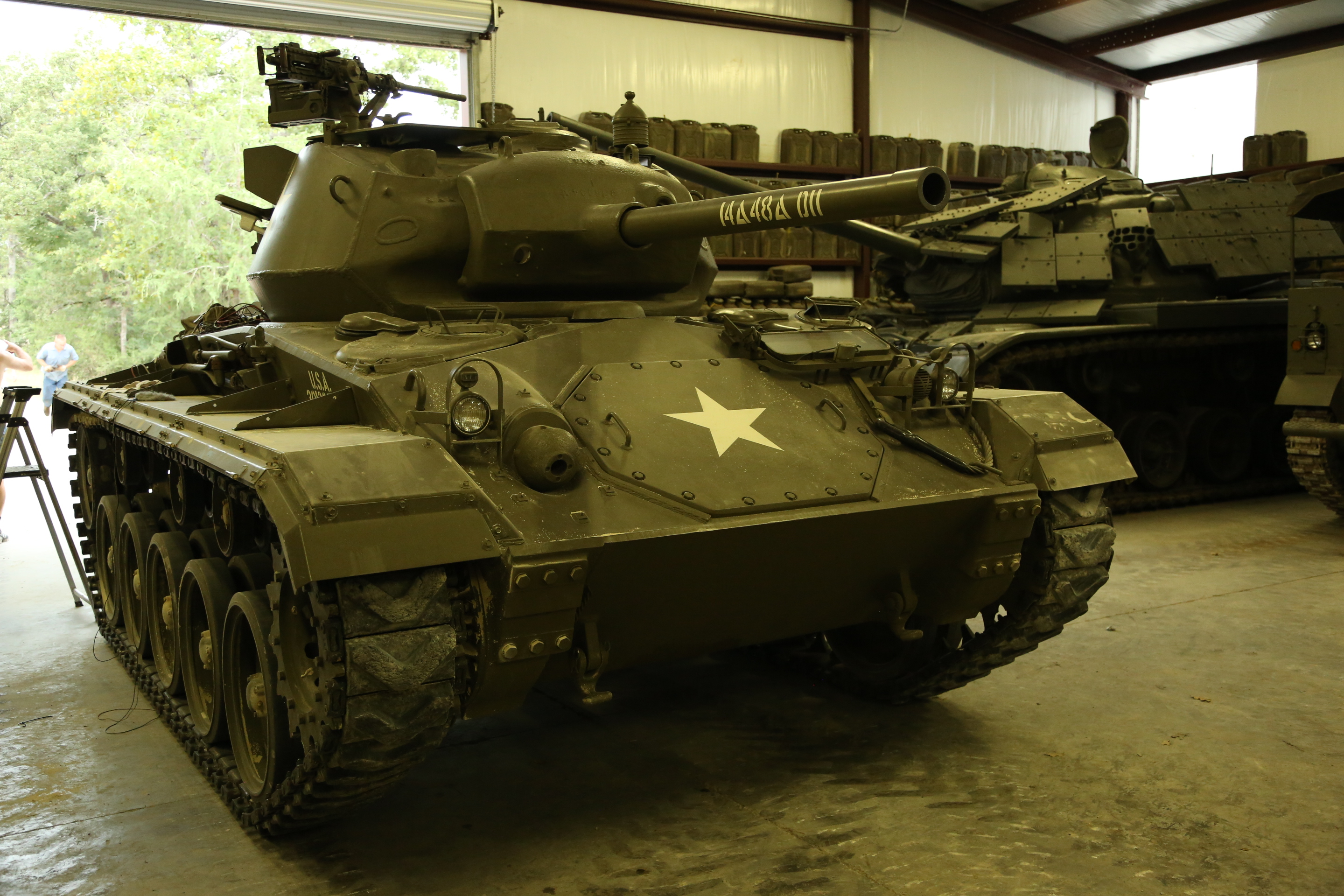
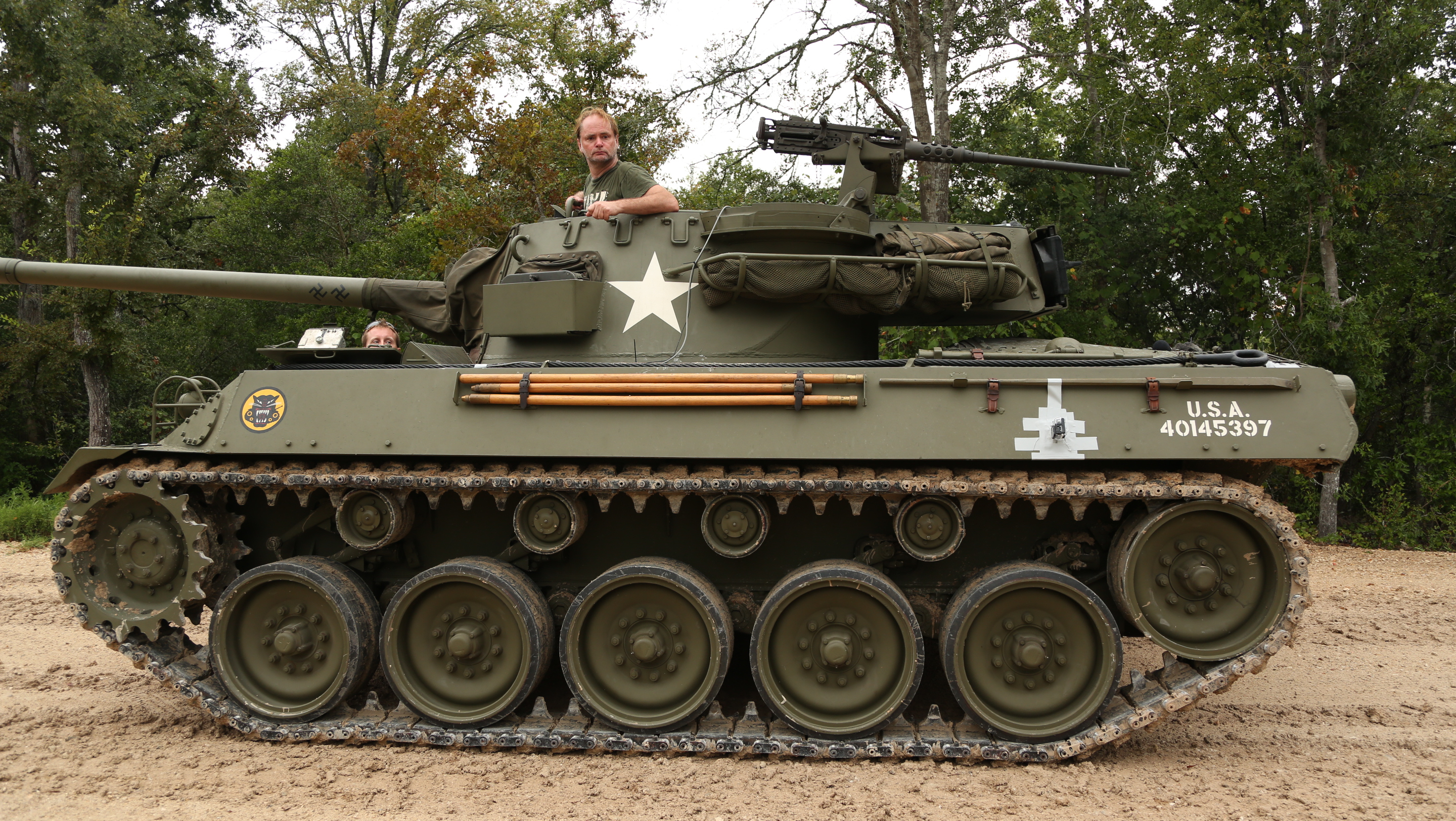
He seemed to be a very hard man to get hold of, but after some emailing and phone calls, we agreed on a date on which we would come over to record sounds from the M8 Armored Car, M5 High Speed Tractor, M5A Stuart Tank, M24 Chaffee Tank, M18 Hellcat Tank Destroyer, M4A1 Sherman Tank, M4A3 Sherman Tank, M16 Halftrack and a 105mm Howitzer Gun. As my girlfriend was expecting our baby in early October, I wanted to go in August at the latest. Brent advised us to come later, as the month of August in Texas is very, very hot and humid. For me, a later date was not an option, so we booked our trip for August, and let me tell you, Brent was right. It is one of the hottest and sweatiest jobs I have ever done, a job which included recording in the jungle.

This was the first trip where Pavel asked us to bring a cameraman, after realising that the footage we were getting ourselves with fixed GoPros wasn’t showing enough action. So I asked a friend of mine, Richard at Bröderna Blom, to join us. On the 11th of August, Bernard, Richard and myself left Stockholm and flew to Houston via London. As always, I chose to fly British Airways, since they allow decent cabin and luggage allowances, which means ‘overweight’ charges, but more importantly, if any of our checked-in luggage got lost, we would still have enough gear in the cabin allowance to be able to record anyway.
http://steamcommunity.com/sharedfiles/filedetails/?id=507546217
http://steamcommunity.com/sharedfiles/filedetails/?id=507546537
After arriving in Houston we went to get our rental car. The guy at the desk asked us the usual questions, like if we wanted the extra insurance to be fully covered, which we agreed on. I asked the guy if that covered everything, and he confirmed it does. ”So if the car gets run over by a tank, we are covered?” I asked him. ”Yes you are”, he replied. A few minutes later, before we took off, the guy asked us what we were doing in Texas. ”We are here to record the sound of armoured vehicles at a tank museum” we answered, and the all of a sudden, the very nervous face he gave us was priceless! That was a good laugh! We didn’t give him any trouble though, the rental car was thankfully intact on its return, though a bit dirty. I am sure it would have made a great sound though - running it over with a tank!

The tanks were located at the Museum of the American GI in College Station, a couple of hours drive north of Houston. We arrived at the museum early, ready for the first day of recordings. It always takes some time to meet everyone, find a good stretch to drive, talk to everyone involved into helping with what was needed, organising what we ourselves needed to do, and so on. Eventually, we got started. Helping us out was our excellent tank driver Sean, one of the best ever to work with. Now we realised how hot it was. We bought huge amounts of bottled water to cope. I soon realised that it was better to save my t-shirt and wear it for lunch, and go without it during work. We hung our wet shirts to dry on cannon barrels in the garage.
http://steamcommunity.com/sharedfiles/filedetails/?id=507546921
http://steamcommunity.com/sharedfiles/filedetails/?id=507547264
Being a bit worried about snakes in Texas, I asked Sean about it. He told me there were no rattlesnakes, but copperheads. On my questions regarding whether they were dangerous or not, he simply replied ”they are not gonna kill ya, but they are gonna make ya wish they did”. Very comforting... To make us feel better, he said that they are only in the high grass, so as long as we stayed on the road we would be fine. Since I was the one to do the exterior recording, I was positioned along the road stretch ready for when the tank passed by, so I kept looking for the snakes all the time. Eventually it got dark, and I figured at least they wouldn’t be out in the dark. Once we were done we put all our stuff in the car and went back to the garage. Just before parking the car, I turned my head and saw something crawling on the road, and my fear became a reality… As it turned out, they indeed ‘were’ active at night too, so I was all wrong to feel safe when it got dark. On top of that, it was not even in the grass like Sean had told us. From that day onwards, we continued to spot snakes every day and never in the grass. Not to mention the scorpions…

Besides worrying about the snakes, a few neighbours were complaining about the tanks ruining the road, and then there was one case where we ran out of gas. Other than these instances, work was smooth, much thanks to Sean who did everything he could to assist us in opening hatches, intakes and whatever we asked for. So we had a couple of microphones in the engine, one in the intake, a couple inside, a few by the exhausts, and one on each side by the tracks. We had two turning points and a long stretch, with microphones by both turning points, and me positioned in between with a number of microphones.
On the last day we were supposed to record the M-16 Halftrack, but due to heavy rain the night before, they could not get it out of the new museum building. The roads were not complete yet, and they were worried it would get stuck. So we had to give up on that one. Instead we went on to record one of the Howitzers being fired.


Going through airport security with gear that has been close to guns being fired, is always exciting. And since we keep the recorders in our carry-on luggage, they are always scanned for explosives. A few moments of excitement, but all was good and we could head back home with some great memories, a new friend and some successful recordings.

Other articles from the series:

Discuss it here!
War Thunder - TheShaolinMonk
https://www.youtube.com/watch?v=oZ8foF7bktQ
This is the final entry from a series of Max Lachmann’s diaries, where he reveals his adventures whilst recording the authentic sounds of real military vehicles for War Thunder. Max tells of his experiences recording U.S. military ground vehicles in Texas.

IV. The Texas adventure!
During my search for World War II ground vehicles to record for Gaijin, I came across the name of a private collector in Texas, US. His name was Brent Mullins, and he seemingly had a very nice collection of old US tanks, amongst other things.


He seemed to be a very hard man to get hold of, but after some emailing and phone calls, we agreed on a date on which we would come over to record sounds from the M8 Armored Car, M5 High Speed Tractor, M5A Stuart Tank, M24 Chaffee Tank, M18 Hellcat Tank Destroyer, M4A1 Sherman Tank, M4A3 Sherman Tank, M16 Halftrack and a 105mm Howitzer Gun. As my girlfriend was expecting our baby in early October, I wanted to go in August at the latest. Brent advised us to come later, as the month of August in Texas is very, very hot and humid. For me, a later date was not an option, so we booked our trip for August, and let me tell you, Brent was right. It is one of the hottest and sweatiest jobs I have ever done, a job which included recording in the jungle.

This was the first trip where Pavel asked us to bring a cameraman, after realising that the footage we were getting ourselves with fixed GoPros wasn’t showing enough action. So I asked a friend of mine, Richard at Bröderna Blom, to join us. On the 11th of August, Bernard, Richard and myself left Stockholm and flew to Houston via London. As always, I chose to fly British Airways, since they allow decent cabin and luggage allowances, which means ‘overweight’ charges, but more importantly, if any of our checked-in luggage got lost, we would still have enough gear in the cabin allowance to be able to record anyway.
http://steamcommunity.com/sharedfiles/filedetails/?id=507546217
http://steamcommunity.com/sharedfiles/filedetails/?id=507546537
After arriving in Houston we went to get our rental car. The guy at the desk asked us the usual questions, like if we wanted the extra insurance to be fully covered, which we agreed on. I asked the guy if that covered everything, and he confirmed it does. ”So if the car gets run over by a tank, we are covered?” I asked him. ”Yes you are”, he replied. A few minutes later, before we took off, the guy asked us what we were doing in Texas. ”We are here to record the sound of armoured vehicles at a tank museum” we answered, and the all of a sudden, the very nervous face he gave us was priceless! That was a good laugh! We didn’t give him any trouble though, the rental car was thankfully intact on its return, though a bit dirty. I am sure it would have made a great sound though - running it over with a tank!

The tanks were located at the Museum of the American GI in College Station, a couple of hours drive north of Houston. We arrived at the museum early, ready for the first day of recordings. It always takes some time to meet everyone, find a good stretch to drive, talk to everyone involved into helping with what was needed, organising what we ourselves needed to do, and so on. Eventually, we got started. Helping us out was our excellent tank driver Sean, one of the best ever to work with. Now we realised how hot it was. We bought huge amounts of bottled water to cope. I soon realised that it was better to save my t-shirt and wear it for lunch, and go without it during work. We hung our wet shirts to dry on cannon barrels in the garage.
http://steamcommunity.com/sharedfiles/filedetails/?id=507546921
http://steamcommunity.com/sharedfiles/filedetails/?id=507547264
Being a bit worried about snakes in Texas, I asked Sean about it. He told me there were no rattlesnakes, but copperheads. On my questions regarding whether they were dangerous or not, he simply replied ”they are not gonna kill ya, but they are gonna make ya wish they did”. Very comforting... To make us feel better, he said that they are only in the high grass, so as long as we stayed on the road we would be fine. Since I was the one to do the exterior recording, I was positioned along the road stretch ready for when the tank passed by, so I kept looking for the snakes all the time. Eventually it got dark, and I figured at least they wouldn’t be out in the dark. Once we were done we put all our stuff in the car and went back to the garage. Just before parking the car, I turned my head and saw something crawling on the road, and my fear became a reality… As it turned out, they indeed ‘were’ active at night too, so I was all wrong to feel safe when it got dark. On top of that, it was not even in the grass like Sean had told us. From that day onwards, we continued to spot snakes every day and never in the grass. Not to mention the scorpions…

Besides worrying about the snakes, a few neighbours were complaining about the tanks ruining the road, and then there was one case where we ran out of gas. Other than these instances, work was smooth, much thanks to Sean who did everything he could to assist us in opening hatches, intakes and whatever we asked for. So we had a couple of microphones in the engine, one in the intake, a couple inside, a few by the exhausts, and one on each side by the tracks. We had two turning points and a long stretch, with microphones by both turning points, and me positioned in between with a number of microphones.
On the last day we were supposed to record the M-16 Halftrack, but due to heavy rain the night before, they could not get it out of the new museum building. The roads were not complete yet, and they were worried it would get stuck. So we had to give up on that one. Instead we went on to record one of the Howitzers being fired.


Going through airport security with gear that has been close to guns being fired, is always exciting. And since we keep the recorders in our carry-on luggage, they are always scanned for explosives. A few moments of excitement, but all was good and we could head back home with some great memories, a new friend and some successful recordings.

Other articles from the series:

Discuss it here!
War Thunder - TheShaolinMonk
In today's Development Blog we will present to you the T25 Medium Tank - An American prototype vehicle with 90mm anti-tank gun and the Panzerwerfer 42 Auf.Sf - A German half-tracked multiple rocket launcher.

T25 Medium Tank


Vyacheslav "BVV_d" Bulannikov, Game Designer:
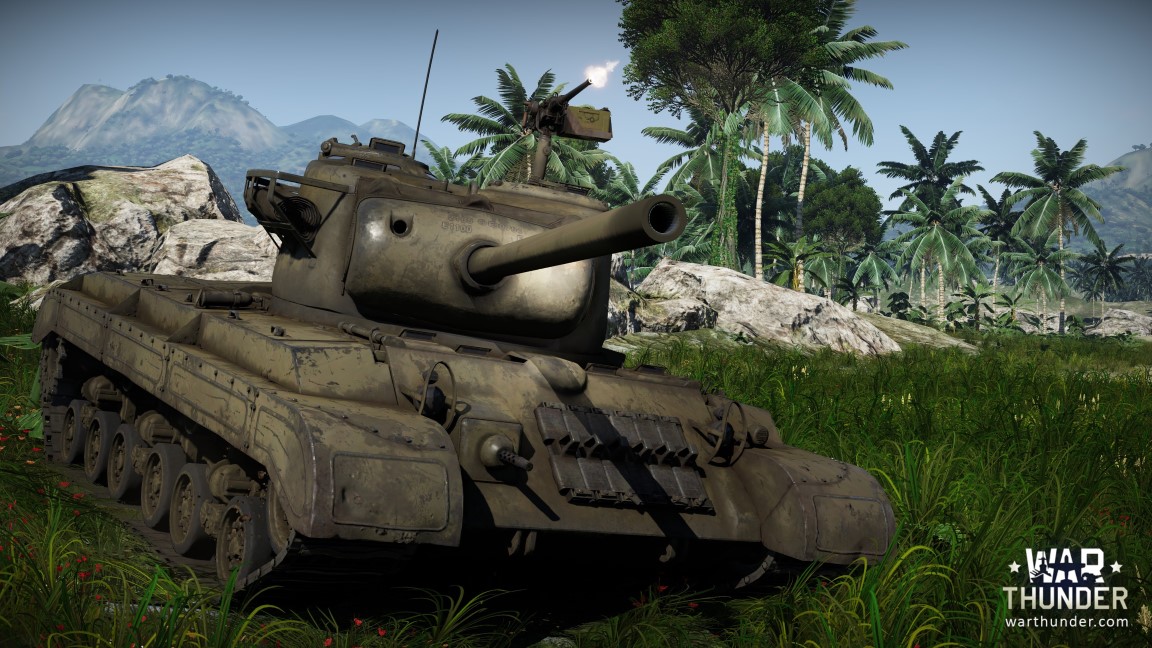
The Т25 is an experimental US medium tank armed with the 90mm М3 cannon. The vehicle is interesting in that it has decent weaponry and armour for its rank, this vehicle will be able to bolster the American medium tank fleet available at this tier where the M4A3 often experiences difficulties when combating enemy heavy tanks.
http://steamcommunity.com/sharedfiles/filedetails/?id=506952919
http://steamcommunity.com/sharedfiles/filedetails/?id=506952997
http://steamcommunity.com/sharedfiles/filedetails/?id=506953024
http://steamcommunity.com/sharedfiles/filedetails/?id=506953059
Svetlana Smirnova, Artist:
This tank resembles the look of American tanks that were developed later on. It has a lot in common with the M26 Pershing. However, this tank will be able to participate in battles against earlier vehicles, against which it will doubtlessly be a major threat.

See video of this tank in action here!

Panzerwerfer 42 Auf.Sf


Vyacheslav "BVV_d" Bulannikov, Game Designer:
The Panzerwerfer 42 Auf Sf will be the first multiple rocket launching system in the German research tree. It will be introduced at rank 2 and will be available as a premium vehicle.
http://steamcommunity.com/sharedfiles/filedetails/?id=506953148
http://steamcommunity.com/sharedfiles/filedetails/?id=506953170
http://steamcommunity.com/sharedfiles/filedetails/?id=506953219
The vehicle was based on the standard model of the Sd Kfz 3a Opel Maultier half track. Mounted on top is a multiple rocket launcher capable of firing ten 158 mm rockets at the enemy. Unfortunately, however, the vehicle lost much of its mobility due to its increased weight. But this is compensated for with the accuracy of its rocket launcher and the hitting power of its 158 mm rockets.

See video of this vehicle here!

The War Thunder Team

War Thunder - TheShaolinMonk
In today's Development Blog we will present to you the T25 Medium Tank - An American prototype vehicle with 90mm anti-tank gun and the Panzerwerfer 42 Auf.Sf - A German half-tracked multiple rocket launcher.

T25 Medium Tank


Vyacheslav "BVV_d" Bulannikov, Game Designer:
The Т25 is an experimental US medium tank armed with the 90mm М3 cannon. The vehicle is interesting in that it has decent weaponry and armour for its rank, this vehicle will be able to bolster the American medium tank fleet available at this tier where the M4A3 often experiences difficulties when combating enemy heavy tanks.
http://steamcommunity.com/sharedfiles/filedetails/?id=506952919
http://steamcommunity.com/sharedfiles/filedetails/?id=506952997
http://steamcommunity.com/sharedfiles/filedetails/?id=506953024
http://steamcommunity.com/sharedfiles/filedetails/?id=506953059
Svetlana Smirnova, Artist:
This tank resembles the look of American tanks that were developed later on. It has a lot in common with the M26 Pershing. However, this tank will be able to participate in battles against earlier vehicles, against which it will doubtlessly be a major threat.

See video of this tank in action here!

Panzerwerfer 42 Auf.Sf


Vyacheslav "BVV_d" Bulannikov, Game Designer:
The Panzerwerfer 42 Auf Sf will be the first multiple rocket launching system in the German research tree. It will be introduced at rank 2 and will be available as a premium vehicle.
http://steamcommunity.com/sharedfiles/filedetails/?id=506953148
http://steamcommunity.com/sharedfiles/filedetails/?id=506953170
http://steamcommunity.com/sharedfiles/filedetails/?id=506953219
The vehicle was based on the standard model of the Sd Kfz 3a Opel Maultier half track. Mounted on top is a multiple rocket launcher capable of firing ten 158 mm rockets at the enemy. Unfortunately, however, the vehicle lost much of its mobility due to its increased weight. But this is compensated for with the accuracy of its rocket launcher and the hitting power of its 158 mm rockets.

See video of this vehicle here!

The War Thunder Team

War Thunder - TheShaolinMonk


Pilot! During the "MAKS 2015" airshow from August 25th to August 30th, take part in battles and receive camouflages for your aircraft, lots of Silver Lions and dozens of personal and team boosters!

From August 28th to August 30th win War Thunder races
on one of the amazing racing tracks!

This year War Thunder is official information partner of the international airshow "MAKS 2015" from August 25th to August 30th and we decided to launch the “War Thunder Airshow” special and anticipated air races with a prize fund of 50,000 Golden Eagles!

War Thunder Airshow
From August 25th to August 30th - Random battles will give additional rewards! Just complete the special tasks and win a prize for every second completed task. The luckiest players will be able to win two camouflages for aircraft of all 5 ranks!

Trophy "Airshow Prize"
  • Silver Lions: from 10,000 to 150,000 Silver Lions
  • +10% Research Points booster for all members of the players team for one battle
  • +10% for all members of the players team for one battle
  • +10-75% Personal Research Points booster for 10 battles
  • +10-75% Personal Silver Lions booster for 10 battles
  • Random "Order"
http://steamcommunity.com/sharedfiles/filedetails/?id=506454110
Airshow tasks:​
  • Destroy 30 enemy aircraft whilst flying first rank fighter of each nation (5 tasks total)
  • Destroy 30 enemy aircraft whilst flying second rank fighter of each nation (5 tasks total)
  • Destroy 30 enemy aircraft whilst flying third rank fighter of each nation (5 tasks total)
  • Destroy 30 enemy aircraft whilst flying fourth rank fighter of each nation (5 tasks total)
  • Destroy 30 enemy aircraft whilst flying fifth rank fighter of each nation (5 tasks total)
  • Destroy 50 ground targets whilst flying bombers and attackers of each nation (5 tasks total)
    You can follow your progress by navigating to "Achievements" -> "Airshow War Thunder".
Terms:​
  • Multiplier for game modes: AB - x1, RB - x2, SB - x3 (for example, in the task “Destroy 30 enemy aircraft” you need to destroy only 10 if you playing SB, or 15 if you playing RB)
  • “Airshow Prize” will be given for completing any two tasks. You can get “Airshow Prize” only 15 times.
  • With each following task the chance of receiving the camouflage sets increases by up to 100%. By completing all the tasks you are guaranteed to receive both of the camouflage sets.
War Thunder - TheShaolinMonk


Pilot! During the "MAKS 2015" airshow from August 25th to August 30th, take part in battles and receive camouflages for your aircraft, lots of Silver Lions and dozens of personal and team boosters!

From August 28th to August 30th win War Thunder races
on one of the amazing racing tracks!

This year War Thunder is official information partner of the international airshow "MAKS 2015" from August 25th to August 30th and we decided to launch the “War Thunder Airshow” special and anticipated air races with a prize fund of 50,000 Golden Eagles!

War Thunder Airshow
From August 25th to August 30th - Random battles will give additional rewards! Just complete the special tasks and win a prize for every second completed task. The luckiest players will be able to win two camouflages for aircraft of all 5 ranks!

Trophy "Airshow Prize"
  • Silver Lions: from 10,000 to 150,000 Silver Lions
  • +10% Research Points booster for all members of the players team for one battle
  • +10% for all members of the players team for one battle
  • +10-75% Personal Research Points booster for 10 battles
  • +10-75% Personal Silver Lions booster for 10 battles
  • Random "Order"
http://steamcommunity.com/sharedfiles/filedetails/?id=506454110
Airshow tasks:​
  • Destroy 30 enemy aircraft whilst flying first rank fighter of each nation (5 tasks total)
  • Destroy 30 enemy aircraft whilst flying second rank fighter of each nation (5 tasks total)
  • Destroy 30 enemy aircraft whilst flying third rank fighter of each nation (5 tasks total)
  • Destroy 30 enemy aircraft whilst flying fourth rank fighter of each nation (5 tasks total)
  • Destroy 30 enemy aircraft whilst flying fifth rank fighter of each nation (5 tasks total)
  • Destroy 50 ground targets whilst flying bombers and attackers of each nation (5 tasks total)
    You can follow your progress by navigating to "Achievements" -> "Airshow War Thunder".
Terms:​
  • Multiplier for game modes: AB - x1, RB - x2, SB - x3 (for example, in the task “Destroy 30 enemy aircraft” you need to destroy only 10 if you playing SB, or 15 if you playing RB)
  • “Airshow Prize” will be given for completing any two tasks. You can get “Airshow Prize” only 15 times.
  • With each following task the chance of receiving the camouflage sets increases by up to 100%. By completing all the tasks you are guaranteed to receive both of the camouflage sets.
War Thunder - TheShaolinMonk
https://youtu.be/FtPOIp-vtmk

We continue to publish a series of diaries with Max Lachmann about recording the authentic sounds of real military vehicles for War Thunder. In this entry, Max explains his instructions to record sounds from the “Griffon” engine of a Spitfire. This led him to a museum in Los Angeles, where he was able to find what he needed.

III. The Griffon engine Spitfire adventure!
Just as I thought we were done, having just delivered a hard drive with nine rare tanks recorded in France, Pavel came back to me with another request: a Spitfire with a Griffon engine. At this point I didn´t realise that it would turn out to be more tricky than it initially appeared. After all, there are plenty of old Spits around, at least it seemed so when compared to Lancasters and Bf 109s, so I couldn’t see why it should be very hard to find one, not that it would have stopped me from trying anyway.


As always, I started to work my connections by email, also Googling all the different Spitfire models that had Griffon engines and to see if there were any survivors. Funnily enough, I found quite a few lists of surviving and restored Spitfires, but very few held any information on what engines were used to run them. It was also difficult to tell which were flying and which weren’t, but after a few days I got some replies to my emails. The first one was a lead in the UK, which would have been very convenient, but it turned out it was an aircraft that was being restored with an unknown finishing date, but expected to be sometime during the summer of 2014. They were very accommodating, but also understood that the timeframe was a bit too vague to work out for us. Our next lead was in the UK as well, but they had a busy schedule, and invited us to come and work around that. Knowing how complex the kind of recordings we do are, I knew that I had to find another alternative. Then, luckily, I got in touch with Jason Somes of the SoCal Wing at the Commemorative Air Force Museum in Camarillo, Los Angeles. They had an airworthy Spitfire with a Griffon engine, and were willing to help! As an added bonus, they also had an airworthy Bearcat and a C-46 that we could potentially do ground runs with.

Now we entered the next phase in the planning process. We had to agree on a budget, find dates that worked for both them and us, making sure one of the Blom Brothers camera guys were available for those dates, make reservations for flights, hotels, rental cars and so on. And, having learned our lesson, we know that recording aircraft requires lots and lots of cables, microphone stands and sandbags to keep everything in place when the prop wash hits them. Since all the equipment is considerably heavy, we figured it would be best to rent it on location. So after dealing with rental companies, travel agencies, the museum etc, we were finally all set.


On the 8th of May, we boarded our flight to Los Angeles. We arrived late in the evening after changing flight in London. Changing to a transfer flight is always a risk, as it means that our luggage has to change planes too, something that is entirely out of our control. Having learnt the hard way that luggage can get lost and delayed, we always make sure to have one complete rig, with recorders and microphones, in our carry on luggage, so as to make sure we can at least record ‘something’ if our equipment goes elsewhere. Luckily the airliner we use allows 23kgs of carry-on luggage, which allows us to take quite a lot with us. Unfortunately it also means we always raise some interest at the security checks with all our odd looking machines and attributes. This time everything ran smooth during the check, and both us and the luggage came to the right place in time. We then got our rental car and drove the hour up to Camarillo and our hotel. At the hotel we received the first part of the rental equipment, two recorders, that we planned on mounting inside the planes when they went flying, and we had to make sure they were set up correctly and that the batteries were charged. The rest of the rental equipment had gone straight to the museum.

At 9am the next morning, we met up with Jason Somes and, to my great joy, a local sound recordist I knew that I had invited to join us, along with his assistant. It had been a few years and it was great to see him again. So after a quick hello we went straight to work. We explained to Jason in more detail what we needed to do, and Jason explained to us what we had to work around on their end. There is always airport security, safety regulations on how close we can stand to the runway, insurances and such things. It turned out to be a bit tricky to get them to co-operate from the beginning, but thanks to a great effort from Jason, and after signing some papers, all was sorted and we were escorted by two authorised personnel to the runway when it was time for the fly bys.


But before we recorded the fly, bys we rigged the aircraft for a ground run. Four microphones and a recorder were mounted inside the aircraft so that we could leave those in for the flying part as well. And around the plane we had another 20 channels set up from different angles. Once the Bearcat was done, we did the same thing with the Spitfire.

Now it was time for the flying part. Since we had recorded a Hellcat and a Mustang P-51 for Pavel a few years ago, but only on the ground, we had asked Jason to fly the Hellcat and the Mustang for us as well, so as to have some flying audio for those aircraft as well. So we mounted recorders inside these planes, and then took our gear out onto the runway. One recordist was left at the hangar to record the taxing away and back. A number of microphones were positioned along the stretch, and we were all set.

First in was the Mustang, and let me tell you, it made an incredible aound! After that we got some really low and fast passes by the Spitfire. Then they flew the Bearcat, and finally, the Hellcat. By now the sun was setting, and it was time to call it a day, after a very long and successful set of recording sessions. Though, one thing was left before we could hit the pillow, data back ups!


We met at 9am once again the next morning, and we had been told that the airport would be more busy and more heavily populated than the previous day, which surely turned out to be the case. There were plenty of people visiting the museum, people getting on flights with a B-25 and with the Mustang, and even people waiting to arrange a party inside the C-46! But, they would have to wait, as the C-46 was ‘our’ goal of the day. It took some time before they got the aircraft in position for us. Due to the heavy prop wash, the plane had to pint with the rear end out towards the taxi way, to avoid blowing other planes around the hangar away. So every time a plane had to taxi by, they had to take the C-46 down to idle before letting it pass. Anyway, we rigged the C-46 with eight microphones inside the cockpit and body, and then setup the usual microphones around the plane.

Read more about this in the Official War Thunder Forums!
War Thunder - TheShaolinMonk
https://youtu.be/FtPOIp-vtmk

We continue to publish a series of diaries with Max Lachmann about recording the authentic sounds of real military vehicles for War Thunder. In this entry, Max explains his instructions to record sounds from the “Griffon” engine of a Spitfire. This led him to a museum in Los Angeles, where he was able to find what he needed.

III. The Griffon engine Spitfire adventure!
Just as I thought we were done, having just delivered a hard drive with nine rare tanks recorded in France, Pavel came back to me with another request: a Spitfire with a Griffon engine. At this point I didn´t realise that it would turn out to be more tricky than it initially appeared. After all, there are plenty of old Spits around, at least it seemed so when compared to Lancasters and Bf 109s, so I couldn’t see why it should be very hard to find one, not that it would have stopped me from trying anyway.


As always, I started to work my connections by email, also Googling all the different Spitfire models that had Griffon engines and to see if there were any survivors. Funnily enough, I found quite a few lists of surviving and restored Spitfires, but very few held any information on what engines were used to run them. It was also difficult to tell which were flying and which weren’t, but after a few days I got some replies to my emails. The first one was a lead in the UK, which would have been very convenient, but it turned out it was an aircraft that was being restored with an unknown finishing date, but expected to be sometime during the summer of 2014. They were very accommodating, but also understood that the timeframe was a bit too vague to work out for us. Our next lead was in the UK as well, but they had a busy schedule, and invited us to come and work around that. Knowing how complex the kind of recordings we do are, I knew that I had to find another alternative. Then, luckily, I got in touch with Jason Somes of the SoCal Wing at the Commemorative Air Force Museum in Camarillo, Los Angeles. They had an airworthy Spitfire with a Griffon engine, and were willing to help! As an added bonus, they also had an airworthy Bearcat and a C-46 that we could potentially do ground runs with.

Now we entered the next phase in the planning process. We had to agree on a budget, find dates that worked for both them and us, making sure one of the Blom Brothers camera guys were available for those dates, make reservations for flights, hotels, rental cars and so on. And, having learned our lesson, we know that recording aircraft requires lots and lots of cables, microphone stands and sandbags to keep everything in place when the prop wash hits them. Since all the equipment is considerably heavy, we figured it would be best to rent it on location. So after dealing with rental companies, travel agencies, the museum etc, we were finally all set.


On the 8th of May, we boarded our flight to Los Angeles. We arrived late in the evening after changing flight in London. Changing to a transfer flight is always a risk, as it means that our luggage has to change planes too, something that is entirely out of our control. Having learnt the hard way that luggage can get lost and delayed, we always make sure to have one complete rig, with recorders and microphones, in our carry on luggage, so as to make sure we can at least record ‘something’ if our equipment goes elsewhere. Luckily the airliner we use allows 23kgs of carry-on luggage, which allows us to take quite a lot with us. Unfortunately it also means we always raise some interest at the security checks with all our odd looking machines and attributes. This time everything ran smooth during the check, and both us and the luggage came to the right place in time. We then got our rental car and drove the hour up to Camarillo and our hotel. At the hotel we received the first part of the rental equipment, two recorders, that we planned on mounting inside the planes when they went flying, and we had to make sure they were set up correctly and that the batteries were charged. The rest of the rental equipment had gone straight to the museum.

At 9am the next morning, we met up with Jason Somes and, to my great joy, a local sound recordist I knew that I had invited to join us, along with his assistant. It had been a few years and it was great to see him again. So after a quick hello we went straight to work. We explained to Jason in more detail what we needed to do, and Jason explained to us what we had to work around on their end. There is always airport security, safety regulations on how close we can stand to the runway, insurances and such things. It turned out to be a bit tricky to get them to co-operate from the beginning, but thanks to a great effort from Jason, and after signing some papers, all was sorted and we were escorted by two authorised personnel to the runway when it was time for the fly bys.


But before we recorded the fly, bys we rigged the aircraft for a ground run. Four microphones and a recorder were mounted inside the aircraft so that we could leave those in for the flying part as well. And around the plane we had another 20 channels set up from different angles. Once the Bearcat was done, we did the same thing with the Spitfire.

Now it was time for the flying part. Since we had recorded a Hellcat and a Mustang P-51 for Pavel a few years ago, but only on the ground, we had asked Jason to fly the Hellcat and the Mustang for us as well, so as to have some flying audio for those aircraft as well. So we mounted recorders inside these planes, and then took our gear out onto the runway. One recordist was left at the hangar to record the taxing away and back. A number of microphones were positioned along the stretch, and we were all set.

First in was the Mustang, and let me tell you, it made an incredible aound! After that we got some really low and fast passes by the Spitfire. Then they flew the Bearcat, and finally, the Hellcat. By now the sun was setting, and it was time to call it a day, after a very long and successful set of recording sessions. Though, one thing was left before we could hit the pillow, data back ups!


We met at 9am once again the next morning, and we had been told that the airport would be more busy and more heavily populated than the previous day, which surely turned out to be the case. There were plenty of people visiting the museum, people getting on flights with a B-25 and with the Mustang, and even people waiting to arrange a party inside the C-46! But, they would have to wait, as the C-46 was ‘our’ goal of the day. It took some time before they got the aircraft in position for us. Due to the heavy prop wash, the plane had to pint with the rear end out towards the taxi way, to avoid blowing other planes around the hangar away. So every time a plane had to taxi by, they had to take the C-46 down to idle before letting it pass. Anyway, we rigged the C-46 with eight microphones inside the cockpit and body, and then setup the usual microphones around the plane.

Read more about this in the Official War Thunder Forums!
...